

Introduction
Consumer services can be a good career path in the United States, especially for people who enjoy helping others, solving problems, and working with the public. It offers many entry-level jobs, flexible schedules, and clear ways to move into sales, operations, training, management, or specialized service work.
The trade-off is that pay and job quality vary widely. Some roles offer strong growth and good benefits. Others may include low starting wages, evening shifts, weekend work, emotional stress, or limited advancement.
The best answer depends on the type of consumer service you choose, your skills, and whether you plan to build toward a higher-level role. This guide explains the main options, pay factors, benefits, drawbacks, and steps to start a career in the U.S. consumer services sector.

What Is Consumer Services?
Consumer services are services provided directly to individuals rather than to businesses. The work may involve answering questions, helping customers choose products, solving complaints, providing personal care, or managing a service operation.


The term covers many industries, so it is not one single job category. Common examples include:
- Customer service
- Retail sales
- Food service and hospitality
- Travel and tourism
- Banking and financial customer support
- Personal care and beauty services
- Fitness and recreation
- Child care
- Home services
- Technical support
- Entertainment and leisure
A customer service representative, hotel manager, hairstylist, and fitness trainer all work in consumer services. However, their pay, training needs, work hours, and career growth can differ greatly.
The U.S. Bureau of Labor Statistics (BLS) tracks these jobs by occupation and industry. It does not treat “consumer services” as one occupation with one standard salary or growth rate. That means you should judge a specific role, not the label alone.
Is Consumer Services a Good Career Path?
Consumer services is a good career path when you want an accessible job with regular human contact and room to gain useful business skills. It may be less suitable if you want quiet work, predictable hours, or a high salary without further training.
Reasons consumer services can be a strong choice
It is accessible. Many entry-level roles require a high school diploma, short-term training, or employer training. This can help you enter the workforce without taking on large college costs.
It builds transferable skills. You can develop communication, conflict management, sales, scheduling, cash handling, teamwork, and problem-solving skills. These skills can help you move into office work, operations, sales, or management.
There are many work settings. You may work in a store, call center, hotel, salon, gym, restaurant, bank, airport, or remote support center.
Demand exists across the country. People continue to need food, lodging, personal care, transportation, recreation, repairs, and customer support. Local demand will still depend on the economy and the specific industry.
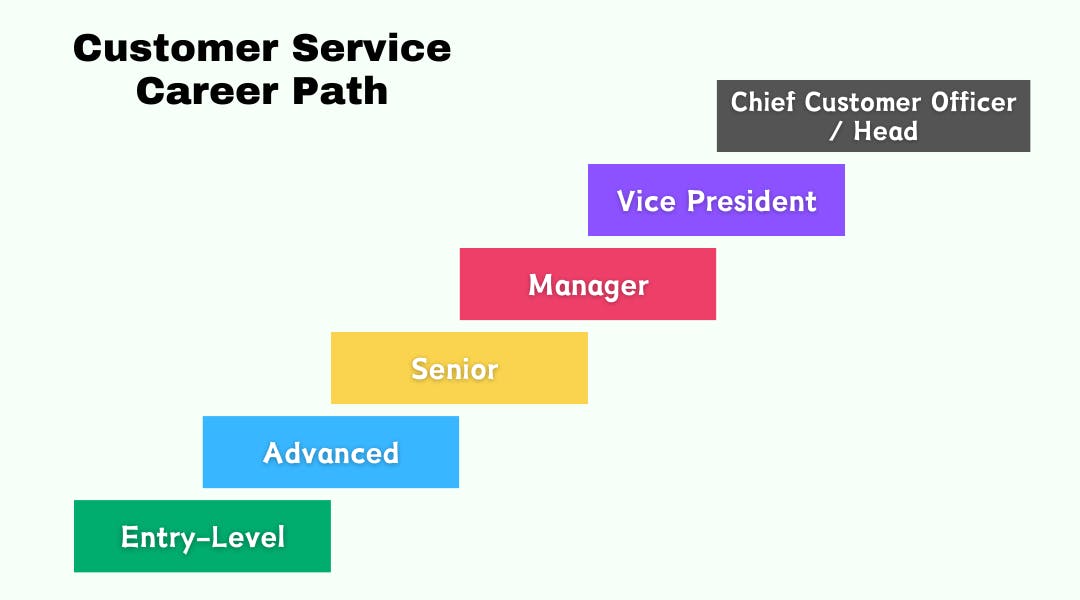
Advancement is possible. A worker may progress from customer service representative to senior representative, team lead, supervisor, assistant manager, and manager. The path is not automatic, but performance and added skills can help.


Reasons it may not be the right fit
Consumer service jobs often require direct contact with upset, rushed, or demanding customers. Some roles require standing for long periods, lifting items, working outdoors, or meeting sales goals.
Many jobs also use schedules that include nights, holidays, weekends, or split shifts. Entry-level pay can be modest, and benefits may differ sharply between employers.
The field can be a good starting point, but it is not always a good long-term path without a plan. Ask yourself whether you want to remain in front-line service or move toward a specialty, leadership role, or credential.

Consumer Services Career Options
The best consumer services career depends on your interests, strengths, training budget, and desired work schedule.
| Career area | Typical entry requirements | Main strengths | Common trade-offs |
|---|---|---|---|
| Customer service | High school diploma and employer training | Accessible and useful for office careers | Repetitive work and difficult customer calls |
| Retail sales | Often no formal credential | Fast entry and sales experience | Variable schedules and modest starting pay |
| Food service | Usually short employer training | Many openings and flexible entry | Physical work, rush periods, and variable hours |
| Hospitality | High school diploma for many roles | Promotion into hotel or event management | Nights, weekends, and seasonal demand |
| Personal care | State-approved training may be required | Direct client relationships and self-employment potential | Licensing rules and physical demands |
| Fitness and recreation | Certification may improve hiring chances | Active work and client coaching | Income may vary by clients and location |
| Technical support | Product training or technical skills | Better path toward IT support | Requires ongoing learning |
| Banking support | High school diploma or some college | Professional setting and advancement options | Compliance rules and performance targets |
| Child care | Requirements vary by state and setting | Meaningful work with children | Responsibility, stress, and pay concerns |
| Home services | Trade training, licensing, or experience | Strong potential in skilled specialties | Travel, physical work, and safety risks |
This table is a starting point, not a salary ranking. A licensed cosmetologist, experienced technical support specialist, or skilled home-service worker may earn more than a new retail associate. Location, commission, tips, union status, benefits, and experience can change the result.
Customer service representative
Customer service representatives answer questions, process orders, explain policies, and resolve problems. Some work in call centers, while others work by email, chat, or in person.
The BLS reported a median annual wage of $39,680 in May 2023 for customer service representatives. The BLS also projected employment to decline from 2023 to 2033, partly because companies continue to use self-service tools and automation. Even so, employers still need people for complex issues, sales support, regulated services, and high-value customers.
Retail sales and sales support
Retail roles can help you build skills in product knowledge, persuasion, inventory, cash handling, and customer care. Strong performers may become department leads, assistant managers, store managers, buyers, or account representatives.
Retail is often a useful entry point, but you should ask about base pay, commissions, schedule stability, promotion rates, and benefits before accepting an offer.
Hospitality and food service
Hotels, restaurants, resorts, and event venues employ large numbers of consumer service workers. Jobs range from host and server to front-desk agent, concierge, event coordinator, and general manager.
Tips can increase income in some food and hospitality roles, but they also make earnings less predictable. Review the employer’s pay policy, scheduling practices, and overtime rules before relying on tips in your budget.
Personal care and wellness
Barbers, cosmetologists, massage therapists, skin-care specialists, and fitness trainers often work closely with repeat clients. These careers can offer independence and self-employment potential.
Many personal care occupations require state licenses. Requirements differ by state, so check your state licensing agency before paying for a training program.

Pay, Benefits, and Job Outlook
Pay in consumer services depends more on the occupation and employer than on the broad sector name. Two jobs with the same customer-facing duties may have very different pay because one includes commission, tips, technical skills, licensing, or supervisory responsibility.
What affects consumer services pay?
The main factors include:


- Geographic area and local cost of living
- Experience and tenure
- Industry and employer size
- Commission, bonuses, or tips
- Full-time versus part-time status
- Union representation
- Licensing or technical credentials
- Shift differentials and overtime
- Health insurance and retirement benefits
- Management responsibility
A job with a lower hourly wage may still be stronger if it provides stable full-time hours, health coverage, paid time off, and a clear promotion path.
A simple compensation calculation
Use total compensation rather than hourly pay alone.
Hypothetical example:
- Job A pays $18 per hour for 40 hours each week.
- Job B pays $20 per hour for 28 hours each week.
- Job A provides health insurance and paid time off.
- Job B offers no benefits and has a changing schedule.
Job B has the higher hourly rate, but Job A may provide more predictable annual income and better protection from medical or financial shocks. Calculate expected yearly pay, then estimate the value of benefits and unpaid time.
How to compare job outlook
Do not assume that a growing consumer industry guarantees growth in every job. Automation may reduce basic call volume while increasing demand for technical support or complex case management.
Review the BLS Occupational Outlook Handbook for the exact occupation. Useful pages include:
- Customer service representatives
- Retail sales workers
- Food and beverage serving workers
- Fitness trainers and instructors
- Personal appearance workers
The BLS data is national. Wages and openings can be much higher or lower in a particular metro area.

Advantages of a Consumer Services Career
Consumer services can offer practical benefits that appeal to people at different stages of life.
Easy entry into the workforce
Many employers provide on-the-job training. This makes consumer services useful for high school graduates, career changers, students, and people returning to work.
Entry-level work can also help you learn what type of environment suits you. For example, a call-center role may show that you prefer problem solving, while hotel work may reveal an interest in event operations.
Transferable skills
The skills gained in consumer services can apply to many other careers. These include:
- Clear speaking and writing
- Active listening
- Complaint resolution
- Time management
- Sales and negotiation
- Point-of-sale systems
- Scheduling
- Team leadership
- Basic reporting
- Customer relationship management software
Keep a record of measurable results. “Helped customers” is less useful on a résumé than “resolved an average of 40 customer cases per day while meeting quality targets.”


Flexible work options
Some employers offer part-time, seasonal, evening, weekend, or remote roles. This can help students, caregivers, and people with other obligations.
Flexibility is not the same as stability, however. A flexible job may also have changing hours or limited benefits. Ask how far in advance schedules are posted and whether minimum hours are guaranteed.
Multiple advancement routes
A consumer services worker may advance in several directions:
- Front-line service to supervisor
- Service to sales
- Retail to buying or merchandising
- Hospitality to event management
- Customer support to technical support
- Personal care to business ownership
- Service work to training and quality assurance
The strongest paths usually combine service experience with a new skill, credential, or measurable business result.

Disadvantages and Challenges to Consider
Consumer services is not a universal fit. Consider the work conditions before choosing a role.
Emotional labor
Emotional labor means managing your tone and behavior while handling stress or frustration from customers. This can be tiring, especially when an employer gives workers little control over policies.
Ask during an interview how the company handles abusive behavior. A responsible employer should have a process for escalation and safety.
Irregular schedules
Restaurants, hotels, stores, and entertainment venues often operate outside normal office hours. Holidays may be busy rather than restful.
If you need fixed hours, prioritize employers that publish schedules early, guarantee hours, or offer weekday shifts.
Physical demands
Some consumer service roles involve standing, lifting, cleaning, driving, repetitive motion, or outdoor work. Review the job description carefully and ask about reasonable accommodations if you have a disability.
Automation and performance monitoring
Self-service kiosks, chatbots, automated phone systems, and scheduling software may change front-line work. Workers who learn digital tools and handle complex cases may be better positioned than workers who perform only routine tasks.
Some call centers also track talk time, case volume, response time, and customer ratings. Ask how performance is measured and whether quality matters as much as speed.
Uneven advancement
A company may advertise advancement without showing how workers actually move up. Before accepting a role, ask:
- How long did the last person stay in this position?
- What skills are required for promotion?
- Are promotions filled internally?
- Is training paid?
- What is the typical schedule after promotion?
- What benefits begin at full-time status?


Skills That Help You Succeed
The most valuable skill in consumer services is not simply being friendly. It is the ability to provide useful help while following policies, managing time, and protecting the customer and the company.
Core skills
Focus on these abilities:
- Active listening: Understand the issue before offering a solution.
- Clear communication: Explain steps without jargon.
- Calm problem solving: Separate the customer’s emotion from the actual problem.
- Product knowledge: Learn what the service can and cannot do.
- Digital fluency: Use point-of-sale, ticketing, scheduling, or customer relationship systems.
- Reliability: Arrive on time and complete tasks consistently.
- Sales awareness: Identify a real customer need without using pressure.
- Teamwork: Share information and hand off complex cases correctly.
Skills that support promotion
To move beyond entry-level work, learn how the business operates. Useful areas include:
- Scheduling and labor planning
- Inventory control
- Revenue and sales reports
- Coaching and feedback
- Hiring and onboarding
- Quality assurance
- Workplace safety
- Basic budgeting
- Customer retention
- Compliance and privacy
A short course in Excel, bookkeeping, conflict resolution, digital marketing, or technical support may improve your options. Choose training that matches a target role rather than collecting unrelated certificates.

How to Start a Consumer Services Career
You can begin with a practical five-step plan.
1. Choose a specific role
Do not search only for “consumer services jobs.” Choose a target such as:
- Customer service representative
- Hotel front-desk agent
- Retail supervisor trainee
- Technical support specialist
- Fitness trainer
- Hairstylist
- Bank customer service associate
A specific target makes it easier to compare requirements and pay.
2. Check local requirements
Use the BLS, state workforce agency, and employer job postings to confirm:
- Education requirements
- License or certification rules
- Expected pay
- Work hours
- Transportation needs
- Physical requirements
- Background-check rules
- Opportunities for advancement
For licensed work, use the official state licensing website. Do not rely only on a private training school’s claims.
3. Build a focused résumé
Show evidence of service skills. Examples include:
- Cash handling
- School or volunteer service
- Retail or restaurant work
- Complaint resolution
- Scheduling
- Software use
- Sales results
- Attendance and reliability
- Team leadership


If you have no paid experience, describe relevant projects, volunteer work, clubs, or school responsibilities honestly.
4. Prepare for interviews
Use the situation, action, result format. For example:
- Situation: A customer received the wrong item.
- Action: You checked the order, explained the options, and found a solution within policy.
- Result: The customer received a replacement and the issue was documented.
Do not promise refunds, discounts, or exceptions that you cannot authorize. Good service includes knowing when to escalate.
5. Create a two-year development plan
Set a target for your first six months and your next promotion. You might plan to learn a software system, reach a quality goal, become a trainer, or earn a state credential.
Review the plan every few months. If the employer offers no training, no stable hours, and no path forward, use the experience to apply elsewhere.

How to Decide if Consumer Services Fits You
Consumer services may fit you well if you answer “yes” to most of these questions:
- Do you like solving practical problems?
- Can you stay calm when someone is upset?
- Do you communicate clearly?
- Are you comfortable following rules?
- Can you handle a busy work pace?
- Do you want a career that starts without a long degree program?
- Are you willing to work some evenings or weekends?
- Do you want to build toward management or a specialized service?
It may be a weaker fit if you strongly dislike public contact, need a fixed daytime schedule, or want work with little performance tracking.
Use a simple scorecard before accepting an offer:
| Factor | Your priority | Job score from 1–5 |
|---|---|---|
| Base pay | High/medium/low | |
| Benefits | High/medium/low | |
| Schedule stability | High/medium/low | |
| Commute or remote option | High/medium/low | |
| Training | High/medium/low | |
| Promotion path | High/medium/low | |
| Physical demands | High/medium/low | |
| Customer stress | High/medium/low |
A job does not need to score five in every category. The goal is to identify a trade-off before it becomes a surprise.

Common Mistakes to Avoid
Treating the whole field as one career
“Consumer services” includes very different occupations. Compare the exact job title, industry, pay structure, and advancement route.
Looking only at hourly pay
Benefits, guaranteed hours, commute costs, tips, commissions, and unpaid time can change the real value of a job.
Paying for training before checking requirements
Some schools sell programs that are not required for the job or do not meet your state’s licensing rules. Check official requirements first.
Accepting vague promotion promises
Ask for concrete examples. A real path should include named skills, performance standards, and likely next roles.
Ignoring workplace safety
Do not accept threats, harassment, unsafe lifting, or dangerous conditions as a normal part of customer service. Report concerns through the employer’s process and contact the appropriate state or federal agency when needed.
Falling for job scams
Be cautious if an employer asks you to pay for a job, buy equipment from a required seller, deposit a check and send money back, or provide sensitive financial information before a legitimate hiring process. Verify the company through its official website and use trusted job sources.

Frequently Asked Questions
Is consumer services a good career for beginners?
Yes. Many consumer service jobs offer employer training and do not require a four-year degree. Beginners should still compare pay, schedules, benefits, and advancement options.
Can consumer services lead to a high-paying career?
It can, but higher income usually requires specialization, commission-based sales, licensing, technical knowledge, or management responsibility. Entry-level service work alone may have limited earning potential.
What degree is best for consumer services?
A degree is not always required. Business, hospitality, communications, marketing, psychology, information technology, and health-related programs may help with specific advancement paths.
Is customer service a stable career?
Customer service work remains common, but routine tasks face pressure from automation and self-service systems. Roles involving complex problems, technical knowledge, regulated services, or relationship management may offer stronger long-term value.
What is the difference between consumer services and customer service?
Customer service is one part of consumer services. Consumer services is the broader group of businesses and occupations that serve individual customers. Customer service usually refers to assistance before, during, or after a purchase.
Key Takeaways
- Consumer services can be a good U.S. career path, but the answer depends on the specific occupation.
- It offers accessible entry, flexible work, and transferable skills.
- Main challenges include customer stress, uneven pay, irregular schedules, and automation.
- Compare total compensation, not hourly pay alone.
- Choose a target role and verify local requirements before paying for training.
- Build toward a specialty, leadership role, technical skill, license, or business opportunity for stronger long-term growth.
Conclusion
Consumer services is a practical career path for people who enjoy working with the public and want a relatively accessible way to enter the workforce. It can lead to management, sales, technical support, hospitality, personal care, or business ownership.
The strongest choice is not simply “consumer services.” It is a specific role with fair pay, reliable hours, useful training, and a visible next step. Compare local jobs, check official occupation data, and choose an employer that helps you build skills rather than keeping you in a dead-end position.
