
Does Urgent Cares Do Ultrasounds: What To Know
In the United States, some urgent care centers do offer ultrasounds, but many do not. Services vary by location, staff training, equipment, and the type of ultrasound you need.
An urgent care may use point-of-care ultrasound (POCUS) for a quick check. It may also offer a formal ultrasound, such as an abdominal, pelvic, or pregnancy scan. However, many urgent cares will send patients to a hospital, imaging center, or emergency department for a full ultrasound exam.
The fastest way to know is to call the specific urgent care before you go. Ask whether it performs the exact scan you need, whether a radiologist reads the images, whether you need an appointment, and whether your insurance is accepted.
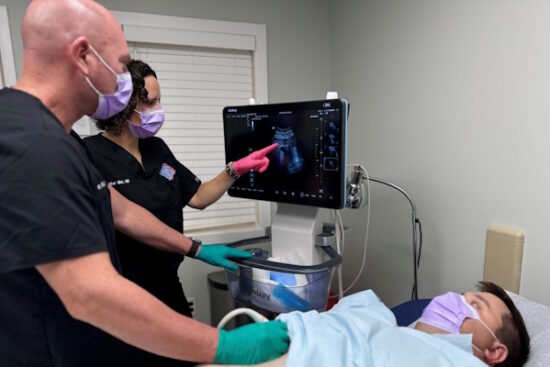
What types of ultrasounds might an urgent care offer?
An urgent care may offer a limited bedside ultrasound or arrange a formal diagnostic ultrasound. These are not always the same service.
Point-of-care ultrasound
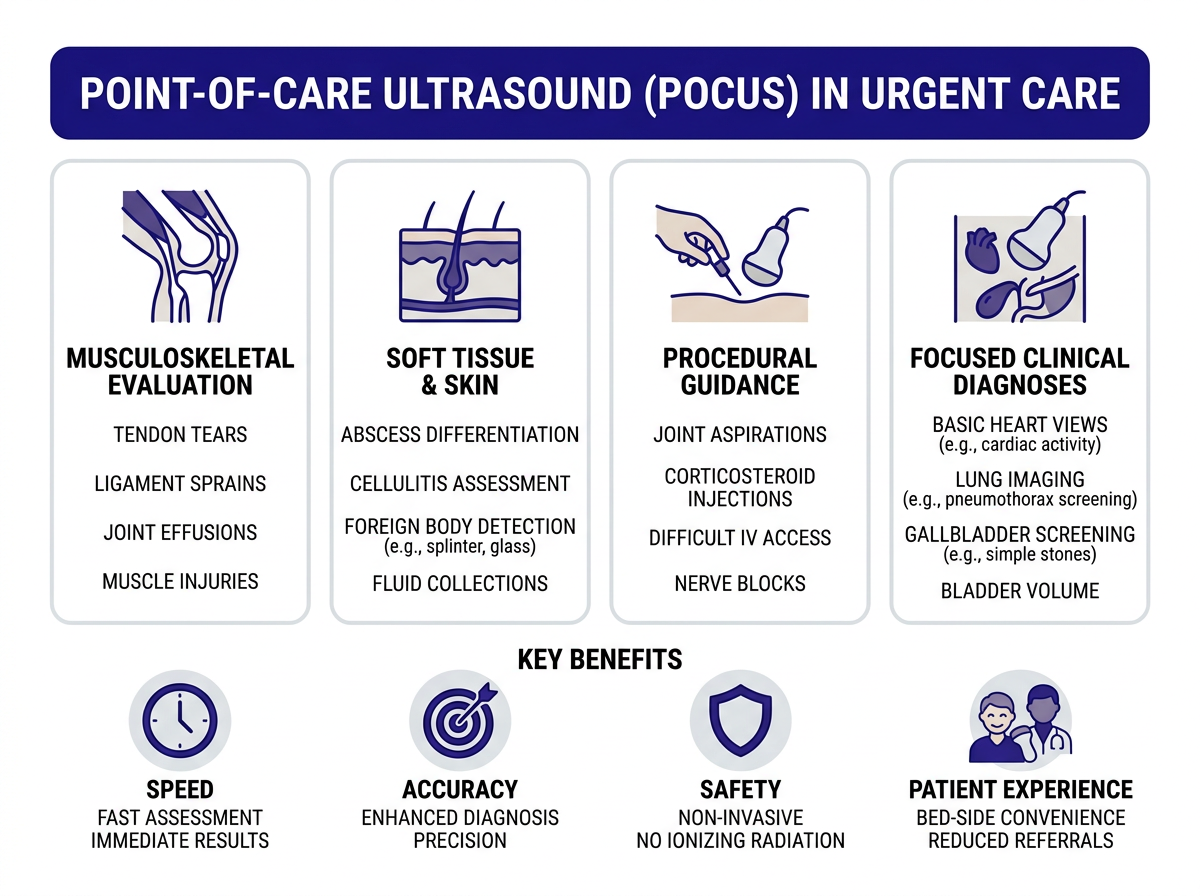
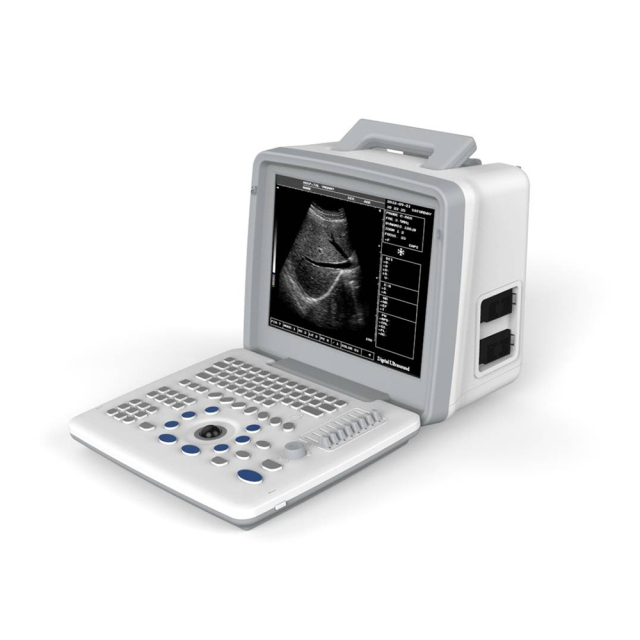
Point-of-care ultrasound uses a small probe to create images during the visit. A trained clinician performs the scan and often reviews the result right away.
Urgent care clinicians may use POCUS to look for:
- Fluid in the abdomen after an injury
- A bladder that is very full or not emptying
- Gallbladder problems
- Kidney swelling
- Lung fluid or signs of a collapsed lung
- A soft-tissue abscess
- A foreign object under the skin
- A blood clot in certain leg veins
- A pregnancy in early pregnancy care, when appropriate
- Fluid around the heart
POCUS can help answer a focused question. It may not provide the full images or detailed report needed for a final diagnosis.
Formal diagnostic ultrasound
A formal ultrasound is usually done by a sonographer or trained imaging professional. A radiologist then reviews the images and sends a report to the ordering clinician.
A formal study may include:
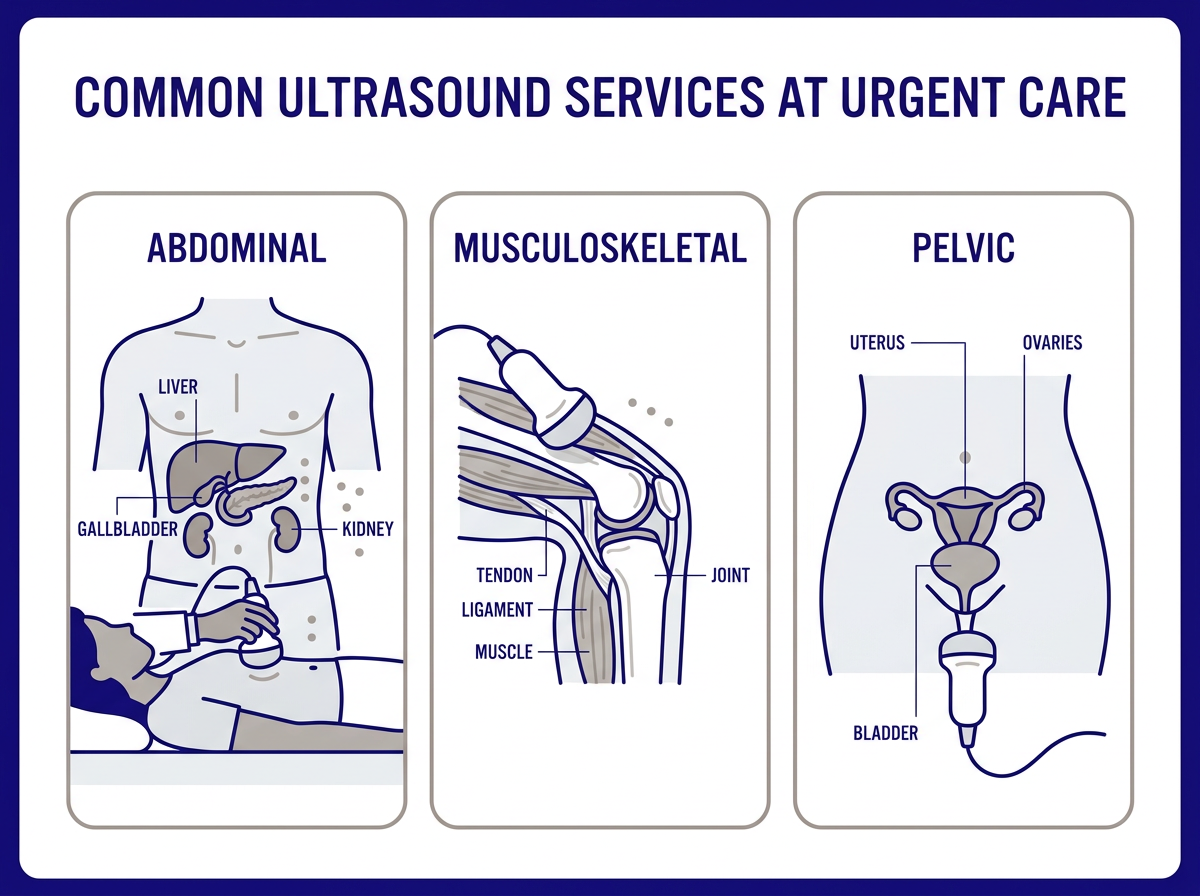
- Abdominal ultrasound
- Pelvic ultrasound
- Transvaginal ultrasound
- Pregnancy ultrasound
- Testicular ultrasound
- Breast ultrasound
- Thyroid ultrasound
- Venous Doppler ultrasound for blood flow
- Soft-tissue ultrasound
The exact services depend on the urgent care network, its equipment, and its relationship with an imaging center.
Why do some urgent cares not offer ultrasounds?
Ultrasound requires more than a machine. The clinic also needs trained staff, proper protocols, image storage, quality checks, and a plan for clinical review.
Some urgent cares do not offer ultrasound because:
- They do not have an ultrasound machine.
- No trained clinician or sonographer is available.
- The clinic cannot provide the type of scan needed.
- A radiologist is not available to interpret the images.
- The scan requires special equipment or a private procedure room.
- The clinic believes the symptoms need emergency evaluation instead.
- The clinic can order the test but does not perform it on site.
A clinic may also advertise “ultrasound” but mean a limited bedside scan. That may not be the same as a complete pregnancy, abdominal, pelvic, or vascular study.
Ask this direct question: “Do you perform a formal diagnostic ultrasound for my condition, or only a limited point-of-care scan?”
Can urgent care do an ultrasound for pregnancy?
Some urgent cares can check for an early pregnancy or perform a limited pregnancy ultrasound. Many cannot provide a full dating scan, anatomy scan, or detailed evaluation of pregnancy complications.
An urgent care may use ultrasound to look for:
- A pregnancy inside the uterus
- A heartbeat, depending on the stage of pregnancy
- Pregnancy-related bleeding
- Fluid or other urgent findings in the pelvis
A very early pregnancy may not be visible on ultrasound. The result can depend on the pregnancy’s age, the type of scan, and the level of a hormone called human chorionic gonadotropin, or hCG.
Urgent care may not be the right setting for pregnancy symptoms that could signal an emergency. Go to an emergency department or call 911 for severe one-sided pelvic pain, heavy bleeding, fainting, shoulder pain with abdominal pain, severe weakness, or trouble breathing. These symptoms can occur with a serious complication, including ectopic pregnancy.
The American College of Emergency Physicians and patient guidance from RadiologyInfo.org support using appropriate imaging and urgent evaluation when symptoms may be dangerous. An ultrasound cannot safely rule out every emergency by itself.

Can urgent care do an ultrasound for stomach pain?
Sometimes, but the answer depends on the pain and the equipment available.
An urgent care may use ultrasound to check for certain causes of abdominal pain, such as:
- Gallstones
- Gallbladder inflammation
- Kidney swelling
- Fluid in the abdomen
- An abdominal aortic concern in selected patients
- A superficial lump or abscess
Ultrasound may not be the best test for every stomach problem. A clinician may recommend a CT scan, laboratory tests, an X-ray, or an emergency evaluation instead. Severe abdominal pain can come from appendicitis, bowel blockage, internal bleeding, or other conditions that may need more than an urgent care can provide.
Seek emergency care for severe or worsening pain, a hard or swollen abdomen, repeated vomiting, black or bloody stool, fainting, confusion, chest pain, or a high fever with serious illness. Do not delay emergency care while trying to find an urgent care that offers ultrasound.

Can urgent care do a pelvic, testicular, or breast ultrasound?
Urgent care may be able to order these tests, but it may not perform them on site.
Pelvic ultrasound
Pelvic ultrasound can examine the uterus, ovaries, and nearby structures. It may be used for pelvic pain, abnormal bleeding, ovarian cyst concerns, or pregnancy-related symptoms.
Some pelvic exams need a transvaginal ultrasound. This uses a covered probe placed inside the vagina. Not every urgent care has the equipment, trained staff, privacy setup, or consent process needed for this exam.
Testicular ultrasound
A testicular ultrasound can help assess swelling, pain, a lump, or reduced blood flow. Sudden and severe testicular pain is an emergency because testicular torsion can cut off blood flow.
Do not wait for an urgent care appointment if the pain began suddenly, is severe, or comes with nausea or vomiting. Go to an emergency department at once.
Breast ultrasound
Breast ultrasound is usually performed in an imaging center. It may help assess a lump or an unusual finding, but it is not a complete replacement for mammography when mammography is recommended.
An urgent care may examine the area, treat an infection or abscess, and give you an imaging referral. Ask where the test will be performed and how you will receive the results.

How is an urgent care ultrasound different from an imaging-center ultrasound?
The main difference is the purpose, operator, and interpretation process.
| Feature | Urgent care ultrasound | Imaging-center ultrasound |
|---|---|---|
| Main purpose | Answer a focused question during a visit | Complete a planned diagnostic study |
| Person doing the scan | Clinician or sonographer, depending on the site | Usually a trained sonographer |
| Image review | May be immediate or limited | Usually reviewed by a radiologist |
| Report | May be brief or part of the visit record | Usually includes a formal radiology report |
| Scope | Often limited | Usually follows a defined exam protocol |
| Follow-up | May require referral | Often links to the ordering clinician and medical record |
This table describes common patterns, not a rule for every clinic. Some urgent care networks have full imaging services, while others only use bedside ultrasound.
A limited scan can be useful when the clinician needs a quick answer. A formal study is usually better when the diagnosis depends on detailed images, measurements, comparison with older scans, or a specialist report.
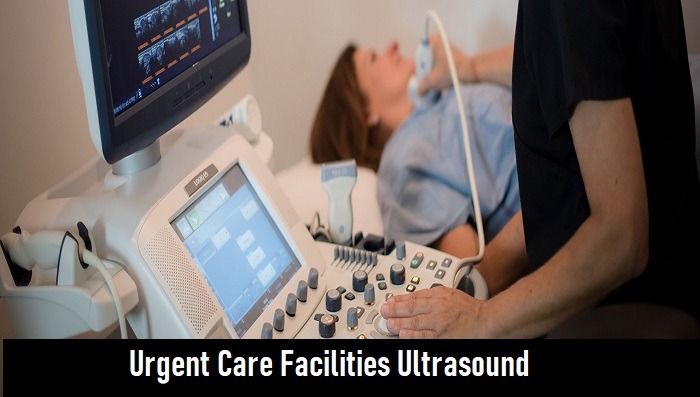
What should you ask before visiting an urgent care?
Call ahead if ultrasound will affect your decision to visit. Use clear, specific questions:
- Do you perform ultrasounds at this location today?
- What body area do you scan?
- Is it a point-of-care scan or a formal diagnostic ultrasound?
- Who performs and reads the scan?
- Will I receive a written report?
- Do I need an appointment or a referral?
- Can you perform the scan during the same visit?
- What preparation is required?
- Do I need a full bladder or an empty stomach?
- What will I pay if insurance does not cover it?
- Will you send me to a hospital or imaging center if you cannot complete it?
Preparation varies. A pelvic ultrasound may require a full bladder. An abdominal ultrasound may require fasting. Do not fast or delay fluids unless the clinic gives you instructions.
Bring your medication list, insurance card, identification, prior imaging reports, and information about the start and severity of your symptoms.

How much does an urgent care ultrasound cost?
There is no single nationwide price for an urgent care ultrasound. Your total cost may include:
- The urgent care visit
- The ultrasound procedure
- A radiologist’s interpretation fee
- Laboratory tests
- A referral or transfer
- Your insurance copay, deductible, or coinsurance
Insurance rules vary by plan and medical reason for the test. A scan ordered for a documented symptom may be covered differently from a screening scan.
Before the visit, ask for an estimate of the total expected cost, not just the office visit fee. If the urgent care sends you to an outside imaging center, ask whether that center is in network.
For an exact estimate, contact your insurer and ask about the procedure code used by the clinic. The urgent care’s billing office may also provide a written estimate.

When should you choose the emergency room instead?
Choose the emergency department when symptoms could be life-threatening or when you may need advanced imaging, surgery, monitoring, or specialist care.
Go to an emergency department or call 911 for:
- Severe trouble breathing
- Chest pain or pressure
- Fainting or new confusion
- Signs of stroke
- Heavy bleeding
- Severe abdominal or pelvic pain
- Sudden severe testicular pain
- A serious injury
- Severe pain during pregnancy
- Heavy vaginal bleeding during pregnancy
- A cold, pale, numb, or weak limb
- A rapidly spreading infection
- Persistent vomiting with dehydration
Urgent care is designed for problems that need prompt treatment but are not usually life-threatening. It is not a substitute for emergency care when a person may need rapid imaging, surgery, blood products, or hospital monitoring.
Ultrasound is generally considered safe when medically indicated. The U.S. Food and Drug Administration advises that ultrasound uses sound waves rather than ionizing radiation, but it should still be used by trained professionals for appropriate medical reasons.

What happens if the urgent care cannot do the ultrasound?
The clinician may refer you to an imaging center, contact your primary care clinician, or send you to the emergency department.
Ask these questions before leaving:
- Where should I have the scan?
- How soon should it happen?
- Do I need a written order?
- Who will review the result?
- How will I receive the report?
- What symptoms mean I should go to the emergency room?
- Should I avoid food or drink before the scan?
If your symptoms worsen while waiting, do not rely on the referral alone. Seek emergency care when red-flag symptoms appear.
A referral is not the same as a completed test. Confirm the appointment, location, preparation instructions, and follow-up plan.
Common mistakes to avoid
People often lose time because they assume every urgent care provides the same services. Avoid these common errors:
- Assuming “urgent care” means full imaging: Many clinics do not have ultrasound equipment.
- Failing to ask what type of ultrasound is offered: A limited scan may not answer the question you have.
- Waiting for urgent care with emergency symptoms: Severe pain, fainting, heavy bleeding, and breathing trouble need emergency evaluation.
- Skipping preparation instructions: Food or bladder instructions can affect image quality.
- Leaving without a follow-up plan: Ask who will read the images and contact you with results.
- Choosing a clinic based only on a low visit fee: An outside imaging bill may raise the final cost.
- Treating a normal scan as a complete diagnosis: Ultrasound cannot detect every cause of pain or illness.
The best choice depends on your symptoms, how quickly the test is needed, and whether you need a limited check or a formal diagnostic study.

Frequently asked questions
Do all urgent cares have ultrasound machines?
No. Some urgent cares have ultrasound equipment, while others only provide examinations, X-rays, or laboratory testing. Services can differ between locations in the same health system.
Can I walk into urgent care and request an ultrasound?
You can ask, but the clinician decides whether ultrasound is medically appropriate. The clinic may not offer the needed scan or may refer you elsewhere.
Does urgent care do ultrasounds for kidney stones?
Some clinics may use ultrasound to look for kidney swelling, but ultrasound does not find every kidney stone. Depending on your symptoms, a clinician may recommend a CT scan, laboratory tests, or emergency care.
Can urgent care detect an ectopic pregnancy?
An urgent care may perform a pregnancy test and, in some cases, an ultrasound. However, an early or unclear scan cannot rule out ectopic pregnancy. Severe pain, fainting, shoulder pain, or heavy bleeding requires emergency evaluation.
Do I need a referral for an ultrasound?
It depends on the imaging center, insurance plan, and type of ultrasound. Some centers require an order from a licensed clinician. Call before scheduling.
Bottom line
Some U.S. urgent cares do ultrasounds, but many do not. A clinic may offer a limited point-of-care scan, a formal diagnostic ultrasound, or only a referral to an imaging center.
Call before you go and ask what type of ultrasound is available, who reads it, what preparation is required, and what the full cost may be. If you have severe pain, heavy bleeding, fainting, breathing trouble, sudden testicular pain, or other emergency symptoms, go directly to the emergency department instead of waiting for urgent care.