

Limp mode is a built-in safety setting that limits a car’s power when its computer detects a serious fault.
If your car suddenly feels slow, refuses to shift, or will not rev past a certain point, you may be dealing with limp mode. As a diagnostic writer and automotive enthusiast, I have seen how confusing this feature can feel at first. The good news is that limp mode is usually a warning system, not a complete engine failure. This guide explains what limp mode on a car means, why it happens, how to drive safely, and how to fix the root problem.
What Is Limp Mode on a Car?
Limp mode is an emergency operating setting controlled by the engine control module, transmission control module, or another vehicle computer. The system activates it when it detects a fault that could damage the engine, transmission, emissions system, or other parts.
When limp mode starts, the car may reduce engine power and limit vehicle speed. It may also hold the transmission in one gear, often second or third, to prevent further damage.
The name sounds dramatic, but limp mode is meant to help you reach a safe place or repair shop. Think of it as the car lowering its voice and speed because something needs attention.
Common signs include:
• Reduced engine power
• Slow acceleration
• A limited top speed
• The engine refusing to rev beyond a set point
• A transmission stuck in one gear
• Harsh or delayed gear changes
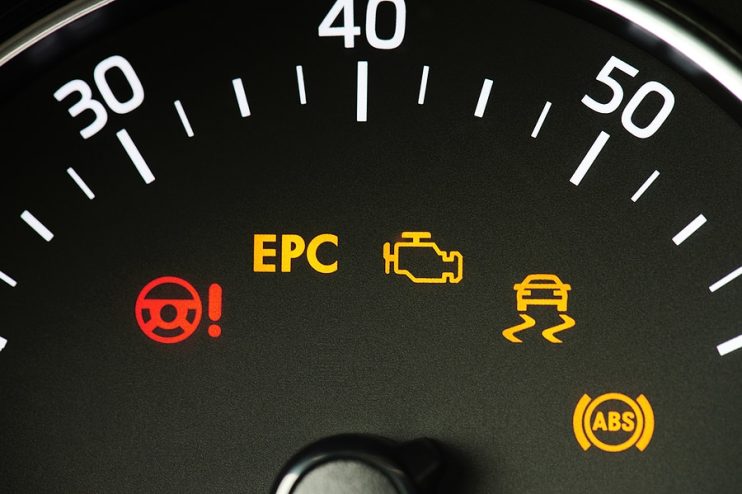
• An illuminated check engine light
• Warning messages such as “Reduced Power” or “Transmission Fault”
The exact behavior differs by make, model, engine, and fault. Some cars enter limp mode after one serious error. Others need several failed readings before the computer takes action.
How Does Limp Mode Work?
Modern cars use many sensors to monitor engine and transmission operation. These sensors send data to control modules many times each second.
The computer compares the sensor readings with expected values. If a reading is unsafe or impossible, the computer stores a diagnostic trouble code, or DTC. It may then activate limp mode to protect the vehicle.
For example, the computer may detect:
• Excessive turbocharger boost
• Very low transmission fluid pressure
• An incorrect throttle position
• A failing crankshaft position signal
• Overheating
• A serious misfire
• A problem with the electronic throttle system
The computer may respond by closing the throttle, reducing fuel, limiting turbo boost, or changing transmission behavior. In some cases, it also turns off cruise control or disables certain comfort features.
Limp mode is not a single standard setting. Each manufacturer designs its own protection strategy. One car may limit the engine to 2,500 revolutions per minute, while another may allow normal engine speed but limit the transmission to one gear.
This explains why two cars with similar warning lights can behave very differently. The stored trouble code is more useful than the dashboard symptom alone.

What Causes Limp Mode on a Car?
Many different faults can trigger limp mode. Some are simple electrical problems. Others need immediate mechanical attention.
Engine and Sensor Problems
A faulty sensor can send incorrect information to the engine computer. The computer may enter limp mode because it cannot safely control the engine.
Common sensor-related causes include:
• Mass airflow sensor failure
• Throttle position sensor failure
• Accelerator pedal position sensor failure
• Manifold absolute pressure sensor problems
• Crankshaft or camshaft position sensor faults
• Oxygen sensor or air-fuel sensor faults
• Coolant temperature sensor errors
A dirty mass airflow sensor, damaged wiring, or a loose connector can create similar symptoms. The sensor itself may not always be the real cause.
Electronic Throttle Problems
Many modern vehicles use electronic throttle control instead of a direct cable. The accelerator pedal sends an electronic signal to the computer, and the computer controls the throttle motor.
If the pedal sensor and throttle sensor do not agree, the system may reduce power. This safety response helps prevent unwanted acceleration.
A dirty throttle body, weak throttle motor, broken wire, or low system voltage may cause this problem.
Transmission Problems
Automatic transmissions often have their own protection mode. The vehicle may stay in one gear when the computer detects a pressure, speed, or shift problem.
Possible causes include:
• Low or dirty transmission fluid
• A failed shift solenoid
• A bad transmission speed sensor
• Valve body wear
• Clutch damage
• Overheating
• Internal transmission failure
Transmission limp mode can feel like an engine problem because the car may barely accelerate. Checking the transmission fault codes is important.
Turbocharger and Boost Faults
Turbocharged engines rely on accurate boost control. Too much boost can damage the engine, while too little boost can point to a leak or failed component.
A damaged boost hose, stuck wastegate, faulty boost control solenoid, or bad pressure sensor may trigger limp mode. Diesel engines can also enter limp mode because of problems with the diesel particulate filter or exhaust gas recirculation system.
Overheating and Low Fluid Levels
High engine temperature can cause the computer to reduce power. Some cars show a temperature warning before entering a reduced-power state.
Low engine oil, low coolant, or low transmission fluid can also create dangerous conditions. A fluid warning should never be ignored. Driving farther may turn a small repair into major engine or transmission damage.
Electrical and Battery Issues
Modern vehicle computers need stable voltage. A weak battery, failing alternator, poor ground, or corroded connection can produce several unrelated warning codes.
This is one reason limp mode can appear after a dead battery or jump-start. The stored codes may reflect low voltage rather than several failed parts.

What Does Limp Mode Feel Like While Driving?
Limp mode often feels like the car has lost its strength. You may press the accelerator, but the vehicle responds slowly.
Some drivers describe it as towing a heavy trailer. Others say the car feels stuck in a low gear. Both descriptions can be accurate.
You may notice:
• The engine will not rev freely
• The car struggles to climb hills
• The transmission will not shift normally
• The throttle feels delayed
• The vehicle cannot reach highway speed
• The check engine light comes on
• The engine runs roughly or shakes
A flashing check engine light is more urgent than a steady light. It can indicate a severe misfire that may damage the catalytic converter. Reduce speed, avoid heavy acceleration, and stop when it is safe.
If the oil pressure, coolant temperature, brake, or charging warning light appears, pull over as soon as possible. Limp mode does not make it safe to continue driving when a critical warning is active.

Can You Still Drive a Car in Limp Mode?
You can often drive a short distance in limp mode, but only if the car feels stable and no critical warning light is on. The safest goal is to reach a nearby repair facility or a secure parking area.
Avoid:
• High-speed driving
• Long trips
• Heavy traffic when possible
• Steep hills
• Towing or hauling
• Hard acceleration
• Repeatedly turning the ignition off and on to hide the problem
A car in limp mode may not accelerate when you need it to. This creates a safety risk when entering a highway or crossing a busy road.
Stop driving and arrange a tow if the engine is overheating, the oil pressure is low, the car is smoking, the transmission makes loud noises, or the engine runs very roughly.
One practical lesson is worth remembering: a temporary restart can make the car feel normal, but it does not prove the problem is fixed. The computer may clear the reduced-power behavior until it sees the fault again.
How to Get a Car Out of Limp Mode
A restart may temporarily reset limp mode. Turn the vehicle off, wait a few minutes, and start it again. This can help confirm that the condition is computer-controlled, but it is not a repair.
Use this process:
Park safely and switch off the engine.
Check the dashboard for oil, coolant, brake, and battery warnings.
Look for low oil or coolant if the engine is cool.
Inspect visible hoses, wires, and electrical connectors.
Start the car again and note whether the symptoms remain.
Scan the vehicle for diagnostic trouble codes.
Repair the cause instead of replacing parts at random.
Clear the codes only after the repair.
A basic OBD-II scanner can read many engine codes on vehicles sold in the United States since 1996. However, a simple scanner may not access transmission, ABS, airbag, or manufacturer-specific systems.
A professional scan tool can view live data. This helps a technician compare the accelerator pedal signal, throttle angle, boost pressure, fuel trim, battery voltage, and transmission speed readings.
Disconnecting the battery may erase useful information and reset learned settings. It can also cause radio, window, or idle issues on some vehicles. Scanning the car before disconnecting the battery is usually the better approach.
How Mechanics Diagnose Limp Mode
Good diagnosis starts with evidence. A warning light alone does not identify the failed part.
A technician may follow these steps:
1. Confirm the Complaint
The technician checks whether the vehicle has reduced power, harsh shifting, a limited engine speed, or another symptom. A short road test may help, but only when it is safe.
2. Read Stored Codes
The scan tool records fault codes and freeze-frame data. Freeze-frame data shows conditions such as engine speed, temperature, vehicle speed, and load when the fault occurred.
3. Check Basic Conditions
The technician inspects fluid levels, battery voltage, fuses, connectors, vacuum hoses, intake pipes, and visible wiring.
4. Test Live Data
Sensor readings are compared with each other and with manufacturer specifications. For example, the throttle position should match the accelerator pedal command.
5. Test the Suspected Circuit
A technician may use a multimeter, pressure gauge, smoke machine, or oscilloscope. These tests can reveal wiring faults, air leaks, low fuel pressure, or sensor signal problems.
6. Verify the Repair
After the repair, the codes are cleared and the vehicle is driven through a suitable test cycle. The system must be checked again to make sure the fault does not return.
This process matters because the code often identifies the system that noticed the problem, not the exact part that failed. Replacing every part named in a code can waste money.
Common Fixes for Limp Mode
The correct repair depends on the cause. Some problems are inexpensive, while others require major work.
Possible repairs include:
• Cleaning or replacing a mass airflow sensor
• Repairing damaged wiring
• Replacing a throttle body
• Replacing an accelerator pedal sensor
• Repairing a boost hose
• Replacing a turbocharger control solenoid
• Servicing or repairing a transmission
• Replacing a failed speed sensor
• Correcting low battery voltage
• Replacing a weak alternator
• Repairing an engine misfire
• Cleaning or replacing an exhaust gas recirculation valve
• Servicing a blocked diesel particulate filter
Do not use a sensor cleaner unless the product is designed for that sensor. For example, some cleaners can damage sensitive electronic components.
Also, do not ignore fluid type. Automatic transmissions often require a specific fluid. Using the wrong fluid can cause poor shifting or internal damage.
How Much Does Limp Mode Repair Cost?
The cost can range from almost nothing to several thousand dollars. The range is wide because limp mode describes a protective response, not one specific failure.
Typical cost factors include:
• Diagnostic fees
• Vehicle make and model
• Sensor or wiring repairs
• Labor rates in your area
• Transmission or turbocharger damage
• Required software updates
• Fluid and filter service
A loose connector may cost little to repair. A failed throttle body may cost several hundred dollars. Internal transmission damage can cost much more.
Ask the repair shop for the exact trouble codes, test results, and recommended repair. A trustworthy shop should explain why a part failed and how the test supports the recommendation.
How to Prevent Limp Mode on a Car
You cannot prevent every electronic fault, but regular care lowers the risk.
Follow the maintenance schedule in the owner’s manual. Pay attention to the service intervals for engine oil, coolant, air filters, spark plugs, and transmission fluid.
Helpful habits include:
• Fixing warning lights early
• Checking fluid levels regularly
• Keeping battery terminals clean
• Replacing a weak battery before winter
• Inspecting intake and turbo hoses
• Using the correct fuel and fluids
• Avoiding flooded roads when possible
• Keeping software updates current
• Repairing rough running without delay
Do not treat a check engine light as a harmless decoration. A small issue can become a larger problem when the vehicle continues to operate with incorrect fuel, temperature, or boost control.
Limp Mode on a Car: Mistakes to Avoid
The most common mistake is clearing the warning light without finding the cause. This may hide valuable diagnostic information and allow damage to continue.
Another mistake is assuming that the most expensive part must have failed. A damaged wire or low battery can imitate a major engine or transmission problem.
Avoid these actions:
• Replacing parts based only on a code description
• Driving for weeks with reduced power
• Ignoring overheating
• Using the wrong transmission fluid
• Revving the engine repeatedly while it is in limp mode
• Disconnecting the battery before scanning the car
• Buying unverified electronic parts
A simple diagnostic check can prevent unnecessary repairs. When the problem is complex, use a qualified technician who has access to the right service information.
Limp Mode on a Car vs. Reduced Power Mode
The terms limp mode and reduced power mode are often used in the same way, but manufacturers may define them differently.
Reduced power mode usually means the engine computer limits throttle opening or fuel delivery. Limp mode may also include a transmission gear limit, lower engine speed, and disabled systems.
Some vehicles use messages such as:
• Engine power reduced
• Transmission fault
• Safe mode
• Fail-safe mode
• Service engine soon
The message wording does not matter as much as the symptoms and stored codes. The owner’s manual can explain the exact warning for your vehicle.
Frequently Asked Questions About What Is Limp Mode on a Car
What is limp mode on a car?
Limp mode is a protective setting that limits engine power, speed, or transmission operation after the vehicle computer detects a serious fault. It helps reduce the chance of further damage and allows the driver to reach a safe location.
Can low transmission fluid cause limp mode?
Yes, low or incorrect transmission fluid can reduce hydraulic pressure and cause shifting problems. The transmission computer may activate limp mode to protect internal parts.
Will disconnecting the battery fix limp mode?
Disconnecting the battery may reset the warning temporarily, but it does not repair the original fault. It can also erase useful diagnostic data and reset some vehicle settings.
Is it safe to drive in limp mode?
A short drive to a nearby repair shop may be acceptable if the vehicle runs smoothly and no critical warning light is active. Do not continue driving if the engine overheats, oil pressure drops, the car smokes, or the vehicle cannot maintain a safe speed.
How long can a car stay in limp mode?
There is no safe universal time limit. The car may remain in limp mode until the fault is repaired, and continued driving can turn a minor issue into expensive damage.
Can a bad battery cause limp mode?
Yes, low voltage from a weak battery, failing alternator, or poor electrical connection can create false or unrelated fault codes. Testing the charging system is an important part of diagnosis.
Does limp mode mean the transmission is bad?
Not always. Limp mode can come from an engine sensor, throttle system, wiring fault, low voltage, or overheating. A transmission code and proper testing are needed before blaming the transmission.
How do I know if limp mode is active?
Common clues include weak acceleration, a fixed gear, limited engine speed, a reduced-power message, or a check engine light. A diagnostic scan can confirm whether the computer has stored related fault codes.
Conclusion
Limp mode is the car’s way of protecting itself when a major system is outside its safe operating range. It can result from sensor faults, throttle problems, low voltage, overheating, boost issues, or transmission trouble.
Treat reduced power as a warning, not an inconvenience. Check for critical dashboard lights, avoid hard driving, scan the vehicle, and repair the cause instead of simply resetting the computer. If this guide helped you understand what is limp mode on a car, share it with another driver or explore your vehicle’s owner’s manual for model-specific advice.
