

Most electric cars have a single-speed transmission, although some models use two or more gears.
The answer to “do electric cars have transmissions” depends on how you define transmission. Electric vehicles use a drive unit that sends motor power to the wheels, but most do not need the complex multi-gear systems found in gasoline cars. This guide explains the technology, driving feel, maintenance needs, exceptions, and what it means when you shop for an EV.
:max_bytes(150000):strip_icc()/GettyImages-1180401717-ac0e5936c7e84455821ef15764a71dc6.jpg)
Do electric cars have transmissions?
Yes, most electric cars have a transmission of some kind. However, it is usually a simple single-speed transmission, often called a reduction gearbox.
A gasoline engine works across a narrow range of useful speeds. It needs several gears to start the car, climb hills, pass traffic, and cruise on the highway. An electric motor works across a much wider speed range and makes strong torque from very low speed.
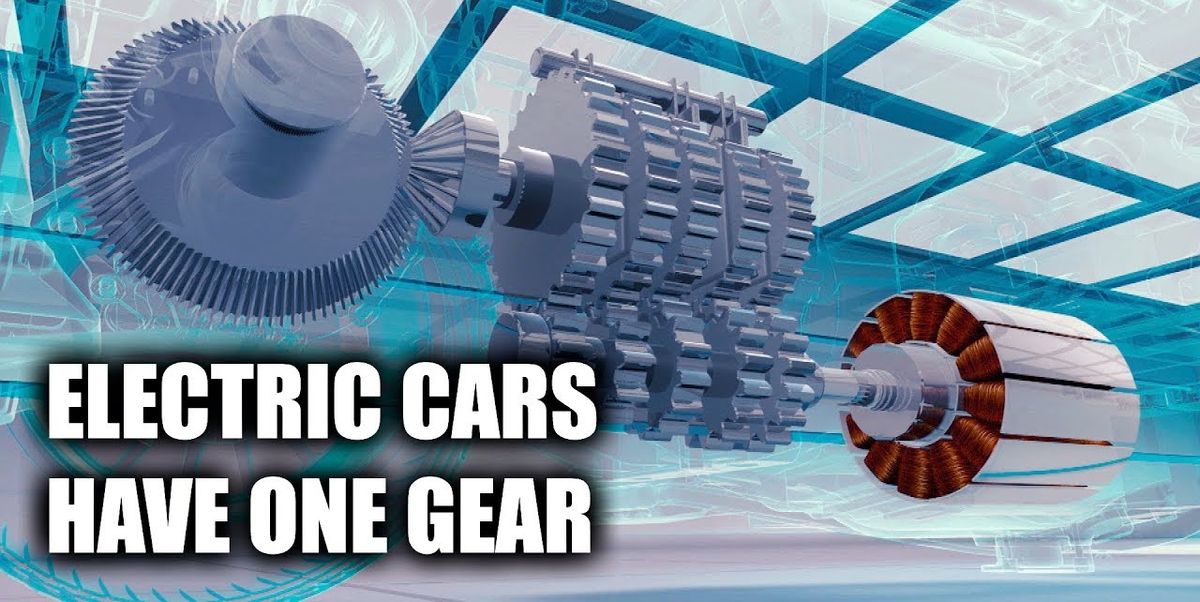
Because of this, an EV can often use one fixed gear ratio. The motor spins faster as vehicle speed rises, while the reduction gear lowers motor speed and increases torque at the wheels.
When people ask, “do electric cars have transmissions,” they often mean, “Do EVs have the same automatic gearbox as a gas car?” In most cases, the answer is no.
An electric car usually does not have:
• A traditional automatic transmission with many forward gears
• A manual transmission with a clutch pedal
• A torque converter
• A complex hydraulic valve body
• Regular gear shifts that the driver can feel
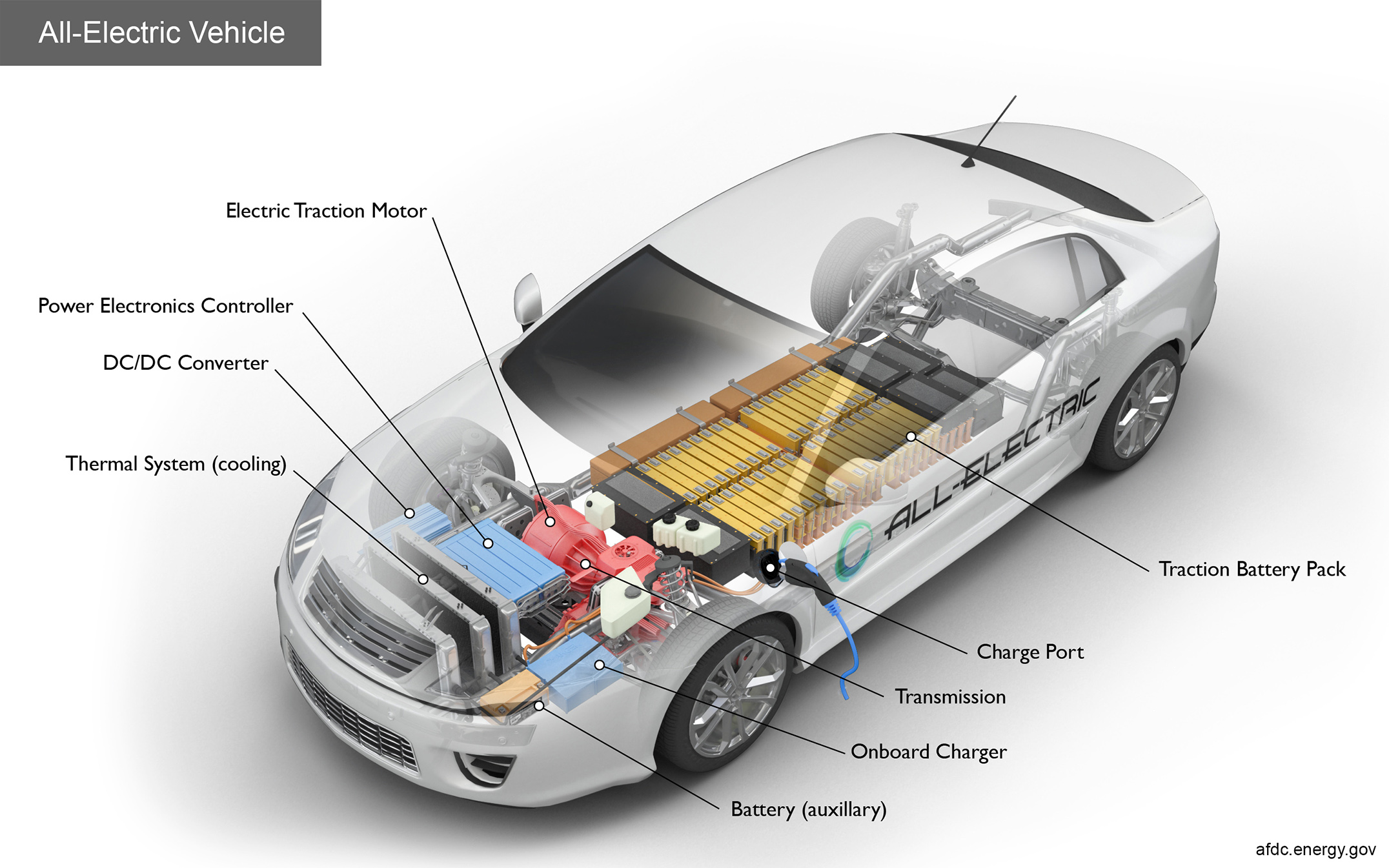
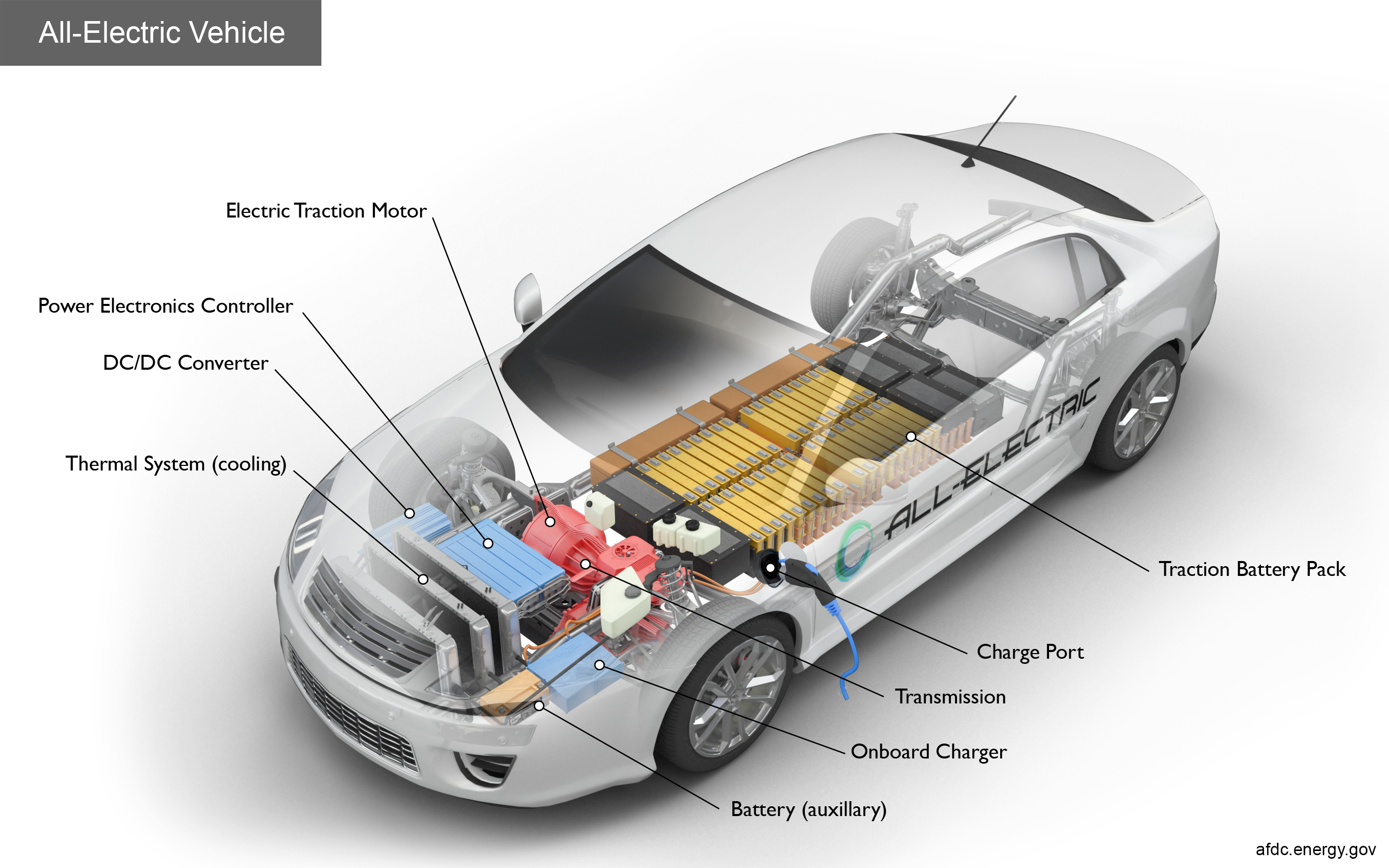
Instead, it normally has an electric motor, an inverter, a differential, and a fixed reduction gear.

How an electric car drivetrain works
An EV drivetrain is simpler than a conventional powertrain. The battery stores direct current electricity, but the motor often needs alternating current. The inverter manages this energy and controls motor speed and torque.
Power flows through the system in a simple path:
- The battery sends electricity to the inverter.
- The inverter changes and controls the electrical current.
- The motor turns electrical energy into rotation.
- The reduction gear lowers motor speed.
- The differential sends power to the drive wheels.
This setup feels smooth because the motor does not need to pause and change gears. The vehicle can respond almost at once when you press the accelerator.
A useful comparison is a powerful electric fan. It can spin at many speeds without a stack of gears. An EV motor works in a similar way, but with far more power and precise electronic control.
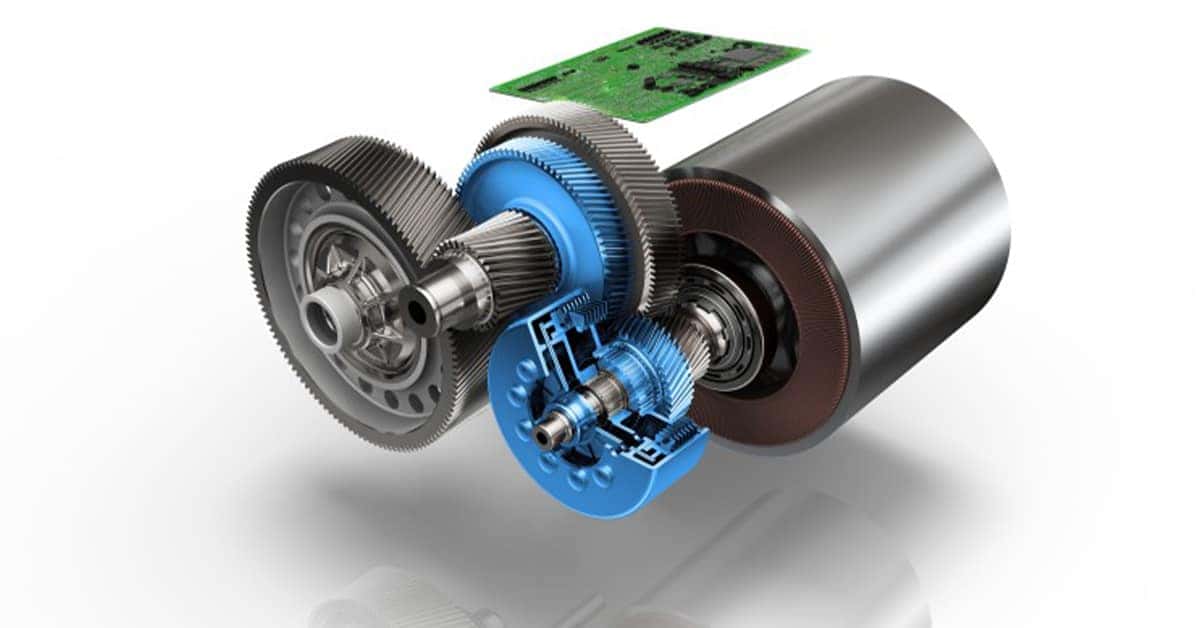
The motor and reduction gear are often packaged together in a unit called an e-axle or drive unit. Front wheel drive EVs may place this unit near the front axle. Rear wheel drive models may place it near the rear axle. All wheel drive EVs usually have separate drive units for the front and rear axles.
Why most EVs use a single-speed transmission
Electric motors produce usable torque across a broad speed range. This is the main reason most EVs do not need multiple gears.
At low speed, an electric motor can deliver strong torque without waiting for engine revs to rise. That is why many EVs feel quick when leaving a stoplight. At higher speeds, the motor can continue spinning rapidly while the fixed gear ratio keeps the wheels moving efficiently.
A single-speed design offers several benefits:
• Smooth acceleration with no shift shock
• Fewer moving parts
• Lower mechanical losses
• Less maintenance
• Reduced weight and size
• Easier control through software
The U.S. Department of Energy describes EV powertrains as simpler than internal combustion powertrains because they use fewer moving parts. This simpler layout can improve efficiency and reduce some service needs.
There is a tradeoff. A fixed gear ratio must balance launch power, highway speed, efficiency, noise, and motor limits. Engineers choose this ratio carefully. A poor choice could hurt acceleration or top speed, but modern motor control systems make the compromise work very well.
Do electric cars have automatic transmissions?
Most electric cars do not have automatic transmissions in the traditional sense. They may have a selector marked Park, Reverse, Neutral, and Drive, but that does not mean they contain a conventional automatic gearbox.
In a gas vehicle, an automatic transmission changes gears as speed and engine load change. It may use planetary gears, clutches, bands, hydraulic pressure, and a torque converter.
An EV usually sends power through a fixed gear reduction system. The driver selects Drive, and the vehicle moves without gear changes.
Some people describe this system as an “automatic transmission” because the car drives without a clutch pedal or manual shifting. That description is understandable, but it is not technically precise.
The more accurate terms are:
• Single speed transmission
• Reduction gearbox
• Electric drive unit
• Fixed ratio transmission
• E-axle
So, do electric cars have transmissions? Yes, in the broad sense. Do they have normal automatic transmissions? Usually not.
Are there electric cars with multiple gears?
Yes. A small number of EVs use two speed or multi speed transmissions.
Porsche uses a two speed system in some versions of the Taycan. One gear helps provide strong launch performance, while the second gear supports efficient high speed driving. Other high performance and commercial EVs have also tested or used multi speed designs.
Multiple gears can help with:
• Very fast acceleration
• High top speed
• Highway efficiency
• Heavy towing
• Large commercial vehicles
• Performance driving
Still, extra gears add weight, cost, parts, and possible service needs. For many passenger EVs, the benefits are not large enough to justify the added complexity.
This is why the answer to “do electric cars have transmissions” is not identical for every model. Most use one speed, but some specialized EVs use more than one gear.
:max_bytes(150000):strip_icc()/GettyImages-1158759859-975a67c24b3342b890394278b84a58f4.jpg)
How EV transmissions compare with gas car transmissions
The biggest difference is the number of parts and the way power is delivered.
A gas car needs a transmission because its engine cannot provide strong torque across the full range of vehicle speeds. The transmission keeps the engine in a useful operating range.
An electric motor can spin from zero rpm to a very high speed. It also produces immediate torque. That removes much of the need for gear changes.
| Feature | Most electric cars | Gasoline cars |
|---|---|---|
| Typical gear count | One fixed ratio | Several forward gears |
| Clutch pedal | No | Only in manual cars |
| Torque converter | Usually no | Common in automatics |
| Gear shifts | Usually none | Frequent |
| Transmission fluid | Limited or specialized | Common service item |
| Low speed torque | Strong | Depends on engine and gearing |
| Power delivery | Smooth and direct | Can vary during shifts |
This difference explains the quiet, seamless feeling of an EV. There is no engine vibration, no shift delay, and no sudden change in engine sound between gears.
What does an EV transmission feel like while driving?
An EV with a single speed transmission feels smooth and steady. Press the accelerator, and the motor sends power to the wheels without a noticeable shift.
At low speed, the car may feel unusually responsive. This is because the motor can create torque right away. At highway speed, acceleration may become less dramatic as the motor approaches its efficient operating limit.
Many EVs also use regenerative braking. When you lift off the accelerator, the motor can work like a generator. It slows the car and sends some energy back to the battery.
This creates one pedal driving in some models. With practice, you can control much of your speed by adjusting the accelerator. The car may slow down strongly without pressing the brake pedal.
One lesson many new EV drivers learn is to start gently. Electric torque is easy to underestimate, especially in a powerful model. Smooth inputs improve comfort, reduce tire wear, and may help preserve energy.
Do electric cars need transmission fluid?
Most EVs use a small amount of specialized lubricant in the drive unit. However, this is not the same service schedule as transmission fluid in a gasoline car.
Some manufacturers call for drive unit fluid inspections or replacement. Others describe the fluid as maintenance free under normal conditions. The correct schedule depends on the vehicle, its design, climate, towing use, and driving conditions.
Always check the owner’s manual rather than assuming an EV needs no fluid service.
Other EV maintenance items may include:
• Tire rotation and replacement
• Brake fluid inspection
• Cabin air filter replacement
• Coolant service for the battery and electronics
• Suspension checks
• High voltage system inspections
• Software updates
Regenerative braking can reduce friction brake use. That may help brake pads last longer, but it does not eliminate brake maintenance. Brake parts can still corrode or wear, especially when the friction brakes are rarely used.
Are EV transmissions more reliable?
A simple EV reduction gearbox has fewer parts than a traditional automatic transmission. Fewer parts can mean fewer possible failure points, but it does not guarantee perfect reliability.
Electric drive units still contain bearings, gears, seals, shafts, sensors, and electronic controls. A damaged gear or leaking seal can be expensive to repair, especially if the complete drive unit must be replaced.
The battery, inverter, and cooling system are also important parts of EV reliability. A problem in any of these systems can affect performance.
Industry reliability data varies by brand and model year. Newer EV platforms may have different results from earlier designs. It is wise to review model specific service records, warranty terms, recalls, and owner reports before buying.
A practical tip is to listen during a test drive. Whining, grinding, clicking, or clunking from the drive unit deserves attention. Some normal electric motor noise is expected, but sharp or changing mechanical sounds should be checked by a qualified technician.
Do electric cars have transmissions for towing?
Yes, electric cars that tow still need a system to transfer motor power to the wheels. Most use a single speed reduction gear, while some larger or specialized vehicles may use more complex gearing.
Electric motors can provide strong low speed torque, which is useful for pulling a trailer. However, towing can reduce driving range because the vehicle must move more weight and overcome greater air resistance.
Before towing with an EV, check:
• Maximum trailer weight
• Maximum tongue weight
• Approved hitch rating
• Cooling requirements
• Battery charge level
• Expected range loss
• Charging access along the route
A single speed EV transmission can handle towing when the vehicle is designed and rated for it. Never assume that strong acceleration means the car has unlimited towing ability.
Do electric cars have transmissions that require repairs?
They can. The transmission part of an EV is usually less complex, but it is not immune to wear or damage.
Common drive unit concerns may include:
• Worn bearings
• Gear noise
• Fluid leaks
• Damaged seals
• Faulty sensors
• Inverter problems
• Cooling system faults
Repair costs vary widely. A small seal or sensor may be affordable, while a complete drive unit can cost much more. Warranty coverage is important, especially for the battery, motor, inverter, and other high voltage components.
Do not attempt high voltage repairs at home. EV systems can hold dangerous electrical energy even when the vehicle is turned off. Use a trained technician with the correct safety equipment and manufacturer procedures.
What should you check before buying an EV?
Understanding the transmission is helpful, but it should not be your only buying factor. A car with a simple single speed drive unit can still have differences in efficiency, comfort, software, and long term cost.
Use this checklist during research and a test drive:
- Confirm whether the model uses one speed or multiple gears.
- Check the warranty for the battery and drive unit.
- Review the recommended service schedule.
- Listen for unusual motor or gearbox sounds.
- Test acceleration at low and highway speeds.
- Try regenerative braking in different settings.
- Check real world range, not only the official estimate.
- Confirm charging speed and charging network access.
- Review towing limits if you plan to pull a trailer.
- Ask about recalls and common repairs for that model year.
The best EV is not always the one with the fastest launch. It is the one that fits your daily trips, charging access, budget, climate, and driving habits.
Common mistakes to avoid with EV transmissions
Many misunderstandings come from applying gas car habits to electric vehicles. A few simple points can prevent confusion.
• Do not expect a normal gear shift during acceleration. Most EVs use one fixed ratio.
• Do not assume every EV has the same drivetrain. Check the exact trim and model year.
• Do not ignore unusual whining or grinding sounds. Early inspection may prevent larger repairs.
• Do not skip brake use for months. Occasional firm braking can help keep friction brake parts clean, when safe and legal.
• Do not rely only on the dashboard range estimate. Weather, speed, cargo, hills, and towing can change energy use.
• Do not service high voltage parts without proper training. EV systems require special safety steps.
When people ask, “do electric cars have transmissions,” the safest answer is to check the manufacturer’s technical details. A single speed drive unit is common, but the design is not universal.
Frequently asked questions about do electric cars have transmissions
Do electric cars have a transmission?
Yes, most electric cars have a simple single speed transmission or reduction gearbox. It sends motor power to the wheels without the multiple gears used in most gasoline cars.
Do electric cars have automatic transmissions?
Most EVs do not have traditional automatic transmissions. They usually have a fixed gear ratio, even though the driver selects Drive and does not operate a clutch.
Do electric cars have gears?
Most electric cars have one forward gear ratio. Some high performance or specialized EVs use two or more gears to improve acceleration, efficiency, or towing performance.
Do electric cars need transmission fluid?
Many EV drive units use specialized lubricant, but service intervals vary by manufacturer. Check the owner’s manual because some systems require inspection or fluid replacement while others have limited scheduled service.
Are electric car transmissions reliable?
A simple EV transmission has fewer moving parts than a conventional automatic transmission, which can reduce mechanical complexity. Still, gears, bearings, seals, electronics, and cooling systems can fail.
Can an electric car tow with a single speed transmission?
Yes, an EV can tow with a single speed transmission if the manufacturer gives it an approved towing rating. Towing can reduce range, so plan charging stops carefully.
[CodeImg?] No placeholder after FAQ per instruction. Need no code.
Conclusion
So, do electric cars have transmissions? Most do, but they usually use a compact single speed reduction gearbox rather than a conventional multi gear automatic or manual transmission.
This simpler design supports smooth power, strong low speed torque, fewer moving parts, and lower routine maintenance. A small number of EVs use two speed systems, especially when high performance, efficiency, or heavy duty work calls for extra gearing.
When shopping for an electric car, look beyond the word “transmission.” Check the drive unit design, warranty, service plan, reliability history, towing rating, and real world range. Compare those details with your daily needs, then take a careful test drive and ask a qualified technician about anything that sounds unusual.