
Checking your car’s fluids might sound boring, but it’s one of the most important things you can do to keep your vehicle running well. You don’t have to be a mechanic to do it. In fact, many drivers learn these simple checks in just a few minutes.
I still remember the first time I checked my own car’s oil, years ago in my dad’s driveway. I was nervous, but afterward, I felt proud—and my engine ran smoother for years because I caught a low oil level before it became a problem.
In this guide, I’ll walk you through each step of checking your car’s fluids. I’ll share what you need, how to stay safe, and which signs to watch out for. You’ll also find practical tips that come from real-life experience, not just a manual.
By the end, you’ll know exactly what to do—and why it matters.
Why Car Fluid Checks Matter
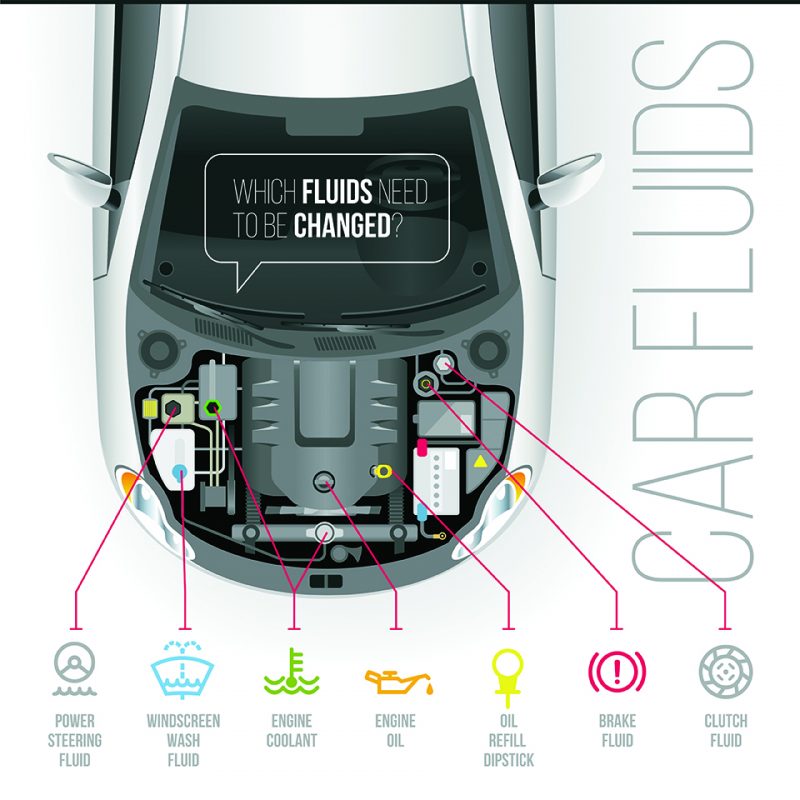
Every car uses several types of fluids to run smoothly. These include engine oil, coolant, transmission fluid, brake fluid, power steering fluid, and windshield washer fluid. Each one has a special job. If just one gets too low or dirty, you can face serious problems. For example:
- Low engine oil can cause your engine to overheat or even seize up.
- Dirty brake fluid can lead to poor braking, which is dangerous.
- Not enough coolant can make your car overheat.
Research shows that regular fluid checks can reduce breakdowns by more than 50%. If you check fluids every month, you can catch small issues before they become big repairs. This not only saves money but also keeps you safe on the road.
What You Need Before You Start
You don’t need fancy equipment to check your car’s fluids. Most of the time, you only need a few basic items:
- Clean rags or paper towels
- Flashlight (for seeing in dark engine bays)
- Gloves (optional, for keeping your hands clean)
- Owner’s manual (for your car’s specs)
- Funnel (for adding fluids if needed)
Always park your car on a flat surface. Turn off the engine and let it cool for at least 10 minutes before you start. This keeps you safe and helps you get accurate readings.
Safety Tips
Before you open the hood, remember these safety tips:
- Engine Off and Cool: Never check fluids while the engine is running or hot, especially coolant. Hot fluids can spray and burn you.
- Secure the Vehicle: Use the parking brake. If your car is on a hill, use wheel chocks.
- Keep It Clean: Wipe the area around caps and dipsticks before opening. This keeps dirt out of the fluid.
- Wear Gloves: Some fluids are toxic or can irritate your skin.
I once forgot to let my car cool down before checking the coolant. The steam burst surprised me, and I learned my lesson the hard way—always wait until the engine is cool.
How To Check Engine Oil
Engine oil is the most important fluid in your car. It keeps the engine moving smoothly and prevents overheating. Here’s how to check it:
- Locate the Dipstick: Open the hood and find the engine oil dipstick. It usually has a yellow or orange handle.
- Pull Out and Wipe: Pull the dipstick out. Wipe it clean with a rag.
- Re-insert and Remove: Put the dipstick back in all the way. Pull it out again.
- Check the Level: Look at the tip. There are markings like “Full” and “Low” or two holes/lines. The oil should be between these marks.
- Check Oil Color: Fresh oil is amber or light brown. Dark, dirty oil means it’s time for a change.
Common Questions About Oil
- If the oil is low, add the right type (see your manual).
- If it looks milky or foamy, there could be a leak—get help from a mechanic.
Expert tip: Always use the oil type and weight your car’s manual recommends. Using the wrong oil can cause damage over time.
How To Check Coolant (antifreeze)
Coolant (or antifreeze) keeps your engine from overheating or freezing. It runs through the radiator and engine block.
- Find the Coolant Reservoir: Look for a translucent plastic tank near the radiator. It’s often marked with “coolant” or “engine coolant.”
- Check Level: There are “Full” and “Low” lines on the side. The fluid should be between them.
- Look at Color: Coolant is usually green, orange, or pink. If it’s rusty or has particles, flush it soon.
- Never Open When Hot: If you need to open the radiator cap, wait until the engine is cold. Hot coolant can cause burns.
What If Coolant Is Low?
- Add a 50/50 mix of coolant and water (unless your manual says otherwise).
- If you need to add coolant often, check for leaks under the car.
Real experience: I once noticed my coolant kept dropping every week. Turns out, a small leak was dripping onto the driveway. Fixing it early saved me from a much bigger repair later.
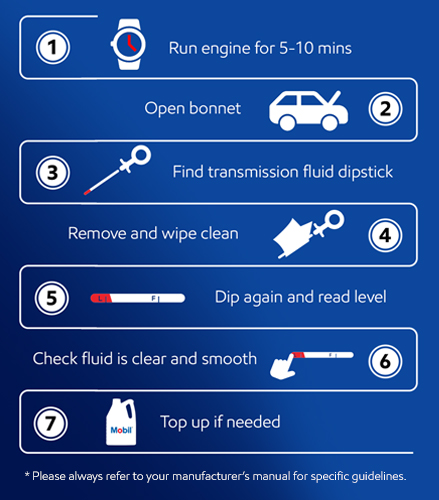
How To Check Transmission Fluid
If your car has an automatic transmission, it probably has a transmission fluid dipstick. Manual transmissions are usually checked by a mechanic.
- Find the Dipstick: Look for a red or black handle, often behind the engine.
- Check When Warm: Most cars need the engine running and warm. Set the parking brake, shift through each gear, then put it in “Park.”
- Pull and Wipe: Pull out the dipstick, wipe it, reinsert, and pull again.
- Check Level and Color: The fluid should be between marks. Good fluid is pink or red. Brown or burnt-smelling fluid means it’s old.
Transmission Fluid Table
Here’s a quick comparison of typical transmission fluid colors and what they mean:
| Color | Condition | Action Needed |
|---|---|---|
| Bright red/pink | Good | None |
| Light brown | Getting old | Plan to change |
| Dark brown/black | Dirty or burnt | Change immediately |
| Milky | Possible water leak | Check with mechanic |
If the transmission fluid is low, add the right type through the dipstick tube. Never overfill.
Credit: www.rgmags.com
How To Check Brake Fluid
Brake fluid is vital for stopping your car safely. Here’s how to check it:
- Find the Reservoir: It’s a small, clear container near the back of the engine bay, usually on the driver’s side.
- Check Level: The fluid should be between “Min” and “Max” lines.
- Look at Color: Good fluid is clear or yellowish. Dark fluid means it’s time to change.
- Don’t Let Dirt In: Clean the cap before opening. Brake fluid absorbs moisture and dirt easily.
Important: If the brake fluid is very low, your brakes might not work. Check for leaks or see a mechanic.
How To Check Power Steering Fluid
Not all cars have a power steering fluid reservoir. If yours does, here’s what to do:
- Find the Reservoir: Usually near the engine, marked “steering” or with a steering wheel icon.
- Check Level: There are “Min” and “Max” marks. Some have a dipstick in the cap.
- Check Color: Good fluid is clear, amber, or pink. Dark fluid is a sign of age.
- Add Fluid if Needed: Use only the type listed in your manual.
Some newer cars use electric power steering and don’t have this fluid. Check your manual if you’re unsure.
Credit: www.mobil.co.uk
How To Check Windshield Washer Fluid
This one is easy but important for safety.
- Find the Reservoir: It usually has a blue or black cap, marked with a windshield/water icon.
- Check Level: Most are clear so you can see the fluid.
- Add Fluid: Use washer fluid, not plain water. In winter, use fluid with antifreeze.
Keeping this topped up means you always have a clear view.
How Often Should You Check Each Fluid?
Different fluids need checking at different times. Here’s a handy chart:
| Fluid | Check Frequency | Change Interval |
|---|---|---|
| Engine Oil | Monthly or every 1,000 miles | 3,000–7,500 miles (depends on oil type) |
| Coolant | Every 3 months | 2–5 years |
| Transmission Fluid | Every 3–6 months | 30,000–60,000 miles |
| Brake Fluid | Every 6 months | 2–3 years |
| Power Steering Fluid | Every 3 months | 2–3 years (if applicable) |
| Windshield Washer Fluid | Monthly or as needed | Top up when low |
Always check your owner’s manual for your specific car. Some new cars have special fluid requirements or longer service intervals.
Signs Your Car Fluids Need Attention
Sometimes, you’ll notice signs that a fluid is low or dirty even before you check. Look out for:
- Dashboard warning lights: Like oil, coolant, or brake warnings.
- Strange noises: Whining, grinding, or squealing can mean low fluid.
- Leaks: Puddles or stains under your car.
- Overheating: Especially in hot weather or traffic.
- Soft brake pedal: Can mean low brake fluid.
If you notice these, check your fluids right away.
Common Mistakes To Avoid
Even experienced drivers can make errors. Here are common mistakes—and how to avoid them:
- Checking When Hot: Fluids can give false readings (or burn you) if checked too soon after driving.
- Mixing Fluids: Never mix different types of oil, coolant, or brake fluid. Always use what your manual says.
- Overfilling: Too much fluid can be as bad as too little.
- Forgetting to Tighten Caps: Always put caps back on tight to keep out dirt and moisture.
- Ignoring Warning Signs: If you see a warning light, don’t wait—check the fluid as soon as possible.
When I first started driving, I once added water instead of washer fluid in winter. The water froze, and I couldn’t clean my windshield until I thawed it out. Now, I always use the right fluid for the season.
Advanced Tips For Car Fluid Checks
Ready to go beyond the basics? Here are some expert tips:
- Record your checks: Write down the date and mileage each time you check or change fluids. This helps you spot patterns and remember service intervals.
- Use a flashlight: Helps you see fluid levels and colors, especially in dim light.
- Look for leaks: Check hoses and under the car regularly for drips or wet spots.
- Check for smells: Burnt or sweet smells can signal trouble with oil or coolant.
- Buy quality fluids: Not all fluids are equal. Use trusted brands for better protection.
What To Do If You Find A Problem
If you notice a fluid is low, top it up with the correct type. If a fluid is dirty or smells burnt, plan to change it soon. For major problems—like milky oil, frequent leaks, or dramatic color changes—visit a mechanic right away.
Catching these issues early can save your engine or transmission.
Electric And Hybrid Cars: What’s Different?
Electric and hybrid vehicles are becoming more common. They use fewer fluids, but checks are still important. For example:
- Engine oil: Many hybrids still need regular oil checks.
- Coolant: Needed for battery and electronics cooling.
- Brake fluid: Still required for safe stopping.
- Windshield washer fluid: Always needed.
Electric cars often use special fluids for batteries or cooling. Always follow your car’s specific manual. For more details, check resources like the National Highway Traffic Safety Administration.
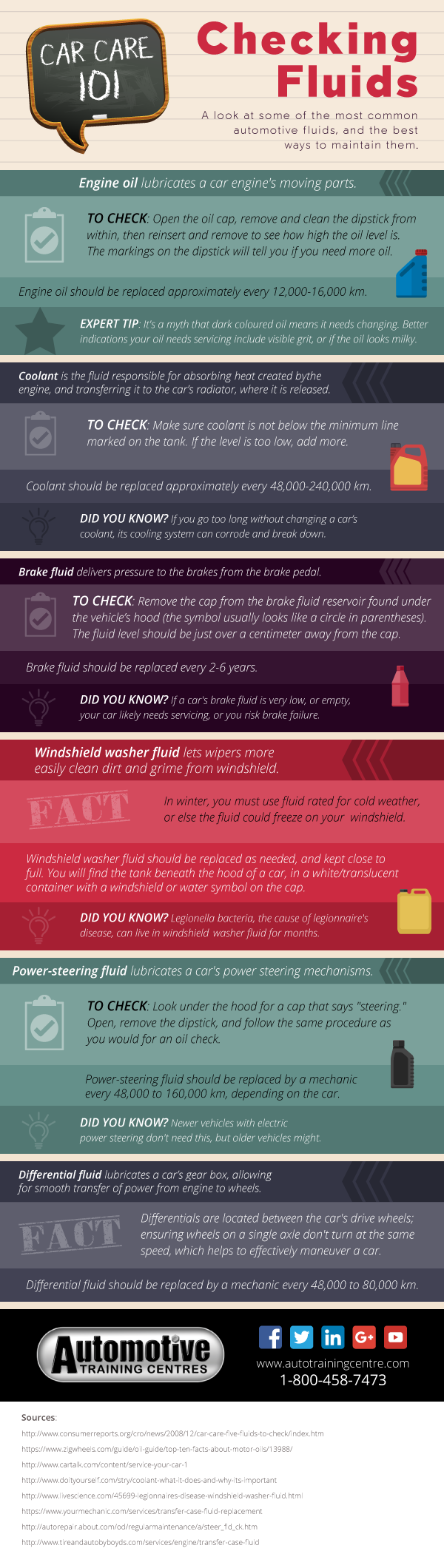
Quick Reference: Fluid Types And Purposes
Here’s a summary table for fast reference:
| Fluid | Main Purpose | Common Warning Sign |
|---|---|---|
| Engine Oil | Lubricates engine parts | Oil light, engine noise |
| Coolant | Prevents overheating | High temp gauge, steam |
| Transmission Fluid | Lubricates gears | Hard shifting, slipping |
| Brake Fluid | Transfers brake force | Soft pedal, warning light |
| Power Steering Fluid | Aids steering | Stiff or noisy steering |
| Windshield Washer Fluid | Cleans windshield | Poor visibility |
Credit: www.autotrainingcentre.com
Frequently Asked Questions
How Often Should I Check My Car Fluids?
You should check engine oil and washer fluid at least once a month. Other fluids like coolant, transmission, and brake fluid can be checked every few months. Always check before long trips or if you notice leaks or warning lights.
Can I Mix Different Brands Of Fluids?
It’s best not to mix different brands or types, especially for engine oil and coolant. Stick to the type and grade listed in your owner’s manual. Mixing can cause chemical reactions, reduce performance, or even damage your car.
What Are The Signs Of A Fluid Leak?
Look for puddles under your car. Engine oil is brown or black, coolant is usually green or pink, transmission fluid is red, and brake fluid is clear to yellow. If you see or smell something unusual, check your levels and see a mechanic.
Is It Safe To Drive If A Fluid Is Low?
It depends on the fluid. Low engine oil, coolant, or brake fluid is dangerous and can cause engine damage or brake failure. Top up as soon as possible and get the problem fixed.
Do Electric Cars Need Fluid Checks?
Yes, but fewer. Electric cars still need coolant for batteries and electronics, brake fluid for the brakes, and washer fluid. Check your manual for specific advice.
---
Learning to check your car fluids is a simple skill that can save money, prevent breakdowns, and keep you safe. Start with these basics, and soon, you’ll feel confident every time you pop the hood. I’ve seen firsthand how small checks can stop big problems before they start—and now, you can too.