

Yes, you can jack up a car safely by using the right points, stands, surface, and process.
The question “does how to jack up car safely” often comes from drivers who want to change a tire, inspect brakes, or do basic repairs without taking needless risks. This guide explains how a floor jack, scissor jack, jack stands, wheel chocks, and your owner’s manual work together to create a safe lifting setup.
Does how to jack up car safely start with preparation?
Yes. Safe lifting begins before the jack touches the car. A rushed setup can turn a simple tire change into a serious accident.
Park on firm, flat ground. Concrete is best. Avoid grass, gravel, soft soil, slopes, and wet shoulders. A jack can sink, tilt, or slide when the surface cannot support the load.
Turn off the engine and place the transmission in the correct gear:
• Automatic transmission: Select Park.
• Manual transmission: Select first gear or reverse.
• All vehicles: Set the parking brake firmly.
Place wheel chocks on the wheels that will stay on the ground. If you do not have purpose-built chocks, solid wood blocks may help in an emergency, but proper rubber or metal chocks are safer.
Before lifting, remove loose items from the cabin and trunk. Sudden movement can shift the car’s balance. Ask passengers to leave the vehicle before you begin.
Inspect your tools
A safe car jack should be in good condition. Check for bent arms, cracked welds, leaking hydraulic fluid, damaged wheels, or a missing handle.
Confirm that the jack stands can support the vehicle. Their combined rating must exceed the weight of the vehicle. The rating should be clearly printed on each stand.
You will usually need:
• A vehicle jack rated for your car’s weight
• Two or more properly rated jack stands
• Wheel chocks
• A lug wrench
• A flashlight
• Work gloves and eye protection
• The owner’s manual
Never rely on the small emergency jack for extended repair work. It is mainly designed for short tire changes on a level, stable surface.

How to find the correct jack points
Finding the correct jack point is one of the most important parts of does how to jack up car safely. The wrong point can bend the body, damage a battery, crush fuel lines, or make the vehicle unstable.
Your owner’s manual should show the approved lifting points. Many cars have reinforced areas behind the front wheels and ahead of the rear wheels. Some vehicles also have a strong center lifting point for a floor jack.
Look beneath the rocker panels for small notches, arrows, or reinforced seams. These marks often identify the side jack points. Do not assume every flat metal area can hold the car’s weight.
Avoid these areas unless the manual specifically approves them:
• Thin floor panels
• Plastic trim
• Exhaust pipes
• Oil pans
• Fuel tanks
• Suspension arms
• Differential covers
• Battery trays
• Body pinch welds without a proper lifting pad
Some cars use a pinch weld. This is a folded metal seam along the lower body. A floor jack may need a special rubber saddle to protect the seam.
Check the vehicle’s weight and balance
The jack must lift the part of the car you need, but its rating should cover the vehicle safely. A heavier vehicle, such as a truck or SUV, needs a stronger jack and stronger stands.
A car’s weight can shift as one end rises. This is why wheel chocks matter. They help stop the tires that remain on the ground from rolling.
For extra safety, lift only one end when possible. Raising one corner is often safer than lifting the whole vehicle. If the repair requires all four wheels off the ground, use four properly placed stands and follow the vehicle manual closely.
How to jack up a car safely step by step
The basic process is simple, but every step matters. Think of the jack as a tool for lifting, not as a permanent support.
1. Read the owner’s manual
Find the approved jack points and any special instructions. Some vehicles require a special adapter. Others have electronic suspension systems or plastic panels that can be damaged by a normal jack.
2. Park and secure the car
Place the vehicle on flat, hard ground. Set the parking brake. Select Park or first gear. Chock the wheels that will remain on the ground.
3. Loosen the lug nuts slightly
If you are removing a wheel, loosen each lug nut about one turn before lifting the car. Keep the tire on the ground while doing this.
Do not remove the lug nuts yet. The tire’s contact with the ground helps hold the wheel still.
4. Position the jack
Slide the jack under the approved lifting point. Make sure the saddle is centered and fully supported.
Keep your hands and feet away from the jack’s moving parts. Check that the jack sits squarely on the ground.
5. Raise the vehicle slowly
Pump the handle or turn the screw slowly. Watch the jack point and the vehicle as the car rises.
Stop if the jack leans, rolls in an unusual way, or moves away from the lifting point. Lower the vehicle and correct the setup.
6. Place the jack stands
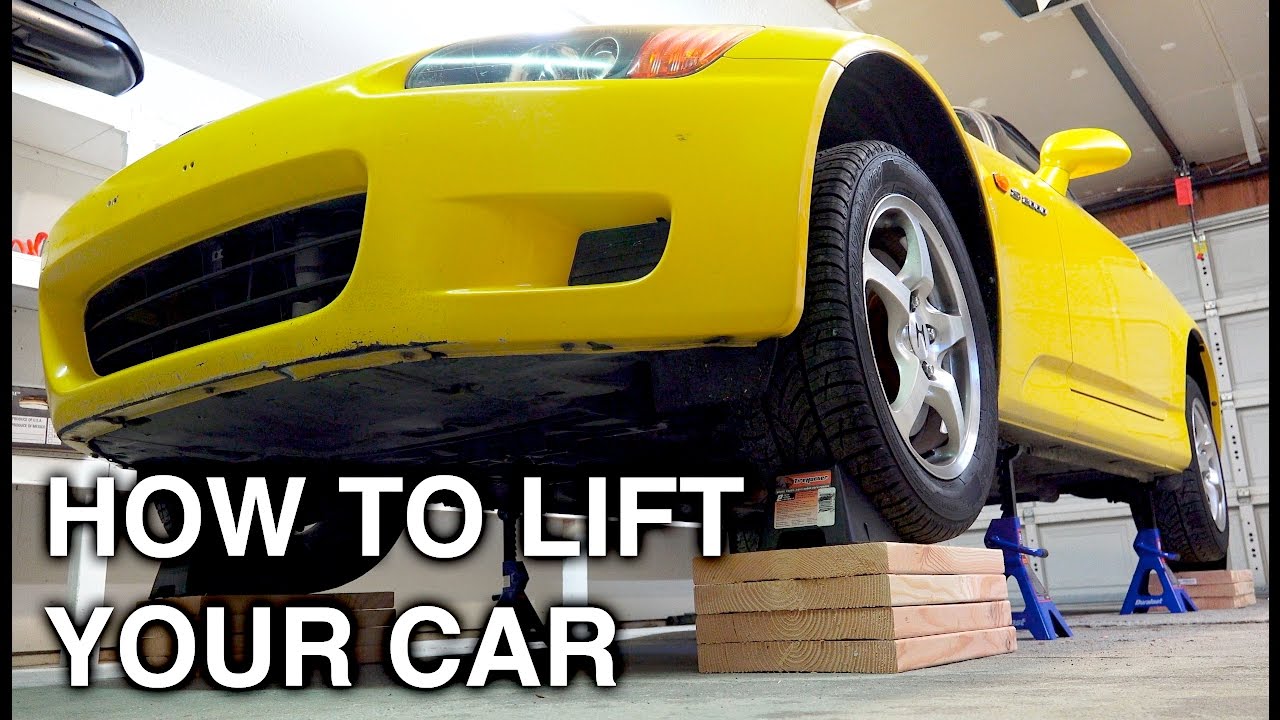
Raise the car only high enough to place the stands under approved support points. Adjust the stands to equal heights when possible.
The stand saddle should touch a strong structural area. Do not place a stand under a thin floor panel or a random suspension part.
7. Lower the car onto the stands
Lower the jack slowly until the vehicle rests firmly on the stands. Keep the jack lightly in place if your manual or repair method allows it, but never treat the jack as a substitute for stands.
8. Test stability
Push the vehicle gently from the side. Use controlled pressure. Do not climb under the car during this test.
If the vehicle rocks, shifts, or makes a sharp metal sound, stop. Raise it again, reposition the stands, and check the surface.
9. Begin the repair
Only work beneath the car after the stands support it securely. Keep tools organized so you do not need to reach or pull hard from an awkward position.
10. Lower the car carefully
Remove tools and people from beneath the car. Raise the vehicle slightly with the jack, remove the stands, and lower the car slowly.
Remove the chocks only after the vehicle rests fully on the ground. Tighten lug nuts in a star pattern. Use a torque wrench to match the specification in the owner’s manual.

Does how to jack up car safely change with different jacks?
Yes. A scissor jack, floor jack, bottle jack, and air jack have different strengths and limits. The basic safety rules remain the same, but the setup changes.
Scissor jack
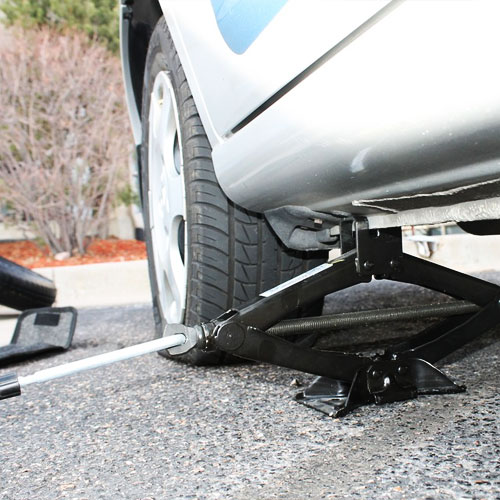
A scissor jack is common in a vehicle’s emergency kit. It is compact and useful for changing one tire.
It is slower and less stable than a good floor jack. Use it only on a firm, level surface and only at the approved jack point.
Floor jack
A floor jack is usually the best choice for home maintenance. Its wheels allow the jack to move slightly as the car rises.
Use a floor jack with a suitable lifting range and weight rating. A low-profile model may be needed for sports cars or vehicles with little ground clearance.
Bottle jack
A bottle jack can lift heavy vehicles, but it needs a stable, flat base. Its small footprint makes it risky on soft or uneven ground.
Never place a bottle jack under a point that the vehicle manufacturer does not approve.
Air or pneumatic jack
Air jacks can lift vehicles quickly in professional settings. They still need proper lifting points, stable ground, and safety stands.
Fast lifting does not remove the need for inspection. A powerful jack can create a dangerous situation faster if it is positioned incorrectly.
Can a car jack hold a vehicle overnight?
No. A jack is for lifting. Jack stands are for support.
If a vehicle must remain raised for a long time, use properly rated stands on a hard, level surface. For storage or major work, follow professional workshop procedures.
Common mistakes that make car lifting dangerous
Understanding what not to do is central to does how to jack up car safely. Most accidents happen because of poor setup, wrong lifting points, or overconfidence.
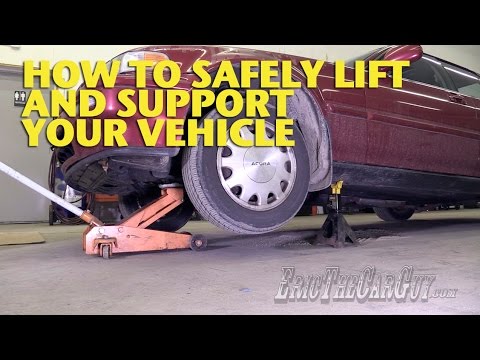
Working under a car supported only by a jack
This is the most dangerous mistake. Hydraulic seals can fail. A scissor jack can fold or tip. A vehicle can also move if the ground shifts.
Always use jack stands before getting beneath the vehicle.
Using a jack on soft ground
Grass may look firm, but the jack can sink under the vehicle’s weight. Gravel can also let the jack roll or tilt.
If you must work outside, use a thick, solid board under the jack. The board must be large and strong enough to prevent sinking. A board does not make a steep slope safe.
Lifting from the wrong location
A strong-looking metal part may not be designed to support the vehicle. Damage can occur even when the car does not fall.
Use the manual instead of guessing. If you cannot identify the lifting point, stop and ask a qualified technician.
Forgetting to chock the wheels
The parking brake may lock only some wheels. A car can still move when one end rises.
Chock the wheels that remain on the ground. Place the chocks snugly against the tires.
Reaching under a moving vehicle
Do not place your hands, legs, or head beneath the car while it is rising or lowering. Keep clear until the vehicle is stable on the stands.
Using unstable substitutes
Concrete blocks, bricks, stacked wood, ramps not meant for support, and homemade stands can break or shift. They are not safe replacements for rated jack stands.
Lifting too high
Raise the vehicle only as high as needed. Extra height increases the distance it can fall and may reduce stability.
Ignoring the load rating
A small jack may lift part of a large SUV, but that does not mean it is a safe choice. Use equipment designed for the vehicle and the job.

How to make jack stands more secure
Jack stands are the main safety barrier when a person works beneath a raised vehicle. Place them with care.
Set each stand on the same firm surface used for the jack. Keep the stand’s feet flat. Do not place one foot on a crack, stone, drain cover, or soft patch.
Use the manufacturer’s approved support points. Some vehicles have separate points for lifting and supporting. The owner’s manual may show both.
Lower the car onto the stands slowly. Listen for movement. After the weight transfers, check that the stand remains vertical and the saddle stays centered.
For a two-stand setup:
• Lift the approved end of the vehicle.
• Place one stand on each side.
• Keep both stands at the same height when possible.
• Lower the vehicle slowly onto both stands.
• Leave the jack in a safe position if it does not interfere with the work.
For a four-stand setup, raise one end at a time. Make sure the first pair remains stable before lifting the second end. Never rely on a single stand for a vehicle end.
Tire changes versus repair work
The answer to does how to jack up car safely depends on the task. A roadside tire change has different needs from brake, suspension, or exhaust work.
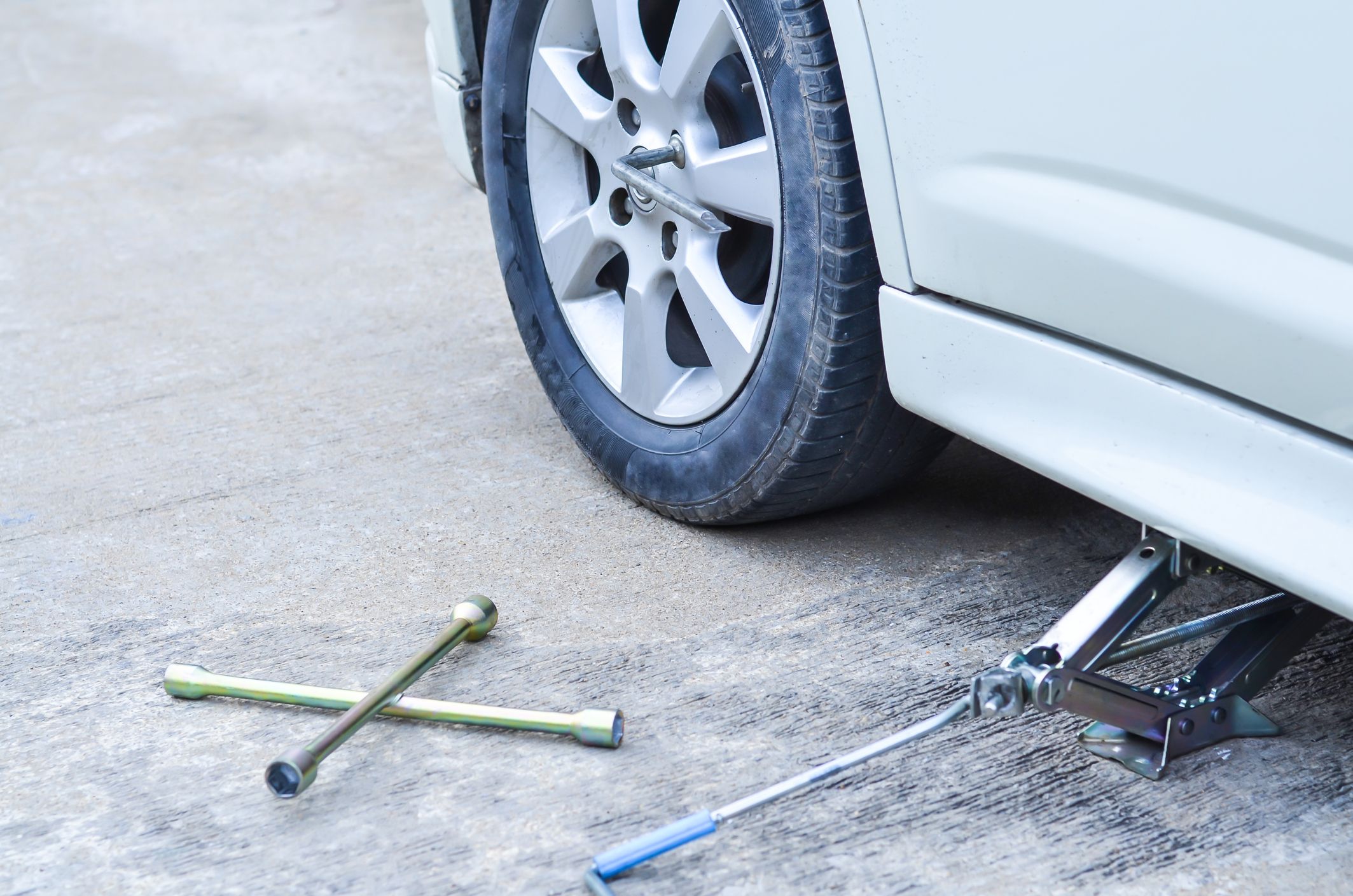
For a tire change, use the emergency jack at the approved point. Keep the spare tire nearby. Loosen the lug nuts before lifting, then remove them once the tire is off the ground.
For brake work, use jack stands. You may need to remove the wheel and move around the vehicle, so stability matters more than speed.
For suspension work, take extra care. Springs and control arms can store significant energy. A jack under a suspension part may move when bolts are removed. Follow a service manual or use a professional technician.
For engine or transmission work, use additional support equipment. Never depend on a floor jack beneath an oil pan, transmission case, or other fragile component unless the repair procedure specifically requires it and uses the correct adapter.

Practical safety tips from real garage work
One lesson repeated in garages is that stable support matters more than lifting power. A large jack cannot fix a poor surface or a wrong jack point.
A common mistake is placing the stand too late. Set up the stand before the car reaches maximum height. This gives you a clear plan and avoids hurried movement.
Another useful habit is to keep the removed wheel under the vehicle’s strong frame area. It is not a replacement for a stand, but it may provide limited secondary protection if something shifts.
Use a flashlight during daylight. Shadows can hide a seam, a crack, or a hose near the lifting point.
Wear eye protection when working beneath a vehicle. Rust, dirt, and small metal particles can fall when you remove wheels or inspect the underside.
If the vehicle feels unstable, trust that warning. Lower it and begin again. A few extra minutes are far better than a serious injury or expensive damage.

Tools that improve safety
Good tools make does how to jack up car safely easier, but they do not replace correct technique.
Consider keeping these items in your garage or roadside kit:
• A hydraulic floor jack with a suitable weight rating
• A pair of rated jack stands
• Four wheel chocks
• A torque wrench
• A lug wrench or breaker bar
• A rubber jack pad
• A bright flashlight
• Work gloves and safety glasses
• A repair manual or vehicle service guide
• A tire pressure gauge
Choose a jack with enough lift height for your vehicle. A jack that reaches its limit before the stand fits under the car is not suitable.
Replace damaged equipment. Do not weld, bend, or modify a jack stand or jack unless the manufacturer specifically provides an approved repair method.
When you should not jack up the car yourself
Some situations call for professional help. Do not attempt the job if you lack a flat surface, proper stands, or a suitable jack.
Call roadside assistance or a mechanic when:
• The car is on a steep slope
• The ground is soft or unstable
• The vehicle has major collision damage
• The jack point is bent or rusted
• The car has an unusual suspension or air system
• You need to remove a loaded spring
• You must support the engine or transmission
• The vehicle exceeds your equipment’s capacity
• You cannot identify the correct lifting point
Roadside conditions also create extra danger. Passing traffic, poor visibility, rain, and loose shoulders can make a tire change unsafe. Move to a safe location if possible, turn on hazard lights, and request professional help.
Does how to jack up car safely require jack stands?
Can I use only the jack that came with my car?
You can use the factory jack for a short tire change when the vehicle is on firm, level ground. Do not use it as long-term support or for repairs that require you to work underneath the car.
Should I leave the car in Park while using a jack?
Yes. Put an automatic vehicle in Park and set the parking brake. For a manual transmission, select first gear or reverse, then use wheel chocks as an added safeguard.
Can I jack up a car on gravel?
It is not recommended. Gravel can shift beneath the jack and reduce stability, so use a hard, level surface or call for assistance.
How many jack stands do I need?
Use at least two stands when supporting one end of a vehicle. If all four wheels must be raised, use four properly rated stands and follow the vehicle’s service instructions.
Is it safe to work under a car with a floor jack?
No. A floor jack is designed to lift, not safely support a person beneath a vehicle. Place the vehicle on properly rated jack stands before working underneath it.
Where is the safest place to put a jack stand?
Use the support points shown in the owner’s or service manual. These points are usually reinforced areas of the vehicle frame or body structure.
Should I loosen lug nuts before lifting the car?
Yes. Loosen them slightly while the tire is still on the ground. This prevents the wheel from spinning while you apply force.
What should I do if the car moves while it is raised?
Stop immediately and stay clear of the vehicle. Do not try to catch or steady it by hand; lower it only when safe, then inspect the jack, stands, wheel chocks, and ground before restarting.
Conclusion
Learning does how to jack up car safely comes down to a few firm rules: use a level surface, follow the manual, choose the correct jack points, chock the wheels, and support the vehicle with rated jack stands. Never work beneath a car held only by a jack.
Take your time and treat every lift as a safety task, not a race. Check your equipment before each use, stop when anything feels unstable, and ask a qualified technician for help when the job exceeds your tools or skill. Save this guide for your next tire change, and share your own safe lifting tips in the comments.
