

A newborn should sit rear-facing, upright but reclined, with the head centered, the chin off the chest, and the harness snug over the body. The baby’s back and bottom should rest flat against the seat, and the car seat should be installed at the recline angle shown in its manual.
A newborn may look small and slightly curled in a car seat. Bent legs are normal. What is not normal is a slumped body, a head that falls forward, loose straps, or thick clothing under the harness.
This guide follows U.S. guidance from the National Highway Traffic Safety Administration (NHTSA), the American Academy of Pediatrics (AAP), and child-restraint manufacturers’ instructions.

The correct newborn position in a car seat
A properly positioned newborn has five main features:
- The car seat faces the rear of the vehicle.
- The baby’s back and bottom touch the seat with no gap.
- The head stays centered, with the chin lifted away from the chest.
- The harness lies flat and fits snugly.
- The seat is reclined according to the manufacturer’s angle indicator.
The baby does not need to look perfectly straight or completely flat. Infant car seats are designed to hold a newborn in a supported, semi-reclined position. The goal is to keep the baby’s airway open while the harness holds the body in place.
What a normal newborn position may look like
A newborn may have:
- Bent knees
- Slightly rounded shoulders
- Arms resting beside the body
- Feet touching or near the vehicle seat
- A small amount of natural movement
- The head turned slightly to one side
These features are usually normal if the baby remains supported and the harness stays in the correct position.
What an unsafe position may look like
Watch for:
- The chin pressed down toward the chest
- The head falling forward
- The body leaning sharply to one side
- The baby sliding down toward the buckle
- A harness that sits away from the shoulders
- Visible slack in the chest straps
- The baby’s back not touching the seat
- The head or neck pushed forward by an insert or cushion
A newborn’s airway is small. A forward-slumped position can make breathing harder, especially when the baby cannot move the head back into a safer position.
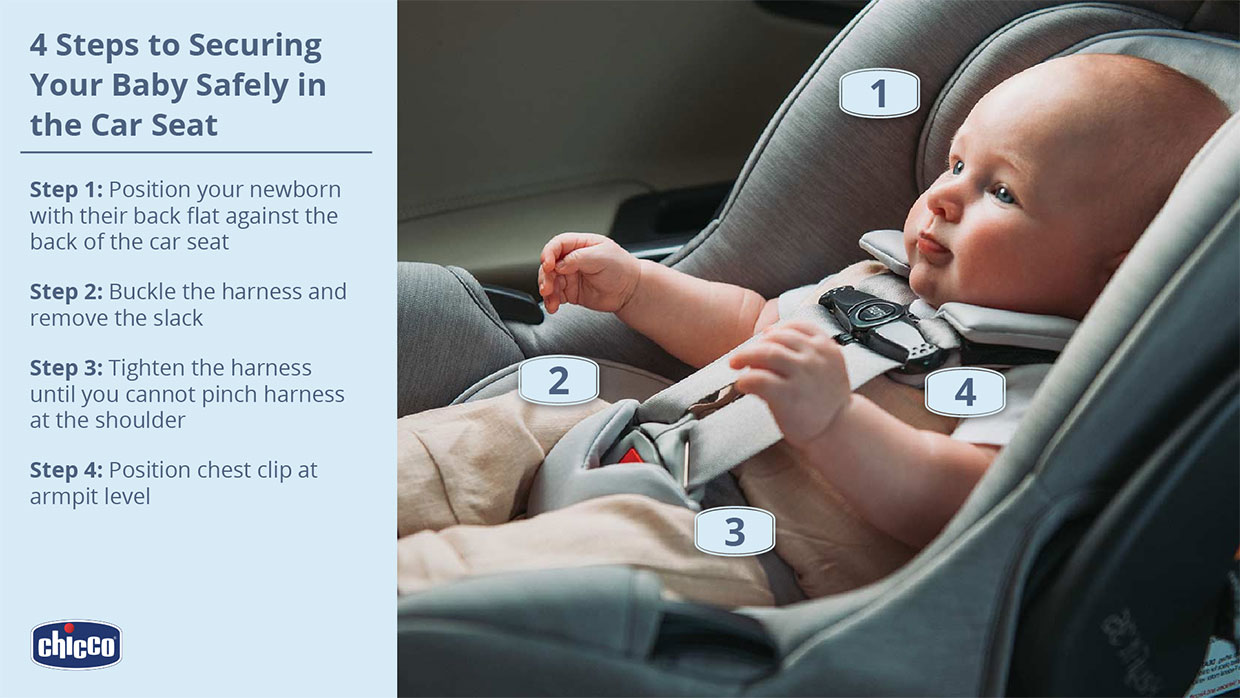
How to position a newborn step by step
Use the car seat manual as the final authority for harness height, recline angle, inserts, and buckle settings. Car seats differ, even within the same brand.
1. Install the seat rear-facing
In the United States, infants should ride in a rear-facing car seat. Keep the seat rear-facing until the child reaches the seat’s height or weight limit for that mode.
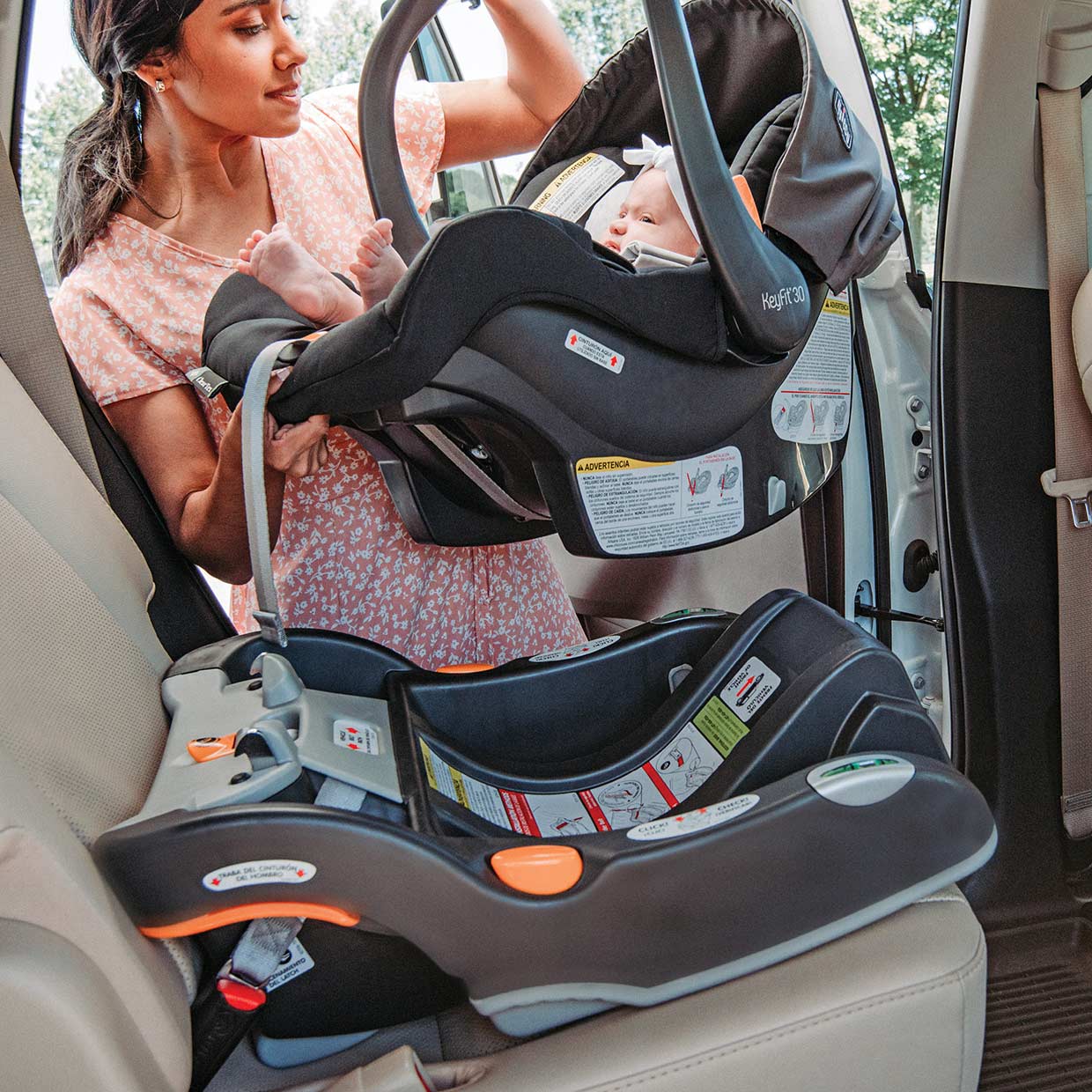
Install the seat in the vehicle’s back seat whenever possible. Follow the car seat manual and the vehicle owner’s manual for the correct installation method. A seat may be installed with the vehicle belt or with LATCH, but do not use both unless both manuals clearly allow it.
The installed seat should not move more than about 1 inch from side to side or front to back when tested at the belt path, according to NHTSA guidance. Check movement at the belt path, not at the top of the carrier.
2. Set the correct recline angle
Place the car seat at the recline angle shown by its built-in indicator. The indicator may use a line, bubble, color, or numbered range.
Do not choose an angle only by looking at the baby. A seat that is too upright may let the head fall forward. A seat that is too reclined may not install correctly or may change how the harness works.
The correct angle can change as the baby grows, so check the indicator and manual from time to time.
3. Place the baby’s bottom at the back of the seat
Lower the baby into the seat so the bottom rests fully against the back of the seat. The baby’s back should touch the seat from the shoulders down.
Do not place folded blankets behind the baby’s back or under the bottom. Do not add padding to fill space unless it came with the car seat and the manual allows it.
4. Position the harness straps
For a rear-facing newborn, the harness straps usually come from slots at or below the baby’s shoulders. The exact rule depends on the seat, so confirm it in the manual.
The straps should lie flat on the baby’s body. They should not twist, cross over the chest, or sit near the neck.
If the seat includes a newborn insert, use it only as directed by the manufacturer. Remove it when the manual says to remove it. A seat-specific insert is not the same as a product sold separately by another company.
5. Buckle the harness and chest clip
Buckle the crotch buckle and both shoulder straps. Then place the chest clip at armpit level. The chest clip helps keep the shoulder straps in position; it is not meant to sit over the belly or neck.
The harness should be snug. After buckling, pinch the strap near the collarbone. If you can pinch a fold of webbing, tighten the harness. This is often called the pinch test.
Do not rely on the chest clip to hold the baby in place. The harness buckle and shoulder straps do that job.
6. Check the baby’s face and airway
Look at the baby from the side and front.
The baby’s:
- Chin should stay away from the chest.
- Nose and mouth should remain clear.
- Head should not be forced forward.
- Neck should not bend sharply.
- Body should remain centered in the seat.
If the head falls forward, stop and correct the setup before driving. Check the recline angle, the baby’s position, and the harness fit. If the problem continues, contact the car seat manufacturer or a certified child passenger safety technician.

How tight should a newborn’s car seat straps be?
The straps should be tight enough that you cannot pinch extra webbing at the collarbone. They should feel secure but should not press into the baby’s neck or leave deep marks.
A snug harness is different from an overly tight harness. The straps should not cause skin injury, but a little pressure mark after a ride can occur. If the harness leaves severe marks, causes swelling, or seems painful, stop and reassess the fit.
Check for these points:
| Part of the seat | Correct position |
|---|---|
| Shoulder straps | At or below the shoulders for rear-facing use, as stated in the manual |
| Chest clip | At armpit level |
| Crotch buckle | In the slot that gives the best fit for the baby |
| Harness webbing | Flat, untwisted, and snug |
| Baby’s body | Bottom and back against the seat |
| Head | Centered or gently turned, with chin off chest |
Never loosen the harness because the baby appears uncomfortable. Instead, check the recline angle, clothing, insert use, and overall fit.
Can a newborn wear a blanket or winter coat in a car seat?
A newborn should not wear a bulky coat, snowsuit, or thick layers under the harness. The padding can compress during a crash and leave too much space between the baby and the straps.
Dress the baby in thin layers. After buckling the harness, place a blanket over the secured straps if needed. Keep the baby’s face uncovered, and do not tuck a blanket behind the baby or under the harness.
A thin fleece layer may be acceptable if it does not interfere with harness fit, but follow the car seat and clothing guidance carefully. When in doubt, buckle the baby in normal indoor clothing and add warmth over the harness.
Never use:
- Thick aftermarket buntings
- Padded harness covers
- Sleeping-bag inserts not approved for the seat
- Blankets tucked under the baby
- Bulky winter clothing beneath the straps

Should a newborn use the infant insert or head support?
Use a newborn insert or head support only when it came with the car seat or is specifically approved by the manufacturer for that model. Follow the instructions for when to install and remove it.
Do not add a rolled towel, nursing pillow, head positioner, or cushion from another brand. These items may change the baby’s position, interfere with the harness, or create a breathing risk.
Some car seats allow small rolled blankets beside the baby’s head for support. Others do not. If the manual does not clearly allow this setup, do not use it.
A newborn’s head may move slightly from side to side. That does not mean the baby needs extra padding. The safest support is the seat’s approved design, correct recline angle, and properly tightened harness.

What should you do if the newborn slumps or leans?
If the baby slumps, stop before driving and check the setup in this order:
- Check the recline angle. Make sure the indicator is within the allowed range.
- Move the baby’s bottom back. The bottom should touch the seat’s back.
- Remove thick clothing. Refit the harness over thin clothing.
- Check harness height. Use the rear-facing setting listed in the manual.
- Tighten the harness. Remove slack near the shoulders.
- Check for unapproved padding. Remove any item not allowed by the manufacturer.
- Check the seat installation. Confirm that the seat is secure at the belt path.
- Ask for an in-person fit check. A certified Child Passenger Safety Technician can help.
You can find inspection resources through NHTSA’s child passenger safety information and local Safe Kids programs.
If the baby has trouble breathing, turns blue or gray, becomes unusually limp, or cannot keep the airway open, remove the baby from the seat and seek emergency medical help. Do not continue driving while trying to solve a serious breathing problem.

How long can a newborn stay in a car seat?
A car seat is made for travel, not routine sleep. When you reach your destination, move the newborn to a firm, flat sleep surface approved for infant sleep as soon as practical.
Do not place the car seat on a bed, sofa, table, kitchen counter, or other raised surface. A seat can tip, and a newborn may slump into a position that affects breathing.
For long trips, plan regular stops to check the baby, adjust the position, and offer feeding or a diaper change. The AAP advises avoiding long periods in sitting devices for young infants. The exact travel plan may depend on the baby’s age, health, trip length, and medical needs.
Premature babies and newborns with breathing, heart, muscle, or airway concerns may need special advice. Ask the baby’s clinician whether a car seat tolerance screening is needed before leaving the hospital.

Common newborn car seat mistakes
The most common errors involve fit, clothing, and extra products.
Loose harness straps
A loose harness can allow the baby to move too far during a crash. Tighten the straps until you cannot pinch slack at the collarbone.
Chest clip placed too low
The chest clip belongs at armpit level. It should not rest on the stomach.
Harness straps placed over a coat
A thick coat can make the harness look tight while leaving hidden space underneath. Use thin layers and place warmth over the secured harness.
Seat installed too upright
A steep angle can let the newborn’s head fall toward the chest. Use the built-in angle indicator rather than guessing.
Aftermarket head supports
Extra cushions may shift the baby’s body or interfere with the harness. Use only parts approved for that specific car seat.
Turning the seat forward too soon
A newborn should ride rear-facing. Keep the seat rear-facing until the child reaches the manufacturer’s rear-facing height or weight limit.
Using a secondhand seat without checking its history
Do not use a used car seat unless you know its full history, including whether it has been in a crash, whether it has all parts, and whether it is expired or recalled. Check for recalls at NHTSA.gov/Recalls.

How to know the newborn is positioned correctly
Before starting the car, confirm that:
- The seat is rear-facing.
- The recline indicator is in the correct range.
- The seat is secure at the belt path.
- The baby’s bottom and back touch the seat.
- The head is centered or gently turned.
- The chin is off the chest.
- The harness is flat and snug.
- The chest clip is at armpit level.
- No bulky clothing is under the harness.
- No unapproved insert or padding is in the seat.
- The baby’s face and airway are clear.
If you are unsure, do not guess. Read both manuals and arrange a fit check with a certified Child Passenger Safety Technician.
Key takeaways
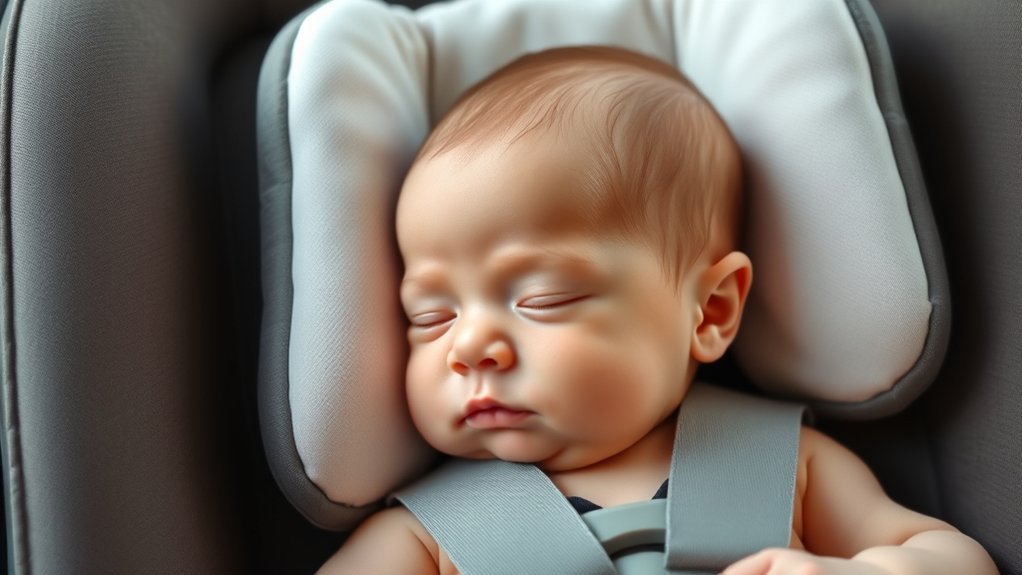
A newborn should look supported, slightly reclined, and securely held in a rear-facing car seat. The baby’s head should not flop forward, the chin should not touch the chest, and the harness should lie flat and snug at armpit-level chest-clip height.
Bent legs and a gently rounded posture are normal. Thick clothing, loose straps, extra cushions, and an incorrect recline angle are not.
When the fit still looks wrong after following the manual, get an in-person inspection before traveling.
Frequently asked questions
Should a newborn’s head touch the car seat?
Yes. The back of the newborn’s head may rest against the approved padding of the car seat. The head should not be pushed forward by an extra cushion, and the chin should remain away from the chest.
Can a newborn’s legs bend in a car seat?
Yes. Bent legs are normal. A newborn does not need to keep the legs straight, and the feet may touch the vehicle seat when the child rides rear-facing.
Should a newborn’s head be straight in the car seat?
The head may face slightly to one side, as long as the airway stays clear and the baby does not slump. The main concern is not a perfectly straight head; it is preventing the chin from dropping toward the chest.
Is it safe to use a rolled towel beside a newborn’s head?
Only if the car seat manufacturer’s instructions specifically allow it. Do not place a rolled towel behind the baby, under the baby, or beneath the harness unless the manual gives clear directions.
What if the newborn looks too small for the car seat?
Check the minimum height and weight listed on the car seat label and manual. Use only the included newborn padding that the manufacturer approves. If the baby still does not fit well, ask the hospital, manufacturer, or a certified Child Passenger Safety Technician for help.
Conclusion
The right newborn car seat position is rear-facing, reclined to the approved angle, centered, and snugly harnessed. The baby’s back and bottom should touch the seat, the head should stay supported without falling forward, and the chin should remain off the chest.
Use the car seat manual for every model-specific detail. If the newborn keeps slumping, the harness does not fit, or breathing looks difficult, stop and seek qualified help before driving.
