

For many drivers in the United States, the Chevrolet Trax is a good small SUV. It offers a low starting price, roomy seats, simple controls, useful cargo space, and a long list of standard safety features.
It is not the best choice for every driver. The Trax has front-wheel drive only, modest power, no hybrid model, and a basic interior in lower trims. Still, its mix of space, price, and features makes it a strong option for city drivers, small families, college students, and buyers who want a new SUV without a high monthly payment.

Quick answer: Is the Chevy Trax worth buying?
Yes, the current Chevrolet Trax is worth considering if your main goals are value, cabin space, easy driving, and low purchase cost.
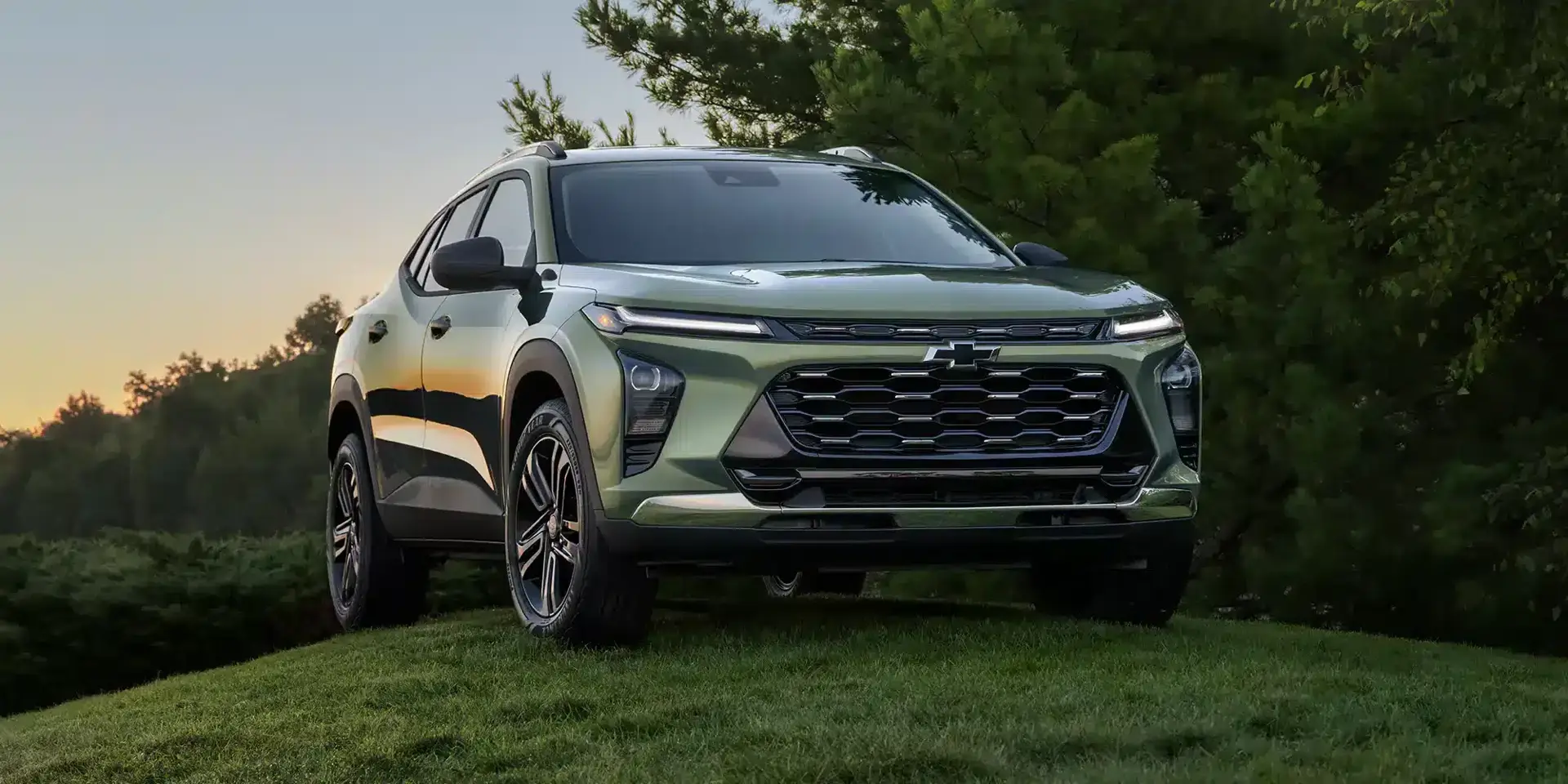
The current U.S. Trax began with the 2024 model year. It is larger than the previous Trax and shares much of its engineering with the Buick Envista. Every current Trax uses a 1.2-liter turbocharged three-cylinder engine, a six-speed automatic transmission, and front-wheel drive.


The Chevy Trax is a good fit for:
- Drivers who want an affordable new SUV
- People who mostly drive in town or on highways
- Small families who need useful cargo room
- Buyers who value standard smartphone connectivity
- Drivers who do not need all-wheel drive
- Owners who prefer simple controls over complex systems
The Chevy Trax may not fit:
- Drivers who need strong towing power
- People who regularly drive in deep snow or on rough roads
- Buyers who want all-wheel drive
- Drivers seeking high fuel economy from a hybrid
- People who want a quiet, upscale cabin
- Families who need a third row
The main question is not whether the Trax is “good” in general. The better question is whether its limits match your needs.
What makes the current Chevy Trax a good car?
The current Trax stands out because it gives buyers more interior room than its low price may suggest. Its rear seat is more useful than the back seat in many small SUVs, and its cargo area can handle normal grocery runs, luggage, and small household items.
The Trax also comes with a useful set of standard features. Depending on trim, these may include wireless Apple CarPlay and Android Auto, a rearview camera, cruise control, keyless entry, and Chevrolet Safety Assist driver aids.
1. It offers strong value for a new SUV
The Trax is priced below many compact SUVs, including several versions of the Honda HR-V, Toyota Corolla Cross, and Mazda CX-30. Exact pricing changes by model year, destination charge, dealer fees, incentives, and trim.
A low price does not make a vehicle a good deal by itself. The Trax earns its value through its size and standard equipment. It is not a tiny hatchback wearing SUV styling. The current model has a longer body and a more useful back seat than the first-generation Trax sold in the U.S.
2. It has useful passenger and cargo space
The Trax seats five people. Its rear seat is suitable for adults on shorter trips, and children should have reasonable room when the front seats are set for average drivers.
Chevrolet lists about 25.6 cubic feet of cargo space behind the rear seats and about 54.1 cubic feet with the rear seats folded. These figures make the Trax practical for daily errands and light travel.
Cargo numbers do not tell the whole story. Before buying, test the vehicle with the items you carry most often. A stroller, large pet crate, wheelchair, musical instrument, or sports gear may fit differently than the published numbers suggest.
3. It is easy to drive
The Trax has a small turning feel and predictable controls. Its automatic transmission does not require the driver to shift gears. The raised seating position also gives many drivers a clearer view than a traditional sedan.


The 1.2-liter turbo engine makes about 137 horsepower and 162 pound-feet of torque. That is enough for normal city traffic and highway use, but it does not make the Trax a quick SUV.
When passing on a two-lane road or merging uphill, the engine may need more planning than a larger four-cylinder engine. A test drive should include an on-ramp and a hill if those situations are common in your area.
4. Safety technology is widely available
The Trax includes Chevrolet Safety Assist on current U.S. models. Depending on the exact equipment list, this package can include:
- Automatic emergency braking
- Forward collision warning
- Lane-keep assist
- Lane departure warning
- Following distance indicator
- Front pedestrian braking
- Automatic high-beam control
Availability and operation can vary by model year and trim. Read the window sticker and owner’s manual rather than assuming every used Trax has the same equipment.
Driver-assistance systems can help reduce risk, but they do not replace attention. Keep your eyes on the road and your hands ready to steer.

What are the main drawbacks of the Chevy Trax?
The biggest Trax drawbacks are its lack of all-wheel drive, modest engine output, average fuel economy, and lower-grade cabin materials in some trims.
These weaknesses may not matter to a city driver. They matter much more to someone who lives in a snowy area, carries heavy loads, or expects a polished driving experience.
No all-wheel-drive option
Every current U.S. Trax uses front-wheel drive. This helps keep weight and cost down, but it limits the Trax for buyers who want extra traction on snow, ice, mud, or loose roads.
Front-wheel drive can work well with proper tires. Winter tires often help more than many drivers expect. However, tires cannot turn the Trax into an all-wheel-drive vehicle. If all-wheel drive is a firm requirement, consider alternatives such as the Subaru Crosstrek, Honda HR-V, Toyota Corolla Cross, or Mazda CX-30.
The engine is adequate, not powerful
The turbocharged three-cylinder engine delivers useful low-speed torque. That helps the Trax feel responsive around town.
At the same time, the engine can sound coarse when pushed. Acceleration may feel slow with several passengers, a full cargo area, or a steep grade. The Trax is built for ordinary transport, not sporty driving or heavy towing.
Chevrolet does not market the Trax as a serious towing vehicle. Do not add a trailer or hitch setup without checking the exact owner’s manual and vehicle limits.
Fuel economy is only average
EPA ratings for the current Trax are roughly 26 mpg city and 31 mpg highway, with the exact rating depending on the model year and configuration. Those figures are reasonable for a small gas SUV, but they are not class-leading.
Real-world fuel use changes with speed, weather, tire pressure, cargo, traffic, and driving style. A hybrid such as the Toyota Corolla Cross Hybrid can use less fuel in many conditions, but it usually costs more to buy.


The cabin is practical rather than luxurious
Higher Trax trims can look modern and well equipped. Lower trims use harder plastic surfaces and may have fewer comfort features.
Road and wind noise can also be noticeable at highway speeds. This does not make the Trax a poor vehicle. It means the Trax focuses more on price and function than on quietness and premium materials.

Which Chevy Trax trim is the best value?
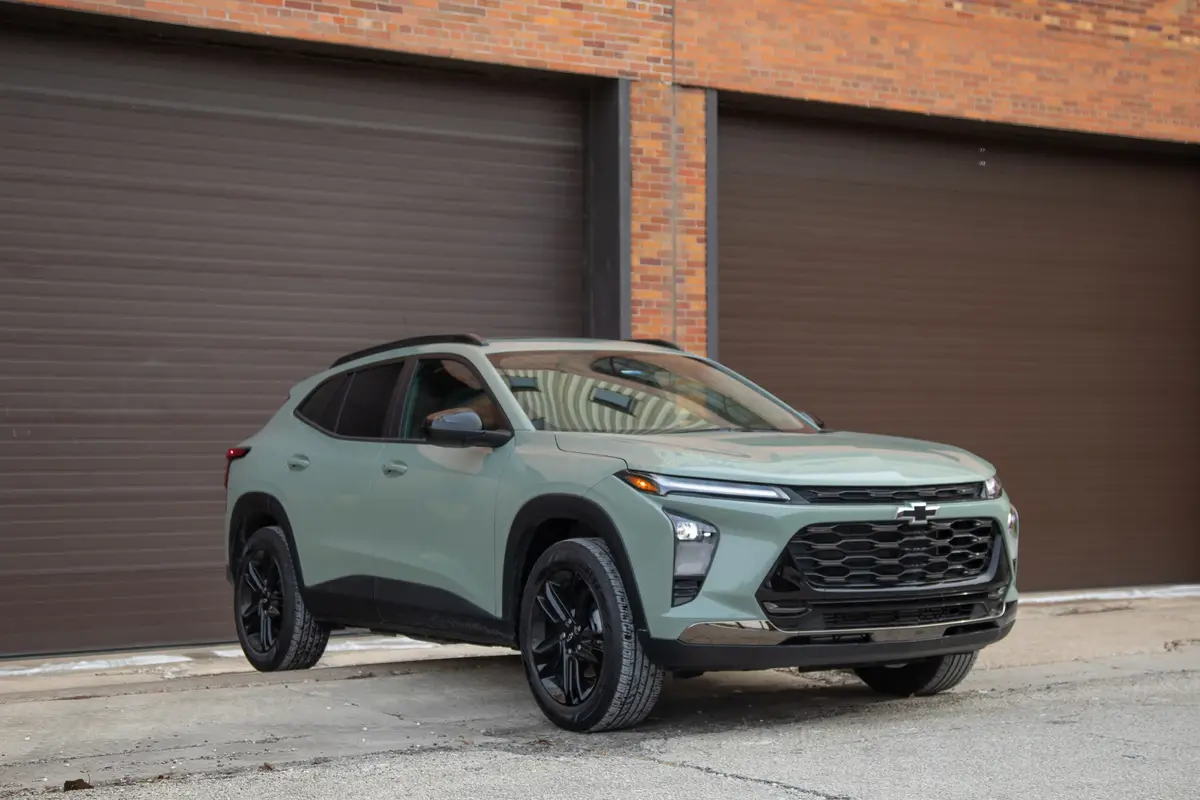
For most U.S. buyers, the LT trim is often the best balance of price and comfort. The base LS can make sense for a strict budget, while the ACTIV and 2RS trims add style and equipment rather than a stronger engine.
Trim names and features can change by model year. Check the official Chevrolet build page and the window sticker for the exact vehicle.
| Trim type | Best for | Main trade-off |
|---|---|---|
| LS | Lowest purchase price | Fewer comfort and appearance features |
| 1RS | Sportier appearance at a moderate price | Styling does not add engine power |
| LT | Balanced equipment and value | Costs more than the base model |
| ACTIV | More distinctive styling and comfort features | Higher price without more power |
| 2RS | Buyers who want the sportiest look | Appearance upgrades may not improve utility |
Choose the LS if price is your top concern
The base LS can be a sensible choice when you want a new vehicle with basic safety and smartphone features. It may lack some convenience items found on higher trims.
Compare the full equipment list before buying. A lower trim with a dealer-added package may cost nearly as much as a better-equipped trim from the factory.
Choose the LT for everyday comfort
The LT usually adds features that make daily ownership easier. These may include upgraded seating materials, added convenience features, and larger or more attractive wheels, depending on the model year.
For many buyers, it avoids paying mainly for exterior styling.
Choose ACTIV or 2RS for appearance
The ACTIV and 2RS trims give the Trax a more distinctive look. The 2RS has a sport-themed design, while the ACTIV has a more rugged appearance.
Neither trim turns the Trax into a performance SUV. The engine and front-wheel-drive layout remain broadly the same.
Do not pay extra for a feature you do not need
A higher trim can raise the purchase price, taxes, insurance, and registration costs. Compare the total monthly payment and total loan cost, not just the advertised monthly figure.
If you mainly need space and transportation, the base or mid-level trim may be the smarter buy.
How reliable is the Chevy Trax?
The current Trax has not been on sale long enough to prove long-term reliability over a decade. Early owner reports and reliability ratings can offer clues, but they should not be treated as a final answer.
Reliability depends on the vehicle’s model year, maintenance history, driving conditions, repair quality, and recall status. A well-maintained used Trax can be a better purchase than a neglected vehicle with a stronger reputation.
What to check on a new Chevy Trax
Before taking delivery:


- Confirm the vehicle identification number, or VIN.
- Check open recalls through the National Highway Traffic Safety Administration.
- Confirm that all software updates and recall repairs are complete.
- Test the infotainment system, camera, windows, locks, and climate controls.
- Look for uneven panel gaps, paint damage, warning lights, or tire damage.
- Read the warranty terms and roadside-assistance limits.
What to check on a used Chevy Trax
For a used Trax, request:
- Service records
- A vehicle history report
- Recall completion records
- Tire and brake measurements
- Evidence of accident repair
- A cold-start inspection
- An independent pre-purchase inspection
A mechanic should check the engine, turbo system, transmission behavior, suspension, steering, brakes, underbody, and signs of water damage.
Do not rely on a clean vehicle history report alone. Such reports can miss repairs that were paid for privately or never reported.

Is a used Chevy Trax a good buy?
A used Chevy Trax can be a good buy, but the model year matters a great deal.
The 2015–2022 Trax is a different vehicle from the current model. It is smaller inside and uses a different powertrain. Some buyers like its compact size, but it does not provide the same rear-seat and cargo room as the newer Trax.
The 2024 and newer Trax has a larger body, a different engine, and a more modern interior. It is the better choice for space and current technology, but it may cost more on the used market because it is newer.
Questions to ask before buying used
Ask the seller:
- Has the vehicle had any major engine or transmission work?
- Has it been used for delivery, rideshare, or towing?
- Are all warning lights off?
- Has the turbo engine received regular oil changes?
- Are both key fobs included?
- Are the tires the same size and type?
- Does the VIN show an open safety recall?
- Can I have an independent mechanic inspect it?
Avoid buying a used Trax without a test drive and inspection. A low price can hide worn tires, brake work, accident damage, or deferred maintenance.
How does the Chevy Trax compare with similar SUVs?
The Trax is strongest when price and interior space matter more than performance, fuel economy, or all-weather traction.
| Vehicle | Main advantage over the Trax | Main disadvantage compared with the Trax |
|---|---|---|
| Chevrolet Trax | Low price and roomy cabin | No all-wheel drive |
| Buick Envista | More upscale design and cabin feel | Usually costs more |
| Honda HR-V | Available all-wheel drive and strong resale appeal | Can feel less powerful and cost more |
| Toyota Corolla Cross | Available hybrid and all-wheel-drive versions | Non-hybrid versions may feel less refined |
| Mazda CX-30 | Sharper handling and nicer interior | Less rear-seat and cargo space |
| Subaru Crosstrek | Standard all-wheel drive and outdoor focus | Higher price and slower base powertrain in some versions |
| Hyundai Kona | Modern features and available all-wheel drive | Pricing and equipment vary by trim |
These are broad comparisons. A specific trim, incentive, financing offer, or used vehicle condition can change the result.
Pick the Trax when value and room lead
The Trax makes sense when you want a new small SUV with a useful back seat and a low entry price. It also works well for buyers who do not need off-road ability.
Pick another SUV when traction or efficiency leads
Choose an alternative if you need all-wheel drive, a hybrid powertrain, stronger acceleration, or a quieter cabin. Paying more for the right feature is often cheaper than replacing a vehicle that does not meet your needs.


What will it cost to own a Chevy Trax?
The purchase price is only one part of ownership cost. Include financing, insurance, fuel, tires, maintenance, taxes, registration, and possible repairs.
A simple fuel-cost estimate can help:
Annual fuel cost = annual miles ÷ actual mpg × fuel price
Hypothetical example
If you drive 12,000 miles per year, your Trax averages 28 mpg, and gasoline costs $3.50 per gallon:
- 12,000 ÷ 28 = about 429 gallons
- 429 × $3.50 = about $1,502 per year
This is only an example. Your result will change with fuel prices and driving conditions.
The Trax has a basic new-vehicle warranty that has commonly included a limited bumper-to-bumper term and a longer powertrain term. Warranty details can change by model year, so review the written Chevrolet warranty booklet for the exact vehicle.
Maintenance usually includes oil and filter changes, tire rotation, brake inspection, air-filter service, and other items listed in the owner’s manual. Turbocharged engines need the correct oil and service intervals. Skipping maintenance can increase repair risk.
Common mistakes when shopping for a Chevy Trax
Many buyers make the same errors when comparing small SUVs.
Mistake 1: Assuming every Trax has all-wheel drive
It does not. Confirm the drivetrain on the window sticker and VIN. The current U.S. Trax is front-wheel drive.
Mistake 2: Comparing only monthly payments
A low payment may come from a long loan term or a large down payment. Compare:
- Vehicle price
- Interest rate
- Loan length
- Total interest
- Taxes and fees
- Trade-in value
- Insurance cost
Mistake 3: Treating trim names as performance upgrades
The 1RS, ACTIV, and 2RS trims mainly change appearance and equipment. They do not create a high-performance Trax.
Mistake 4: Ignoring tire quality
Good tires matter for braking, rain, and winter traction. Check the tire brand, tread depth, age, and type before buying a used Trax.
Mistake 5: Skipping the back-seat test
Bring the child seat, booster, pet carrier, or work gear you use every day. Sit in the rear seat and load the cargo area before signing.
Key takeaways
- The current Chevrolet Trax is a good value-oriented small SUV for many U.S. buyers.
- Its best traits are its price, roomy cabin, useful cargo area, and standard safety technology.
- Its main limits are front-wheel drive only, modest power, average fuel economy, and basic cabin materials.
- The LT trim often offers the best balance of features and cost.
- The 2024-and-newer Trax is much larger inside than the older 2015–2022 model.
- Check recalls, service records, tires, and warranty coverage before buying used.
- Choose another SUV if you require all-wheel drive, hybrid efficiency, strong towing ability, or a premium interior.


Frequently asked questions
Is the Chevy Trax good for a family?
The Trax can work well for a small family. It seats five and has useful cargo space, but rear-facing child seats can reduce front-seat room. Test your own car seats before buying.
Is the Chevy Trax good on the highway?
Yes, it can handle normal U.S. highway driving. The 1.2-liter turbo engine has enough power for routine trips, but passing with a full load may require more planning.
Is the Chevy Trax good in snow?
It can perform reasonably in light snow with good tires and careful driving. Because it has front-wheel drive only, it is not the best choice for frequent deep snow, steep icy roads, or rural winter travel.
Does the Chevy Trax have Apple CarPlay and Android Auto?
Current U.S. Trax models offer smartphone connectivity, but the exact system and wireless functions can vary by model year and trim. Confirm the equipment on the vehicle you plan to buy.
How long can a Chevy Trax last?
There is no guaranteed mileage figure. Maintenance, driving conditions, repair quality, and rust exposure all matter. A documented service history and a pre-purchase inspection are better indicators than a single mileage number.
Is the Chevy Trax better than the Buick Envista?
Both vehicles share important mechanical features. The Buick generally targets buyers who want a more upscale cabin and design, while the Trax usually emphasizes lower cost and value. Compare equal trims and final transaction prices.
Final verdict
The Chevy Trax is a good car for buyers who want an affordable, roomy, easy-to-drive small SUV. It is especially appealing for urban drivers, small households, and first-time new-car buyers.
It is not the right choice if you need all-wheel drive, high fuel economy, strong acceleration, or a luxury-grade interior. Take a test drive, compare the total ownership cost, verify the safety equipment, and inspect any used example before making a decision.
For official specifications, recalls, and warranty details, check the Chevrolet website, the vehicle window sticker, the owner’s manual, and the National Highway Traffic Safety Administration’s VIN lookup tool.
