

Introduction
Yes. Computer security can be a strong career in the United States if you enjoy solving problems, learning new tools, and protecting people and organizations from digital threats.
The field offers good pay, many job paths, and strong demand. The U.S. Bureau of Labor Statistics (BLS) reports that information security analyst jobs are projected to grow 32% from 2022 to 2032, much faster than the average for all occupations. The median annual wage for information security analysts was $120,360 in May 2023.
However, this career is not easy money. Security work may involve stress, on-call hours, constant study, and tough hiring standards. Your results will depend on your skills, experience, location, education, and chosen specialty.


What Is Computer Security?
Computer security is the practice of protecting computers, networks, software, data, and online accounts from harm or unauthorized use.
The term often overlaps with cybersecurity. In most U.S. workplaces, the two terms describe nearly the same career field. Computer security is sometimes used more narrowly for devices and systems, while cybersecurity may include broader digital risks, cloud systems, applications, and online infrastructure.
Common security goals include:
- Keeping private data confidential
- Preventing unauthorized system changes
- Keeping services available
- Finding and fixing weaknesses
- Detecting attacks
- Responding to security incidents
- Helping organizations recover after an attack
A security professional may work for a hospital, bank, government agency, school, software company, defense contractor, or small business.
Common computer security job titles
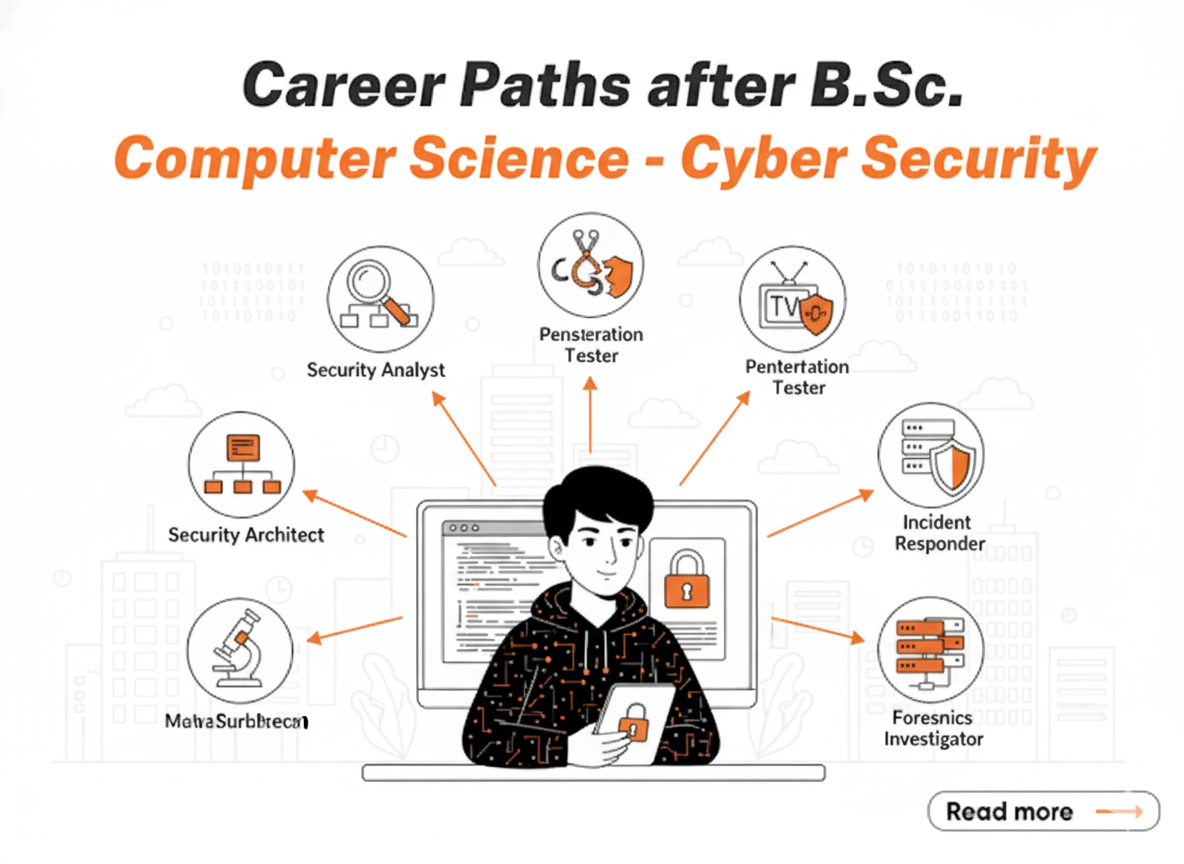
The field includes far more than one job. Common roles include:
| Job title | Main work |
|---|---|
| Security analyst | Monitors systems, reviews alerts, and investigates threats |
| Security operations center analyst | Watches security events and responds to incidents |
| Incident responder | Helps contain and investigate attacks |
| Penetration tester | Performs authorized tests to find weaknesses |
| Security engineer | Builds and maintains security tools and controls |
| Cloud security engineer | Protects cloud services, accounts, and workloads |
| Application security engineer | Helps developers build safer software |
| Governance, risk, and compliance analyst | Maps security work to laws, rules, and company policies |
| Digital forensics analyst | Examines devices and evidence after an incident |
| Security architect | Designs security for large systems |
| Security manager | Leads people, budgets, plans, and risk decisions |
The best role for you depends on whether you prefer hands-on technical work, writing, investigation, project work, or leadership.

Why Is Computer Security a Good Career in the United States?
Computer security is a good career for many people because demand comes from a basic business need: organizations must protect their systems while they use more cloud services, software, connected devices, and online accounts.
A security failure can cause lost money, stolen data, legal trouble, service outages, and damage to public trust. Because of this, security is not only an IT concern. It is also a business, legal, and safety concern.
1. Strong job growth
The BLS projects that employment for information security analysts will grow much faster than average through 2032. This occupation is only one part of the wider security market, but it gives a useful view of demand.
Other roles may grow for different reasons:
- Cloud teams need people who can manage identity and access.
- Software companies need application security support.
- Hospitals need to protect sensitive health data.
- Financial firms need fraud and threat controls.
- Government agencies need secure systems and incident response.
- Small businesses need security services but may not have large internal teams.


Growth does not mean every applicant will receive a job offer. Employers still look for proof of skill, clear communication, and practical experience.
2. Strong earning potential
Security pay can be high, especially after you build experience or move into a specialty.
The BLS median wage for information security analysts was $120,360 in May 2023. That figure is a midpoint, not a starting salary and not a promise. Entry-level roles may pay much less, while senior engineers, managers, consultants, and specialists may earn more.
Pay can change based on:
- Job title
- Years of experience
- Industry
- Employer size
- U.S. region
- Security clearance
- Technical specialty
- Management duties
- Remote or hybrid work rules
For example, a security analyst in a low-cost area may earn less than a similar analyst in a major technology or financial center. A public-sector role may offer different benefits and stability than a private-sector role.
3. Many ways to enter the field
You do not need one fixed background to work in security. People enter from:
- IT support
- Systems administration
- Networking
- Software development
- Data analysis
- Military service
- Audit and compliance
- College programs
- Self-study and hands-on labs
A computer science or cybersecurity degree can help, but it is not the only path. Employers often want evidence that you can use tools, understand systems, and explain your decisions.
4. Work that has a clear purpose
Security work can feel meaningful because it protects real people and services. A well-designed control may help prevent a patient record leak, keep a school system running, or stop a criminal from taking over customer accounts.
Still, the work is not always dramatic. Much of it involves patching, access reviews, log checks, documentation, training, and careful planning. If you need constant excitement, the routine parts may feel slow.
What Are the Downsides of a Computer Security Career?
Computer security has real drawbacks. Knowing them before you start can help you choose the right path.
The field changes often
Attack methods, software, laws, and tools change all the time. You may need to learn throughout your career. A certificate or degree can open a door, but it will not replace ongoing practice.
Some jobs are stressful
A serious incident may require long hours, quick decisions, and work outside normal business hours. Some security operations centers use shifts, including nights and weekends.
Ask an employer about:
- On-call rotation
- Average incident volume
- Team size
- Incident response plans
- Overtime rules
- Remote work during emergencies
- Training time
- Burnout and turnover
A job with a high salary may not be worth it if the schedule is unsafe or unsustainable.


Entry-level jobs can be difficult to find
Many people want to enter cybersecurity because of its reputation for high pay. This creates competition for junior roles.
Some employers also list unrealistic requirements. A job labeled “entry level” may still ask for prior IT experience, certifications, internships, or security tool knowledge.
A practical first role may be in help desk support, system administration, network support, or a security operations center. These jobs can build the system knowledge that security work requires.
Mistakes can have serious effects
A wrong firewall rule, poor access setting, or missed alert can expose data or interrupt services. Good security professionals work carefully, document changes, and follow approval processes.
You should also understand the legal boundary around security testing. Never scan, exploit, or access systems without clear permission. Use your own lab, a legal training platform, or a written authorization from the system owner.

What Skills Do You Need for Computer Security?
You need a mix of technical, analytical, and communication skills. You do not need to master everything before applying for your first job.
Technical skills
Start with the systems that security professionals protect:
- Networking basics
- Windows and Linux administration
- User accounts and access control
- Operating system security
- Basic scripting
- Logs and event data
- Backups and recovery
- Cloud concepts
- Vulnerability management
- Common attack methods
You should understand how data moves through a network, how users authenticate, how software runs, and where systems can fail.
Useful tools may include:
- PowerShell
- Bash
- Python
- Wireshark
- SIEM platforms
- Endpoint detection tools
- Vulnerability scanners
- Ticketing systems
- Cloud security consoles
Tools differ by employer. Focus on the skill behind the tool. For example, learn how to investigate a suspicious login, not just how to click through one vendor’s dashboard.
Communication skills
Security work depends on clear writing and speech. You may need to explain a technical risk to a manager, write an incident report, or show a developer how to fix a flaw.
Strong security professionals can answer:
- What happened?
- How do we know?
- What could happen next?
- What action should we take?
- What risk remains?
Communication is especially important in governance, risk, and compliance roles, but it matters in every security job.


Curiosity and judgment
Attackers look for unexpected paths. Security workers must ask useful questions and avoid jumping to conclusions.
Good judgment means knowing when to:
- Gather more evidence
- Isolate a device
- Escalate an incident
- Ask for approval
- Stop a risky change
- Accept a low risk
- Recommend a stronger control

Do You Need a Degree or Certification?
No single education path guarantees a computer security job. A degree, certification, portfolio, internship, or prior IT experience may each help, but their value depends on the role and employer.
A degree can help with structured learning
Common degrees include:
- Cybersecurity
- Computer science
- Information technology
- Information systems
- Digital forensics
- Network administration
A degree may help with internships, government jobs, larger employers, and roles that list formal education as a requirement. It can also give you a broad base in programming, systems, networks, and math.
The trade-off is cost and time. Before enrolling, compare the program’s tuition, lab access, internship support, course content, graduation outcomes, and employer connections.
Certifications can show focused knowledge
Certifications may help validate entry-level knowledge or support career growth. Examples include:
- CompTIA Security+
- Cisco Certified CyberOps Associate
- GIAC certifications
- Certified Ethical Hacker
- Certified Information Systems Security Professional
- Certified Information Security Manager
- Cloud security certifications from major cloud providers
The right certification depends on your experience and target role. Some advanced certifications require work experience. Do not choose a credential only because it appears in online advertisements.
A certification is most useful when you can explain and apply the material. Memorizing practice questions without understanding the concepts will not prepare you for real work.
A portfolio can prove practical ability
A legal home lab can help you show what you can do. You might:
- Build a small Windows and Linux network
- Collect logs and investigate test events
- Write a simple script to check file hashes
- Document a vulnerability in a controlled lab
- Create a basic incident response plan
- Review cloud identity settings in a training account
- Write a clear security report
Document the goal, method, result, and limits. Never publish real passwords, private data, or attack details that could harm others.


How Much Does Computer Security Pay?
Computer security pay varies widely, so use salary data as a guide rather than a guarantee.
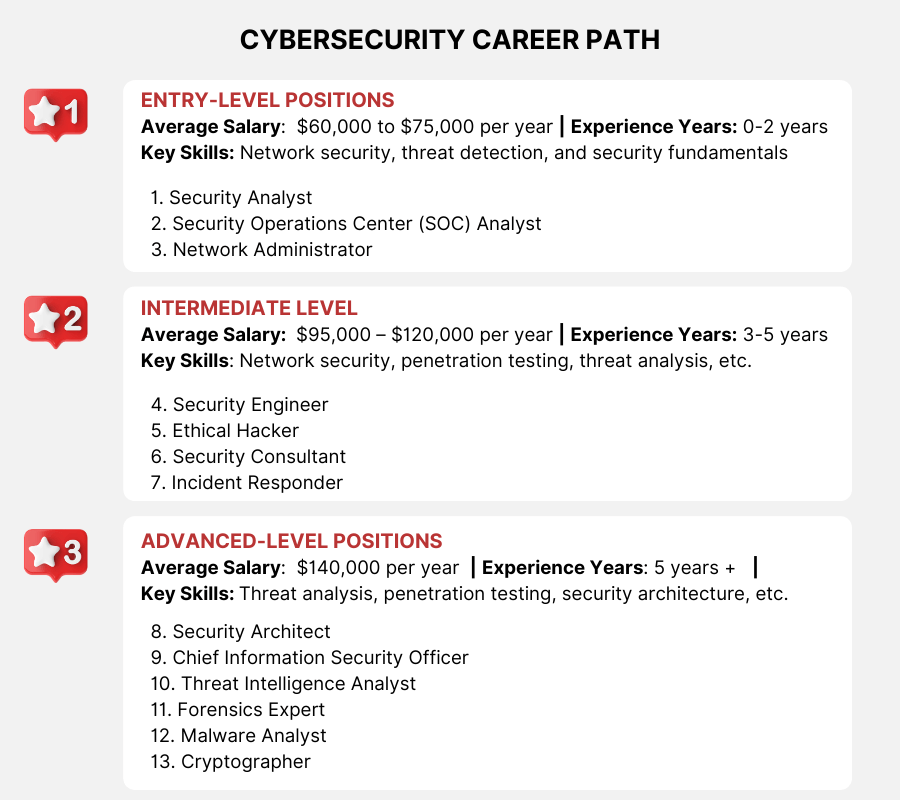
The following figures show the type of progression many workers may see, but they are illustrative ranges, not official salary promises:
| Career stage | Possible role examples | Typical factors |
|---|---|---|
| Entry level | Help desk, junior analyst, security support | Basic IT skills, labs, communication |
| Early career | Security analyst, vulnerability analyst, SOC analyst | Incident work, tools, system knowledge |
| Mid-career | Security engineer, consultant, cloud security analyst | Specialization and independent decisions |
| Senior level | Security architect, lead responder, senior engineer | Design, leadership, complex risk |
| Leadership | Security manager, director, chief information security officer | Strategy, budgets, people, executive communication |
The BLS wage figure for information security analysts is more reliable than a generic online salary range because it comes from a defined U.S. occupation and survey method. It still does not describe every cybersecurity job.
When comparing offers, review the whole package:
- Base pay
- Bonus rules
- Health coverage
- Retirement match
- Paid leave
- Training budget
- Certification support
- On-call pay
- Clearance requirements
- Commute and work schedule
A lower salary with strong training and a healthy team may create better long-term value than a higher salary with constant crisis work.

Which Computer Security Career Path Is Right for You?
Choose a path based on the work you enjoy, not only the salary.
| If you enjoy… | Consider exploring… |
|---|---|
| Investigating alerts and events | Security operations or incident response |
| Building and fixing systems | Security engineering |
| Testing systems with permission | Penetration testing |
| Coding and reviewing software | Application security |
| Cloud platforms and identity | Cloud security |
| Rules, evidence, and documentation | Governance, risk, and compliance |
| Finding patterns in evidence | Digital forensics |
| Planning and leading people | Security management |
Technical security
Technical roles require regular work with systems, networks, code, cloud services, or security tools. They may suit people who like building, testing, and troubleshooting.
Governance, risk, and compliance
GRC roles focus on policies, controls, audits, risk reviews, vendor assessments, and regulatory requirements. These jobs can suit people who write well, organize evidence, and connect business goals with security needs.
Offensive security
Penetration testers and red teams look for weaknesses through authorized testing. This work requires strong technical skill and strict legal boundaries. A responsible tester reports flaws clearly and helps the owner fix them.
Defensive security
Defensive roles detect, contain, and prevent attacks. They often involve monitoring, alert review, endpoint tools, identity controls, and incident response.
No path is automatically better. The best choice is the one that matches your strengths and preferred work style.

How to Start a Computer Security Career
A practical entry plan is more valuable than collecting random courses.
Step 1: Learn core IT concepts
Study networking, operating systems, identity, files, permissions, and basic troubleshooting. Security sits on top of these topics.
Step 2: Choose a target role
Do not try to prepare for every security job at once. Pick a first target, such as:


- Junior security analyst
- SOC analyst
- IT support with security duties
- Vulnerability management assistant
- GRC analyst
- Junior system administrator
Your target role will guide your study and project choices.
Step 3: Build a safe practice lab
Use a personal computer, virtual machines, or a legal training platform. Keep the lab separate from work systems and personal accounts.
Practice tasks such as:
- Creating users and permissions
- Reviewing logs
- Applying updates
- Writing simple detection rules
- Investigating a simulated alert
- Making a backup and restoring it
- Writing a short incident report
Step 4: Create proof of work
A resume claim is weaker than a clear example. Build a small portfolio with screenshots, diagrams, notes, and reports that do not expose private information.
Step 5: Gain related experience
Help desk, networking, system administration, software testing, and audit work can all lead toward security. Look for tasks involving access reviews, patching, logs, backups, or incident handling.
Step 6: Apply with a focused resume
Match your resume to the job description. Show outcomes when possible:
- Reviewed authentication logs
- Supported user access changes
- Documented security procedures
- Investigated suspicious email reports
- Assisted with patch management
- Built a home lab for log analysis
Do not claim experience with tools you have only watched in a video.
Is Computer Security a Good Career for Beginners?
Yes, but beginners should set realistic expectations. You may need to enter through general IT before moving into a dedicated security role.
Security employers often expect candidates to understand how normal systems work. It is hard to identify abnormal behavior if you do not know what normal network traffic, account use, or system activity looks like.
A beginner-friendly path might look like this:
- Learn basic IT and networking.
- Practice in legal labs.
- Earn one relevant entry-level certification if useful.
- Apply for support, network, systems, or junior security roles.
- Keep a record of practical projects.
- Move toward a specialty after gaining experience.
Do not wait until you feel fully ready. At the same time, do not apply only to senior jobs after completing a short course. Build skills in stages.

Who Should Not Choose This Career?
Computer security may not suit you if you strongly dislike:
- Constant learning
- Technical troubleshooting
- Detailed documentation
- Rules and approval steps
- Unclear problems
- High responsibility
- Occasional urgent work
- Explaining technical issues to nontechnical people
That does not mean you need to be a mathematical genius or a programming expert. Many security jobs value careful analysis, writing, organization, and teamwork as much as advanced coding.
You should also avoid the field if your main goal is a quick salary increase with minimal study. Security tools and threats change, and employers can tell when a candidate lacks basic system knowledge.
Common Mistakes to Avoid
Chasing certifications without practice
A long list of certificates will not replace hands-on ability. Pair each major topic with a lab, project, or work task.
Ignoring communication
Security work affects users, managers, developers, and customers. Clear writing can set you apart from a technically strong candidate who cannot explain risk.
Learning tools without concepts
Tools change. Core ideas last longer. Learn authentication, least privilege, network traffic, logging, patching, backups, and risk before focusing on brand names.
Testing systems without permission
Unauthorized scanning or exploitation can cause harm and may violate civil or criminal law. Use written authorization and stay within the agreed scope.
Assuming all security jobs are remote
Some roles support sensitive systems or require on-site work. Ask about location, equipment, travel, clearance, and emergency duties before accepting an offer.
Treating burnout as normal
Security incidents happen, but permanent exhaustion is not a career requirement. Ask how the team handles staffing, vacations, on-call schedules, and incident recovery.
Key Takeaways
- Computer security is a good U.S. career for many people, especially those who like technology, investigation, and continuous learning.
- The BLS projects 32% growth for information security analyst jobs from 2022 to 2032.
- The BLS reported a $120,360 median annual wage for information security analysts in May 2023.
- A degree can help, but practical skills, related IT experience, certifications, and a portfolio can also matter.
- Entry-level hiring may be competitive, so help desk, networking, and systems roles can be useful stepping stones.
- The field includes technical, defensive, offensive, cloud, compliance, forensic, and leadership paths.
- Never test or access systems without clear authorization.
- Compare job offers by workload, training, benefits, and on-call duties—not salary alone.
Frequently Asked Questions
Is computer security hard to learn?
It can be challenging because it combines networking, operating systems, software, risk, and human behavior. You do not need to learn everything at once. Start with basic IT, then build toward one target role.
Can I get a computer security job without a degree?
Yes. Some employers accept certifications, practical projects, prior IT work, or relevant military experience instead of a degree. Other employers, especially some government and large-company roles, may list a degree as a requirement.
Is cybersecurity still a good career in the USA?
The U.S. labor outlook remains strong for information security analyst work, based on BLS projections. Demand does not remove competition, and job conditions vary by employer, location, specialty, and experience.
What is the best entry-level cybersecurity job?
There is no single best option. A SOC analyst role may provide direct security experience, while help desk, network support, and system administration can build the technical foundation many security roles require.
Do computer security jobs require coding?
Not always. GRC, auditing, security awareness, and some analyst roles may use little code. Scripting becomes more useful in security engineering, detection, penetration testing, automation, and cloud security.
Can computer security work be stressful?
Yes. Incident response, monitoring, and critical infrastructure roles may involve urgent events or on-call work. Ask about staffing, shifts, alert volume, and recovery time before accepting a position.
Sources and Data Notes
The labor figures in this article come from the U.S. Bureau of Labor Statistics:
- Information Security Analysts — Occupational Outlook Handbook
- Occupational Employment and Wage Statistics
Additional career and skills frameworks are available from:
- NICE Cybersecurity Workforce Framework
- Cybersecurity and Infrastructure Security Agency
- National Institute of Standards and Technology Cybersecurity Framework
BLS wage and projection data describe specific occupations and survey periods. They do not guarantee an individual salary, job offer, or career outcome.
Conclusion
Computer security is a good career in the United States when the work matches your interests and expectations. It offers many paths, strong demand, and the chance to protect systems that people rely on every day.
Start with core IT skills, choose one entry target, practice in a legal lab, and build proof of your work. Then compare jobs by pay, training, workload, and long-term growth. That approach is more reliable than chasing a title or certificate alone.