
No single car color is illegal nationwide, but emergency-style colors, lights, and markings can violate state law.
The answer to “what color is illegal to use on cars” depends on your state, the vehicle’s purpose, and whether the color is paint, lighting, tint, or reflective material. After reviewing common U.S. vehicle rules, the key lesson is clear: ordinary paint colors are usually legal, while colors that imitate police, fire, or emergency vehicles can create legal trouble.
What Color Is Illegal to Use on Cars?
In the United States, no single paint color is banned on all private cars. You can usually paint a vehicle red, blue, green, black, white, yellow, purple, or any custom shade.
The legal concern often involves how the color is used. A blue light on a private car may be restricted, even though blue paint is legal. A red light facing forward may also be illegal, while a red body panel is normally allowed.
When asking what color is illegal to use on cars, separate these four categories:
• Body paint: Usually legal in any color.
• Emergency lights: Often restricted by color and location.
• Window tint: Regulated by visible light transmission, not simply by color.
• Reflective markings: May be restricted if they copy official vehicles.
This difference matters. Many drivers hear that “blue cars are illegal” or “red cars are illegal.” That is usually false. The real issue is whether the vehicle looks or functions like an emergency vehicle.
Are Any Car Paint Colors Illegal?
Most car paint colors are legal for personal vehicles. State motor vehicle laws focus more on safety, identification, and deceptive appearance than on ordinary paint.
A private owner can generally use:
• Bright red paint
• Police-style navy blue paint
• Fire-engine red paint
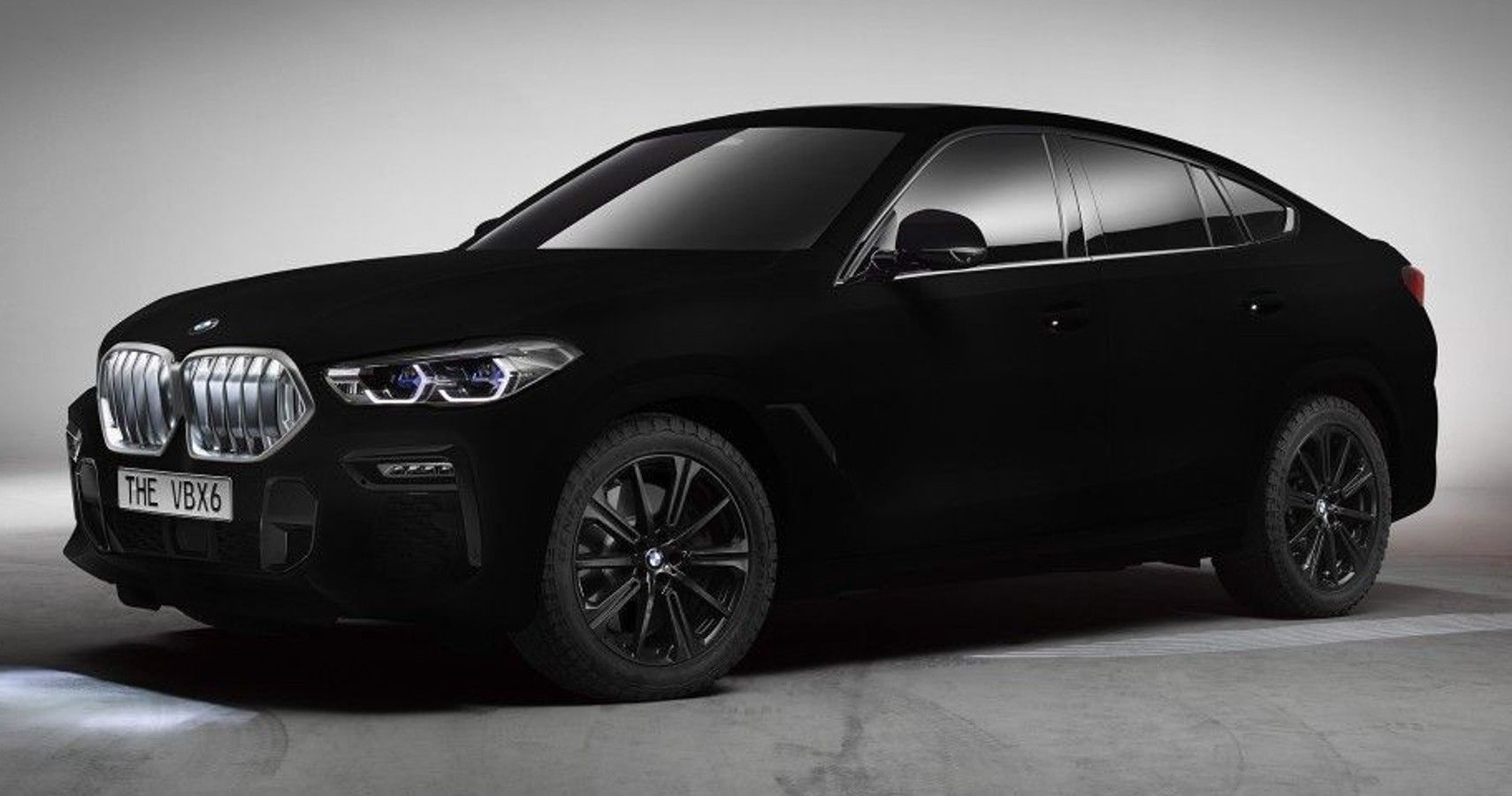
• Matte black paint
• Fluorescent yellow paint
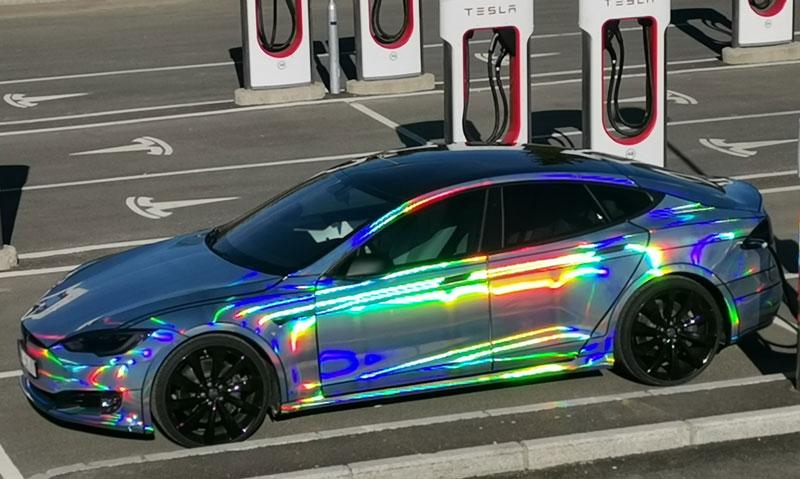
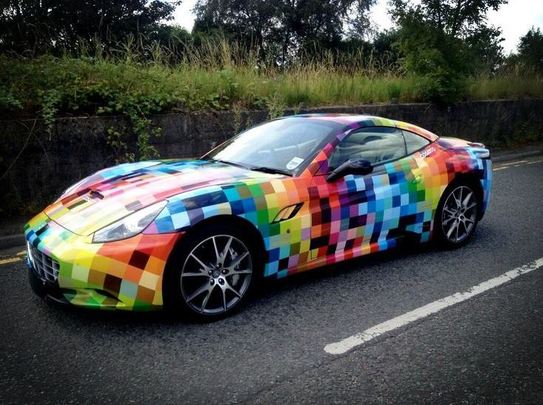
• Chrome or color-shifting paint
However, a paint scheme may become a problem if it closely copies an official vehicle. Some states restrict markings, badges, lettering, stripes, or designs that could cause people to believe a private car belongs to law enforcement or another public agency.
This means a blue sedan with no police markings is usually fine. A blue sedan with “POLICE” lettering, a badge emblem, a roof light bar, and official-looking stripes is a different matter.
The answer to what color is illegal to use on cars is therefore not based on color alone. It depends on the full visual package and how the vehicle is used.
Police-style colors and markings
Police cars often use dark blue, black, white, or a combination of these colors. Those colors are not automatically illegal for private vehicles.
The risk increases when you add:
• Police wording or agency names
• Badge symbols
• Official shield designs
• Emergency light bars
• Red and blue flashing lights
• Reflective police graphics
• Decals that suggest official authority
A paint color by itself rarely gives police a legal reason to cite you. A complete imitation may lead to a stop, equipment violation, or other charge, depending on local law.
Fire department and ambulance designs
Fire trucks often use red, white, or yellow. Ambulances may use white, red, yellow, green, or blue. These colors remain legal as normal paint choices.
The problem comes from copying official graphics, warning patterns, or emergency equipment. A private vehicle that looks like an active fire truck or ambulance may confuse other drivers, especially at night or during an emergency.
Are Red and Blue Lights Illegal on Private Cars?
Red and blue lights are among the most restricted vehicle light colors in the United States. Many states reserve blue lights for police vehicles and reserve red lights for emergency vehicles or for specific positions on a vehicle.
Rules vary by state, but common restrictions include:
• Blue flashing lights may be limited to law enforcement.
• Red lights facing forward may be reserved for emergency vehicles.
• Flashing red and blue lights may be illegal on private cars.
• Light bars may be illegal even when they are not turned on.
• Emergency-style lights may require official authorization.
• Certain volunteer responders may have limited permission under state law.
A steady red light at the rear of a car is often required for brake and tail lamps. That does not mean a private car may place a flashing red light on the grille or roof.
Likewise, amber lights are often allowed for tow trucks, construction vehicles, and utility vehicles. But an ordinary driver may still face restrictions on flashing amber lights, light placement, or use on public roads.
If you are researching what color is illegal to use on cars, lighting rules deserve more attention than paint rules. A legal body color can become part of an illegal setup when combined with restricted lights.
Why Emergency Colors Are Regulated
Emergency lighting rules exist to protect fast recognition. Drivers need to identify police, fire, ambulance, and road service vehicles in seconds.
Think of emergency colors as traffic language. Red, blue, and amber signals tell other drivers to slow down, move over, or yield. If too many private cars use those signals, the message becomes unclear.
These rules also protect emergency workers. A fake police-looking car could cause a driver to stop when they should not. It could also make people ignore a real emergency vehicle because they have seen too many imitations.
State laws may regulate:
• The color of a lamp
• The direction the lamp faces
• Whether the lamp flashes
• The number of lamps
• The lamp’s brightness
• The vehicle’s purpose
• Whether the driver has official permission
Federal vehicle standards also regulate required lighting equipment, but states often control additional warning lights and unauthorized emergency signals on public roads.
Is It Illegal to Drive a Police-Style Car?
A police-style car is not automatically illegal. The answer depends on how closely it resembles an official vehicle and what equipment it carries.
A private owner may legally drive a black-and-white sedan in many places. The same car could create a legal issue if it has police decals, a siren, a light bar, or wording that suggests it is an official patrol car.
Before creating a police-style build, check your state’s rules for impersonating public officials and unauthorized vehicle markings. Some laws focus on intent. Others focus on the appearance itself.
A safe approach is to avoid:
• Official agency names
• Police badges and shield graphics
• “POLICE” or “SHERIFF” lettering
• Red and blue warning lights
• Sirens
• Government license plates
• Reflective graphics copied from local agencies
A replica used for a movie, parade, or display may have different rules. It may still need to be covered, marked, or transported rather than driven normally on public roads.
What About Green, Purple, Yellow, or White Lights?
Green, purple, yellow, and white lights can also be regulated. There is no universal rule that makes these colors legal for every private vehicle.
Green lights may be linked to emergency medical services, security functions, or special responder programs in some states. Yellow and amber lights are common on service vehicles but may be restricted in brightness, placement, or use.
White lights are usually allowed for headlights, reverse lamps, and some work lights. A white flashing light aimed forward can still create a safety issue or violate equipment rules.
Purple lights are less common, but uncommon does not mean automatically legal. State laws may ban flashing, rotating, or oscillating lights that are not approved for the vehicle’s use.
When asking what color is illegal to use on cars, ask three follow-up questions:
Is the light steady or flashing?
Where is it mounted?
Is the vehicle authorized to use it?
Those details often matter more than the color itself.
Is Colored Window Tint Illegal?
Colored window tint is different from colored paint and emergency lighting. Tint laws usually measure how much visible light passes through the glass.
A state may allow a light smoke tint but restrict red, blue, mirrored, or highly reflective film. Some states also ban tint that makes it hard to identify the driver or see into the vehicle.
Rules often apply to:
• Windshields
• Front side windows
• Rear side windows
• Back windows
• Reflective film
• Red or blue tint
• Medical exemptions
• Factory glass
For example, a state may allow darker tint on rear windows but require a lighter level on front windows. A tint meter may be used during inspection or a traffic stop.
Do not rely only on the film package label. “Legal tint” claims may apply to one state but not another. The final result also depends on the vehicle’s factory glass and the added film.
Can Reflective or Chrome Car Colors Cause Problems?
Chrome paint and color-shifting finishes are usually legal. They can create practical problems if they reflect too much light or interfere with visibility.
Highly reflective surfaces may distract other drivers, especially in direct sunlight. Some states regulate reflective materials on vehicles, particularly when they look like warning markings or create glare.
A wrap with reflective red, blue, or white stripes may draw more attention than a normal paint job. If the design resembles an emergency, highway, or utility vehicle, an officer may inspect it more closely.
Before installing a reflective wrap, confirm:
• It does not cover the license plate.
• It does not hide required lamps or reflectors.
• It does not copy official vehicle graphics.
• It does not create dangerous glare.
• It complies with inspection rules.
The answer to what color is illegal to use on cars can change when a finish is reflective, flashing, or combined with official-style markings.
How State Laws Affect Car Color Rules
Vehicle equipment laws are not identical across the country. One state may allow a certain warning light for volunteer responders, while another may reserve it for public agencies.
Local rules can also apply to:
• Vehicle inspections
• License plate visibility
• Decorative lighting
• Underbody lights
• Window tint
• Emergency markings
• Public road use
• Special permits
For accurate information, check your state department of motor vehicles, state traffic code, and vehicle inspection agency. If the vehicle resembles a police, fire, ambulance, or highway service vehicle, also check laws on impersonating public officials.
Do not treat advice from a car forum as legal proof. Online posts may be old, incomplete, or based on another state. When a custom build is expensive, ask the inspection office or a qualified traffic attorney before installing the equipment.

Common Mistakes Car Owners Make
Many legal problems come from small changes that owners do not view as important. A driver may buy a light bar for a show car, install it for appearance, and forget that the car may later be driven on public roads.
Common mistakes include:
• Assuming a legal paint color makes all accessories legal
• Installing red or blue grille lights
• Using a siren without checking state law
• Covering a license plate with a tinted cover
• Adding dark tint over already dark factory glass
• Copying a local police department’s graphics
• Driving a parade or movie replica on normal roads
• Trusting a seller’s “street legal” label
A practical lesson from reviewing custom vehicle setups is simple: inspect the whole car, not just one part. A blue paint job may be harmless, but blue flashing lights, a light bar, and police decals can change the legal picture completely.
Take photographs of the planned design and equipment. Compare them with your state’s rules before installation. This can prevent costly removal work and an avoidable traffic stop.
How to Make a Custom Car Legal
Use this checklist before driving a customized vehicle on public roads:
Identify the type of change. Decide whether it involves paint, tint, lights, decals, reflective material, or all of these.
Check state rules. Look for laws covering lamps, emergency equipment, window tint, vehicle markings, and license plates.
Compare light colors and positions. Confirm whether each lamp is allowed, where it faces, and whether it may flash.
Remove official-looking symbols. Do not use agency names, badges, or police-style lettering.
Test visibility. Make sure the license plate, lamps, reflectors, and required markings remain easy to see.
Confirm inspection requirements. Some states inspect tint, lighting, and equipment before registration.
Ask before spending money. Contact the DMV or inspection office when the rule is unclear.
Keep show equipment off public roads. A display-only setup may be acceptable at a private event but illegal during normal driving.
If you have already installed restricted equipment, do not assume it is fine because you have not received a ticket. Remove it, cover it, or disable it until you confirm the law.
Frequently Asked Questions About What Color Is Illegal to Use on Cars
What color is illegal to use on cars in the United States?
No single body paint color is illegal nationwide. Most restrictions apply to emergency lights, official markings, reflective designs, or window tint rather than ordinary car paint.
Is it illegal to drive a blue car?
No. Blue paint is generally legal on private cars. Blue flashing lights or police-style markings may be restricted, depending on state law.
Are red lights illegal on private vehicles?
Red lights are not always illegal because private cars use red tail and brake lamps. However, flashing red lights or red lights facing forward may be reserved for emergency vehicles.
Can I paint my car like a police car?
It may be legal to use similar colors, but copying official decals, badges, lettering, or equipment can create legal problems. Check state laws before driving a replica on public roads.
Are colored headlights legal?
Colored headlights are often restricted because headlights must meet approved color and visibility standards. Blue, red, purple, and heavily tinted headlight covers may fail inspection or violate traffic laws.
Is amber lighting legal on a personal car?
Amber lighting is often associated with tow, construction, utility, and maintenance vehicles. It may be legal in limited situations, but flashing amber lights can still be restricted by state law.
Is colored window tint legal?
Colored window tint depends on state rules and the amount of visible light it allows through. Red, blue, mirrored, or very dark tint may be prohibited even when a seller calls it legal.
Conclusion
The best answer to what color is illegal to use on cars is that ordinary paint colors are rarely banned. Legal trouble usually starts with emergency-style lights, police or fire markings, reflective designs, illegal tint, or equipment that makes a private vehicle look official.
Before modifying your car, check your state’s current rules and review the entire design as one package. A custom color can be safe and legal, but a flashing light or official-looking decal can change everything. For the most reliable result, confirm your setup with your state DMV or inspection agency before driving it on public roads.