

For drivers in the United States, 185 in a tire size means the tire is 185 millimeters wide from sidewall to sidewall. That equals about 7.3 inches.
However, 185 is not a complete tire size. A full size also needs the tire’s aspect ratio, construction type, wheel diameter, load index, and speed rating. For example, 185/65R15 88H gives much more information than “185” alone.
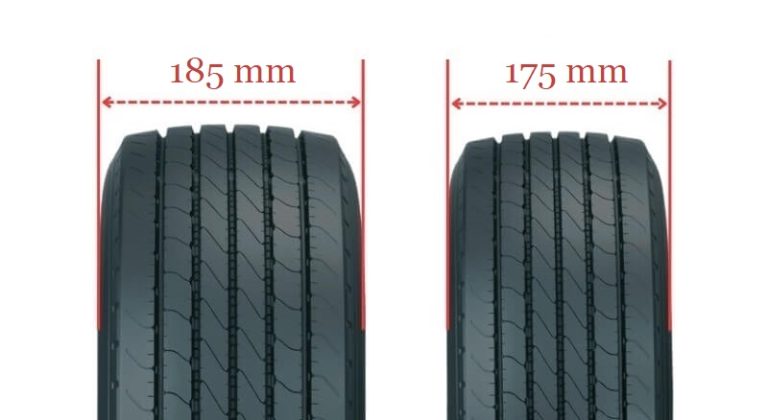
What Does 185 Mean on a Tire?
The number 185 is the tire’s section width. It measures the widest part of the inflated tire in millimeters.
Here is the basic meaning:
- 185 = tire width in millimeters
- 7.3 inches = approximate width after conversion
- Measurement is taken from one sidewall to the other
- The actual tread width may be narrower than the full tire width
To convert the number:
185 ÷ 25.4 = 7.28 inches
So, a tire marked 185 is about 7.28 inches wide.
The number does not tell you:
- The tire’s total diameter
- The sidewall height
- The wheel size
- The tire’s load capacity
- The tire’s speed rating
- Whether it fits your vehicle
Those details appear in the rest of the tire-size code.

How to Read a Complete Tire Size
A common tire size is 185/65R15 88H. Each part has a separate meaning.
| Marking | Meaning |
|---|---|
| 185 | Section width in millimeters |
| 65 | Aspect ratio |
| R | Radial construction |
| 15 | Wheel diameter in inches |
| 88 | Load index |
| H | Speed rating |
185/65R15 explained
The 185 means the tire is about 185 mm wide.
The 65 means the sidewall height is 65% of the tire’s width. It does not mean the sidewall is 65 millimeters tall.
The R means radial construction. Nearly all modern passenger tires sold in the United States use radial construction.
The 15 means the tire fits a 15-inch wheel. This is the wheel’s diameter, not the tire’s total diameter.
The 88 is the load index. A load index of 88 corresponds to a maximum rated load of 1,235 pounds per tire under the applicable tire-rating conditions.
The H is the speed rating. H-rated tires are rated for speeds up to 130 mph under specified test conditions. This rating is not a recommended driving speed.
Always confirm the exact load and speed ratings for your vehicle. A tire with the right width may still be unsafe or unsuitable if its other ratings are too low.

How Wide Is a 185 Tire Compared With Other Sizes?
A 185 tire is considered a relatively narrow passenger-car tire. It is wider than a 175 tire and narrower than a 195 or 205 tire.
| Tire width | Approximate width in inches | Difference from 185 |
|---|---|---|
| 175 | 6.9 inches | 10 mm narrower |
| 185 | 7.3 inches | Reference size |
| 195 | 7.7 inches | 10 mm wider |
| 205 | 8.1 inches | 20 mm wider |
| 215 | 8.5 inches | 30 mm wider |
The difference may look small, but tire width can affect several vehicle traits:
- Steering feel
- Wet-road grip
- Snow performance
- Road noise
- Fuel use
- Clearance inside the wheel well
- Contact with suspension parts
A wider tire is not automatically better. A narrow tire may work well in snow because it can cut through loose snow more effectively. A wider tire may offer more dry-road grip, but only if the wheel, suspension, alignment, and vehicle design support it.
The tread design, rubber compound, tire pressure, vehicle weight, and road surface also matter. Width alone does not predict total performance.

Does 185 Mean the Tire Is 185 Millimeters Wide?
Yes, but with a small qualification. 185 is the tire’s nominal section width, not a guaranteed measurement of the visible tread.
The measured width can vary based on:
- Tire brand
- Tire model
- Approved wheel width
- Inflation pressure
- Tire load
- Measuring standard
- Tread and sidewall design
For example, two different 185-width tires may not measure exactly the same when mounted. One may have a wider shoulder or a different sidewall shape.
This is normal. The tire size is a standardized fitment label, not a promise that every physical measurement will be identical.
Section width versus tread width
These terms are different:
- Section width: The tire’s widest outside measurement
- Tread width: The part of the tire that contacts the road
- Rim width: The width of the wheel where the tire bead mounts
A tire listed as 185 may have a tread width that is less than 185 mm. Do not use the tread width alone when checking basic fitment.

What Does the 185 Tire Size Look Like in Practice?
Consider the common size 185/65R15.
Sidewall height
Use this formula:
Sidewall height = tire width × aspect ratio
The aspect ratio is 65%, or 0.65:
185 × 0.65 = 120.25 mm
Each sidewall is about 120 mm, or 4.7 inches, tall.
Overall tire diameter
Use this formula:
Overall diameter =
(2 × sidewall height) + wheel diameter
Convert the 15-inch wheel to millimeters:
15 × 25.4 = 381 mm
Then calculate:
(2 × 120.25) + 381 = 621.5 mm
The approximate overall diameter is:
- 621.5 mm
- 24.5 inches
This calculation is only an example. A different aspect ratio or wheel diameter will produce a different tire height, even when the width remains 185 mm.
Comparing common 185 sizes
| Tire size | Approximate diameter | Approximate sidewall height |
|---|---|---|
| 185/60R15 | 23.7 inches | 4.4 inches |
| 185/65R15 | 24.5 inches | 4.7 inches |
| 185/70R14 | 24.2 inches | 5.1 inches |
| 185/70R15 | 25.2 inches | 5.1 inches |
The first number is the same in each example. The tires still have different heights and may not be interchangeable.

Can You Replace a 185 Tire With a 195 Tire?
Sometimes, but not by width alone. A 195 tire is about 10 mm wider than a 185 tire. That change may affect clearance, handling, and the vehicle’s speedometer.
Before changing sizes, compare the complete tire specifications:
- Width
- Aspect ratio
- Wheel diameter
- Overall diameter
- Load index
- Speed rating
- Approved rim width
- Clearance at the suspension and body
- Vehicle manufacturer requirements
For example, replacing 185/65R15 with 195/60R15 creates a tire with a similar overall diameter, but it is still wider. Replacing it with 195/70R15 creates a much taller tire, which may cause clearance or speedometer problems.
The vehicle manufacturer’s approved alternate sizes are the safest place to start. If the size is not listed, ask a qualified tire professional to verify the fit.
What happens if the replacement is too tall?
A larger overall diameter can:
- Reduce clearance
- Cause rubbing during turns
- Change speedometer readings
- Affect anti-lock braking and stability systems
- Change acceleration and gear behavior
What happens if the replacement is too short?
A smaller overall diameter can:
- Increase engine speed at a given road speed
- Reduce ground clearance
- Cause the speedometer to read higher than actual speed
- Change braking and handling behavior
A tire calculator can estimate the difference, but it cannot confirm physical clearance or electronic compatibility.

How Do You Know if a 185 Tire Fits Your Vehicle?
Check the vehicle’s tire and loading information placard first. In the United States, this label is commonly found on the driver-side doorjamb. It may also be inside the glove box, on the fuel-door area, or in the owner’s manual.
The placard normally lists:
- Original tire size
- Recommended cold tire pressure
- Maximum vehicle load
- Seating capacity
Use the placard size as the main reference. The owner’s manual may list approved alternate sizes for different wheels or trim levels.
A safe fitment check
Before buying a 185 tire, verify all of these items:
- The full size matches an approved vehicle size.
- The tire fits the wheel diameter.
- The rim width is approved for that tire.
- The load index meets or exceeds the vehicle requirement.
- The speed rating meets the vehicle requirement.
- The tire type matches the vehicle’s needs.
- There is enough clearance at full steering lock.
- The tire does not rub the suspension or body.
- The tire pressure follows the door placard, not the maximum pressure molded on the tire.
Do not choose a tire based only on the number 185. Two tires that begin with 185 may have very different load ratings and diameters.

What Is the Difference Between 185 Tires and 185R Tires?
A size such as 185R14 can be less complete than a size such as 185/75R14.
In some tire-size systems, a missing aspect ratio is interpreted by a standard convention. For many older or light-truck applications, 185R14 may indicate an aspect ratio near 80. However, the exact meaning can depend on the tire type, manufacturer, and application.
Do not assume the missing number without checking the tire maker’s specification. The sidewall, vehicle placard, owner’s manual, or tire dealer can provide the correct interpretation.
This matters because two tires with the same 185 width may have different overall diameters:
- 185/60R14 is relatively short
- 185/75R14 is taller
- 185R14 may refer to a conventional higher-profile size
The width is only one part of the fitment equation.

Is a 185 Tire Good for Snow or Rain?
A 185 tire can perform well in snow or rain, but the number 185 does not determine wet or winter performance.
Key factors include:
- Tread pattern
- Rubber compound
- Tire age
- Tread depth
- Inflation pressure
- Vehicle drivetrain
- Road temperature
- Snow or water depth
For winter driving in the United States, look for the three-peak mountain snowflake symbol when severe-snow performance is required. This symbol identifies a tire that meets a defined snow-traction performance test. It does not mean the tire is suitable for every winter road.
An all-season tire may be adequate in mild climates. Drivers who regularly face ice, packed snow, or very low temperatures may need dedicated winter tires.
A narrow 185 tire may offer useful snow behavior, but width alone cannot replace the right winter compound and tread design.

Common Mistakes When Reading 185 Tire Sizes
Mistake 1: Treating 185 as the complete size
“185” only gives the nominal width. It does not identify the correct tire for a vehicle.
Mistake 2: Confusing aspect ratio with sidewall height
In 185/65R15, the 65 means the sidewall is 65% of 185 mm. It does not mean the sidewall is 65 mm.
Mistake 3: Assuming every 185 tire has the same diameter
A 185/60R15 and a 185/70R15 have the same width but different heights.
Mistake 4: Ignoring the load index
A tire may fit the wheel but still have too little load capacity for the vehicle.
Mistake 5: Setting pressure from the tire sidewall
The pressure molded on the tire is often the tire’s maximum permitted cold pressure. Use the vehicle door placard for normal inflation pressure.
Mistake 6: Mixing tire sizes without checking the drivetrain
Some vehicles need matching tire diameters on all four wheels. This is especially important for vehicles with all-wheel drive or four-wheel drive.
Mistake 7: Measuring only the tread
The sidewall can be wider than the tread. Check the full section width and the manufacturer’s fitment data.

Key Takeaways
- 185 means the tire is about 185 mm wide, or 7.3 inches.
- It is the tire’s nominal section width.
- “185” alone is not a complete tire size.
- The aspect ratio controls sidewall height.
- The wheel diameter appears after the letter R.
- Load index and speed rating are separate safety details.
- A 195 tire is about 10 mm wider than a 185 tire.
- Always check the doorjamb placard and owner’s manual before changing sizes.
- Do not assume two 185 tires have the same diameter or fit.
Frequently Asked Questions
Is a 185 tire 7 inches wide?
A 185 tire is about 7.28 inches wide, so it is closer to 7.3 inches than 7 inches. This is the nominal section width, not necessarily the exact tread width.
Can I put a 185 tire on a 15-inch wheel?
Yes, if the complete size is designed for a 15-inch wheel, such as 185/65R15. The 185 by itself does not confirm wheel compatibility. Check the full size and the tire maker’s approved rim-width range.
Is 185 the tire’s tread width?
No. It is the nominal section width from sidewall to sidewall. The usable tread area is usually narrower and varies by tire model.
Is a 185 tire better than a 195 tire?
Neither size is always better. A 185 tire is narrower, while a 195 tire is wider. The better choice depends on the vehicle’s approved sizes, driving conditions, load needs, and clearance.
Can I use different 185 tire sizes on the same vehicle?
Usually, tires on the same axle should match in size, construction, and rating. Many vehicles require all four tires to have the same size, especially all-wheel-drive vehicles. Follow the vehicle manufacturer’s instructions.
Where can I find my vehicle’s correct tire size?
Look at the tire and loading information placard on the driver-side doorjamb. You can also check the owner’s manual. Do not rely only on the size printed on the tires currently installed, since they may be replacements or may not match the original specification.
Final Answer: What Is 185 in Tire Size?
185 is the tire’s nominal width in millimeters. It represents a tire about 7.3 inches wide.
To identify the correct tire, read the entire marking, such as 185/65R15 88H. Then compare it with the vehicle’s doorjamb placard and owner’s manual. If you are considering a different width or overall diameter, have the fitment, load rating, clearance, and drivetrain requirements checked before installation.
For additional safety guidance, consult the National Highway Traffic Safety Administration tire safety information and the tire manufacturer’s specifications.