

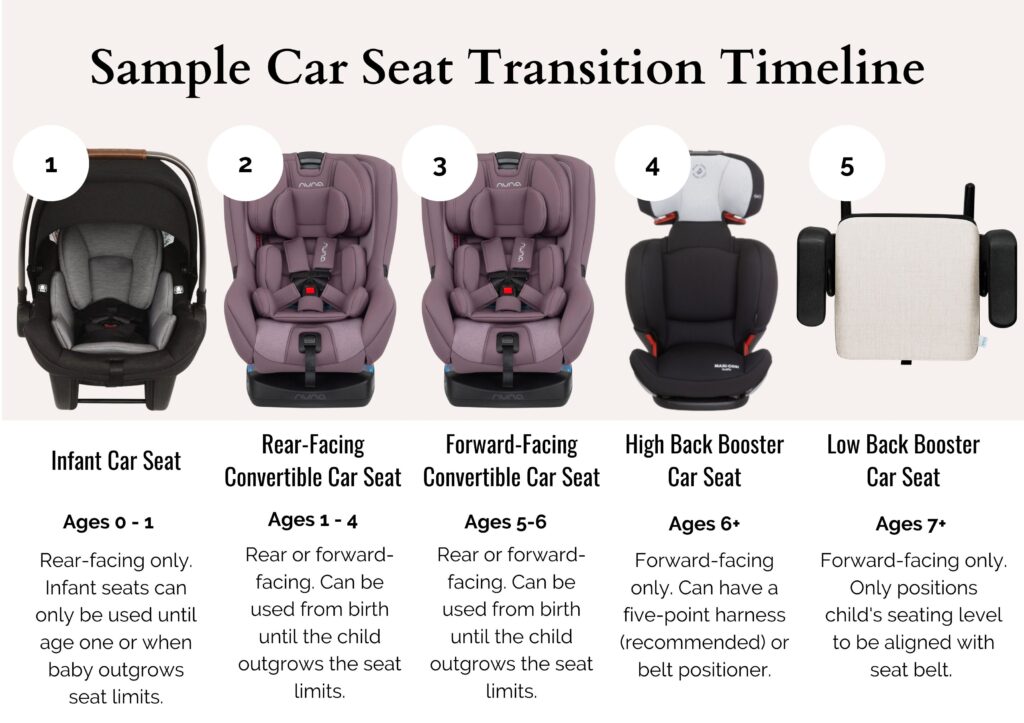
For most families in the United States, switch from an infant car seat to a convertible car seat when your child reaches the infant seat’s height or weight limit, or when the child no longer fits safely. Age alone does not decide the timing.
Many babies move to a convertible car seat between 12 and 24 months, but some switch earlier and others later. Check the labels and manual for your exact infant seat. Until then, keep your child rear-facing every ride.
What Is the Difference Between an Infant and Convertible Car Seat?
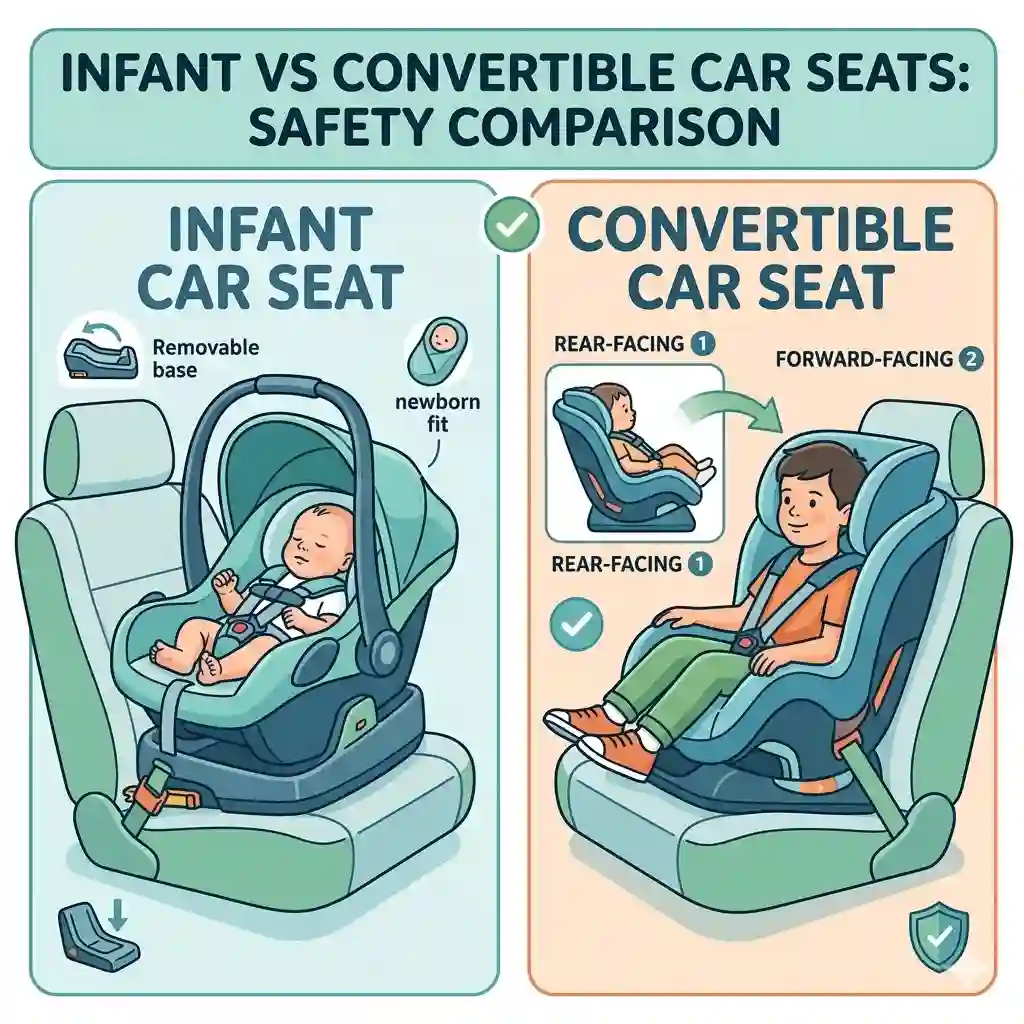
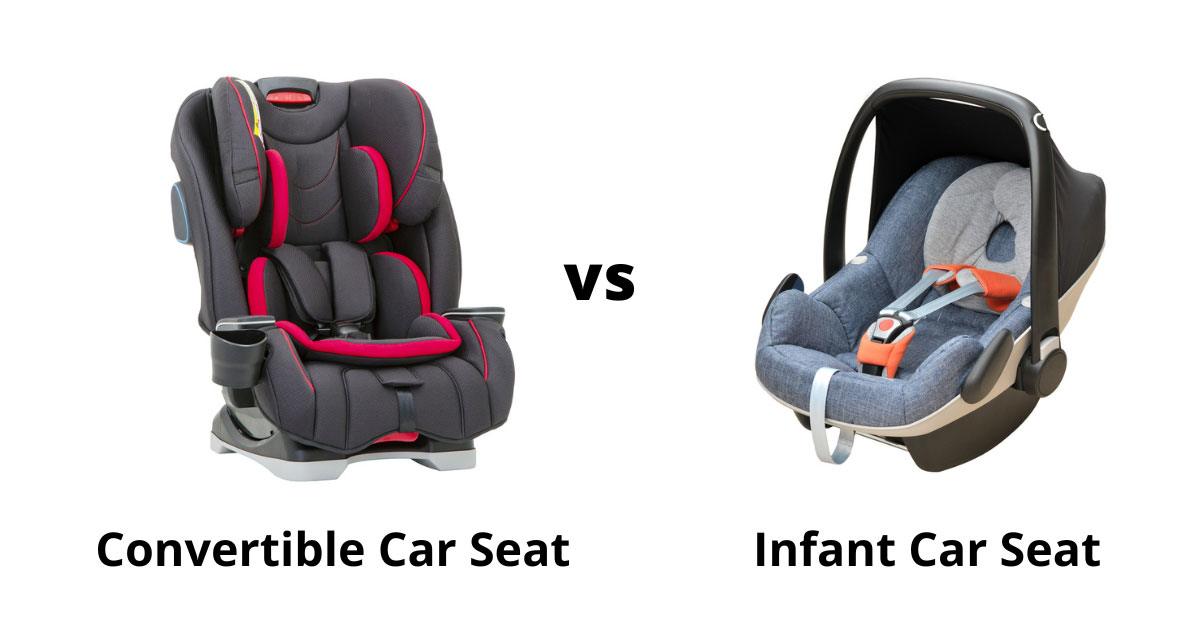
An infant car seat is a rear-facing-only seat. It often clicks into a base that stays in the car and can be carried with the baby inside.
A convertible car seat stays in the vehicle. It can usually be used:
- Rear-facing for infants and toddlers
- Forward-facing for older children who meet the seat’s requirements
The key difference is not that one seat is “for babies” and the other is “for toddlers.” The key difference is how each seat fits your child and supports them within its approved limits.
The American Academy of Pediatrics recommends keeping children rear-facing until they reach the highest weight or height allowed by the car seat manufacturer. After that, they can use the seat forward-facing with a harness and top tether. See the AAP guidance from HealthyChildren.org.
Infant car seat
An infant seat usually:
- Faces the rear of the vehicle only
- Uses a detachable carrier and a fixed base
- Has a carry handle
- Fits small babies well when used according to its manual
- Has a lower height and weight limit than many convertible seats
Convertible car seat
A convertible seat usually:
- Stays installed in the vehicle
- Starts rear-facing
- Later turns forward-facing
- Has a higher rear-facing limit than many infant seats
- Requires careful adjustment as your child grows
A convertible seat does not need to wait until your child is a toddler. Some models are approved for newborns. However, the child must meet the seat’s minimum size, harness, and recline requirements.

When Should You Switch From an Infant Car Seat to a Convertible?
Switch when your child reaches any one of the infant seat’s limits or no longer fits correctly. You do not need to wait until the child reaches both the maximum height and maximum weight.
Check these signs:
- Your child is above the seat’s maximum weight.
- Your child is taller than the seat’s stated height limit.
- The top of the child’s head is too close to the seat’s allowed upper boundary.
- The harness cannot sit correctly on the child’s shoulders.
- The child’s body no longer fits within the seat’s shell or head-support rules.
- The infant seat, base, or carrier has damage, has expired, or is subject to a recall.
Use the exact limits printed on the seat label and in the manual. Infant seats vary widely. A general limit such as “around 30 pounds” cannot replace the manufacturer’s instructions.
Do babies need to switch at age one?
No. Turning one does not automatically require a new car seat.
If your child still fits the infant car seat and the seat is in good condition, you may continue using it rear-facing. The child must remain within every limit in the manual.
Some parents switch near the first birthday because the baby is tall, heavy, dislikes the carrier, or needs more legroom. Those are practical reasons, not a universal safety deadline.
Can a baby use a convertible car seat from birth?
Yes, if the specific convertible seat is approved for newborn use and your baby meets its minimum requirements.
Before using one for a newborn, confirm:
- The minimum weight and height
- The required recline angle
- The harness position
- The need for an infant insert
- Whether the insert comes with the seat
- Whether the baby’s head and neck stay in a safe position
Never add a pillow, rolled towel, head support, or aftermarket insert unless the car seat manufacturer specifically allows it. Extra padding can change how the harness holds the child.

Signs Your Infant Car Seat Has Been Outgrown
The clearest sign is reaching a listed limit. Fit problems can also show that it is time to move on.
The child reaches the height limit
Car seat height limits do not all use the same measurement. Some refer to standing height. Others refer to seated height or a position within the shell.
Read the manual instead of judging by appearance. A child may look tall enough to switch while still fitting, or may exceed a seated-height limit before reaching the weight limit.
The child reaches the weight limit
Weigh your child without guessing if they appear close to the maximum. A child who is over the listed weight limit should not keep using that seat, even if the harness still seems to fit.
The seat’s limit is not a target. It is the upper boundary approved by the manufacturer.
The harness no longer fits correctly
For rear-facing use, harness straps generally need to come from at or below the child’s shoulders. The harness should lie flat and snug, with no slack at the collarbone.
If the harness cannot reach the correct position, cannot be tightened, or is below the child’s shoulders in a way the manual does not allow, stop and check the instructions. The seat may be outgrown or adjusted incorrectly.
The child’s head is too close to the top
Do not use a simple rule such as “one inch above the head” for every car seat. Some seats have a stated distance. Some use a shell or head-restraint limit.
Follow the rule for your exact model. If the manual is missing, contact the manufacturer before relying on a general internet guideline.
The child seems cramped
Bent legs alone do not mean a rear-facing seat is unsafe or outgrown. Children can sit with their legs bent, crossed, or resting on the vehicle seat.
Move to a convertible seat for more room if you wish, but use the seat’s written limits—not leg position alone—to decide whether a switch is required.

A Simple Decision Guide
Use this checklist before buying or installing a convertible car seat.
| Question | If the answer is yes | What to do |
|---|---|---|
| Is your child over the infant seat’s weight limit? | The seat is outgrown | Stop using it and choose a suitable convertible seat |
| Is your child over the height or seated-height limit? | The seat is outgrown | Switch to a convertible seat |
| Does the harness fail to sit at the correct height? | Fit may no longer be safe | Recheck the manual, then switch if needed |
| Is the seat damaged, expired, recalled, or missing parts? | The seat may not be usable | Stop use and contact the manufacturer |
| Does your child still fit all limits? | The seat may still be usable | Continue rear-facing or switch for practical reasons |
| Does the convertible seat fit your child and vehicle? | It may be a safe next step | Install it rear-facing and follow its manual |
The decision is usually simple: follow the first limit your child reaches. If no limit has been reached, switching is optional unless the seat has a safety or condition problem.

How to Choose a Convertible Car Seat
Choose a convertible seat that fits your child, vehicle, and daily routine. A higher price does not automatically mean a safer result.
Look for a rear-facing limit that supports your plan
A convertible seat should allow rear-facing use for the period you expect to need it. The AAP recommends rear-facing use until the child reaches the seat’s maximum rear-facing height or weight.
Compare:
- Minimum rear-facing weight
- Maximum rear-facing weight
- Maximum rear-facing height
- Recline settings
- Newborn fit requirements
- Harness adjustment range
A seat with a high advertised weight limit is not useful if your child cannot fit its harness or body shape correctly.
Check the vehicle fit
Before buying, consider:
- The width of the seat
- Front-to-back space
- The vehicle’s seat belt path
- Lower-anchor locations
- The vehicle seat’s contour
- Whether the front passenger or driver needs adequate legroom
- Whether you need more than one car seat across the back row
A seat can be safe but still fail to fit your vehicle correctly. If possible, use a retailer with a clear return policy and read both the car seat manual and vehicle owner’s manual.
Compare installation methods
Most U.S. car seats can be installed with either the vehicle seat belt or the lower anchors, depending on the child’s size and the manufacturer’s instructions.
Do not use both methods together unless both manuals specifically allow it. Use the top tether for forward-facing installation whenever required or recommended by the car seat and vehicle manuals.
The National Highway Traffic Safety Administration explains installation basics and offers a child passenger safety technician search tool.
Consider daily use
A convertible seat may be the better choice if:
- You rarely carry the seat outside the car
- Your baby is heavy or difficult to carry
- Your child has outgrown the infant carrier
- You want one seat to use through several stages
- You need more rear-facing space
An infant seat may remain convenient if you often move a sleeping baby from the car. Convenience is a valid reason to keep using it, as long as the seat remains within its limits and is used correctly.

How to Move Your Child Into a Convertible Car Seat
Install the convertible seat rear-facing unless your child has already reached the seat’s rear-facing limits. Most children who are moving out of an infant seat still need to face the rear.
Step 1: Read both manuals
Read the car seat manual and the vehicle owner’s manual before installing the seat. Find the sections for:
- Rear-facing installation
- Seat belt use
- Lower anchors
- Recline angle
- Harness height
- Child size limits
- Tether use
Keep the manuals in an easy-to-find place. You may need them again when the child grows.
Step 2: Select a vehicle seating position
The safest position is the one where the seat can be installed correctly and used consistently. The center position is not automatically safest if it does not provide a good installation.
Check whether the position has:
- A usable seat belt
- Approved lower anchors
- Enough room for the rear-facing recline
- No interference from another seat
- A stable vehicle seat cushion
Never place a rear-facing car seat in front of an active passenger air bag.
Step 3: Set the rear-facing recline angle
Use the recline indicator on the car seat. The correct angle helps support a young child’s head and keeps the child’s body positioned as designed.
A newborn may need a different angle from an older baby, so use the setting allowed for the child’s size. Do not change the angle with unapproved objects unless the manufacturer permits that method.
Step 4: Install the seat tightly
After installation, hold the seat near the approved belt path and test it. It should not move more than 1 inch from side to side or front to back at that point, based on common U.S. installation guidance.
Do not test by pulling hard on the top of the seat if the manual tells you to check at a specific location. A loose installation needs to be corrected before use.
Step 5: Adjust the harness
Place the child’s back flat against the seat. For rear-facing use, position the harness straps at or below the shoulders unless the manual states a different rule.
Tighten the harness until you cannot pinch extra webbing at the shoulder. Place the chest clip at armpit level if the seat includes one.
Bulky coats can prevent a snug fit. Put the child in thin clothing, buckle the harness, and place a blanket over the straps if needed.
Step 6: Have the installation checked
A certified Child Passenger Safety Technician can check the installation and help with harness fit. Use the NHTSA inspection-station search or contact a local hospital, fire department, police department, or public health program to ask about available checks.
Services and appointment rules differ by location. Do not assume every fire station or police station offers car seat inspections.

Common Mistakes to Avoid
The most common error is switching a child forward-facing too soon. Moving from an infant seat to a convertible seat does not mean turning the seat around.
Avoid these mistakes:
- Switching based only on age
- Turning the child forward-facing after the first birthday
- Using a seat past its height or weight limit
- Guessing the correct recline angle
- Installing with both lower anchors and the seat belt without permission
- Leaving slack in the harness
- Placing the chest clip too low or too high
- Letting a child wear a thick winter coat under the harness
- Using unapproved cushions or head supports
- Relying on an infant insert from another brand
- Installing a rear-facing seat in front of an active air bag
- Using a seat with missing parts or an unknown crash history
- Assuming a used seat is safe because it looks clean
If the seat was in a moderate or serious crash, follow the manufacturer’s replacement guidance. NHTSA advises replacing a car seat after a moderate or severe crash. Some manufacturers allow continued use after a minor crash only when all listed conditions are met.
When to Replace the Infant Car Seat Instead of Reusing It
A child may outgrow the infant seat before the seat itself needs replacement. If the seat is still within its usable period and has no damage, another child may be able to use it—but only after you verify its history and condition.
Replace the seat if:
- It has been in a crash that meets the replacement criteria
- The expiration date has passed
- The shell is cracked
- The harness is frayed or damaged
- The buckle does not work correctly
- Parts are missing
- The model has an unresolved recall
- You cannot confirm its history
- The manufacturer says it cannot be repaired
Do not use a seat with an unknown crash history. Do not donate a recalled or expired seat. If you discard one, damage the harness and label it as unsafe so another person will not retrieve it.
Check recalls through the NHTSA car seat recall tool and the manufacturer’s website. Registration helps the manufacturer contact you about recalls, but it does not replace checking the seat yourself.
Infant Seat vs. Convertible Seat: Which Is Better?
Neither type is always better. The better choice depends on fit, correct use, and your family’s needs.
| Feature | Infant car seat | Convertible car seat |
|---|---|---|
| Direction | Rear-facing only | Rear-facing, then forward-facing |
| Portability | Carrier usually detaches | Usually stays in the vehicle |
| Newborn use | Often designed for newborns | Only if the model allows it and fits correctly |
| Rear-facing duration | Limited by seat limits | Often supports a longer rear-facing period |
| Stroller connection | Often available with a matching system | Usually not designed for carrying |
| Long-term use | Usually shorter | Usually longer |
| Main convenience | Easy to carry | Less need to buy another seat soon |
If carrying the baby from the car matters most, an infant seat may be useful. If the child is heavy, tall, or rarely removed from the vehicle, a convertible seat may be more practical.
Safety depends more on correct fit and installation than on whether the seat is an infant or convertible model.

What If the Convertible Car Seat Does Not Fit?
Stop and troubleshoot before driving with the child in the new seat. A seat that does not install tightly or meet the child’s fit rules is not ready for use.
Check these items in order:
- Confirm that the seat is approved for your child’s height and weight.
- Read the rear-facing installation section again.
- Use only the belt path named in the manual.
- Check the recline indicator.
- Remove unapproved padding or accessories.
- Try the vehicle seat belt if lower anchors do not give a proper fit, or use lower anchors if allowed and more suitable.
- Check the vehicle manual for anchor and seating-position limits.
- Contact the car seat manufacturer.
- Ask a certified Child Passenger Safety Technician to inspect it.
If the seat still cannot be installed correctly in that vehicle position, try another approved position or choose a different seat. Do not force the seat to fit.

Frequently Asked Questions
Can I switch to a convertible car seat before my baby turns one?
Yes. You can switch before age one if the convertible seat is approved for your baby’s size and provides a correct rear-facing fit. Keep the child rear-facing and follow the seat’s minimum requirements.
Should I switch when my baby’s feet touch the vehicle seat?
No. Feet touching the vehicle seat are not, by themselves, a reason to turn a child forward-facing or replace the seat. Check the seat’s height, weight, harness, and shell limits instead.
Can I use a convertible car seat for a newborn?
Only if the manufacturer approves it for newborns and the baby meets every minimum requirement. The recline angle and harness fit matter especially for a small baby.
How long should my child stay rear-facing?
Keep your child rear-facing until they reach the highest rear-facing height or weight limit allowed by the car seat manufacturer. This may be beyond age two, depending on the child and the seat.
Do I need a new car seat when my child turns two?
Not necessarily. If your child still fits the convertible seat rear-facing, continuing that way may be appropriate. Check the seat manual and your state’s child passenger safety law.
Can I use a secondhand convertible car seat?
Use one only when you can verify its model, expiration date, crash history, recalls, and complete parts. If any of those facts are unknown, choose a different seat.
Key Takeaways
- Switch from an infant car seat when your child reaches any height or weight limit or no longer fits safely.
- Age alone does not determine when to switch.
- A convertible car seat should usually be installed rear-facing when replacing an infant seat.
- Reaching a child’s foot against the vehicle seat is not a reason to turn the seat forward-facing.
- Follow the exact manuals for the car seat and vehicle.
- Have the installation checked by a certified Child Passenger Safety Technician when possible.
- Replace seats after qualifying crashes, expiration, serious damage, missing parts, or unresolved recalls.
Conclusion
The right time to switch from an infant car seat to a convertible car seat is when the infant seat no longer fits your child or has reached one of its limits. If the seat still fits and is safe, you can usually keep using it rear-facing.
When you do switch, choose a convertible seat that fits your child and vehicle, install it rear-facing, and check the harness and recline angle carefully. For help with a difficult installation, use a certified Child Passenger Safety Technician rather than guessing.
