How To Check How Much Air To Put In Tires: Easy Guide
The correct tire pressure for a vehicle in the United States is usually listed on the Tire and Loading Information label inside the driver’s doorjamb. It may also appear in the owner’s manual. Check the pressure when the tires are cold, then use a tire gauge to compare the reading with the recommended number, shown in pounds per square inch (PSI).
Do not use the number molded into the tire’s sidewall as the normal fill setting. That number is usually the tire’s maximum cold inflation pressure, not the pressure recommended for your specific vehicle.
Where to Find the Correct Tire Pressure
Start with the vehicle, not the tire. Car makers choose the recommended PSI based on the vehicle’s weight, suspension, handling, braking, and approved tire size.
Look in these places:
- Driver’s doorjamb: Open the driver’s door and look for a white, yellow, or silver label.
- Owner’s manual: Check the tire pressure, maintenance, or specifications section.
- Glove box or fuel door: Some vehicles place a tire label in one of these areas.
- Manufacturer’s owner website: Use the official site if you have lost the manual.
The label may show different pressures for:
- Front and rear tires
- Normal loads and heavy loads
- Standard and high-speed driving
- A temporary spare tire
- Vehicles with different tire sizes
A label might show something like 35 PSI front and 33 PSI rear. In that case, do not set all four tires to 35 PSI unless the label says to do so.
The recommended pressure is often called the cold tire pressure. “Cold” means the vehicle has been parked long enough for the tires to return close to outdoor air temperature. A practical check is to measure them before driving or after the vehicle has been parked for about three hours.
Why the tire sidewall number is different
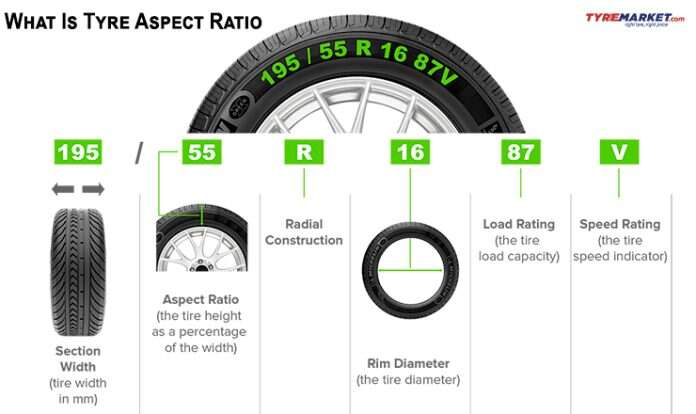
The sidewall may say something such as “Maximum pressure 44 PSI.” This is a limit set for the tire under stated conditions. It is not a custom recommendation for your car or truck.
Using the sidewall maximum can make the ride harsh and may reduce the tire’s contact with the road. Using too little air can create excess heat, poor handling, and faster edge wear.

What You Need Before Checking Tire Pressure
You need only three things:
- A reliable tire-pressure gauge
- Access to an air pump or compressor
- The vehicle’s recommended PSI
A digital gauge is easy to read, but a basic pencil-style gauge can also work well when used correctly. The gauge should measure in PSI, the common pressure unit in the United States.
Check all four road tires. Do not assume they have the same pressure. Also check the spare if your vehicle carries one. A spare that has sat unused for months can lose air.
Before measuring, inspect each tire for obvious problems:
- A nail, screw, or other object in the tread
- A bulge or bubble in the sidewall
- A deep cut
- Cracks
- A valve stem that leaks
- A tire that looks much lower than the others
Do not remove a nail or screw before getting advice. Removing it can cause a fast air loss. A tire with a bulge, major cut, or exposed internal material should not be driven on unless a qualified tire professional says it is safe.
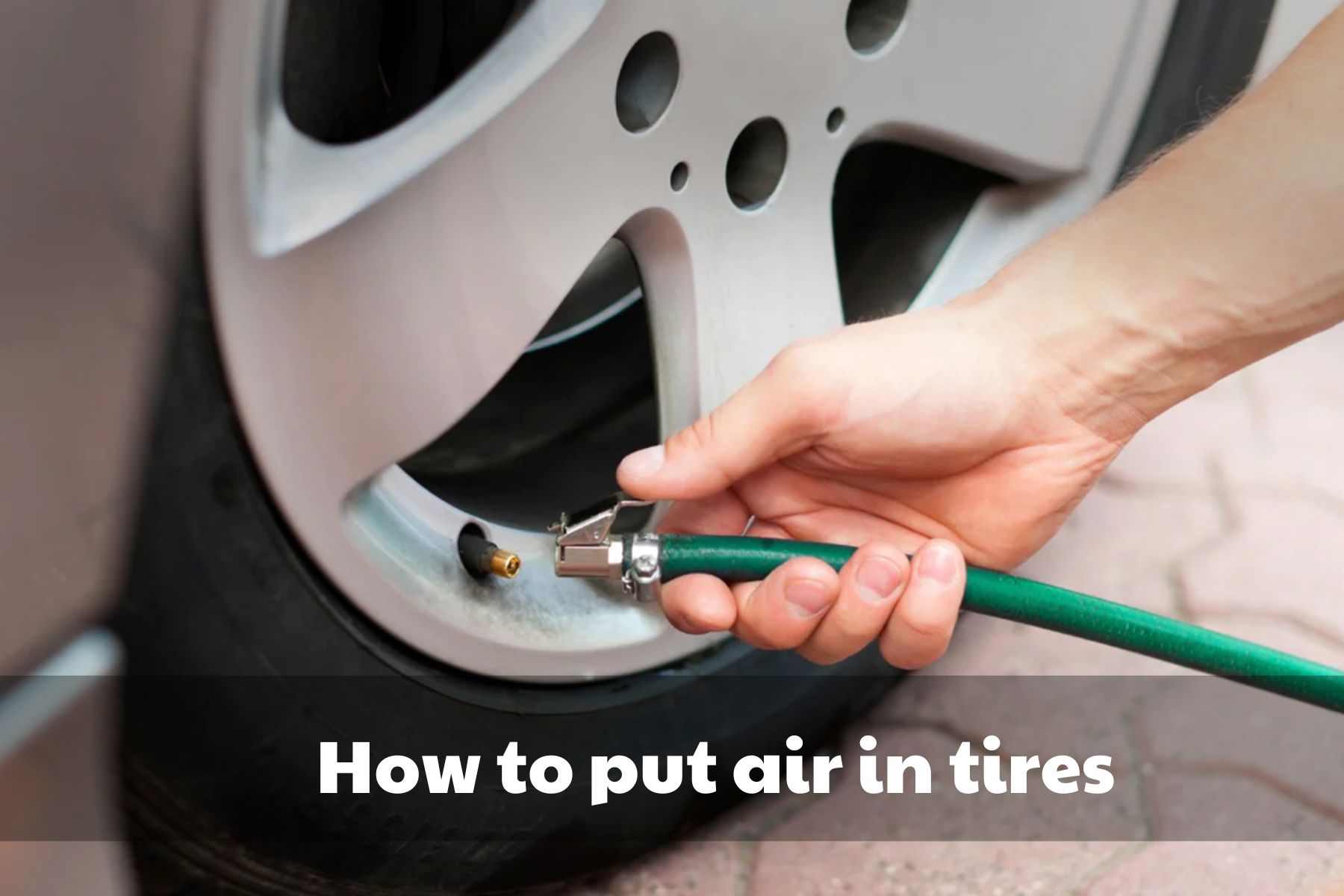
How to Check How Much Air to Put in Tires
Follow these steps for an accurate reading and safe adjustment.
1. Check the tires when they are cold
Measure the pressure before driving, if possible. Driving heats the tire and raises the reading. Sunlight can also warm one side of a vehicle more than the other.
If you must check a warm tire, record the reading and recheck it later when the tires are cold. Do not release air from a warm tire just to make the gauge match the door label.
2. Remove the valve-stem cap
Unscrew the small cap from the valve stem. Place it somewhere clean. The cap helps keep dirt and moisture away from the valve, so replace it after checking.
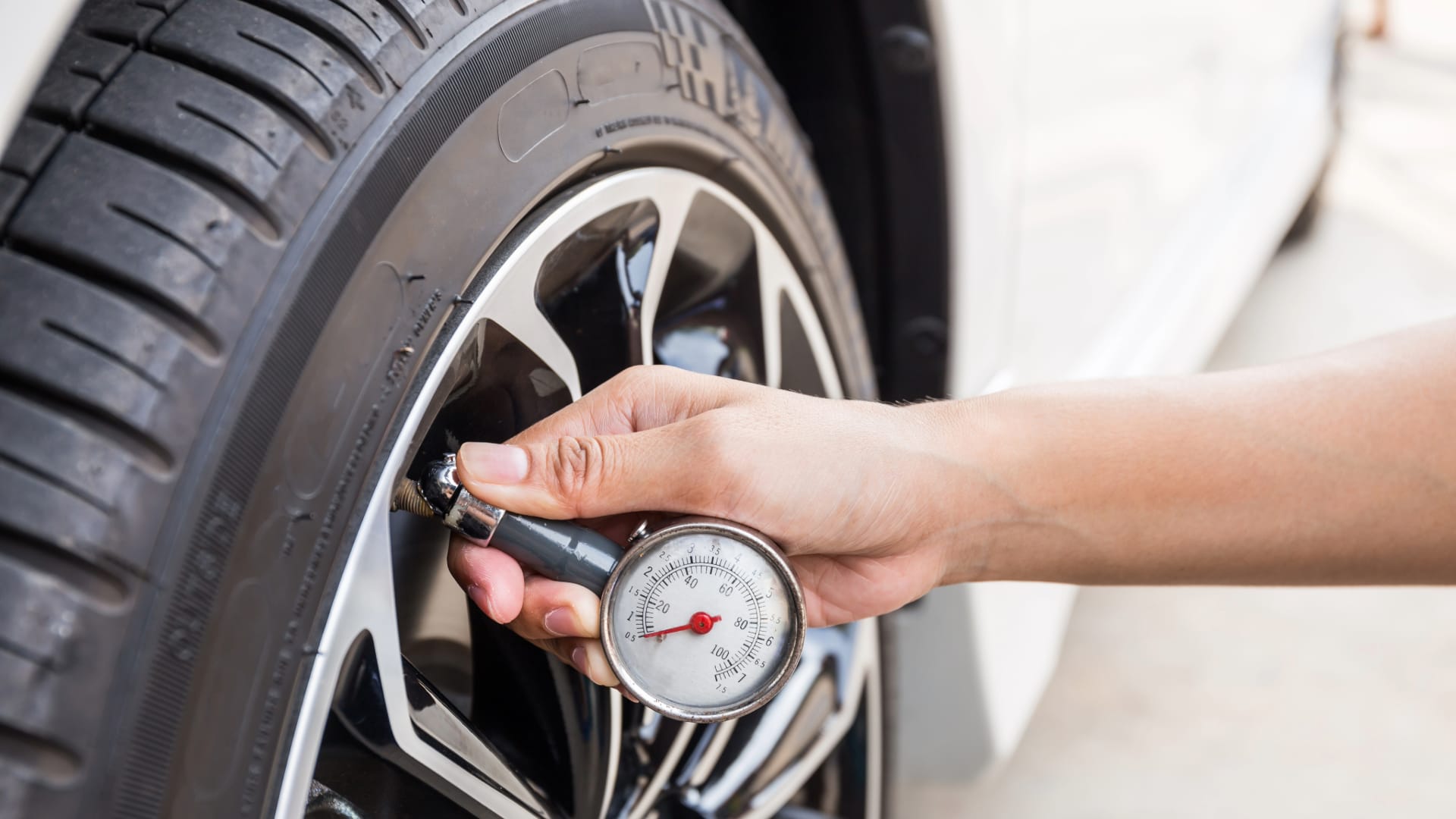
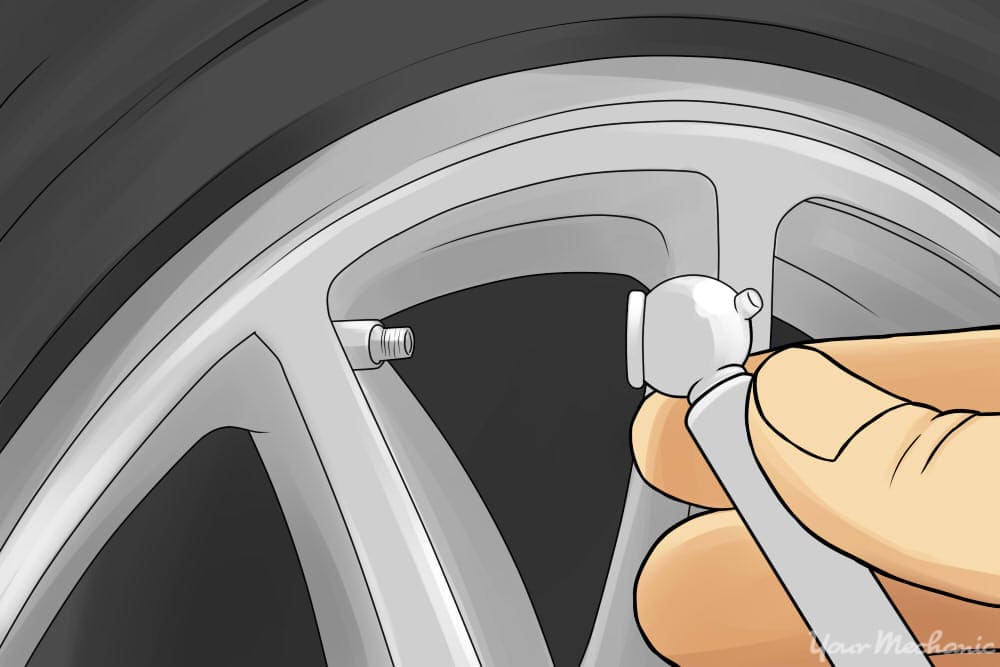
3. Press the gauge onto the valve stem
Push the gauge straight onto the valve stem. You should hear a short hiss as the gauge seals. A long hiss usually means the gauge is not seated correctly.
Read the number shown on the gauge. If the gauge gives a different reading each time, check the seal and test it again.
4. Compare the reading with the door-label PSI
Use the front or rear number that matches the tire’s position. For example:
- Recommended front pressure: 36 PSI
- Actual front pressure: 30 PSI
- Air needed: about 6 PSI
The gauge tells you the tire’s current pressure. It does not tell you how much air to add automatically. Add air in short bursts and check the pressure again.
5. Add air in small amounts
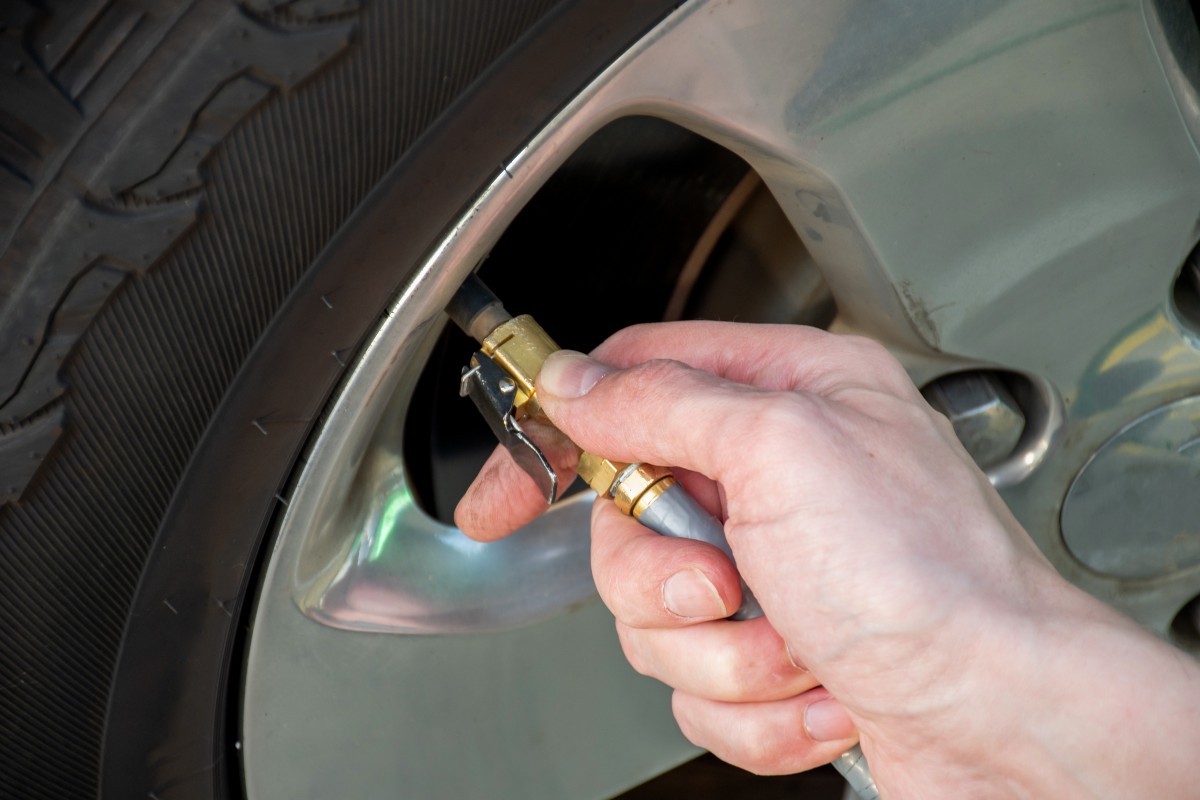
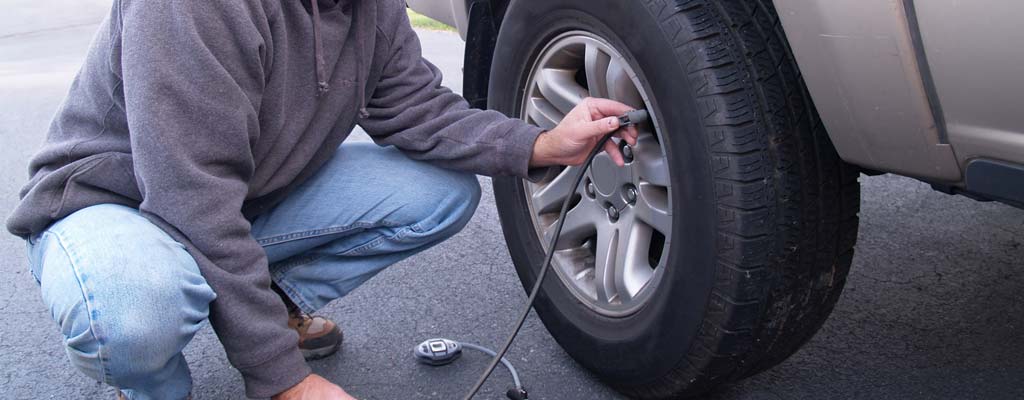
Connect the pump to the valve stem. Add air for a few seconds, then check the pressure. Repeat until the tire reaches the recommended cold PSI.
If the pump has a digital setting, set it to the vehicle’s recommended pressure. Still verify the final pressure with your own gauge because pumps may not be calibrated the same way.
6. Replace the valve cap
Tighten the cap by hand. Do not use pliers. Check the other tires, then inspect the tread and sidewalls once more.
A successful check means each tire is at the correct pressure for its position, the valve caps are back on, and no tire shows signs of damage or a continuing leak.

How to Add Air at a Gas Station
Many gas stations in the United States have an air machine near the fuel pumps. Some are free, while others require payment.
To use one:
- Park close enough for the hose to reach all tires.
- Read the doorjamb label before setting the machine.
- Remove one valve cap.
- Press the hose fitting firmly onto the valve stem.
- Add air until the gauge reaches the target PSI.
- Check the pressure with a separate gauge if the machine’s reading seems doubtful.
- Replace the valve cap.
- Repeat for each tire.
Some machines make a sound when the tire reaches the selected pressure. If the machine does not seem to add air, check that the hose is fully connected. If air escapes around the valve, reposition the fitting.
Do not wait until a tire is nearly flat before deciding whether to drive to a gas station. A severely underinflated tire can be damaged internally even if it still holds air. Use a spare tire or roadside service when the tire cannot safely support the vehicle.
Should You Check Tire Pressure When Tires Are Hot?
The best time to set tire pressure is when the tires are cold. A tire warms as it rolls because of flexing and friction. Warm air inside the tire expands, so a hot reading may be higher than the cold reading.
If the tires are hot, you have two safer choices:
- Wait until the tires cool, then measure and adjust them.
- If the pressure is dangerously low, add enough air to reach a safe level before driving farther, then set the final pressure when cold.
Never let air out of a hot tire simply because the reading is above the door-label number. That can leave the tire underinflated after it cools.
A common rule of thumb is that tire pressure changes by roughly 1 PSI for every 10°F change in temperature, although the actual change varies. This explains why a tire can show a lower reading on a cold morning without having a puncture.
Seasonal temperature changes make regular checks useful. The U.S. National Highway Traffic Safety Administration recommends checking tire pressure at least monthly and before long trips.
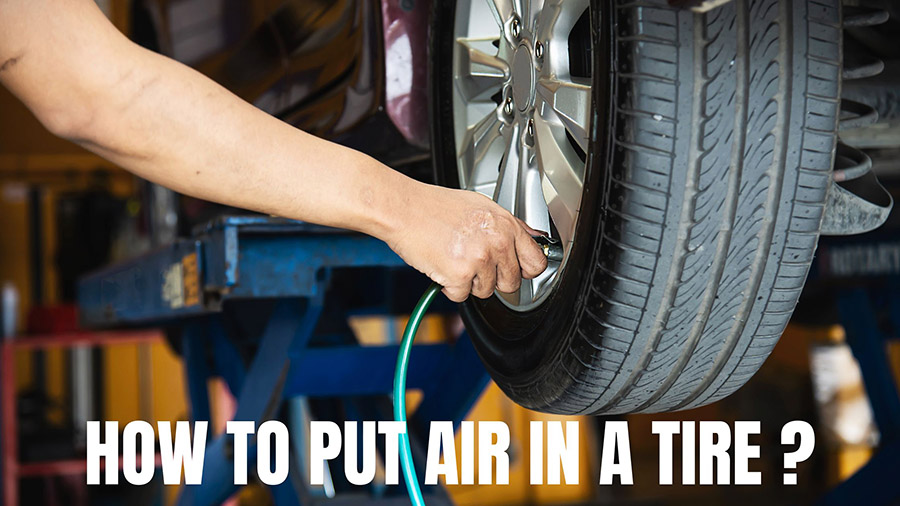
How Much Air Should You Put in a Spare Tire?
Use the pressure printed on the spare-tire label or listed in the owner’s manual. A temporary spare, often called a “donut,” may require much more air than the regular tires.
Some temporary spares are specified at 60 PSI, but do not assume that number applies to your vehicle. Follow the exact label for your spare.
Check the spare during routine tire checks. It may lose air even though it is not being used. A flat spare will not help during a roadside puncture.
Temporary spares also have limits. The sidewall or vehicle manual may restrict speed, distance, or use on certain axles. Follow those instructions and replace the damaged road tire as soon as practical.

What to Do If a Tire Keeps Losing Air
A tire that loses air again after inflation may have a puncture, damaged wheel, leaking valve, or bead leak. The bead is the part of the tire that seals against the wheel rim.
Use this simple check:
- Note the tire’s cold pressure.
- Check it again the next day.
- Compare it with the other tires.
- Look for a visible object or damage.
- Have a tire shop inspect it if the pressure drops again.
Do not rely only on appearance. A tire can be seriously underinflated while still looking normal.
A slow leak should be repaired by a qualified tire professional. Do not use a plug as a permanent fix unless the repair meets current tire-industry standards and the tire is suitable for repair. A tire driven while flat or severely underinflated may need replacement even if the puncture itself looks small.
If the tire-pressure warning light stays on after you add air, drive only as needed and check all tires again. The vehicle may need time to update the system, or the sensor may need a reset procedure listed in the owner’s manual.

Tire Pressure Monitoring Systems and Warning Lights
Most newer vehicles sold in the United States have a tire-pressure monitoring system, or TPMS. It monitors tire pressure and warns the driver when pressure falls below a specified level.
TPMS is a useful warning system, but it does not replace a tire gauge. It may not tell you the exact pressure, and the warning may appear only after pressure has dropped significantly.
When the TPMS light comes on:
- Check all four tires with a gauge.
- Check the spare if the vehicle’s system monitors it.
- Inflate each tire to the door-label pressure.
- Drive according to the owner’s manual instructions.
- Confirm that the warning light turns off.
A TPMS light that flashes and then stays on may indicate a system fault rather than low pressure. The manual or a qualified repair shop can identify the correct next step.
Do not ignore a warning light simply because the tires look full. A pressure difference can affect handling, braking, fuel use, and tire wear.

Common Tire-Pressure Mistakes
Avoid these frequent errors:
Using the sidewall maximum
The sidewall number is not normally the correct pressure for the vehicle. Use the doorjamb label or owner’s manual instead.
Checking only one tire
A puncture can affect one tire, and temperature or load can create different readings. Check all tires.
Measuring after a long drive
Heat raises the reading. Set pressure when the tires are cold.
Letting air out of warm tires
The pressure may return to the correct level after the tire cools. Releasing air can cause underinflation later.
Guessing by appearance
Radial tires can look properly inflated even when they are low. Use a gauge.
Setting all tires to the same PSI
Some vehicles specify different front and rear pressures. Follow the correct position on the label.
Ignoring the load rating
A heavily loaded vehicle may have a separate pressure recommendation. Check the label and owner’s manual before carrying extra passengers, cargo, or towing.
Driving on a damaged or flat tire
Inflation does not repair structural damage. Stop in a safe place and arrange an inspection or roadside help.

Does Correct Tire Pressure Improve Gas Mileage?
Correct tire pressure can reduce rolling resistance compared with driving on underinflated tires. That may help fuel economy, but the amount varies with the vehicle, tires, load, speed, road, and weather.
Do not overinflate tires to chase better mileage. The vehicle maker’s recommended pressure is the proper starting point because it balances handling, comfort, braking, and tire wear for the vehicle.
The best routine is simple: check the pressure monthly, before long trips, after major temperature changes, and whenever the vehicle feels different or a warning light appears.
Quick Tire-Pressure Reference
| Situation | What to do |
|---|---|
| Normal daily driving | Use the PSI on the driver’s door label |
| Cold tires | Best time to measure and set pressure |
| Hot tires | Do not bleed air; recheck when cold |
| Tire sidewall shows a higher PSI | Treat it as a maximum limit, not the vehicle setting |
| Temporary spare | Use the spare’s own label or manual |
| Tire-pressure warning light | Check all tires with a gauge |
| Tire loses air repeatedly | Have it inspected for a leak or damage |
| Heavy load or towing | Follow the vehicle’s load-specific guidance |
| Bulge, deep cut, or exposed material | Do not drive on it; seek professional help |
Frequently Asked Questions
How often should I check my tire pressure?
Check it at least once a month and before long trips. Also check after large temperature changes, when the vehicle carries a heavy load, or when the TPMS warning light comes on.
Can I check tire pressure right after driving?
You can check it, but the reading will be affected by heat. For the most useful result, wait until the tires are cold. Do not remove air from a warm tire to match the door-label number.
Is 35 PSI too much for a tire?
It depends on the vehicle and tire. If the doorjamb label says 35 PSI, it is the correct cold pressure for that tire position. If the label says less, 35 PSI may be too high. The sidewall maximum alone does not answer the question.
Should front and rear tires have the same pressure?
Not always. Many vehicles use different front and rear pressures because of weight distribution and handling design. Follow the vehicle label.
How do I know if my tire gauge is accurate?
Compare it with a second gauge or have it checked at a tire shop. A gauge that gives inconsistent readings or has visible damage should be replaced.
What if I cannot find the doorjamb label?
Check the owner’s manual or the vehicle maker’s official documentation. Do not use a guess or the tire sidewall maximum as a substitute.
Conclusion
To find out how much air to put in your tires, read the recommended cold PSI on the driver’s doorjamb label or in the owner’s manual. Check each tire with a gauge when it is cold, add air in short bursts, and replace the valve caps.
Use the sidewall number only as a tire limit, not as your normal target. If a tire loses air, shows damage, or remains underinflated after filling, stop treating it as a routine air-pressure issue and have it inspected by a qualified tire professional.