How To Fix Low Tire Pressure: Easy Steps
If your tire pressure is low, check the pressure when the tires are cold, compare it with the tire-pressure label inside the driver’s door, and add air until it reaches that number. If the tire looks damaged, is losing air again, or is nearly flat, do not keep driving on it. Have it inspected by a tire shop or roadside professional.
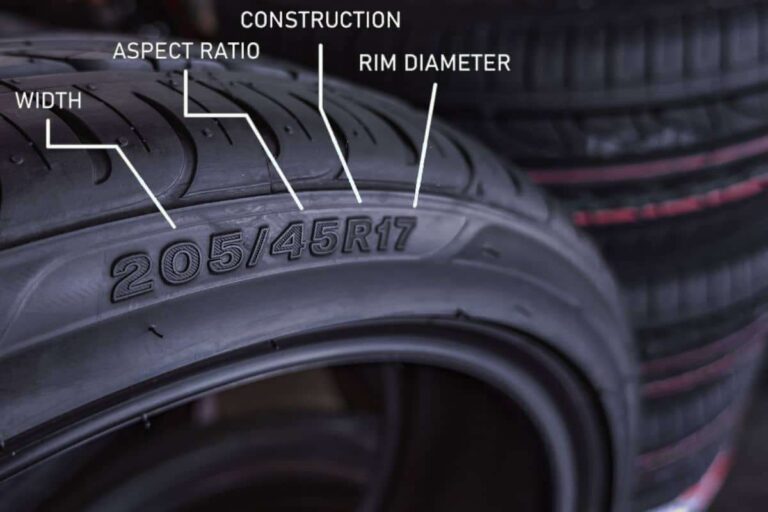
The correct pressure is usually listed on the driver’s doorjamb label or in the owner’s manual. It is not the maximum pressure printed on the tire sidewall. That number shows the tire’s maximum limit, not the vehicle maker’s recommended setting.
This guide explains how to fix low tire pressure on cars, SUVs, pickup trucks, and minivans in the United States.
What low tire pressure means
Low tire pressure means a tire has less air than the vehicle manufacturer recommends. Even a small loss can affect handling, braking, fuel use, and tire wear.
The tire-pressure monitoring system, or TPMS, may turn on the yellow tire-shaped warning light when one or more tires are underinflated. In many vehicles, a steady light means low pressure. A light that flashes first and then stays on may signal a TPMS problem, but the exact warning pattern can vary by vehicle.
A TPMS light does not tell you the exact pressure. You still need to check each tire with a pressure gauge.
The three pressure numbers you may see
| Number or label | What it means |
|---|---|
| Doorjamb label | The recommended cold pressure for your vehicle |
| Owner’s manual | The recommended pressure and tire service details |
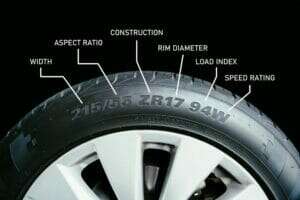
| Tire sidewall | The tire’s maximum permitted pressure under stated conditions |
Use the doorjamb label or owner’s manual as your main reference. Some vehicles list different pressures for the front and rear tires. A vehicle carrying a heavy load or towing a trailer may also have special instructions.
Why tire pressure changes
Air pressure changes with temperature. A common rule is that pressure changes by about 1 psi for every 10°F change in temperature, although the exact change depends on the tire and conditions. This is why a TPMS light may appear on a cold morning.
A tire can also lose air from:
- A nail, screw, or other puncture
- A leaking valve stem
- A poor seal between the tire and wheel
- A bent or cracked wheel
- A damaged tire
- Normal, gradual air loss
Temperature can explain a small change, but it does not repair a leak. If pressure keeps dropping, the tire needs an inspection.

How to fix low tire pressure
You need a tire-pressure gauge and a source of compressed air. A portable 12-volt inflator, gas station air machine, or shop compressor can work.
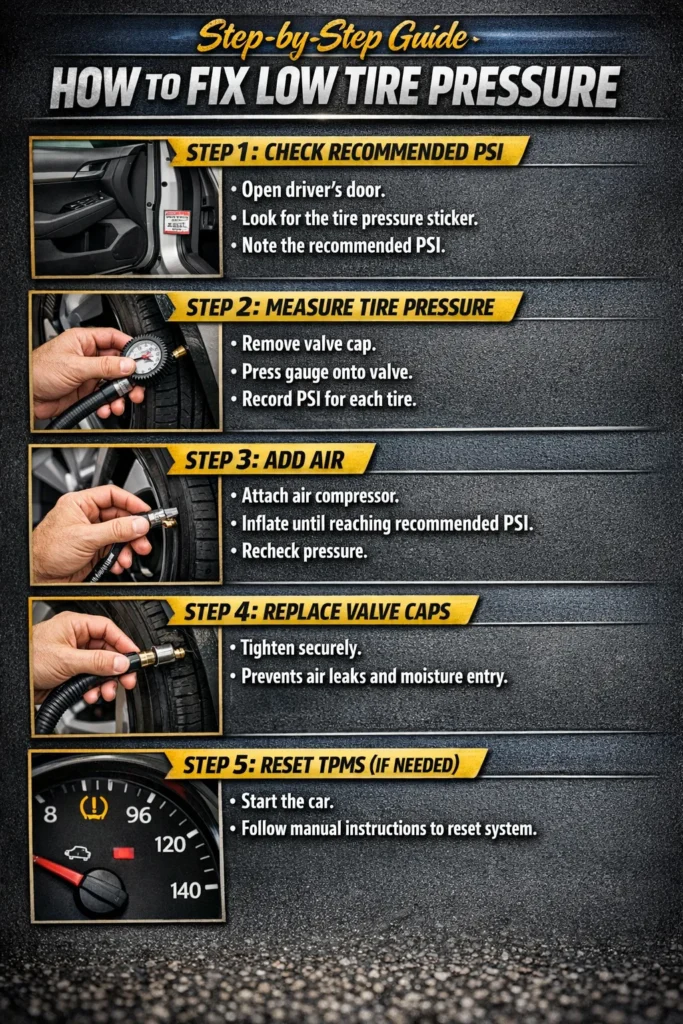
1. Park in a safe place
Move off the road if possible. Use a level area away from traffic. Set the parking brake and turn on your hazard lights if you are near moving vehicles.
Do not inspect or inflate a tire while it is close to traffic unless you can do so safely. Call roadside assistance if the location is dangerous.
2. Check whether the tire is safe to drive on
look at the tire before driving farther. Do not drive on it if you see:
- A large cut, bulge, or split
- Exposed cords
- A nail or other object causing a fast leak
- A sidewall puncture
- A tire that is nearly flat
- A tire that has come off the wheel rim
- Severe damage from a crash or pothole
A tire that looks very low may have internal damage after being driven without enough air. Adding air does not make that damage safe.
3. Find the recommended cold pressure
Look for the tire-information label on the driver’s doorjamb, door edge, or fuel-filler door. You can also check the owner’s manual.
The label may show values such as:
- Front: 35 psi
- Rear: 33 psi
- Spare: 60 psi
Use the value for the correct tire position. Do not assume all four tires use the same pressure.
4. Measure the pressure
Remove the valve cap and press the gauge firmly onto the valve stem. Read the pressure in pounds per square inch, or psi.
For the most accurate reading, check the tires when they are cold. The U.S. National Highway Traffic Safety Administration recommends checking tire pressure when the vehicle has been parked for at least three hours or has been driven less than one mile at moderate speed.
A warm tire may show a higher reading because the air inside has heated up. Do not release air from a warm tire simply to match the cold-pressure number.
5. Add air in short bursts
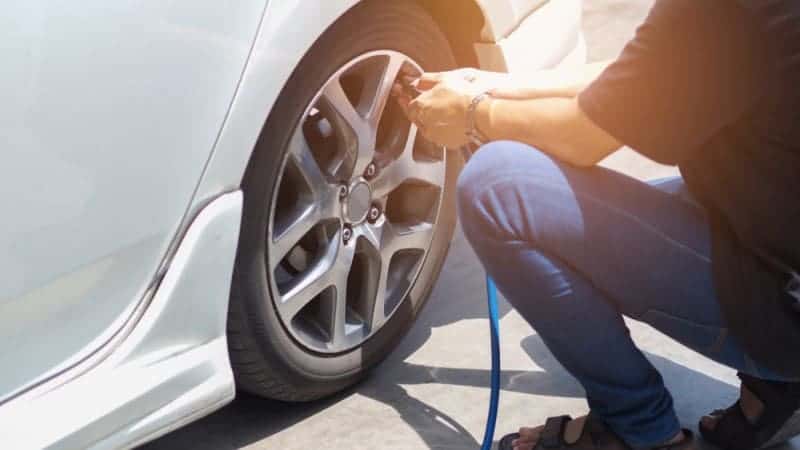
Attach the air hose to the valve stem. Add air for a few seconds, then check the pressure again.
Stop when the tire reaches the recommended cold pressure. If the gauge is hard to read, add air slowly and check often. Overinflation can reduce the tire’s contact with the road and may make the ride harsh.
If you accidentally add too much air, press the small metal pin inside the valve stem for a brief moment. Recheck the pressure with the gauge.
6. Replace the valve cap
Tighten the valve cap by hand. The cap helps keep dirt and moisture away from the valve. It is not a substitute for a working valve core, but a missing cap can contribute to valve problems over time.
7. Check for a leak
After inflating the tire, listen for hissing. You can also apply soapy water to the tread, sidewall, and valve area. Bubbles that continue to grow may point to a leak.
Do not remove a nail or screw from the tire. The object may be slowing the leak. A tire professional can decide whether the tire can be repaired safely.
8. Drive only as needed for a recheck
If the tire looks sound and holds air, drive a short distance and recheck it when cold later. The TPMS warning light may turn off after driving, but the timing varies by vehicle.
If the warning remains on after all tires are correctly inflated, consult the owner’s manual. The system may need a reset, or it may have a sensor fault.

How to fix low tire pressure without a pump
If you do not have a pump, use a nearby gas station air machine, tire shop, repair shop, or roadside assistance service.
Do not use a bicycle pump unless the tire needs only a small amount of air and you can safely provide the required pressure. A car tire holds much more air than a bicycle tire, so hand pumping can take a long time.
If the tire is nearly flat, do not drive several miles to find air. Driving on a flat or badly underinflated tire can damage the sidewall and wheel. Use a spare tire or call for help instead.
Some vehicles include:
- A compact spare tire
- A full-size spare
- A tire sealant and compressor kit
- Run-flat tires
Follow the instructions for the equipment fitted to your vehicle. Tire sealant is usually an emergency measure, not a permanent repair. It may also interfere with some tire-pressure sensors.

What to do when the tire pressure light stays on
A tire-pressure light that stays on after inflation can have several causes.
The tire is still low
Check all four tires, even if only one tire looked low. The spare may also be monitored on some vehicles.
Use a reliable gauge. Gas station gauges may be worn or inaccurate. If your gauge and the air machine show different readings, compare them with a second gauge or ask a tire shop to check the pressure.
The pressure was checked while the tires were warm
Warm tires can show a higher reading. If you set them while warm, check them again when cold. Use the vehicle’s recommended cold pressure.
The TPMS needs time to update
Some systems update after the vehicle is driven for a short distance. Others may need a manual reset through the vehicle’s controls.
Read the owner’s manual before resetting the system. A reset can hide a problem if the tires have not been checked first.
The TPMS sensor has a fault
A flashing TPMS light, a warning that says “sensor fault,” or a light that returns after correct inflation may indicate a sensor, battery, wiring, or system problem.
A TPMS fault does not necessarily mean the tire pressure is safe. Check the pressure with a gauge and arrange a diagnostic inspection.
The tires were rotated or replaced
Some vehicles need the TPMS sensors to be relearned after tire rotation, wheel replacement, or sensor service. The required process depends on the vehicle.
The dealer or a tire shop can identify the correct procedure. Do not assume every vehicle uses the same reset method.

Common causes of low tire pressure
Finding the cause helps prevent the warning from coming back.
Slow puncture
A nail or screw can cause a gradual leak. The tire may lose only a few psi over days or weeks.
A repair may be possible if the puncture is in the repairable part of the tread and the tire has not been driven while badly underinflated. A sidewall puncture usually requires tire replacement.
Valve stem leak
The valve stem or valve core may leak, especially after age, corrosion, or tire service. Soapy water around the valve can help reveal bubbles.
A technician can replace the valve core or valve stem. Vehicles with TPMS sensors may need a special valve-service part.
Wheel damage
A pothole can bend a wheel or damage the bead seal where the tire meets the wheel. You may notice repeated pressure loss, vibration, or a visible bend.
Do not assume that replacing the tire alone will solve the problem. The wheel may need inspection and repair or replacement.
Cold weather
Cold air can lower the pressure reading. This is common during winter in many parts of the United States.
Add air to the recommended cold pressure. Check the tires regularly as temperatures change. Do not intentionally overinflate them in advance unless your vehicle or tire professional gives a specific instruction.
Normal air loss
All tires lose a small amount of air over time. Pressure can also change after tire service or seasonal temperature shifts.
A tire that needs frequent inflation has a problem that should be found. Repeatedly adding air without an inspection is not a lasting fix.

How much does low tire pressure affect driving?
Low pressure can increase the tire’s flex as it rolls. That extra flex may create heat and can increase wear on the outer edges of the tread.
Underinflation may also affect:
- Steering response
- Braking distance
- Cornering stability
- Fuel economy
- Tire life
- The risk of tire failure
The effect depends on how low the pressure is, how far you drive, your speed, the load in the vehicle, and road conditions. Do not try to judge pressure by appearance alone. Many tires can look normal while being underinflated.
A tire-pressure warning is especially important before highway travel, long trips, towing, or carrying a heavy load.
Should you inflate tires to the number on the sidewall?
No. In normal use, inflate the tires to the vehicle manufacturer’s recommended cold pressure on the doorjamb label or in the owner’s manual.
The sidewall number is usually the tire’s maximum pressure, not the correct pressure for your specific vehicle. Using it as the target can create an incorrect setup.
There may be exceptions for special applications, such as temporary spare tires, heavy loads, or towing. Use the vehicle’s instructions for those conditions.

Common mistakes to avoid
Checking only the tire with the warning light
The TPMS warning may not show which tire is low. Check all tires, including the spare if your vehicle monitors it.
Using the maximum sidewall pressure
This is one of the most common errors. Use the vehicle label instead.
Checking only by sight
Visual checks are useful for finding damage, but they do not replace a pressure gauge.
Releasing air from a warm tire
Warm air expands. A warm reading may be higher than the cold target. Check again when the tire is cold.
Driving on a nearly flat tire
Even a short drive can damage the sidewall. Inflate it only if it is safe and appears undamaged. Otherwise, use roadside assistance.
Removing a puncturing object
Pulling out a nail or screw can make the leak worse. Leave it in place until a professional examines the tire.
Resetting TPMS without checking pressure
A reset does not add air or repair a leak. Check and correct the pressure first.

When to replace a tire instead of inflating it
Inflation is not a repair for structural tire damage. Stop and seek professional help if you find:
- A sidewall bulge
- Deep cuts
- Exposed cords
- A puncture outside the main tread area
- Severe tread separation
- Damage from driving while flat
- Repeated pressure loss after a repair
- A tire that is worn to its tread-wear indicators
A tire professional can inspect the inside of the tire. External appearance alone may not show internal damage.
The U.S. Department of Transportation requires tire manufacturers to place tread-wear indicators in the grooves. When the tread is worn level with those indicators, the tire has reached its legal wear limit in many service situations and should be replaced. Check local requirements and follow the tire maker’s guidance.

A simple tire-pressure maintenance schedule
Check tire pressure:
- At least once each month
- Before a long road trip
- Before carrying a heavy load
- Before towing
- After hitting a deep pothole or curb
- When the weather changes sharply
- Whenever the TPMS warning appears
Use a gauge when the tires are cold. Check the tread and sidewalls at the same time.
Keep a small pressure gauge and a suitable inflator in the vehicle if practical. These tools cannot replace a tire inspection, but they can help you respond early to a slow leak.

Frequently asked questions
Can I drive with the tire-pressure light on?
Drive only as far as needed to reach a safe place or tire service, and only if the tires look sound and are not severely low. Check the pressure as soon as possible. Do not continue at highway speed with a visibly low or damaged tire.
How long can I drive after adding air?
There is no safe distance that applies to every tire. If the tire reaches the correct pressure and shows no damage, drive carefully to a place where it can be checked. If it loses pressure again, stop driving and arrange service.
Why does my tire keep losing air but have no nail?
The leak may come from the valve stem, valve core, wheel rim, bead seal, or a small puncture that is hard to see. A tire shop can test the tire in water or with a leak-detection solution.
Do I need to replace all four tires if one is low?
No. Low pressure alone does not mean the tire must be replaced. The tire may only need inflation, or it may need a repair. Replacement depends on the cause, tread condition, age, damage, and whether the tire is suitable for repair.
Can I use tire sealant to fix low pressure?
Tire sealant may provide temporary help for some tread punctures, but it is not suitable for every tire or damage type. Follow the product and vehicle instructions, and have the tire inspected as soon as possible.

Key takeaways
- Use the pressure on the driver’s doorjamb label or in the owner’s manual.
- Check tire pressure when the tires are cold.
- Do not use the maximum pressure printed on the tire sidewall as the normal target.
- Inspect for punctures, cuts, bulges, and valve leaks.
- Do not drive on a nearly flat or visibly damaged tire.
- If pressure drops again, have the tire and wheel inspected.
- A TPMS light that stays on may indicate low pressure or a system fault.
Conclusion
Fixing low tire pressure is often simple: measure the cold pressure, add air to the vehicle’s recommended level, and check for damage or leaks. The key safety step is knowing when inflation is not enough.
If the tire is badly low, damaged, or losing air again, avoid driving on it. Use a spare tire or roadside assistance, then have a qualified tire professional inspect the tire and wheel.