

To park a car safely, choose a legal space, check your surroundings, move slowly, and secure the vehicle before leaving.
Learning how to park a car is a basic driving skill, but it takes more than turning the wheel and stopping. Good parking requires control, judgment, space awareness, and respect for other drivers and pedestrians. This guide explains does how to park a car in clear steps, from choosing a space to parallel parking, backing in, parking on hills, and avoiding common mistakes.
What Does How to Park a Car Mean?
The phrase does how to park a car appears to ask how parking works and what steps a driver should follow. In simple terms, parking means placing your vehicle in a safe, legal position and keeping it still until you are ready to drive again.
Good parking has four main goals:
• Keep people and property safe.
• Leave enough room for nearby cars.
• Follow signs, markings, and local laws.
• Secure the vehicle before you walk away.
Parking is not only about fitting into a space. It is also about knowing what surrounds your vehicle. A small child, bicycle, shopping cart, curb, pole, or low wall may sit outside your normal view.
When learning does how to park a car, think of the vehicle as a large box. Your job is to guide that box into a marked space without touching anything. Slow movements give you time to adjust.

How to Park a Car Step by Step
These basic steps work for most parking situations. They apply to parking lots, driveways, street spaces, and many marked areas.
- Signal your intention.
Use your turn signal before slowing or turning into a space. This tells other road users what you plan to do.
- Check all sides of the vehicle.
Look in your mirrors and check blind spots. Watch for people walking behind you, cars passing, bikes, and open doors.
- Choose a suitable space.
Pick a space that is legal and large enough for your vehicle. Avoid spaces near fire hydrants, crosswalks, driveways, loading zones, or no-parking signs.
- Slow down early.
Parking should happen at walking speed or slower. Remove your foot from the gas and use gentle brake pressure.
- Turn smoothly.
Use the steering wheel in a steady way. Sudden turns often cause drivers to cut across lines or get too close to another car.
- Center the vehicle.
Try to leave similar space on both sides. Keep the front of your car inside the lines and avoid blocking traffic lanes.
- Stop fully.
Place the transmission in Park if you drive an automatic. For a manual car, select the correct gear and apply the parking brake.
- Check before opening the door.
Look for passing cars, cyclists, and pedestrians. Dooring crashes can happen when a driver opens a door without checking.
These steps explain does how to park a car in a simple way, but practice is still important. New drivers should begin in an empty lot during daylight. Practice makes steering and distance judgment feel natural.

How to Park in a Parking Lot
Parking lots offer several common options, including straight-in spaces, angled spaces, and pull-through spaces. Each type needs a slightly different approach.
Straight-in parking
Straight-in parking is common at stores, offices, and schools. Follow these steps:
Drive slowly past the space while checking for pedestrians.
Keep enough room from the parked cars beside you.
Turn toward the space when your front end reaches the correct point.
Straighten the wheel as the car enters the space.
Stop when the front bumper is safely behind the line.
Do not rely only on the front camera or parking sensors. These tools help, but they may not detect a small object or person. Use your eyes and mirrors as well.
Angled parking
Angled spaces are often easier for new drivers because they need less steering. Follow the arrows and enter in the correct direction. Do not drive against the flow of traffic, even if the space looks open.
When leaving an angled space, back out slowly. Your view may be limited by cars on both sides. If possible, ask a passenger to watch or use a spotter in a busy area.
Pull-through parking
A pull-through space lets you enter from one side and leave from another. These spaces reduce the need to reverse, but you still need to check for pedestrians and traffic before moving out.
One mistake I often see from new drivers is focusing only on the empty space. They forget that a person may walk across the front of the vehicle. Always scan the full area, not just the pavement.

How to Parallel Park
Parallel parking places your car beside the curb, usually between two vehicles. It can feel hard at first because the space is narrow, but the process becomes easier with practice.
Use this method:
Find a space that is long enough for your car.
Signal and stop beside the vehicle in front of the space.
Keep about 2 feet between the two vehicles.
Align your rear seat or rear bumper with the front vehicle’s rear bumper.
Turn the wheel sharply toward the curb.
Reverse slowly while checking all mirrors and blind spots.
When your front end clears the vehicle ahead, straighten the wheel.
Continue reversing until your car forms an angle with the curb.
Turn the wheel away from the curb to guide the front end into the space.
Move forward or backward to center the car.
Finish close to the curb without touching it.
The exact steering point depends on your car’s length, turning radius, and the size of the space. Modern cars also have different camera views, so a method that works in one vehicle may need small changes in another.
A useful lesson about does how to park a car is that slow control matters more than speed. If the car moves too fast, you lose time to check your surroundings. Stop, reset your position, and try again when needed.
Common parallel parking mistakes
• Starting too far from the car ahead.
• Turning too early and hitting the curb.
• Forgetting to check the front end as it swings outward.
• Ending too far from the curb.
• Reversing without checking for people or cyclists.
• Leaving the car at an angle that blocks traffic.

How to Back Into a Parking Space
Backing into a space, also called reverse parking, can improve your view when leaving. It is useful in busy lots, narrow streets, and workplaces with regular traffic.
Start by driving slightly past the space. Signal and check behind you. Turn the wheel toward the space, then reverse slowly while watching the lines and nearby vehicles.
As the car enters the space, straighten the wheel. Stop when the vehicle is centered and fully inside the markings. Check both sides because the front of the car swings in the opposite direction from the rear.
Backing into a space is not always the best choice. In a crowded lot, another driver or pedestrian may approach while you are reversing. If visibility is poor, choose a safer option or ask someone to guide you.
When considering does how to park a car, remember that reverse parking requires extra attention. A backup camera shows only part of the area. It may not show a child, pet, or object outside its viewing range.
How to Park on a Hill
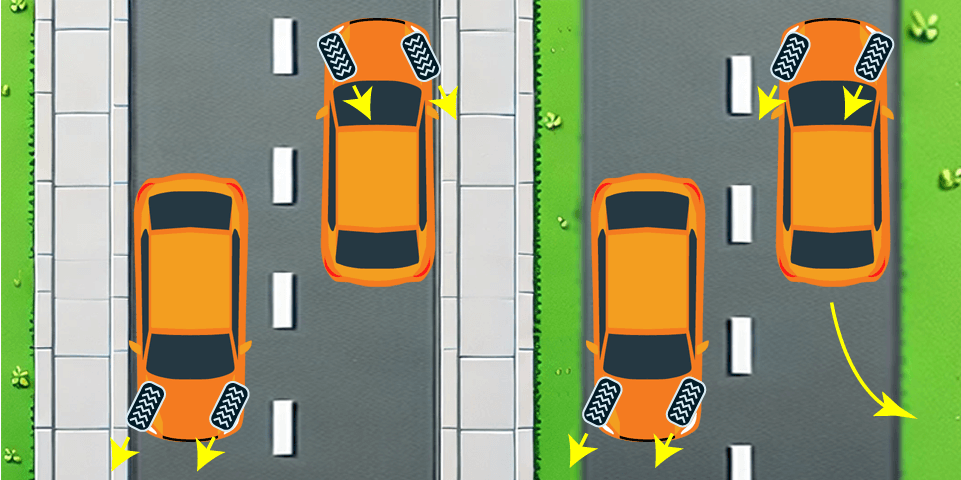
Parking on a hill requires both steering and vehicle control. The correct method depends on whether the car faces uphill or downhill and whether a curb is present.
Facing downhill with a curb
Turn the front wheels toward the curb. If the vehicle rolls, the curb can help stop it from moving into traffic.
Facing uphill with a curb
Turn the front wheels away from the curb. If the car rolls backward, the rear wheel should move toward the curb rather than into the road.
Facing uphill without a curb
Turn the wheels toward the edge of the road. This helps keep the car away from the center of traffic if it moves.
Always apply the parking brake. In an automatic vehicle, place the transmission in Park. In a manual vehicle, leave it in the appropriate gear as recommended in the owner’s manual.
Do not depend on Park alone. The parking brake helps hold the vehicle and reduces stress on the transmission. These steps are a key part of does how to park a car safely on an incline.

How to Park a Car Safely at Night
Night parking reduces visibility and makes it harder to see people, curbs, and objects. Take extra time before entering or leaving a space.
• Choose a well-lit area when possible.
• Reduce speed before turning into the space.
• Check the rear and side areas more than once.
• Clean dirty mirrors and camera lenses.
• Watch for dark clothing and unlit bicycles.
• Avoid parking where lighting creates strong glare.
If your headlights shine into another driver’s mirrors, turn them off after stopping when appropriate. Keep your car secure, but do not create a hazard for others.
Night parking is also a good reason to avoid relying fully on technology. Sensors and cameras can become less useful in rain, snow, dirt, or low light.

Parking Safety Rules and Legal Checks
Parking laws vary by city and state, so always read local signs and curb markings. A space that looks open may still be restricted.
Before leaving your vehicle, check for:
• No-parking or no-stopping signs.
• Fire hydrants and emergency access areas.
• Crosswalks and curb ramps.
• Bus stops and bike lanes.
• Driveways and private entrances.
• Yellow, red, or otherwise restricted curbs.
• Permit-only or time-limited spaces.
• Enough room for emergency vehicles.
Do not park too close to another vehicle. A wide gap may make it hard for others to enter their cars, while a narrow gap can lead to door damage. Center yourself between the lines whenever possible.
The National Highway Traffic Safety Administration emphasizes careful observation and safe vehicle control as core parts of defensive driving. Parking may happen at low speed, but low-speed crashes still cause property damage and injuries.

Common Parking Mistakes to Avoid
Even experienced drivers make parking errors. Most problems come from rushing or failing to scan the full area.
Parking too fast
Speed reduces reaction time. Use the brake to control the car and keep your foot ready to stop.
Turning without signaling
Other drivers need to understand your plan. Signal early, but remember that a signal does not give you the right of way.
Ignoring blind spots
Mirrors do not show everything. Turn your head and check beside and behind the vehicle.
Depending only on sensors
Sensors may miss low objects, narrow posts, or people. Use them as support, not as your only source of information.
Parking over the line
A vehicle across the line takes space from another driver. Recenter the car before leaving.
Forgetting the parking brake
The parking brake adds protection, especially on slopes. Use it according to your vehicle’s instructions.
Leaving the car unsecured
Before walking away, turn off the engine, lock the doors, close the windows, and take the keys. Check that the vehicle is stable.
My most useful parking lesson came from correcting a small mistake rather than forcing it. If the angle feels wrong, stop and reposition. A three-point adjustment is better than scraping a bumper or blocking two spaces.
Tips for New Drivers
New drivers often worry about judgment, but parking improves quickly with the right practice plan.
- Practice in an empty lot.
Use cones or safe markers instead of real cars. Never use objects that could damage the vehicle.
- Learn your vehicle’s size.
Notice where the hood ends, where the rear wheels track, and how far the doors open.
- Practice one skill at a time.
Start with straight-in parking. Then practice reversing, angled spaces, hill parking, and parallel parking.
- Use reference points.
Your instructor or passenger can help you find visual points for turning. These points may change when you drive a different car.
- Keep your hands calm.
Do not spin the wheel quickly while looking away. Smooth steering gives you better control.
- Ask for feedback.
A qualified driving instructor can spot habits that friends may miss. Professional instruction is especially useful if parking causes stress.
- Practice in different conditions.
Try daylight, rain, slopes, and crowded areas only after you feel comfortable. Increase difficulty in small steps.
This approach makes does how to park a car less intimidating. Parking is a skill, not a test of your worth as a driver. Everyone needs time to build confidence.
Does How to Park a Car Change for Different Vehicles?
Yes. Parking changes slightly with the vehicle’s size, shape, and technology. A compact car turns in a tighter space than a large pickup truck. A long SUV may need more room to swing its front end.
Vehicle features also matter:
• Backup cameras improve rear visibility.
• Parking sensors warn about nearby objects.
• Blind-spot monitors help detect some vehicles.
• Automatic braking may stop the car in certain situations.
• Four-wheel steering can reduce the turning circle.
These systems are helpful, but they do not replace the driver. Read the owner’s manual to learn what each feature can and cannot detect. Weather, dirt, shadows, and unusual objects may affect performance.
When learning does how to park a car in a new vehicle, practice in a quiet area first. The steering response and camera view may feel different from your old car.
Frequently Asked Questions About Does How to Park a Car
What is the easiest way to learn how to park a car?
Start in an empty parking lot and practice at low speed. Learn straight-in parking first, then move to reverse and parallel parking.
How close should a car be to the curb?
In many places, drivers should park close to the curb without touching it, often within about 12 inches. Local laws may set a different distance, so check local rules and signs.
Should I use the parking brake every time?
Using the parking brake is a good habit, especially on hills. Follow your vehicle’s owner’s manual for the correct procedure.
Is it safer to back into a parking space?
Backing in can improve your view when leaving, but reversing into any space requires careful checks. Choose the method that gives you the best visibility and control.
Why does my car park crooked?
A crooked position often comes from turning too late, failing to straighten the wheel, or using poor reference points. Pull out safely and reposition instead of leaving the vehicle at an angle.
Can parking sensors replace checking mirrors?
No. Sensors can miss objects, people, and areas outside their range. Always use mirrors, shoulder checks, and direct observation.
How do I park on a steep hill?
Apply the parking brake, select Park or the correct manual gear, and turn the wheels in the proper direction. The wheel position depends on the slope and whether a curb is present.
Conclusion
Knowing does how to park a car means more than placing the vehicle in an open space. You need to choose a legal spot, signal, check blind spots, move slowly, center the car, and secure it before leaving.
Practice in a quiet area, use technology as a backup, and never rush a difficult maneuver. If your position feels wrong, stop and reset. Try these steps during your next drive, and share your best parking tip or question in the comments.
