How Long Does It Take A Car Battery To Recharge: Fast Guide
A car battery can take 4 to 24 hours to recharge with a home battery charger, depending on the battery size, charge level, and charger output. A low battery may need several hours. A deeply drained battery may need overnight charging or longer.
Driving can restore some charge, but it may take 30 minutes to several hours, and a short trip often will not fully recharge the battery. A small trickle charger may need 24 to 48 hours.
These estimates apply mainly to standard 12-volt lead-acid car batteries used in cars and trucks in the United States.
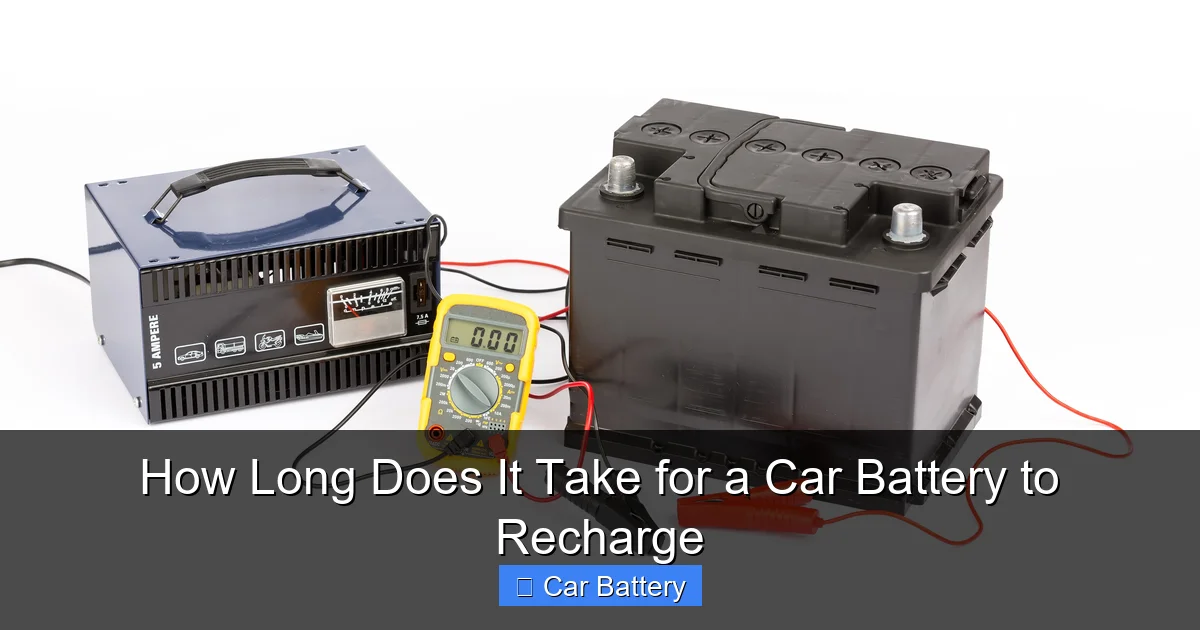
Quick answer: How long does a car battery take to charge?
The charging time depends on three main factors:
- Battery capacity: Larger batteries need more energy.
- How low the battery is: A battery at 50% charge needs much less time than one that is nearly empty.
- Charger output: A 10-amp charger works faster than a 2-amp charger.
Typical charging times
| Charger type | Approximate time for a partly discharged car battery | Best use |
|---|---|---|
| 1-amp maintainer | 24–48 hours or more | Long-term maintenance |
| 2-amp charger | 12–24 hours | Slow, gentle charging |
| 4-amp charger | 6–12 hours | Regular overnight charging |
| 10-amp charger | 3–6 hours | Faster home charging |
| 20-amp charger | 2–4 hours | Faster charging when supported |
| Alternator while driving | 30 minutes to several hours | Restoring some charge after a start |
These are estimates, not guarantees. A smart charger often slows near the end of the cycle. That final stage helps protect the battery and bring it closer to a full charge.
What controls car battery charging time?
The battery’s state of charge and the charger’s current have the largest effect. Temperature, battery age, battery type, and the vehicle’s charging system also matter.
Battery size
Most gasoline cars use a battery rated around 45 to 75 amp-hours (Ah). Larger trucks, SUVs, and vehicles with many electrical systems may use a battery with a higher capacity.
An amp-hour is a measure of how much electrical charge a battery can store. It is not a direct promise of how long a charger will take, because charging is not 100% efficient.
Battery state of charge
A battery that is only slightly low may charge in an hour or two. A battery that is deeply discharged can take much longer.
As a rough guide, a rested 12-volt lead-acid battery may show these readings:
| Rested voltage | Approximate charge level |
|---|---|
| 12.6–12.8 volts | Nearly full |
| 12.4 volts | About 75% |
| 12.2 volts | About 50% |
| 12.0 volts | About 25% |
| Below 12.0 volts | Very low or deeply discharged |
These readings are approximate. The battery should rest for several hours before testing. A recent drive or charge can leave a temporary “surface charge” that makes the voltage look higher than it really is.
Charger output
A charger’s amp rating tells you how much current it can provide. A 2-amp charger is safer for slow charging but takes longer. A 10-amp charger is faster but must be suitable for the battery and charger connection.
A simple estimate is:
Charging time = amp-hours needed ÷ charger amps
Then add extra time for charging losses and the slower final stage.
For example, a 60-Ah battery at about 50% charge needs roughly 30 Ah:
30 Ah ÷ 10 amps = 3 hours in theory
In real use, the same battery may take about 4 hours or more with a 10-amp smart charger.
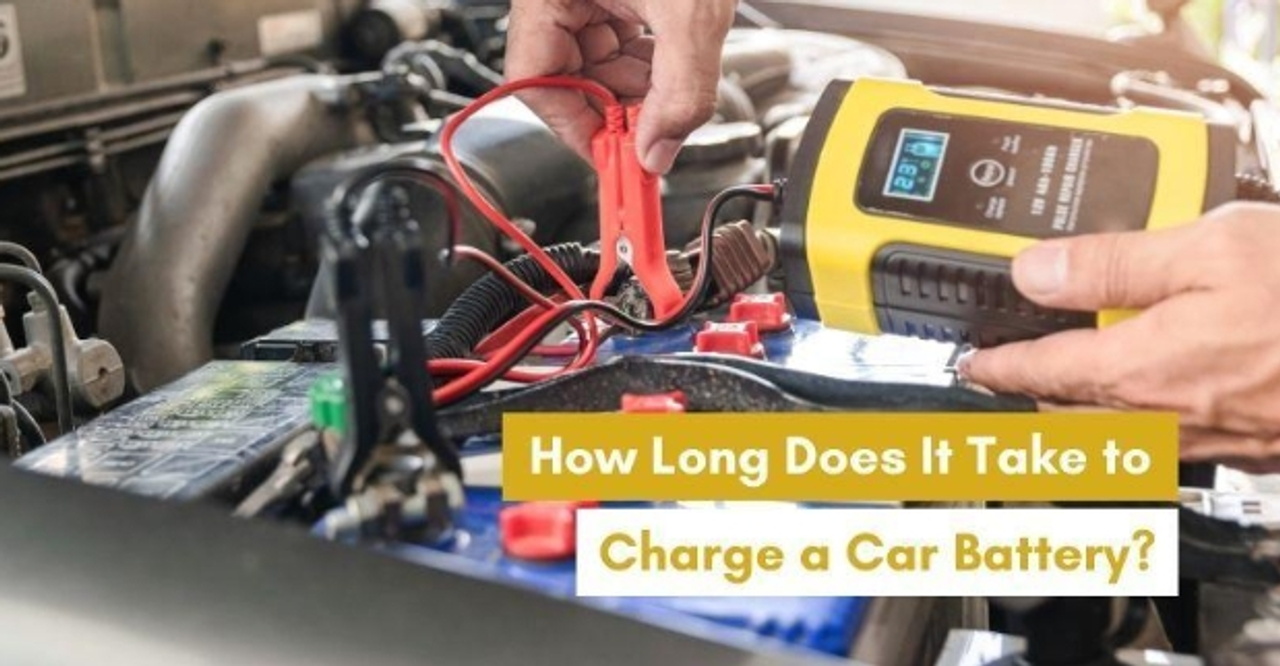
How long does it take to charge a car battery with a charger?
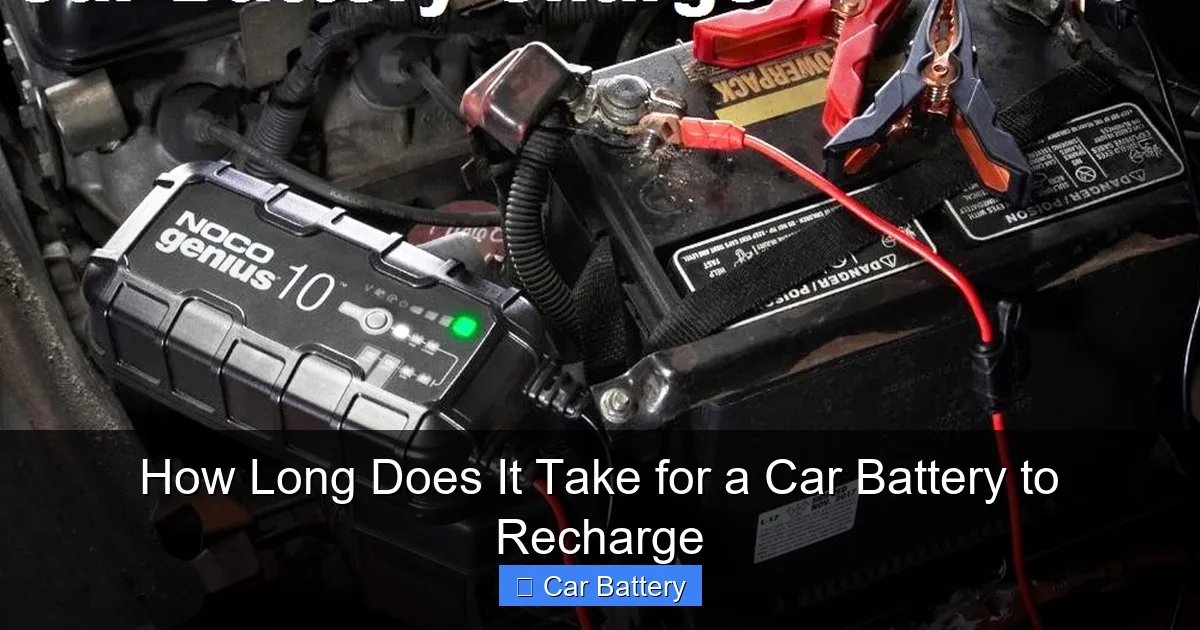
A home charger usually takes 4 to 24 hours, depending on its output and the battery’s condition.
Use a charger made for a 12-volt automotive battery. A smart charger is useful because it can reduce current as the battery fills and switch to a maintenance mode when appropriate.
Estimated times by charger size
The table below assumes a common 60-Ah battery that is about 50% discharged.
| Charger output | Estimated time |
|---|---|
| 1 amp | 30–40 hours |
| 2 amps | 15–20 hours |
| 4 amps | 8–10 hours |
| 6 amps | 5–7 hours |
| 10 amps | 3.5–5 hours |
| 15 amps | 2.5–4 hours |
A battery that is only 25% discharged may charge in about half these times. A battery that is almost fully drained may take longer than the table suggests.
Why the last part takes longer
A charger may deliver its full rated current at first. As the battery voltage rises, the charger often reduces the current. This is called the absorption stage.
The slower finish helps limit heat and overcharging. Do not assume that a charger has finished just because the engine starts. Starting the engine requires a short burst of power. It does not prove that the battery has returned to full charge.
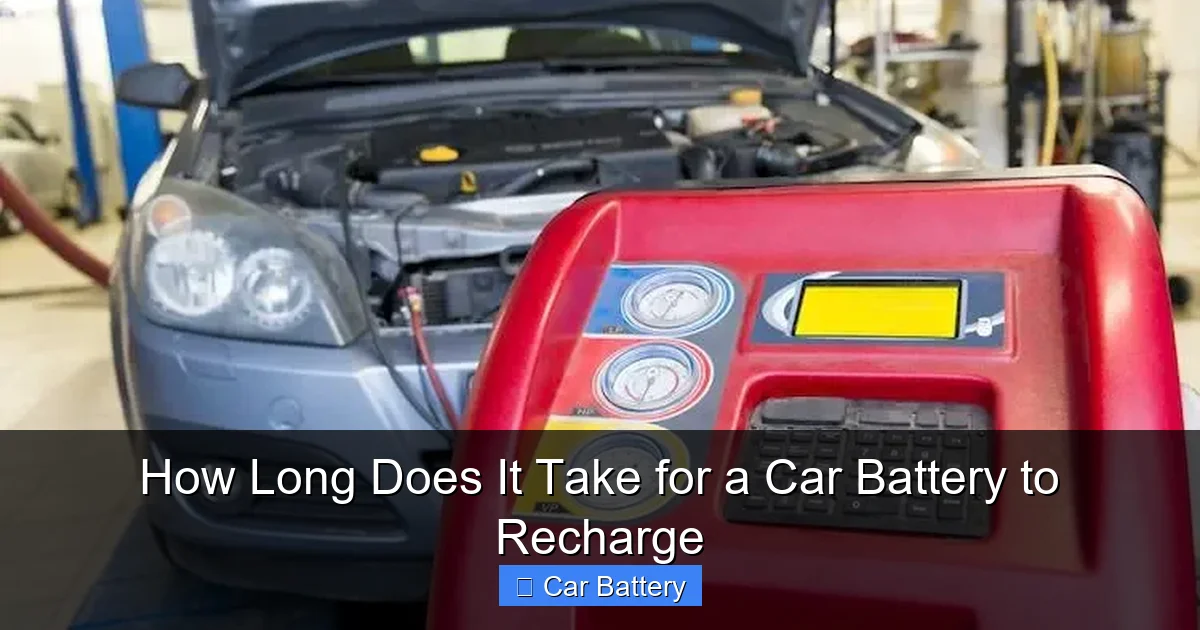
How long does driving take to recharge a car battery?
Driving for 30 minutes may restore enough power for another start, but it may not fully recharge the battery. A deeply discharged battery may need several hours of driving or a separate battery charger.
The alternator powers the vehicle’s electrical systems and sends some current to the battery. The actual charging rate changes with:
- Engine speed
- Alternator size and condition
- Electrical load from lights, climate control, audio, and accessories
- Battery age and condition
- Vehicle charging-system controls
- The battery’s current state of charge
City driving with frequent stops may provide less charging time than steady highway driving. However, high engine speed does not always mean the battery charges faster. Modern vehicles may control alternator output to improve fuel use and reduce load.
Why a short drive may not be enough
Starting the engine can use a substantial amount of energy, especially in cold weather. A short trip may replace only part of that energy.
If the battery went dead because a light was left on, a longer drive may help. If the battery is old, damaged, or repeatedly loses charge, driving will not fix the underlying problem.
A home charger is usually the better choice when the battery is deeply discharged. It provides a controlled charge without relying on the alternator to do all the work.
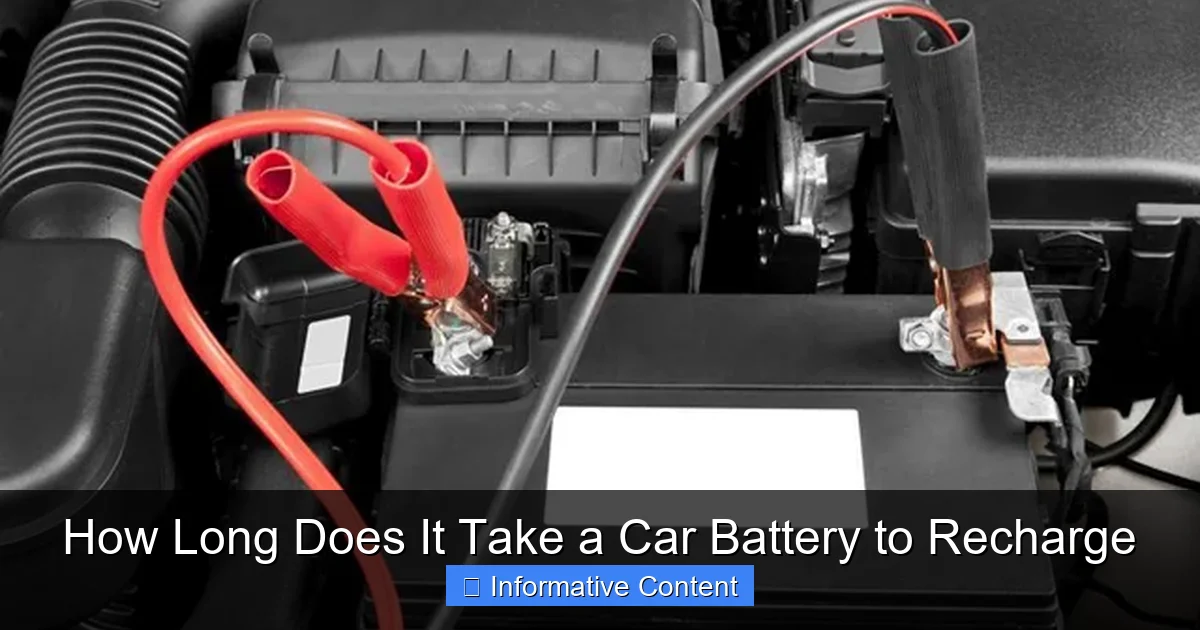
How long does it take to charge a dead car battery?
A “dead” battery may mean one of two things:
- It is discharged but still able to accept a charge.
- It has an internal failure and cannot hold or accept a charge.
A discharged battery may need 6 to 24 hours on a suitable charger. A severely discharged battery may take longer. Some smart chargers will not begin charging if the battery voltage is extremely low.
What to do
- Inspect the battery first. Do not charge a battery that is cracked, swollen, leaking, or frozen.
- Turn off the vehicle. Remove the key and switch off lights and accessories.
- Use the correct charger setting. Select 12 volts and the correct battery type, such as standard flooded lead-acid or AGM.
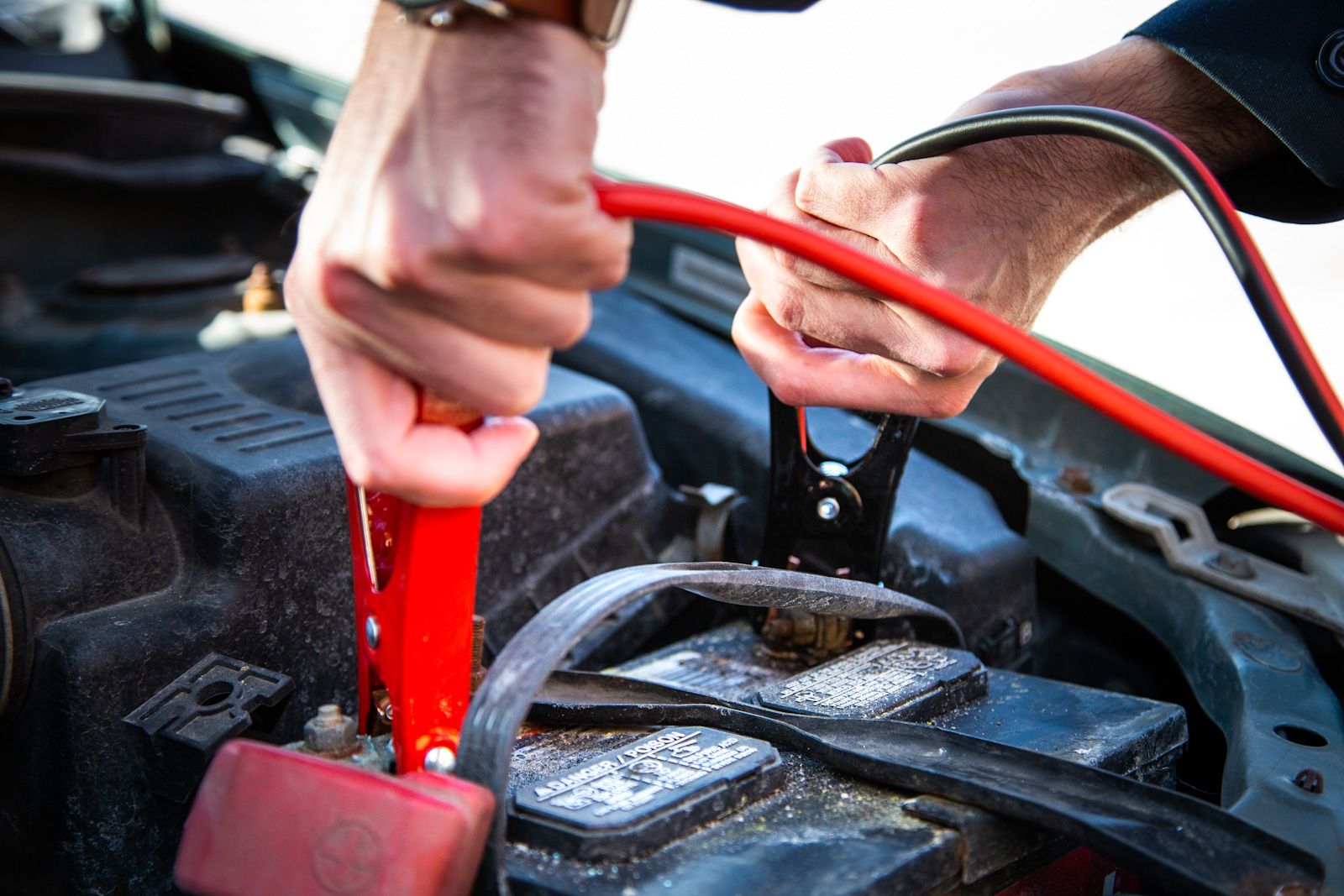
- Connect the clamps correctly. Follow the charger and vehicle owner’s manual.
- Charge in a ventilated area. Lead-acid batteries can release hydrogen gas.
- Let the charger complete its cycle. Do not stop as soon as the engine starts.
- Test the battery after it rests. A voltage reading taken immediately after charging can be misleading.
If the charger repeatedly shows an error, the battery becomes hot, or the battery will not hold a charge, stop charging and have the battery and charging system tested.
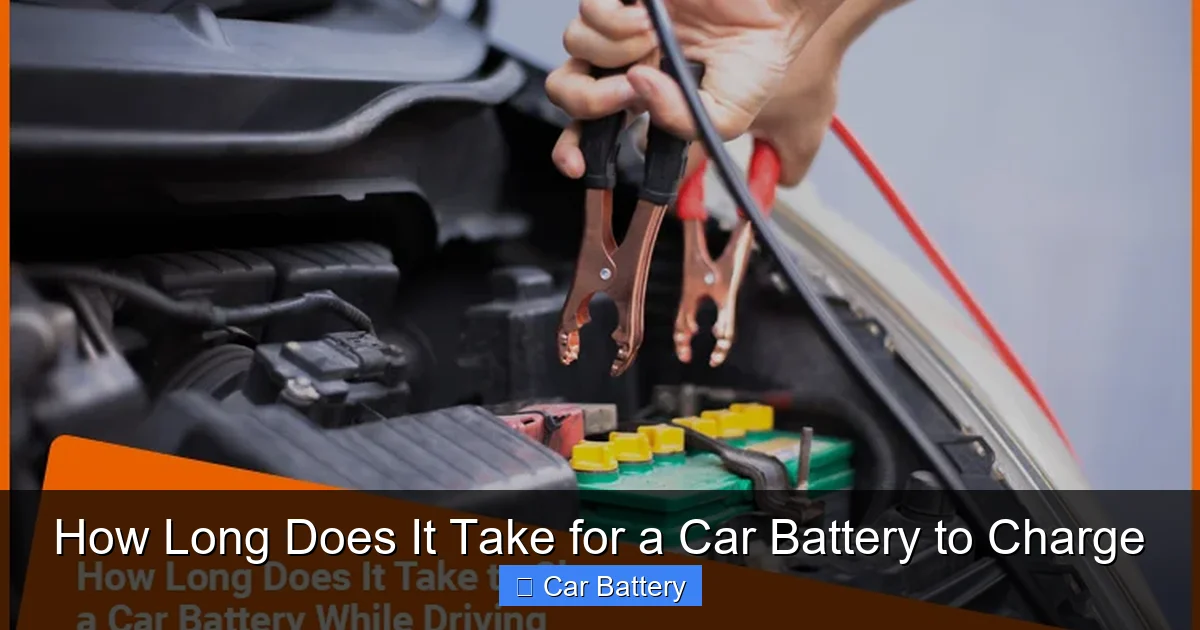
Can you charge a car battery overnight?
Yes, you can usually charge a car battery overnight if you use a suitable automatic or smart charger and follow its instructions.
A smart charger can reduce the charging current when the battery is full. Some models then switch to float or maintenance mode. A basic manual charger may continue supplying current and can overcharge the battery if left connected too long.
Before charging overnight:
- Check the charger’s voltage and battery-type settings.
- Inspect the battery for damage.
- Place the battery in a well-ventilated area.
- Keep sparks, cigarettes, and flames away.
- Do not cover the charger or battery.
- Follow the vehicle and charger manuals.
Do not charge a frozen, swollen, cracked, or leaking battery. A frozen battery can be damaged internally and may create a safety risk as it warms.

How to calculate car battery charging time
You can estimate charging time with the battery’s amp-hour rating.
Basic formula
Time in hours = battery capacity in Ah × percentage to replace ÷ charger output in amps
Then add roughly 15% to 30% for charging losses and the slower final phase.
Example
Suppose a vehicle has a 60-Ah battery at 50% charge. The charger must replace about 30 Ah.
With a 4-amp charger:
30 Ah ÷ 4 amps = 7.5 hours
After allowing for charging losses and tapering, the practical time may be about 9 to 11 hours.
With a 10-amp charger:
30 Ah ÷ 10 amps = 3 hours
The practical time may be about 4 to 5 hours.
This is a planning estimate. The battery’s actual capacity may be lower because of age, cold temperatures, sulfation, or damage.
What is the difference between a trickle charger, battery charger, and maintainer?
These devices may look similar, but they serve different purposes.
Trickle charger
A trickle charger supplies a low, steady current. It can take a day or longer to charge a low battery. Some basic trickle chargers do not shut off automatically.
Automatic battery charger
An automatic charger adjusts its output and may stop or enter maintenance mode when the battery is full. It is designed for charging rather than only maintaining a charge.
Battery maintainer
A maintainer is mainly used to keep a charged battery from going flat during storage. It is not always designed to recover a deeply discharged battery quickly.
Check the product label and manual. The terms are sometimes used differently by different manufacturers.

Why a car battery may not recharge
If the battery still goes dead after charging, the problem may not be the charging time.
Common causes include:
- An old or sulfated battery
- A failing alternator
- A loose or corroded battery connection
- A parasitic drain from a light, module, alarm, or accessory
- A damaged battery cable or ground connection
- A charger that is too small or unsuitable
- A battery that was deeply discharged too many times
Useful checks
After charging, let the battery rest and check its voltage. A healthy, fully charged lead-acid battery often reads near 12.6 volts at room temperature, but voltage alone cannot confirm battery health.
A professional battery test can measure starting capacity. The vehicle’s charging voltage should also be checked with the engine running. The correct value varies by vehicle, so use the service information for that model.
If the battery repeatedly needs a jump-start, have both the battery and alternator tested. Replacing the battery without checking the charging system may leave the problem unresolved.
Can a car battery recharge while idling?
It can recharge while the engine idles, but idling is often a slow and inefficient way to restore a low battery.
At idle, the alternator may produce less current than it does at normal driving speed. The vehicle may also use much of that output for the engine computer, fuel system, cooling fan, lights, and climate controls.
Do not leave a vehicle running in a garage, carport, or other enclosed space. Carbon monoxide can build up quickly and can be fatal.
If a battery needs more than a small boost, use a proper charger or drive only when the vehicle is safe to operate and the battery can reliably start the engine.

Car battery charging safety
Battery charging involves electricity, acid, and potentially flammable gas. Follow the charger manual and the vehicle owner’s manual.
Keep these safety rules in mind:
- Wear eye protection when working near the battery.
- Keep metal tools away from both battery terminals.
- Do not smoke or create sparks near a charging battery.
- Stop if the battery becomes hot, swells, leaks, or smells strongly.
- Do not charge a frozen or visibly damaged battery.
- Use the correct charger voltage and battery chemistry setting.
- Make sure the charger cables are secure before switching it on.
- Do not reverse the positive and negative connections.
- Keep children and pets away from the work area.
Some vehicles place the battery in the trunk, under a seat, or in another hard-to-reach location. They may also have designated charging terminals under the hood. Use the vehicle manual rather than guessing.
When should you replace the battery instead of recharging it?
Recharge the battery when it was accidentally drained and otherwise performs normally. Consider replacement or professional testing when:
- The battery is several years old and repeatedly loses charge.
- The engine turns slowly after a full charge.
- The battery case is swollen, cracked, or leaking.
- The battery voltage drops quickly after charging.
- The vehicle needs frequent jump-starts.
- The battery warning light remains on.
- The battery fails a capacity or load test.
A battery that starts the car once after charging may still be weak. Starting the engine is a brief demand. Keeping the engine running and powering the vehicle over time requires a battery and charging system in usable condition.

Frequently asked questions
Will a 30-minute drive fully charge a car battery?
Usually not. Thirty minutes may replace some of the energy used during starting, but it may not fully recharge a low or deeply discharged battery. A dedicated charger is more reliable for a full recharge.
Can a completely dead battery be recharged?
Sometimes. If the battery is discharged but undamaged, a compatible charger may restore it. If it has an internal short, severe sulfation, a cracked case, or another failure, it may not accept or hold a charge.
Is it better to charge a car battery at 2 amps or 10 amps?
A 2-amp charge is slower and can suit long, gentle charging. A 10-amp charger is faster and may be practical for a normal automotive battery. Use the setting recommended for the battery and charger. Faster is not always better if the battery is damaged or the charger is unsuitable.
How do I know when the battery is fully charged?
Use the charger’s full or maintenance indicator when available. You can also check the battery after it rests. A healthy, fully charged 12-volt lead-acid battery often measures about 12.6 to 12.8 volts at room temperature, but a professional test gives more useful information about starting ability.
Can I leave a battery charger connected all the time?
Only if the charger is designed for maintenance charging and the battery is suitable. An automatic smart charger may safely enter float mode. A basic manual charger can overcharge the battery and should not be left connected without supervision.
Bottom line
A car battery usually takes 4 to 12 hours with a common home charger, while a small maintainer may need 24 to 48 hours. Driving for 30 minutes can help after a weak start, but it often will not fully recharge a low battery.
For a battery that is deeply discharged, use a suitable smart charger, inspect the battery first, and allow the full charging cycle to finish. If the battery goes flat again, test the battery, alternator, cables, and possible electrical drains rather than repeatedly relying on jump-starts.