

Yes, you may be able to sell a car without a title in the United States, but the answer depends on your state, the reason the title is missing, and the buyer. A private buyer may refuse the sale, while a licensed dealer, salvage yard, or junkyard may have a different process.
In most cases, the safest path is to replace the lost title before selling. If a lender still has a lien, you must deal with the lender first. Do not sign a blank title, hide the missing document, or sell the car with false ownership information. Those steps can create fraud, registration, and liability problems.
This guide explains how to sell a car without a title, when it is legal, what documents may work instead, and when you should stop and contact your state motor vehicle agency.

Can You Legally Sell a Car Without a Title?
You can legally sell a car without a paper title only in certain situations. State law controls the transfer, and each state has its own rules for lost titles, electronic titles, liens, salvage vehicles, inherited cars, and abandoned vehicles.
A title is the main document that proves ownership. It usually lists:
- The legal owner
- The vehicle identification number, or VIN
- The make, model, and year
- Odometer information
- Lienholder information
- Transfer and reassignment areas
Some states use electronic titles. In those states, the title may exist in a state database rather than as a paper document. A missing paper title does not always mean the car has no title record.
Situations where a sale may still be possible
You may have options if:
- You lost the original title.
- The title was damaged or stolen.
- Your state has an electronic title record.
- A lender holds the title because of an active loan.
- You are selling the car to a licensed dealer or salvage business.
- The vehicle qualifies for a bonded title or similar ownership process.
- You inherited the vehicle and have estate documents.
- The car is being sold for parts or scrap under a state-approved process.
The buyer may still need a title before registering the vehicle. A bill of sale alone often does not prove ownership.
Situations that create a major problem
Selling becomes much harder when:
- The seller is not the person shown in state records.
- The VIN does not match the vehicle.
- The title lists a lien that has not been released.
- The vehicle has a salvage, rebuilt, flood, or junk brand.
- The owner has died and the estate has not been settled.
- The vehicle was bought at an auction with incomplete paperwork.
- The car was abandoned or left on private property.
- The seller wants to avoid a title because the car has ownership issues.
A state agency may reject the transfer or refer suspected fraud to law enforcement. The buyer may also sue if the car cannot be registered.

The Best First Step: Find Out Why the Title Is Missing
The reason the title is missing determines the correct solution. Start by identifying the problem before advertising the vehicle.
1. You lost the title
apply for a duplicate title through the motor vehicle agency in the state that issued it. The agency may ask for:
- Your driver’s license or state identification
- The VIN
- The current registration
- A duplicate-title form
- A title fee
- Lien-release paperwork, if the loan is paid
Some states let you apply online. Others require a mail or office application. If more than one owner appears on the title, each owner may need to sign.
Do not order a duplicate title from a state where you never owned or registered the vehicle unless that state’s agency tells you to do so. The correct agency is usually the one that issued the last title.
2. A lender still has the title
A lender may hold the title until the loan is paid. This is called a lien.
You generally cannot transfer clear ownership while the lien remains active. Contact the lender and ask for:
- The current payoff amount
- The payoff process
- A lien release
- Instructions for a private-party sale
- The estimated title-release time
Some states use electronic lien records. In that case, the lender may notify the state electronically after payoff. The buyer may still need to wait for the title record to update.
Never tell a buyer that the vehicle is “free and clear” unless the lien has been released.
3. The title is in another person’s name
You usually cannot sell the car as your own without first fixing the ownership record. A bill of sale from someone else may not be enough.
The person listed on the title may need to:
- Apply for a replacement title.
- Sign the title over to you.
- Complete any required odometer disclosure.
- Provide a bill of sale or other supporting document.
- Complete the transfer through the state agency.
Avoid “title jumping.” Title jumping happens when a person buys a vehicle but does not put it in their own name before selling it. Many states treat this as illegal or as evidence of unlicensed dealer activity.
4. You inherited the vehicle
An inherited car may be transferable without a normal sale if you provide estate documents. The required paperwork may include:
- A death certificate
- A will or probate document
- Letters of administration
- An affidavit for small estates
- A court order
- A title signed by the personal representative
- A lien release, if needed
The process varies sharply by state. Contact the motor vehicle agency before selling the car. The estate representative may need to transfer the title first.
5. The vehicle is salvage, junk, or for parts
A salvage or junk vehicle may follow a different process. Some states issue a salvage title, certificate of destruction, junk certificate, or parts-only document.
A salvage yard may accept a vehicle without a standard title, but it may require:
- Proof of identity
- Registration
- A bill of sale
- A salvage or junk certificate
- A state-required affidavit
- Proof that you own the vehicle
Ask the business what it requires before the vehicle is picked up. Requirements can differ between a licensed recycler, dismantler, junkyard, and private buyer.

How to Sell a Car Without a Title: A Safe Process
Follow this order to reduce delays and protect yourself.
Step 1: Check the VIN and ownership record
Locate the VIN on the dashboard, driver-side door frame, registration, insurance card, or service records. Check that every VIN matches.
Then contact your state motor vehicle agency. Ask:
- Is the vehicle titled in my name?
- Is the title electronic or paper?
- Is there an active lien?
- Is the title branded?
- Can I request a duplicate title?
- Can I sell the car before the replacement title arrives?
- What documents must the buyer receive?
A vehicle history report can help identify title brands and mileage records. It is not a replacement for an official title record.
Step 2: Decide which buyer fits the situation
The buyer type affects the paperwork.
| Buyer | May buy without a paper title? | Main concern |
|---|---|---|
| Private buyer | Sometimes, but often not | The buyer may be unable to register the car |
| Licensed dealer | Sometimes | The dealer must follow state transfer rules |
| Junkyard or recycler | Often, for qualifying vehicles | Proof of ownership and vehicle status |
| Salvage buyer | Sometimes | Salvage paperwork and title branding |
| Parts buyer | Depends on state law | VIN, ownership, and dismantling rules |
A private buyer usually wants a clean, transferable title. A dealer may have access to title services, but that does not mean the dealer can ignore state law.
Step 3: Replace the title when possible
A duplicate title is usually the cleanest solution. Use the official state agency website, not an unofficial site that charges extra for a basic form.
Search for the official agency by using your state name plus “DMV duplicate title,” “motor vehicle title replacement,” or “vehicle title replacement.” The agency may be called the DMV, BMV, MVD, Department of Revenue, or Secretary of State.
Step 4: Gather supporting documents
Keep copies of:
- Your government-issued identification
- Registration
- Insurance records
- The purchase contract
- Loan payoff records
- Lien-release letters
- Probate or inheritance papers
- Repair or salvage records
- A signed bill of sale
- Communications with the buyer
These records do not always replace a title. They can help prove the history of the transaction and support an application.
Step 5: Use a complete bill of sale
A bill of sale should normally include:
- Seller’s legal name and address
- Buyer’s legal name and address
- Vehicle year, make, model, and VIN
- Sale price
- Date and time of sale
- Odometer reading
- Vehicle condition
- Lien status
- Signatures of the buyer and seller
- Any “as-is” language allowed by state law
The bill of sale should clearly state that the title is missing. Do not describe the title as clean, clear, or transferable unless that is true.
Step 6: Protect yourself at payment and handoff
Use a safe payment method. Do not release the vehicle based only on a screenshot of a payment, a promise of future payment, or an unverified cashier’s check.
At handoff:
- Remove your license plates if required by your state.
- Remove personal items and toll transponders.
- Give the buyer only documents that belong with the vehicle.
- Record the odometer reading.
- Submit a notice of sale or release-of-liability form if your state offers one.
- Keep copies of all signed documents.
- Cancel or change insurance only after the sale and local requirements are clear.
The buyer may need temporary permits, insurance, and a title before driving the vehicle legally.
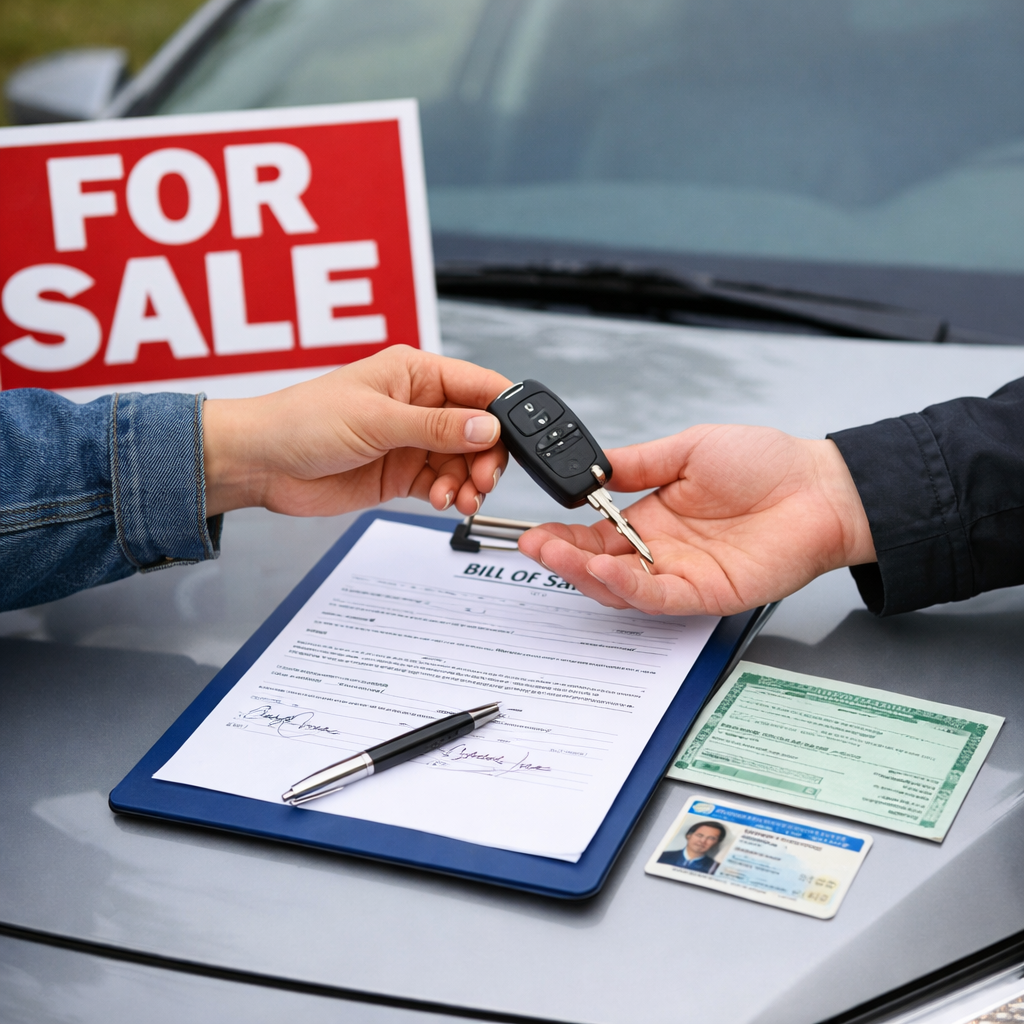
What Can I Use Instead of a Title?
A substitute document may support a sale, but it may not transfer ownership by itself. Ask the buyer and your state agency which documents are accepted.
Common supporting documents
Possible documents include:
- A state-issued registration
- A duplicate-title application
- A lien release
- A properly completed bill of sale
- An odometer disclosure
- A bonded-title document
- A court order
- Probate or inheritance documents
- A salvage certificate
- A certificate of destruction
- A manufacturer’s certificate of origin for a new vehicle
- A dealer reassignment document
The correct combination depends on the vehicle and the state.
What about a bonded title?
A bonded title may help when a person has possession of a vehicle but lacks normal proof of ownership. The applicant typically must prove possession, complete an inspection or VIN check, and buy a surety bond for an amount set by the state.
A bonded title does not erase the risk of a prior owner or lienholder making a claim. The bond protects against certain ownership claims during the required period. It is not a shortcut for a stolen vehicle or a way to hide an unresolved lien.
Is a bill of sale enough?
Usually, no. A bill of sale records a transaction, but registration agencies often require a title or another state-approved ownership document.
Some states allow a bill of sale for older vehicles, low-value vehicles, abandoned vehicles, or certain transfers. Those exceptions are narrow. Confirm the rule before listing the car or accepting payment.

State Rules Can Change the Answer
There is no single nationwide rule for selling a car without a title. The state that controls the title record usually matters more than the state where the car is sitting.
For example, states may differ on:
- Whether electronic titles are common
- Whether a duplicate title can be ordered online
- Whether a notary must witness signatures
- Whether a bill of sale can replace a title for older vehicles
- Whether a private sale requires an odometer form
- Whether a notice of sale is required
- Whether a lien release must be original
- Whether a VIN inspection is needed
- Whether a bonded title is available
- Whether a salvage vehicle can be sold for road use
Use your state’s official motor vehicle agency as the final source. Helpful official resources include:
- USA.gov state motor vehicle agencies
- National Motor Vehicle Title Information System
- Federal Trade Commission guidance on buying and selling cars
A federal vehicle history system can help identify title and brand information from participating states and organizations. It does not replace the title issued by your state.

Common Mistakes to Avoid
The most expensive mistakes usually happen when a seller tries to save time.
Selling with an open or blank title
Never sign a title and leave the buyer’s information blank. Do not give a buyer a title signed by someone else. This can create an ownership gap and may be illegal.
Ignoring an active lien
An unpaid loan can block the transfer. Contact the lienholder before advertising the car as title-free.
Accepting a fake payment
A buyer may send a fake cashier’s check, overpayment, or payment screenshot. Verify funds through your bank before releasing the vehicle.
Using an incorrect VIN
A single wrong character can stop registration. Compare the VIN on the vehicle with every document.
Advertising “no title” without details
State the exact situation. For example:
- “Duplicate title ordered; expected transfer after issuance”
- “Electronic title; lender release pending”
- “Parts-only vehicle; sold with salvage certificate”
- “Bill of sale only; buyer must verify registration eligibility”
Clear wording helps avoid disputes.
Driving the vehicle after the sale
Once ownership changes, you may not be covered for the buyer’s use. Follow your state’s plate, insurance, and notice-of-sale rules.
Relying on a title service without checking it
Some companies offer help with title problems. Ask what the service will do, what it costs, and whether it is licensed or authorized. A private service cannot override a state agency’s ownership decision.

Should You Sell the Car Without a Title or Replace It First?
Replacing the title is usually the better choice when the vehicle is titled in your name and no major ownership issue exists.
| Situation | Best next move |
|---|---|
| Lost title and no lien | Request a duplicate title |
| Paid loan but lien remains | Obtain a lien release and update the title record |
| Active auto loan | Contact the lender and arrange the payoff |
| Title belongs to another person | Have the titled owner complete the transfer |
| Inherited vehicle | Complete the estate process |
| Salvage or parts vehicle | Confirm the correct salvage or junk paperwork |
| Unknown ownership history | Contact the state agency before selling |
| Stolen or suspicious VIN | Stop and contact law enforcement or the DMV |
The trade-off is simple: waiting for proper paperwork can delay payment, but selling too soon can leave you responsible for a car you no longer possess.

Frequently Asked Questions
Can I sell a car without a title to CarMax or another dealer?
A dealer may buy a vehicle without a paper title in limited cases, such as an electronic title or a lender-held title. The dealer will still need a way to verify ownership and complete the transfer. Ask the specific dealer for its required documents before bringing in the car.
Can I sell a car without a title to a junkyard?
Many junkyards and recyclers accept vehicles without a standard title in some circumstances. They may require registration, identification, a bill of sale, or a state-approved junk certificate. Call first and ask whether the business is licensed and what documents it accepts.
Can I sell a car with a lost title?
Usually, the safest option is to request a duplicate title. Some states permit a sale while the replacement is pending, but the buyer may not be able to register the vehicle until the title arrives.
Can I sell a car with an active loan?
You can sell a financed car, but the loan must be paid and the lien must be handled. A dealer may pay the lender directly. In a private sale, use the lender’s payoff instructions and do not promise clear ownership before the lien is released.
Can I sell a car that is not registered?
Registration and title are different. An unregistered car may still have a valid title, but it may not be legal to drive on public roads. The buyer may need to tow it, obtain a temporary permit, and register it after the transfer.
Can I sell a car with only a bill of sale?
Sometimes, but only if your state and the buyer accept that document for the specific vehicle. A bill of sale does not automatically replace a title. Confirm the rule with the state agency before completing the sale.

Key Takeaways
- You may be able to sell a car without a paper title, but state law controls the process.
- Replacing a lost title is usually the safest option.
- An active lien must be paid or formally handled before clear ownership can transfer.
- A bill of sale alone often does not allow the buyer to register the vehicle.
- Dealers, junkyards, and salvage businesses may have different document requirements.
- Check the VIN, title record, lien status, and state transfer rules before accepting money.
- Keep signed records and submit any required notice of sale or release-of-liability form.
Conclusion
You can sometimes sell a car without a title in the United States, but the sale is not automatically legal or safe. The right path depends on whether the title was lost, held by a lender, issued electronically, tied to an estate, or replaced by salvage paperwork.
Start by checking the official record with the state motor vehicle agency. If the vehicle is in your name, request a duplicate title when possible. If another person, lender, estate, or salvage brand is involved, resolve that issue before handing over the car.
