Can You Drive On A Spare Tire: Safe Distance And Tips
A spare tire can help you reach a safe place or a tire repair shop, but it is not always safe for normal driving. In the United States, most temporary “donut” spares are made for short trips at speeds of 50 mph or less. Your tire sidewall, owner’s manual, or spare-tire label may set a different limit, so always follow the lowest limit shown.
A full-size spare may work like a normal tire, but it still needs the correct pressure and must match your vehicle’s size and drivetrain needs. If the damaged tire is unsafe to repair, replace it as soon as possible.

How long can you drive on a spare tire?
You should drive on a temporary spare only long enough to get the original tire repaired or replaced. There is no single distance that applies to every vehicle, but many temporary spares are intended for roughly 50 to 70 miles under normal conditions.
That distance is a general guide, not a guarantee. Some vehicles have smaller spares with stricter limits. The sidewall of the spare tire and the vehicle owner’s manual are the best sources for your specific car.
A temporary spare is an emergency tool. It is not a regular replacement for a full-size tire.
Why temporary spares have limits
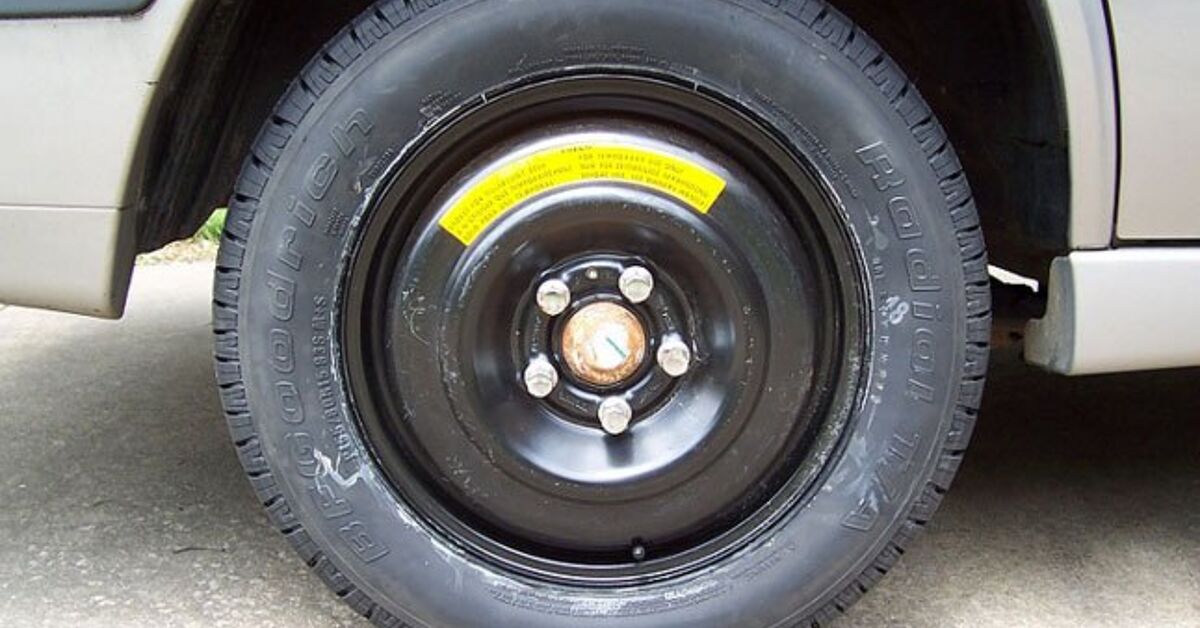
A donut spare is usually narrower and lighter than the other tires on your vehicle. It may also have:
- Less tread
- A different diameter
- A higher required air pressure
- A lower speed rating
- Less grip during braking and cornering
These differences can change how the vehicle handles. The car may feel less stable, especially on wet roads, during hard braking, or when making a quick turn.
The smaller tire also spins at a different rate from the other wheels. On some vehicles, this can affect the anti-lock braking system, traction control, or all-wheel-drive system.
What the 50 mph rule means
Many temporary spare tires show a maximum speed of 50 mph on the sidewall. This limit is common, but it is not universal.
Do not treat 50 mph as a target speed. Treat it as an upper limit. Driving at 35 or 40 mph may be safer when:
- The road is wet or icy
- Traffic is heavy
- The spare is on a drive wheel
- The vehicle feels unstable
- The spare is on the front axle
- You are towing or carrying a heavy load
If your manual or tire sidewall lists a lower limit, use the lower limit.

What type of spare tire do you have?
The type of spare tire determines how far and how fast you can drive. Check the tire itself, the label in the trunk or cargo area, and the owner’s manual before driving.
Temporary compact spare
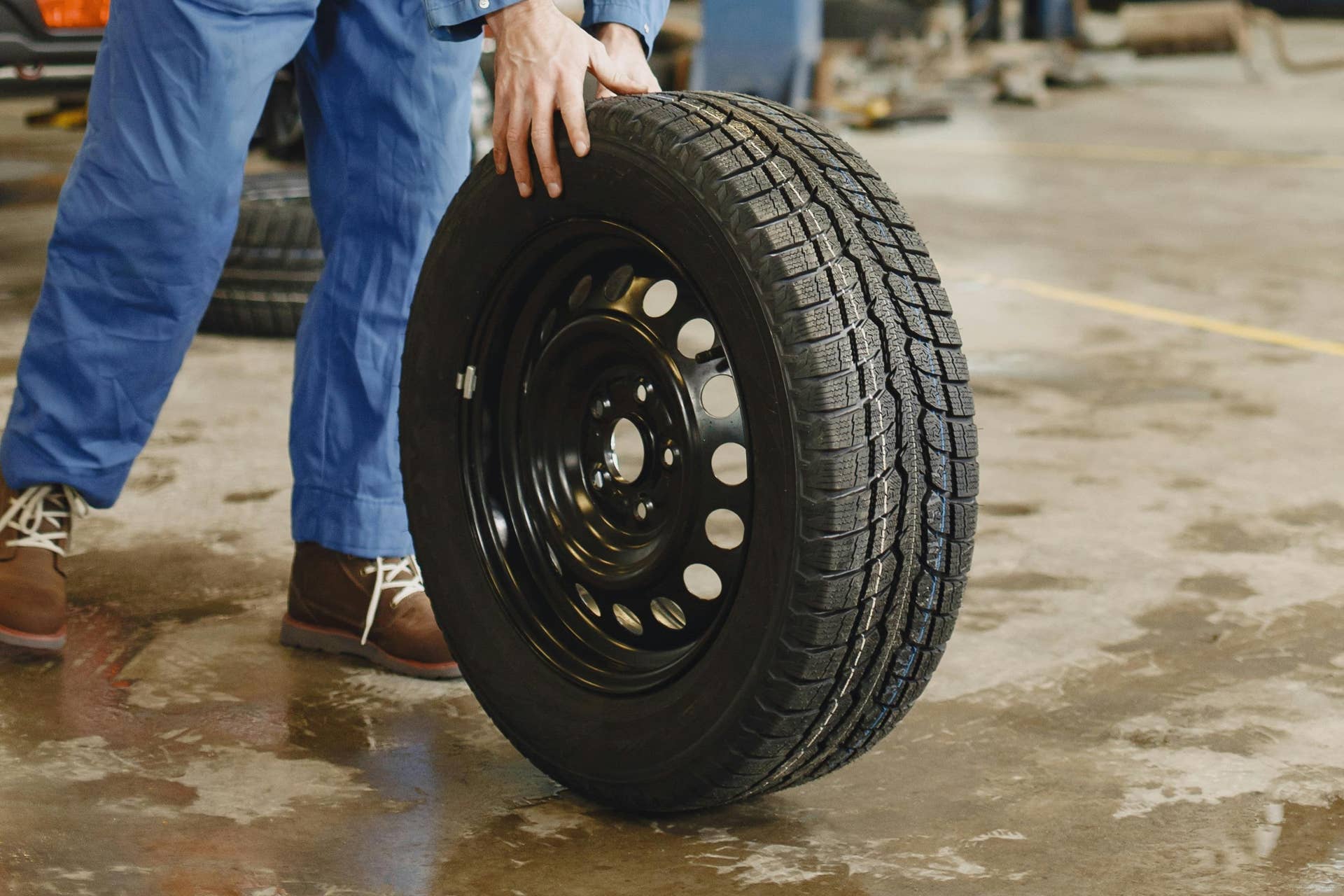
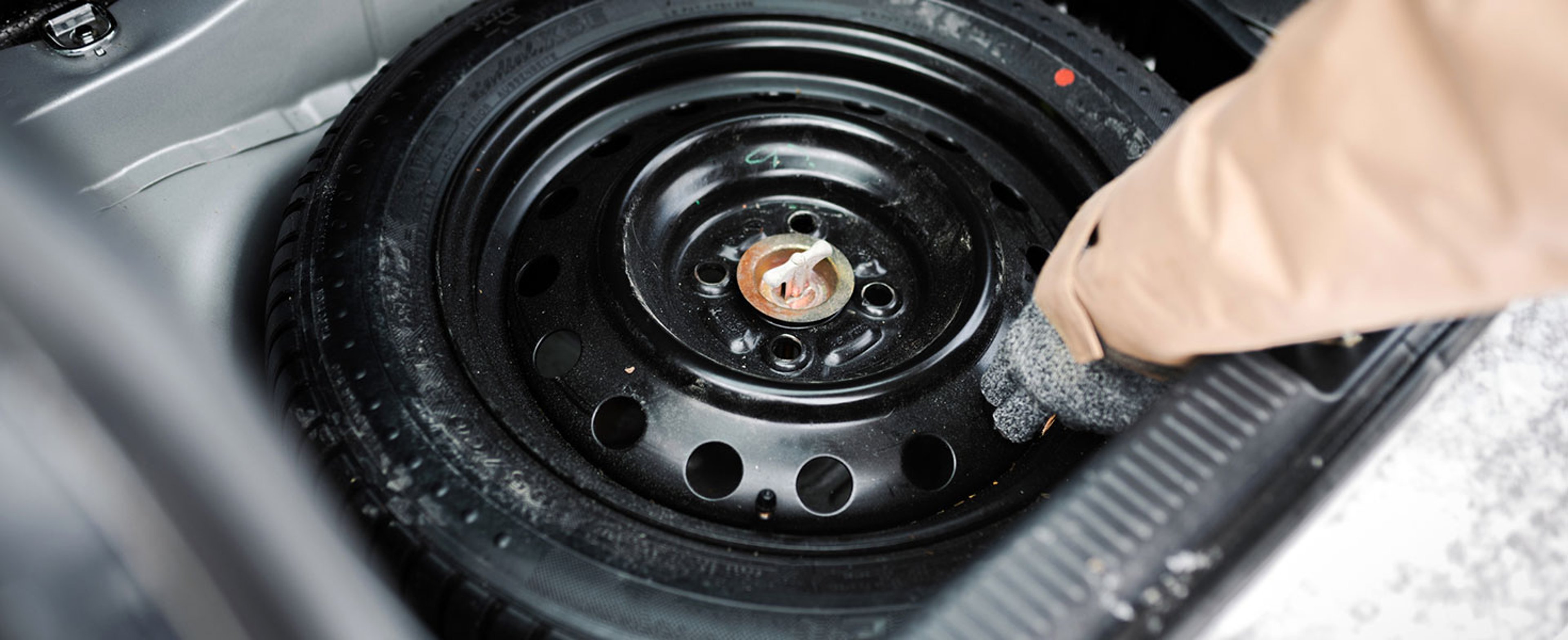
A compact spare, often called a donut, is smaller than a normal vehicle tire. It is designed for emergency use only.
Most compact spares require:
- A maximum speed near 50 mph
- A short driving distance
- Frequent pressure checks
- Gentle braking and steering
The correct pressure may be much higher than the pressure in your regular tires. Some compact spares need about 60 psi, but you must use the pressure printed on that tire or listed by the vehicle maker.
Never reduce the pressure to match the other tires unless the vehicle manufacturer specifically says to do so.
Full-size matching spare
A full-size spare has the same basic size as the other tires. If it matches the vehicle’s tire type, load rating, speed rating, and wheel specifications, it may be suitable for normal use.
Still, check the following:
- Is the spare inflated correctly?
- Is the tread worn differently?
- Is it the same type of tire?
- Is the wheel the correct size?
- Does the vehicle require matched tires on the same axle?
- Is the spare older than the other tires?
A full-size spare can age even when it is not used. Inspect it for cracks, damage, or dry rot before relying on it.
Full-size temporary spare
Some vehicles include a full-size spare that looks like a normal tire but has a different tread or construction. It may still have a temporary-use warning.
Read the sidewall. Words such as temporary use only, maximum 50 mph, or a special speed symbol indicate that the tire has restrictions.
Run-flat tire
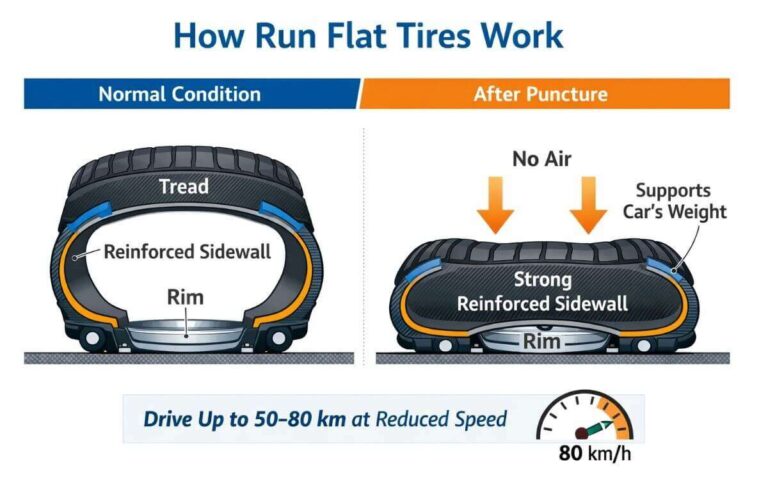
A run-flat tire is not the same as a spare tire. It is built to travel a limited distance after losing air, but its limits depend on the tire model, vehicle, speed, load, and road conditions.
Many run-flat systems also require a working tire-pressure monitoring system. Follow the vehicle manual and the tire maker’s instructions.
How to drive safely on a spare tire
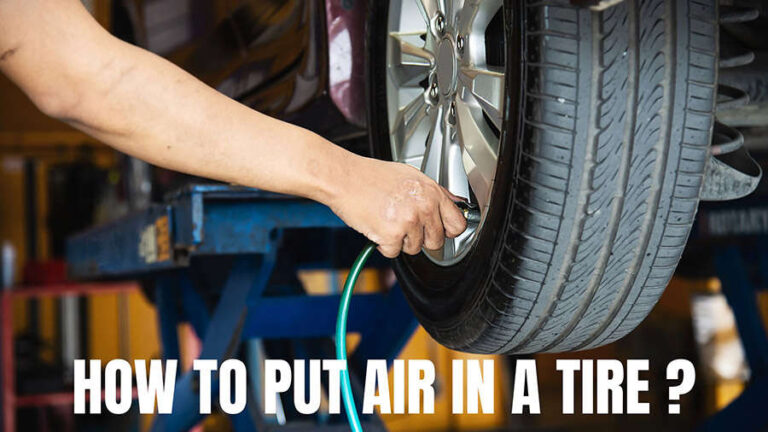
Before driving, make sure the spare is installed correctly and inflated to the listed pressure. If the wheel is loose, the tire is damaged, or the spare does not fit correctly, do not drive on it.
1. Check the tire pressure
Find the correct pressure on:
- The spare tire sidewall
- The vehicle’s owner’s manual
- The tire information label inside the driver’s door
Do not use the pressure shown on the regular tire as a substitute. A temporary spare often needs a different pressure.
If the spare is badly underinflated, stop and inflate it before driving. If it will not hold air, call roadside assistance.
2. Confirm that the lug nuts are tight
If you installed the spare yourself, tighten the lug nuts in a crisscross pattern. Use the vehicle’s specified torque as soon as possible.
A spare installed with loose lug nuts can cause the wheel to wobble or come off. If you are unsure about the installation, do not drive at highway speed. Have a technician inspect it.
3. Reduce speed
Stay below the spare’s posted speed limit. Drive more slowly when road, weather, or traffic conditions are poor.
Avoid sudden:
- Braking
- Lane changes
- Turns
- Acceleration
- Swerving
The vehicle may not respond in the same way as it did with four matching tires.
4. Avoid highways when possible
A short route on slower roads is often easier to manage than a long highway trip. Use the right lane, leave extra space, and avoid fast traffic.
If a highway is the only route to safety, drive cautiously and exit as soon as practical. Do not continue a long trip simply because the spare feels normal.
5. Remove extra weight
A heavy load increases stress on the spare and can make braking harder. Remove unnecessary cargo if possible.
Do not tow a trailer with a temporary spare unless the vehicle manufacturer specifically permits it.
6. Get the original tire repaired or replaced
A spare tire is a bridge to a repair shop, not a permanent fix. Contact a tire shop, dealer, or roadside service provider as soon as you reach a safe location.
A puncture in the tread may be repairable in some cases. Damage to the sidewall, shoulder, or bead usually requires tire replacement. A qualified tire professional should make that decision.
When should you not drive on a spare tire?
Do not drive on a spare if the tire is flat, damaged, expired, incorrectly sized, or installed on the wrong vehicle. Call roadside assistance instead.
Avoid driving on the spare when:
- The tire has visible cracks or bulges
- The spare has little or no air
- The wheel does not fit the hub
- The lug nuts do not seat correctly
- The tire rubs against the suspension or body
- The spare is too small for the brake assembly
- The vehicle has a major drivetrain warning
- The damaged tire came off an all-wheel-drive vehicle
- You need to travel a long distance
- You must drive through severe weather
- The vehicle feels unstable after installation
A temporary spare may also be unsafe when placed on the front axle of some vehicles. Front tires control steering, and they often handle much of the braking work.
Some manufacturers advise moving a full-size rear tire to the front and placing the temporary spare on the rear. This requires the correct tire size, equipment, and safe installation. Check the owner’s manual before attempting it.
Stop driving if the car behaves differently
Pull over in a safe place if you notice:
- Steering-wheel vibration
- Pulling to one side
- Tire rubbing
- Repeated traction-control activation
- ABS or drivetrain warnings
- A burning smell
- New grinding or clicking sounds
- The spare losing pressure
A warning light can have several causes. Do not assume it is harmless because the car still moves.

Can you drive on a spare tire with all-wheel drive?
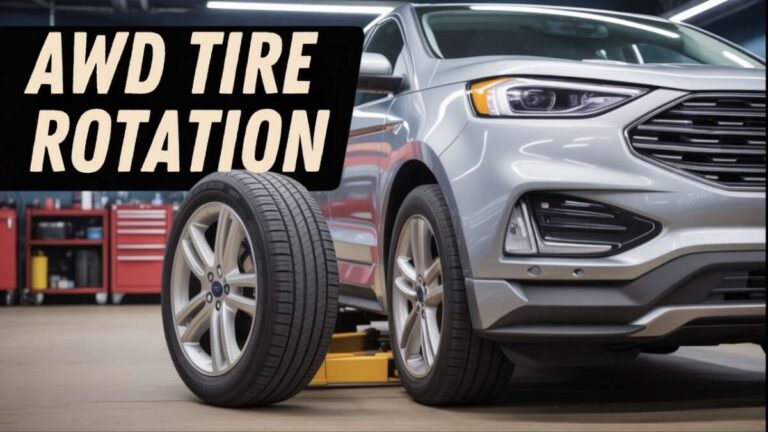
All-wheel-drive vehicles need special care because their systems may react badly to tires with different rolling diameters. A small temporary spare can cause extra stress in the drivetrain, especially if it remains installed for too long.
Some vehicle makers allow a temporary spare for a short emergency trip. Others advise against driving with a compact spare on an AWD vehicle or place strict limits on where it can be installed.
Check the exact instructions for your vehicle. The owner’s manual may tell you to:
- Drive only a short distance
- Keep the spare on a specific axle
- Disable or avoid certain driving modes
- Replace or repair the damaged tire immediately
- Use a full-size matching tire instead
Do not rely on advice for a different make, model, or model year. AWD systems vary.
The same concern can apply to some four-wheel-drive vehicles. If you cannot confirm the manufacturer’s instructions, use roadside assistance rather than guessing.
Can you drive on a spare tire in rain, snow, or ice?
You can sometimes drive a short distance in light rain, but a temporary spare gives you less margin for error. Its smaller tread and different grip can make wet braking and cornering less predictable.
Avoid driving on a temporary spare in snow or ice whenever possible. If you must move the vehicle to a safer location:
- Drive well below the posted limit
- Use smooth steering and braking
- Increase following distance
- Avoid steep roads
- Do not use cruise control
- Stop if the car begins to slide or feel unstable
A spare tire does not restore the same traction as four matching tires. Road conditions can turn a short trip into a serious safety risk.

Common mistakes to avoid
Driving at normal highway speed
The vehicle may feel fine at first, but the spare’s construction and size can limit handling. Stay below the marked speed limit and avoid long highway trips.
Leaving the spare installed for weeks
A temporary spare can lose pressure and wear quickly. It may also affect vehicle systems and handling. Repair or replace the original tire promptly.
Using the pressure from the door sticker
The door-jamb label usually lists pressure for the regular tires. The spare may need a different pressure. Use the spare’s own label or the manual.
Assuming every spare is interchangeable
A spare from another vehicle may have the wrong bolt pattern, offset, brake clearance, load rating, or tire diameter. Use only a spare approved for your vehicle.
Forgetting the tire-pressure monitoring system
The warning light may remain on after installing the spare. Some temporary spares do not have a pressure sensor. The light may clear after the original wheel is reinstalled, but follow the vehicle manual if it does not.
Repairing a damaged sidewall
Most puncture repairs are limited to certain tread-area damage. Sidewall and shoulder damage generally cannot be safely repaired. Ask a tire professional to inspect it.
Temporary spare vs. full-size spare
| Feature | Temporary compact spare | Full-size matching spare |
|---|---|---|
| Main purpose | Emergency travel to repair | May serve as a regular replacement |
| Typical speed limit | Often 50 mph; check sidewall | Tire-specific |
| Driving distance | Short distance only | Depends on tire condition and match |
| Handling | More different from other tires | Closer to normal if properly matched |
| Air pressure | Often much higher | Usually similar to regular tires |
| AWD concerns | Often significant | Lower if diameter and type match |
| Best next step | Repair or replace original tire | Inspect and replace when needed |
The key difference is not only size. A tire’s diameter, tread, construction, load rating, and speed rating all affect safe use.

What should you do after installing the spare?
Use this quick check before moving:
- Read the spare’s sidewall.
- Check the owner’s manual.
- Confirm the tire pressure.
- Check that the wheel is secure.
- Look for rubbing or damage.
- Keep speed below the lowest posted limit.
- Choose the shortest safe route.
- Avoid hard braking, sharp turns, and heavy loads.
- Arrange tire repair or replacement immediately.
- Have the lug nuts checked with a torque wrench.
If any part of this check fails, do not drive. Call a tire shop, dealer, or roadside assistance provider.
Key takeaway
Yes, you can drive on some spare tires, but only as a short-term emergency measure. A temporary spare usually means slower speeds, a limited distance, careful handling, and prompt tire repair. A full-size spare may allow more normal driving only when it matches the vehicle and has no temporary-use restrictions.
FAQs
Can you drive 100 miles on a donut spare?
You should not assume that 100 miles is safe. Some temporary spares may tolerate that distance, but others have shorter limits. Check the tire sidewall and owner’s manual. If you must travel farther than the stated limit, use roadside assistance or have the original tire replaced first.
Can you drive on a spare tire overnight?
You can drive overnight only if the spare is properly installed, correctly inflated, and within its speed and distance limits. Darkness does not change the tire’s limits, but poor visibility, rain, and traffic increase risk. Drive only to a safe repair location.
Can you drive on a spare tire on the front?
It depends on the vehicle and spare. A front-mounted spare can affect steering, braking, and drivetrain operation. Some manuals recommend placing a temporary spare on the rear instead. Follow the vehicle maker’s instructions.
Is it safe to drive on a spare tire on the highway?
A short highway trip may be possible if the spare is approved for the vehicle and you stay under its speed limit. However, slower roads are usually easier to manage. Avoid a long highway journey, especially in rain, snow, heavy traffic, or an AWD vehicle.
Can a spare tire go flat while stored?
Yes. Spare tires lose air over time, even when they are not used. Check the spare during routine tire-pressure checks and before long trips. Also inspect it for cracks, aging, and damage.
Conclusion
A spare tire can get you out of trouble, but it does not make the vehicle fully normal again. Before driving, check its type, pressure, speed limit, distance limit, and compatibility with your vehicle.
For a temporary donut spare, drive slowly, take the shortest safe route, and repair or replace the damaged tire as soon as possible. If the spare is damaged, the vehicle is AWD, the road conditions are poor, or the car feels unstable, do not risk the trip—call for professional roadside help.
Sources and further reading
- National Highway Traffic Safety Administration: Tire Safety
- National Highway Traffic Safety Administration: TireWise
- Your vehicle’s owner’s manual and tire information label
- The spare tire sidewall and the tire manufacturer’s safety instructions
- Your vehicle manufacturer’s roadside assistance guidance