

Clean leather car seats with a vacuum, mild leather cleaner, soft brushes, and conditioner, using gentle strokes.
Knowing how can i clean leather car seats helps protect their color, feel, and resale value. The safest method is simple: remove loose dirt first, test every product, clean small areas, and keep moisture under control. With the right steps, you can remove dust, food marks, body oils, and light stains without drying or cracking the leather.
What You Need to Clean Leather Car Seats
Before you start, gather your supplies. Using the right tools matters more than using strong chemicals. Leather is durable, but its finish can still become dull, sticky, or damaged.
You will need:
- A vacuum with a soft brush attachment
- Two or three clean microfiber towels
- A pH-balanced leather cleaner
- A soft leather cleaning brush
- Distilled water
- A leather conditioner made for automotive interiors
- Cotton swabs for seams and tight areas
- A soft, dry detailing brush
- A small bucket
Choose products labeled for finished automotive leather. Most modern car seats have a protective surface coating, so harsh oils and household cleaners can leave residue or cause uneven shine.
Avoid paper towels, rough sponges, bleach, ammonia, dish soap, alcohol, and all-purpose cleaners. These products may remove dirt, but they can also strip surface oils, weaken the finish, or leave the seat slippery.
:max_bytes(150000):strip_icc()/how-to-clean-leather-car-seats-5204366-hero-a9e1643de2804141afa2639918981c29.JPG)
How Can I Clean Leather Car Seats Safely?
The best process has five stages: inspect, vacuum, test, clean, and protect. Work slowly and clean one seat section at a time. This prevents dirty water from spreading across the upholstery.
1. Check the Leather and Seat Condition
Look closely at the seats before applying any product. Check for cracks, peeling, deep scratches, loose stitching, dye transfer, or worn coating.
If the leather is peeling, do not scrub it. Cleaning will not repair damaged coating. A professional automotive upholstery specialist may need to recolor or repair the surface.
Also check the owner’s manual. Some vehicles use perforated leather, coated leather, synthetic leather, or a combination of materials. These surfaces can look alike but may need different care.
2. Remove Loose Dirt With a Vacuum
Vacuum the seat, seams, folds, and gaps around the seat belt buckle. Use a soft brush attachment to avoid scratching the finish.
Pay special attention to the crease between the seat cushion and backrest. Sand, crumbs, and grit often collect there. If you rub these particles into the leather, they can act like fine sandpaper.
Use a soft detailing brush to loosen dirt from stitching. Keep the vacuum nozzle close, but do not press a hard plastic edge into the seat.
3. Test the Cleaner First
Spray or apply a small amount of cleaner to a hidden spot. Good test areas include the lower side of the seat or the area beneath the front edge.
Wait until the spot dries. Look for color change, stickiness, fading, or a patchy finish. If the test area looks normal, continue with the rest of the seat.
This small test can prevent a large repair bill. Product labels help, but a test is still important because leather finishes vary by vehicle and age.
4. Apply Cleaner to a Towel or Brush
Do not soak the seat. Apply a small amount of leather cleaner to a microfiber towel or soft brush instead of spraying heavily across the upholstery.
Clean a section about one square foot at a time. Use light circular or back-and-forth strokes. Let the cleaner loosen the grime rather than forcing it into the surface.
For perforated leather, use very little liquid. Excess cleaner can enter the tiny holes and reach the seat foam. That may create lingering odors or slow drying.
5. Wipe Away the Dirt
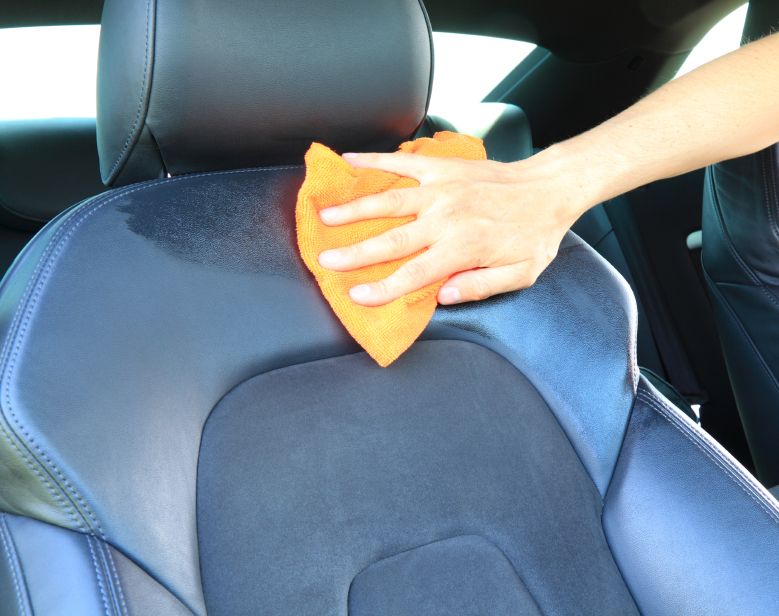
After cleaning each section, wipe it with a clean, slightly damp microfiber towel. Turn the towel often so you do not spread dirt back onto the seat.
Use a second dry towel to remove leftover moisture. The leather should feel clean and natural, not wet or greasy.
If the seat still looks dirty, repeat the process after the surface dries. Several mild passes are safer than one aggressive scrub.
How to Remove Common Stains From Leather Seats
Different stains need different approaches. Treat them as soon as possible, but avoid panic cleaning. Rubbing hard can make a small mark larger.
Food and Drink Spills
Blot liquid with a clean towel. Do not wipe from side to side because that can spread the spill.
Use a small amount of leather cleaner on a microfiber cloth. Work from the outside of the stain toward the center. This helps reduce a visible ring.
For milk, coffee, or sugary drinks, clean the area more than once if needed. These spills can leave odor and sticky residue after the surface appears dry.
Grease and Body Oil
Body oils often darken the outer seat bolster, steering wheel, and headrest. A leather cleaner can remove light buildup, but heavy grease may need several gentle treatments.
Apply cleaner to a soft brush, then work carefully along the grain. Wipe the area clean after each pass. Do not use baking soda, cornstarch, or strong degreasers unless the leather manufacturer approves them.
Ink Marks
Ink is difficult to remove without affecting the dye or protective finish. Do not use nail polish remover, rubbing alcohol, or hairspray.
Blot fresh ink gently and seek professional help for a large or old mark. A trained leather technician can often match the finish better than a home treatment.
Dye Transfer From Clothing
Dark jeans can transfer color to light leather. Clean the mark with a leather-safe product and a soft cloth.
Do not scrub hard. Dye transfer may sit within the protective coating, and aggressive rubbing can remove the coating along with the stain.
Chewing Gum
Harden the gum with a small ice pack wrapped in a towel. Once firm, lift it carefully with a plastic card.
Never use a sharp blade. After removing the gum, clean the area lightly and condition it if the surface feels dry.
How to Clean Perforated Leather Car Seats
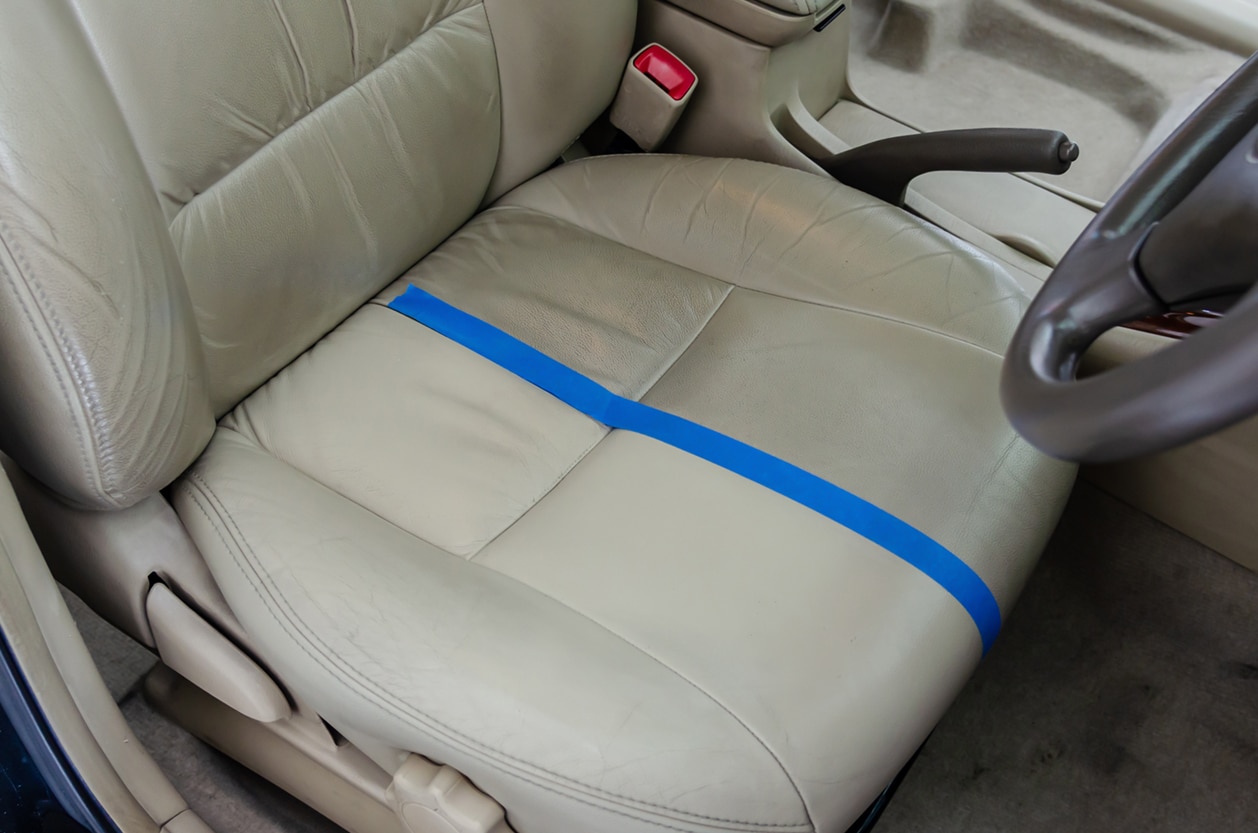
Perforated leather has small holes for ventilation. It needs a lighter touch than smooth leather because liquid and foam can move through the openings.
Start by vacuuming the holes with a soft brush. Use short passes rather than pushing the nozzle firmly against the seat.
Apply cleaner to a brush or towel, not directly to the seat. Work across a small area, then wipe it with a damp microfiber cloth.
If cleaner enters the holes, use a dry towel to blot the area. A soft, dry brush can help clear residue from the openings once the surface is nearly dry.
Never flood ventilated seats. Moisture inside the cushion may cause odors, electrical problems, or slow drying.
:max_bytes(150000):strip_icc()/how-to-clean-leather-car-seats-5204366-hero-a9e1643de2804141afa2639918981c29.JPG)
Should You Condition Leather Car Seats?
Conditioner can help keep the surface supple and improve its appearance, but more is not better. Modern automotive leather usually has a protective coating, so it does not absorb large amounts of oil like an untreated leather bag.
Use a conditioner only after cleaning and drying the seats. Apply a thin, even layer with a microfiber applicator. Let it sit for the time stated on the label, then buff away excess product.
A good conditioner should leave the seat soft and natural. It should not make the surface oily, shiny, or slippery.
Avoid heavy waxes, petroleum oils, mink oil, and household leather products unless the vehicle manufacturer approves them. These may attract dust or interfere with the factory finish.
Conditioning every few months may be enough for many drivers. A car parked in strong sun or used every day may need more frequent inspection, but the condition of the leather matters more than a fixed schedule.
Mistakes to Avoid When Cleaning Leather Car Seats
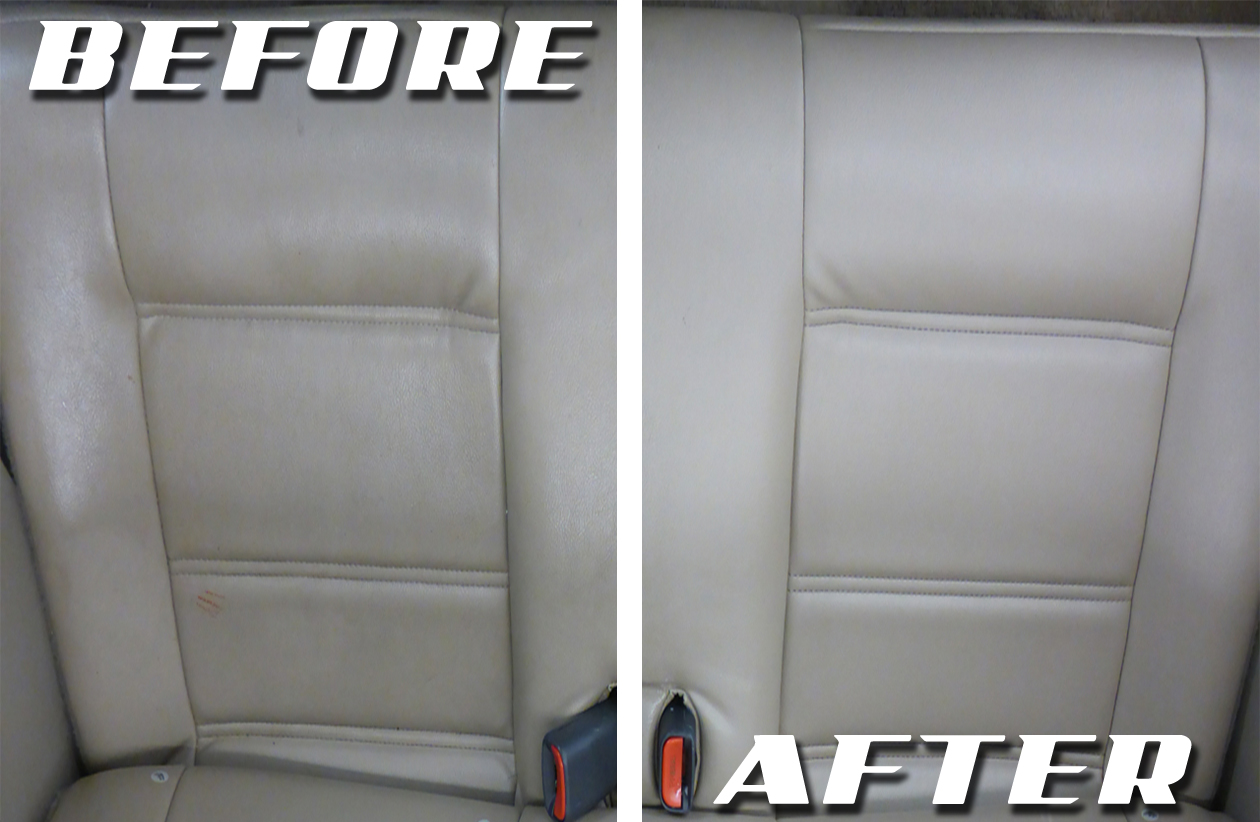
Many leather problems come from using too much force or too much product. The following mistakes are common.
- Do not use bleach or ammonia. These chemicals can damage the finish and change the color.
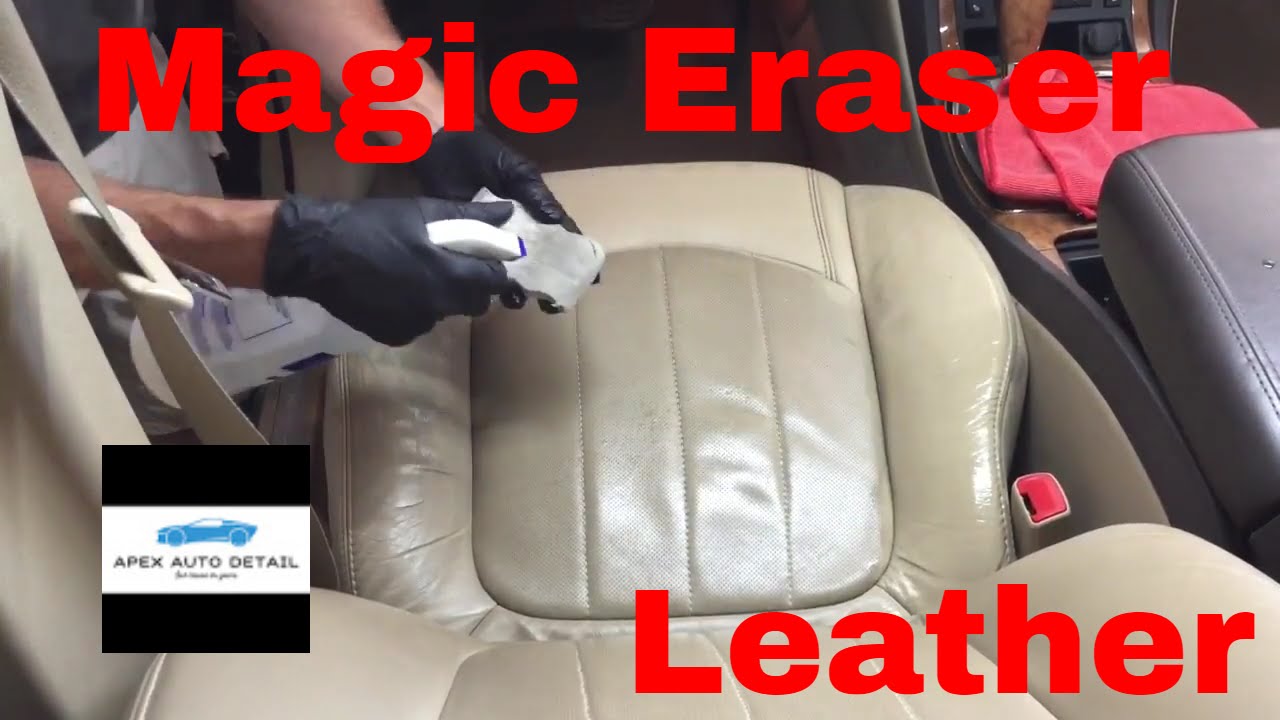
- Do not use a magic eraser. Its abrasive surface may remove the protective coating.
- Do not soak the cushions. Water can enter foam, seams, and ventilation holes.
- Do not scrub cracks. Scrubbing can lift loose coating and make peeling worse.
- Do not apply conditioner to dirty leather. It can seal grime into the surface.
- Do not leave the windows closed while wet seats dry. Trapped moisture can create odor.
- Do not use silicone-heavy products. They may create a slippery driving surface.
- Do not clean in direct, intense sun. Heat can dry products too quickly and leave streaks.
- Do not use colored towels. Dye from a towel can transfer to light upholstery.
One lesson detailers often learn early is that a seat can look cleaner after strong scrubbing but become weaker over time. Gentle cleaning protects the finish better than chasing a perfectly bright appearance.

How Often Should You Clean Leather Car Seats?
For most vehicles, lightly vacuum the seats every one or two weeks. Wipe high-contact areas, such as the driver’s bolster and headrest, every few weeks.
Perform a deeper cleaning every three to six months. Adjust the schedule if you have children, pets, food spills, dusty roads, or a light-colored interior.
A simple care plan looks like this:
- Vacuum weekly or whenever you see grit.
- Wipe fresh spills as soon as possible.
- Clean the seats every three to six months.
- Inspect for cracks, fading, and peeling during each cleaning.
- Condition lightly when the leather looks dry or feels rough.
- Use a sunshade when parking outdoors for long periods.
Sunlight, heat, sweat, denim dye, and friction can wear leather faster than ordinary dirt. Regular light care works like brushing your teeth. Small efforts prevent bigger problems.
How to Protect Leather Car Seats After Cleaning
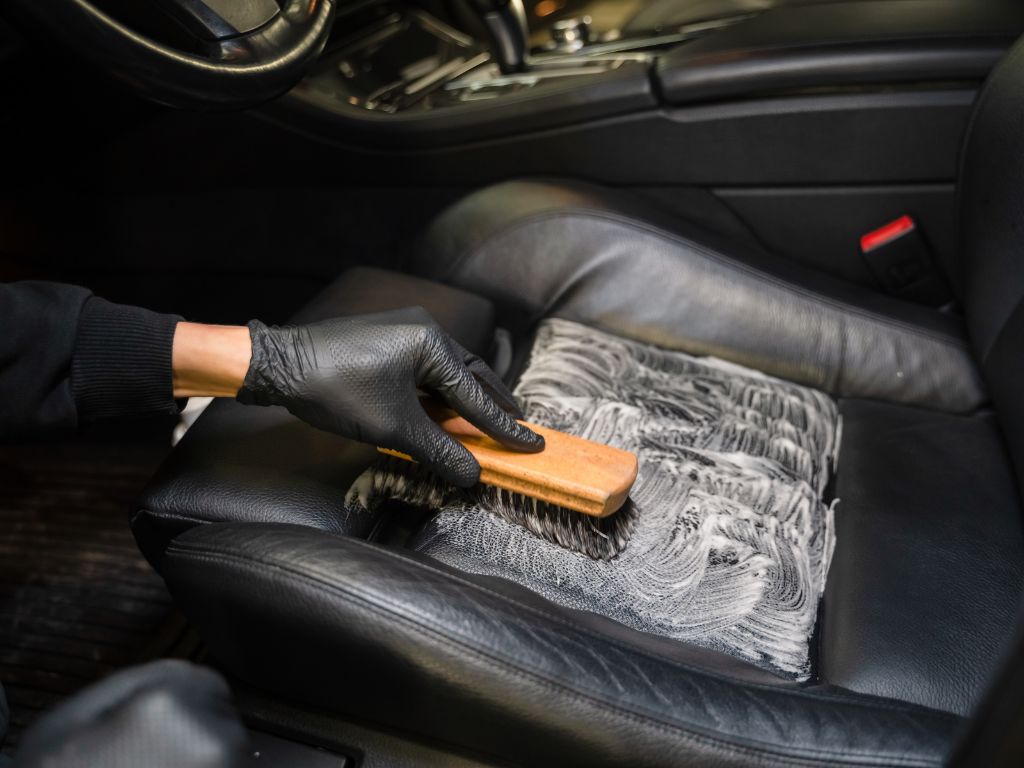
Cleaning removes dirt, but protection reduces future wear. Park in a garage or shaded area when possible. Use a windshield sunshade to reduce heat and ultraviolet exposure.
Keep sharp tools, pet claws, and metal objects away from the seats. If you carry pets, use a properly fitted seat cover that does not trap moisture or rub against the leather.
Clean spills right away. Blot them with a soft towel, then follow with a small amount of leather-safe cleaner. Waiting can allow dyes, oils, and sugars to bond with the finish.
Use a clean towel on the driver’s seat before and after long trips if you sweat heavily. Body oils can build up quickly on the steering wheel, seat bolster, and headrest.
A professional detail may be worthwhile when leather is deeply stained, cracked, peeling, or discolored. Home cleaning works well for maintenance, but it cannot replace leather repair or color restoration.
When Professional Leather Cleaning Makes Sense
Professional help is useful when a stain covers a large area or the leather has physical damage. It is also wise when the seat has a heating, cooling, or massage system and you are unsure how much moisture it can safely handle.
A qualified technician can identify the material, test the finish, remove stubborn dye transfer, and apply a matching color coating. Ask what products and methods will be used before approving the service.
Be cautious of anyone who promises that one product will repair all cracks or restore badly peeling leather. Cracks often indicate lost finish or worn material. Cleaning may improve the appearance, but repair may require recoloring, filling, or replacement.
In hands-on detailing, the best results usually come from restraint. A clean, even finish is better than a glossy seat covered in oily residue.
Frequently Asked Questions About How Can I Clean Leather Car Seats
Can I use soap and water to clean leather car seats?
A small amount of mild soap diluted in water may work in an emergency, but it is not the best regular choice. Use a pH-balanced cleaner made for automotive leather, and always wipe away moisture.
Can I use baby wipes on leather car seats?
Some baby wipes contain alcohol, fragrance, oils, or preservatives that may leave residue or affect the finish. A leather-safe automotive wipe is a better option, especially for frequent cleaning.
How can I clean white leather car seats?
Vacuum first, then use a leather cleaner on a hidden spot. Clean small sections with a soft brush and microfiber towel, but avoid bleach and abrasive products that can damage white leather.
How do I clean perforated leather seats?
Use very little cleaner and apply it to a towel or brush rather than spraying the seat. Vacuum the holes first, blot moisture quickly, and never flood the cushion.
How often should I condition leather car seats?
Many vehicles need light conditioning every three to six months. Follow the vehicle and product instructions, and use the leather’s feel and appearance as your guide.
Can I use vinegar to clean leather car seats?
Vinegar is acidic and may affect the protective finish, especially when used often or at full strength. Choose a tested leather cleaner instead.
Why do my leather car seats feel sticky after cleaning?
Sticky leather usually has leftover cleaner, conditioner, or oily residue on the surface. Wipe it with a clean, slightly damp microfiber towel, then dry it fully with another towel.
Conclusion
Learning how can i clean leather car seats does not require complicated tools. Vacuum loose grit, test your cleaner, use small amounts, clean gently, wipe away residue, and condition only when needed.
Protect the seats from heat, spills, friction, and heavy oils. If the leather is cracked, peeling, or deeply stained, professional repair is safer than aggressive home treatment. Start with one small section today, and share your results or explore more car care guides for practical interior detailing advice.