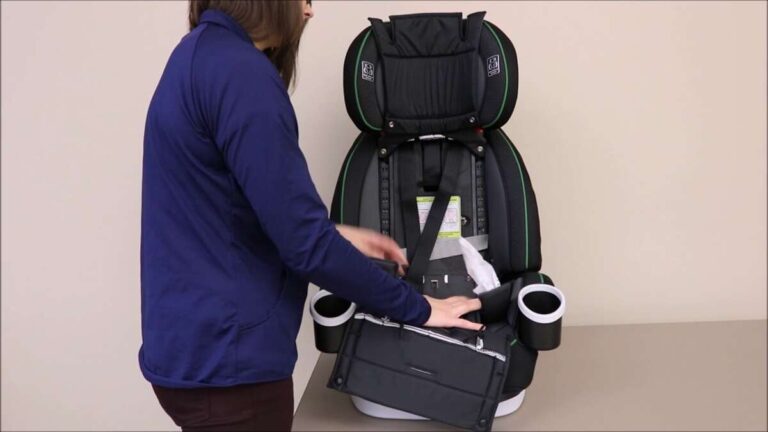
How Long Can A Newborn Be In A Car Seat: Safe Time Limits
In the United States, there is no single federal rule that sets a maximum number of minutes for a newborn to stay in a car seat. For a healthy baby, a practical safety limit is to avoid keeping the baby in the seat for more than about 2 hours at a time, and to stop sooner if the baby’s head slumps, breathing changes, or the baby needs care.
The 2-hour limit is a cautious travel guideline, not a guarantee that every newborn can safely tolerate that long. Newborns, premature babies, and babies with breathing or muscle problems may need much shorter trips. Always follow your baby’s doctor, the car seat manual, and current U.S. safety guidance.
A car seat is designed to protect a baby during a vehicle crash. It is not designed for routine sleep, unsupervised rest, or long periods outside the car.
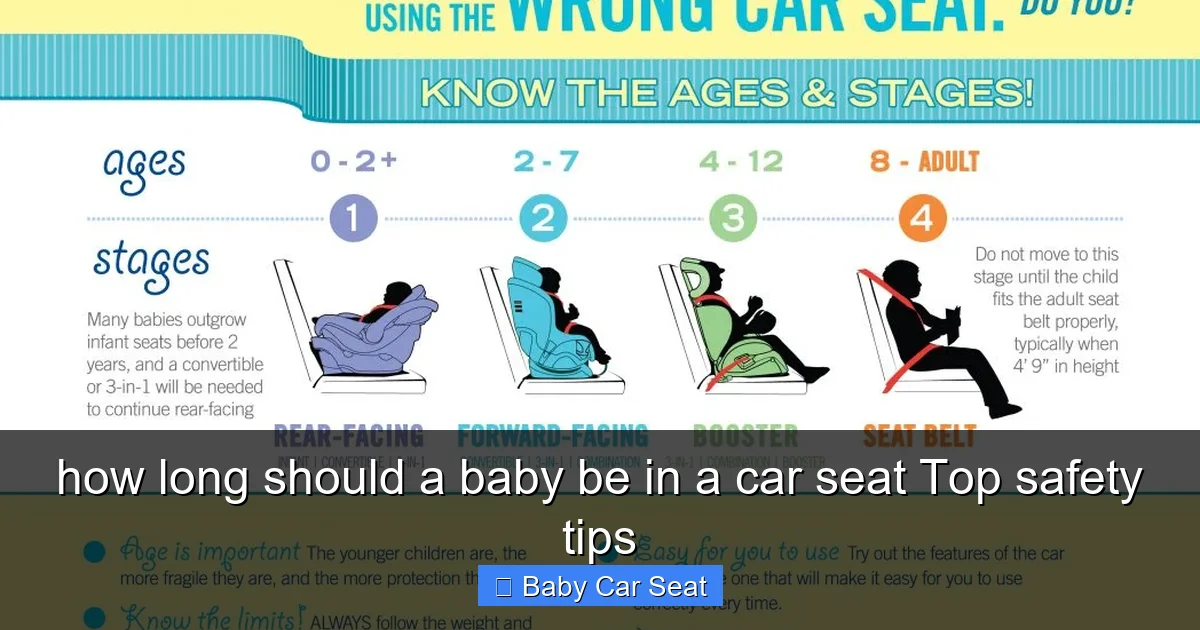
Why newborns should not stay in a car seat too long
Newborns have weak neck muscles and limited control of their heads. When they sit in a semi-upright position, the head can fall forward. This may narrow or block the airway, a risk known as positional asphyxia.
A newborn may not be able to move their head or body to improve airflow. The risk can increase when the baby is:
- Premature or small
- Asleep
- Slumped to one side
- Wearing bulky clothing
- Using an incorrectly adjusted harness
- Placed in a seat with the wrong recline angle
- Left without direct adult supervision
A properly installed rear-facing car seat can reduce injury during a crash. However, correct installation does not make the seat safe for unlimited use. The seat still holds a young baby in a position that may affect breathing over time.
The American Academy of Pediatrics recommends using car seats for travel and removing babies from them when they are not traveling. The AAP also advises against routine sleep in sitting devices, including car seats, once the trip ends.
Is the “two-hour rule” an official U.S. law?
No. The 2-hour recommendation is not a U.S. federal law and is not a universal medical limit.
It is commonly used by child-safety organizations and health professionals as a conservative travel guideline. The exact safe time can vary with the baby’s age, health, size, position, and the type of journey.
Think of two hours as a point to plan a break, not a target to reach. For a newborn, a shorter break may be wiser.

How long can a newborn be in a car seat during a trip?
For most healthy newborns, plan to stop and take the baby out of the car seat at least every 1 to 2 hours during a long trip. If possible, stop closer to the one-hour mark for a very young or small newborn.
During the break:
- Park in a safe place.
- Remove the baby from the car seat.
- Hold the baby upright or lay the baby flat on a firm, safe surface.
- Check the baby’s color, breathing, temperature, and comfort.
- Feed, burp, and change the baby as needed.
- Recheck the harness and position before continuing.
An adult should sit beside the baby when possible. If the driver is alone, use a properly adjusted mirror so the driver can check the baby without turning around. Do not try to adjust the harness while driving.
A simple travel guide
| Trip length | Practical plan |
|---|---|
| 15–30 minutes | Usually manageable if the seat is installed and adjusted correctly |
| 30–60 minutes | Check the baby’s position during the trip when it is safe to do so |
| 1–2 hours | Plan a stop before reaching 2 hours |
| More than 2 hours | Build in regular breaks and expect feeding or diaper stops |
| Long road trip | Consider stopping every 1–2 hours and having another adult monitor the baby |
These time ranges are planning tools, not medical clearance. A baby who shows signs of poor positioning needs to come out of the seat right away, even if only 10 minutes have passed.
What to do if your newborn falls asleep in the car seat
If your newborn falls asleep during a car ride, you do not need to wake the baby while the vehicle is moving solely because the baby is asleep. Keep the baby buckled and monitor the position.
Once you arrive, take the baby out of the car seat. Move the baby to a firm, flat, level sleep surface, such as a crib, bassinet, or play yard that meets current U.S. safety standards.
Do not let the baby continue sleeping in the car seat:
- On the floor
- On a bed
- On a couch
- On a kitchen counter
- Inside the home
- In a shopping cart
- On top of a stroller or other raised surface
- Beside you while you sleep
A car seat can tip over when placed on a raised or soft surface. Even when the seat stays upright, the baby’s head may fall forward or sideways.
What about a car seat attached to a stroller?
A car seat may connect to a stroller for short travel between the vehicle and a destination, if the products are approved for use together. That does not turn the car seat into a safe sleep space.
When you reach your destination, move the baby to a flat, firm sleep surface. Do not use a car seat and stroller system as a substitute for a crib or bassinet.

How to keep a newborn safe in a car seat
The safest position for a newborn is rear-facing in the back seat, using a seat that fits the baby’s current height and weight. Follow both the car seat instructions and the vehicle owner’s manual.
Check the installation
Before the first trip:
- Use the correct rear-facing belt path.
- Follow the seat manufacturer’s instructions for the lower anchors or seat belt.
- Make sure the seat does not move more than 1 inch from side to side or front to back when checked at the belt path.
- Set the recline angle according to the indicator on the seat.
- Do not place a rear-facing seat in front of an active passenger air bag.
- Register the seat so the manufacturer can contact you about recalls.
- Check the seat’s expiration date and crash history.
A certified child passenger safety technician can help. The National Highway Traffic Safety Administration provides a search tool for inspection stations and car seat help in the United States.
Check the harness
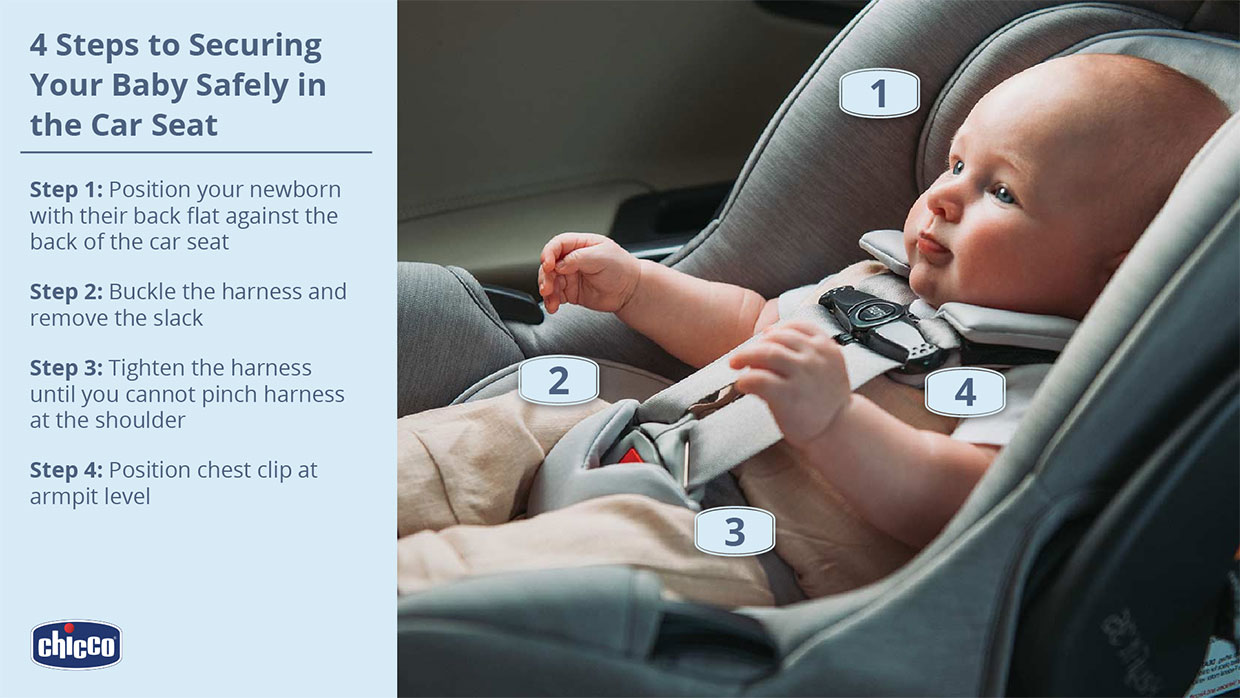
The harness should be snug and lie flat. For a rear-facing newborn:
- Place the harness straps at or below the baby’s shoulders.
- Position the chest clip at armpit level.
- Remove thick coats and bulky layers before buckling.
- Place a blanket over the secured harness if the baby needs warmth.
- Do not add padding unless it came with the seat or the manufacturer specifically approves it.
- Never place a blanket, towel, or cushion behind the baby’s back or under the harness.
You should not be able to pinch the harness webbing at the shoulder after tightening it.
Watch the baby’s head and airway
The baby’s chin should not rest tightly against the chest. The head should stay in a neutral position, and the face should remain visible.
Stop as soon as it is safe if you see:
- The chin pressed to the chest
- The head falling forward
- The head leaning far to one side
- The baby’s face covered by clothing or a blanket
- Pale, blue, gray, or dusky skin
- Weak, noisy, or irregular breathing
- Sudden limpness
- Trouble waking the baby
If the baby is not breathing normally, looks blue or gray, or is difficult to wake, call 911 immediately.

When should you ask a doctor before a long car ride?
Ask your baby’s pediatrician before a long trip if your newborn was premature or has a condition that may affect breathing, muscle tone, heart function, or oxygen levels.
You may need a specific travel plan if your baby has:
- A history of breathing problems
- Lung or heart disease
- Low birth weight
- Poor muscle tone
- Recent surgery
- A feeding or swallowing problem
- A need for home oxygen
- A previous failed car seat observation or challenge
Some premature babies are checked in their car seats before hospital discharge. This type of test may assess whether the baby can maintain safe breathing and heart rates while positioned in the seat. A hospital’s test does not mean that a baby can remain in the seat for unlimited periods.
Your pediatrician may recommend shorter travel times, more frequent stops, a different seat setup, or another adult in the back seat.
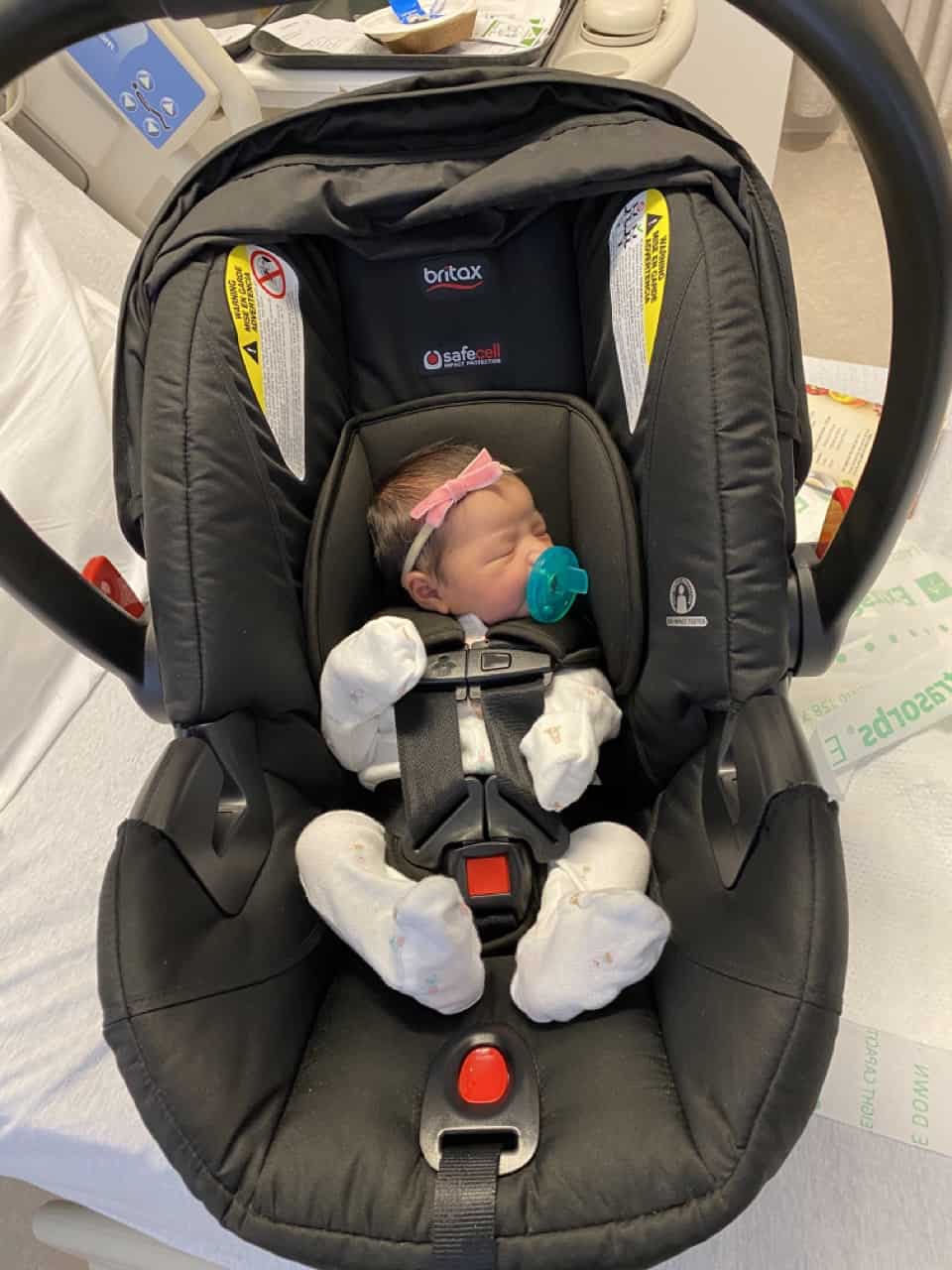
Can a newborn ride in a car seat for a long road trip?
Yes, a newborn may be able to take a long road trip, but the trip needs careful planning. The goal is not to keep the baby in the seat for the entire drive. Plan frequent stops and allow enough time for feeding, diaper changes, holding, and safe rest outside the seat.
Before leaving:
- Practice using the seat on short trips.
- Confirm that the baby fits the seat’s minimum size requirements.
- Install the seat several days before travel.
- Have a certified technician check the installation if possible.
- Pack feeding supplies, diapers, spare clothes, and a safe place for breaks.
- Plan stops every 1–2 hours.
- Avoid driving when the baby or driver is exhausted.
- Have another adult sit near the baby if possible.
During the trip, stop sooner if the baby becomes unsettled or slides into a poor position. Do not rely on a mirror, monitor, or camera as a replacement for stopping and checking the baby in person.
If the trip can be postponed, waiting until the baby is older may make travel easier. If it cannot be postponed, ask the baby’s health care provider for advice based on the baby’s health and size.

Common mistakes to avoid
Several habits can make car-seat travel less safe even when the seat is correctly installed.
Treating two hours as a safe minimum
The 2-hour figure is a planning limit, not a required amount of time. A newborn may need a break sooner.
Letting the baby sleep in the seat after arrival
Move the baby to a firm, flat sleep surface as soon as you reach your destination.
Adding aftermarket inserts
Head supports, cushions, strap covers, and newborn inserts can change the way the harness fits. Use only items supplied with the seat or approved in writing by its manufacturer.
Using thick winter clothing
Bulky coats can leave the harness too loose in a crash. Use thin layers, then place a blanket over the buckled harness.
Turning the seat forward too soon
Keep the child rear-facing until reaching the seat’s height or weight limit. Many children can remain rear-facing beyond infancy. Follow the car seat instructions and state law.
Moving the seat to the front passenger seat
The back seat is generally safer for children. Never place a rear-facing car seat in front of an active air bag.
Leaving the baby alone in the vehicle
Never leave a newborn alone in a parked car, even for a short time. Temperatures can change quickly, and a baby cannot escape or get help.

Frequently asked questions
Can a newborn be in a car seat for 3 hours?
A continuous 3-hour period is longer than the commonly advised 1–2-hour travel interval. Plan to stop earlier, remove the baby from the seat, and check the baby’s breathing and position. Ask a pediatrician before taking a newborn on a trip that requires extended travel.
How long can a newborn sleep in a car seat?
A newborn should not routinely sleep in a car seat outside the vehicle. If the baby falls asleep during a ride, keep the baby properly buckled while driving, then move the baby to a firm, flat sleep surface when you arrive.
Can a newborn be in a car seat for 30 minutes?
Most healthy newborns can usually tolerate a short, properly managed car ride. Make sure the seat is rear-facing, correctly installed, properly reclined, and adjusted to fit the baby. Check the baby’s head and airway when you arrive.
Can I feed my newborn while the car is moving?
No. Stop the vehicle in a safe place before feeding the baby. Never loosen or remove the harness while the vehicle is moving.
Is it safe to use a newborn car seat on an airplane?
A car seat may be used on an airplane when it is approved for aircraft use and the airline accepts it. Check the label and airline rules before travel. During the flight, follow the airline crew’s instructions and keep the child secured as directed.
What should I do if my newborn looks slumped in the car seat?
Stop as soon as it is safe. Remove the baby and check breathing and color. Recheck the recline angle, harness fit, clothing, and installation before continuing. If the baby has breathing trouble, blue or gray skin, or is difficult to wake, call 911.
Key takeaways
- There is no single U.S. federal maximum time for a newborn in a car seat.
- Plan a break at least every 1–2 hours on a long trip.
- Stop sooner if the baby slumps or shows any breathing or color change.
- Use a rear-facing seat in the back seat.
- Keep the harness snug and remove bulky coats.
- Move a sleeping baby to a firm, flat sleep surface after arrival.
- Ask a pediatrician about travel if the baby was premature or has a medical condition.
Conclusion
A newborn can usually take short car rides when properly secured in a rear-facing car seat. For longer trips, plan regular stops rather than keeping the baby in the seat for hours without a break. The practical rule is simple: use the car seat for travel, watch the baby’s position, and remove the baby when the journey ends.
For U.S. installation help, use NHTSA’s child passenger safety resources and look for a certified child passenger safety technician. For medical concerns, contact your baby’s pediatrician before traveling.
Sources and further reading
- American Academy of Pediatrics: Safe Sleep and Car Seats
- American Academy of Pediatrics: Car Seats and Booster Seats
- National Highway Traffic Safety Administration: Car Seats and Booster Seats
- National Highway Traffic Safety Administration: Find a Car Seat Inspection Station
- U.S. Consumer Product Safety Commission: Safe Sleep