

Introduction
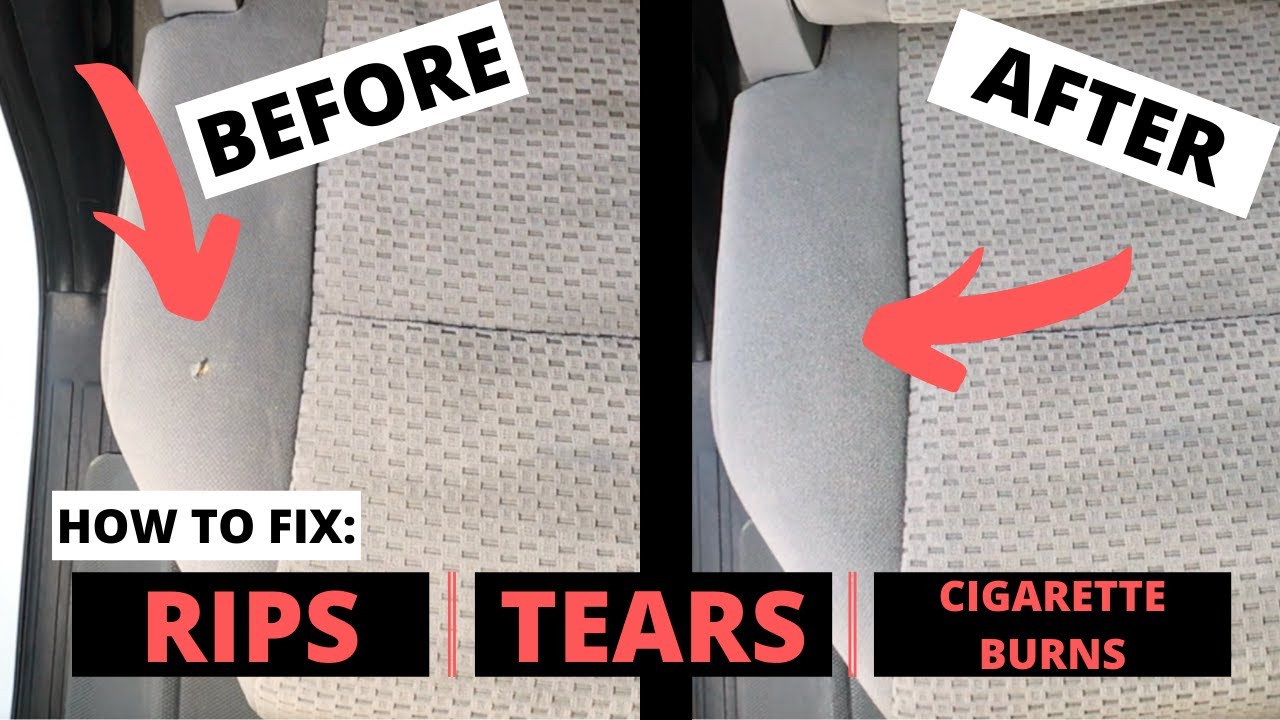
You can fix a small cigarette or ember burn in a car seat with a backing patch, upholstery adhesive, and a matching piece of fabric, vinyl, or leather. The best method depends on the seat material, the hole size, and whether the damaged area is near an air bag, seat heater, sensor, or child-seat anchor.
For a clean repair, first stop the loose fibers from spreading. Then support the hole from below, fill or patch the opening, and blend the surface with matching material. Large holes, burned foam, leather damage, and damage near safety equipment usually need a professional upholstery repair.
This guide applies to vehicles in the United States, including cars, trucks, SUVs, and vans. It does not replace the vehicle owner’s manual or a qualified technician’s inspection.

Before You Repair the Burn Hole
A burn hole is more than a cosmetic mark. Heat can damage the seat cover, foam, wiring, heating elements, or sensors below the surface.
Start by checking these points:
- Seat material: cloth, vinyl, leather, synthetic leather, or a mixed material
- Hole size: pinhole, small opening, split seam, or large burned area
- Damage depth: cover only, or cover plus foam
- Seat location: center cushion, side bolster, backrest, or headrest
- Nearby safety parts: side air bag, seat belt, occupancy sensor, seat heater, or child-seat anchor
- Vehicle age and value: a simple patch may be fine in an older daily driver, while a newer vehicle may justify a replacement cover
Do not mistake a seat-mounted side air bag for an ordinary seam. Many vehicles place the air bag inside the outer side of the front seatback. The seat cover may have a marked seam or label that identifies the air-bag exit area.
If the burn is on that seam, near an air-bag label, or close to exposed wiring, stop and ask a qualified automotive upholstery or repair professional to inspect it. A poor repair could affect how the cover tears during air-bag deployment.
When you should not use a DIY repair
Avoid a home repair if:
- The foam is charred, melted, or badly compressed.
- You see wires, connectors, or metal parts.
- The seat has a side-air-bag label near the damage.
- A heated seat stopped working after the burn.
- The air-bag warning light is on.
- The seat has an occupant-classification sensor under the cushion.
- The hole is larger than a few inches or crosses a seam.
- The burned area is on a child car seat rather than the vehicle seat.
Never repair a child safety seat with upholstery glue, fabric patches, or filler. A child restraint with heat, flame, melted plastic, or damaged webbing should be replaced according to the manufacturer’s instructions. In the United States, parents can check current child-seat guidance through the National Highway Traffic Safety Administration.

What You Need to Fix a Small Cloth Seat Burn
For a small burn on a cloth car seat, gather:
- Small scissors or a sharp craft knife
- Tweezers
- A vacuum or soft brush
- Rubbing alcohol and a clean cloth
- Thin upholstery backing fabric
- Flexible upholstery adhesive
- Matching cloth or a fabric repair compound
- A blunt tool, spoon, or small seam roller - Clean paper or masking tape for protecting nearby areas
Use flexible upholstery adhesive, not household super glue. Super glue can dry hard, leave a shiny spot, stain nearby fibers, and create a brittle edge that may crack when the seat flexes.
For the patch material, use cloth with a similar:
- Color
- Weave
- Thickness
- Stretch
- Surface texture
A hidden area may provide a small donor piece. For example, you might use fabric from beneath the seat or from an upholstery sample. Do not cut material from a visible area unless you already plan to replace that section.
Choosing a repair method
| Damage | Suitable method | Likely result |
|---|---|---|
| Tiny hole with little missing fabric | Fabric repair compound or donor fibers | Good cosmetic improvement |
| Hole under about 1 inch | Backing patch and matching cloth | Stronger, cleaner repair |
| Frayed hole with burned edges | Trim, back, and fill | Good if the foam is sound |
| Split seam | Upholstery stitching or cover replacement | Often needs professional work |
| Burned foam | Foam repair and cover repair | Usually best handled by an upholsterer |
| Leather or vinyl hole | Backing patch and flexible filler | Good when color and grain are matched |
| Damage near air-bag seam | Professional inspection | Safety takes priority |
These size ranges are practical guidelines, not a guarantee. The seat’s construction matters as much as the hole’s diameter.

How to Fix a Small Burn Hole in a Cloth Car Seat
1. Clean and inspect the area
Park the vehicle in a dry, shaded place. Turn off the vehicle and remove the key or key fob from the cabin.
Vacuum loose ash and fibers. Wipe the area lightly with a small amount of rubbing alcohol on a clean cloth. Do not soak the seat. Let it dry fully before applying adhesive.
Look below the hole with a flashlight. If you see melted foam, wiring, or a heating element, stop the repair and arrange a professional inspection.
2. Trim only the damaged fibers
Use sharp scissors or a craft knife to remove black, brittle, or loose fibers. Cut as little as possible.
Do not enlarge the hole just to make it look neat. A large clean opening is harder to hide than a small irregular one. Remove only material that cannot be supported or blended.
If the hole has a hard, melted rim, carefully shave down the raised plastic-like edge. Keep the seat cover intact around the opening.
3. Cut a backing patch
Cut a piece of thin upholstery backing fabric slightly larger than the hole. A patch that extends about a quarter inch beyond the opening on every side is often enough for a small repair.
Round the corners. Rounded corners are less likely to catch and lift than sharp corners.
Slide the backing fabric under the seat cover with tweezers. Center it beneath the hole. It should sit flat without bunching.
4. Apply flexible adhesive
Apply a small amount of upholstery adhesive to the backing patch, following the product’s instructions. Avoid spreading glue on the visible seat surface.
Press the fabric edges down onto the backing. Use a blunt tool or the back of a spoon to hold the edges in place. Do not press so hard that you flatten the surrounding seat texture.
Allow the adhesive to cure for the full time listed on its label. The surface may feel firm before the bond is fully set.
5. Fill the opening
For a very small hole, tease matching fibers over the adhesive while it is still suitable for bonding. You can also use a small amount of fabric repair compound.
Build the repair in thin layers rather than one thick blob. Thick filler can look raised and may crack when someone sits on the seat.
Match the surface texture before the compound cures. A blunt tool can help press the repair level with the surrounding fabric.
6. Blend the color and texture
If the patch is visible, use a compatible fabric colorant or upholstery repair dye. Test it first on a hidden area.
Do not try to make the color darker by applying one heavy coat. Several light coats usually blend better. Let each coat dry as directed.
Brush the surrounding fibers gently so the repaired area does not look like a hard circle. The goal is to match the seat’s texture, not merely cover the hole.
7. Inspect the finished repair
A successful repair should have:
- No sharp or loose edges
- No exposed foam
- No wet or tacky adhesive
- No hard lump under the fabric
- No spreading tear when the seat flexes
- No blocked seat controls or belt hardware
Wait until the adhesive and colorant have cured before using strong cleaners or placing heavy objects on the seat.

How to Repair a Burn Hole in Leather or Vinyl
Leather and vinyl need a different process because the surface is a solid sheet rather than a woven fabric.
For a small hole, use a flexible leather or vinyl repair kit that includes a backing cloth, filler, colorant, and, when needed, a grain paper or texture pad.
Step-by-step method
- Clean the area. Use a cleaner made for the seat material. Avoid harsh solvents that can strip the finish.
- Trim loose edges. Cut away only charred or lifted material.
- Insert the backing cloth. Slide it beneath the hole and keep it flat.
- Bond the edges. Apply the kit’s recommended adhesive around the underside of the opening.
- Add flexible filler. Use thin layers and let each layer dry.
- Level the surface. Smooth the filler so it is flush with the original seat.
- Copy the grain. Press a matching grain pad or texture paper into the filler if the kit requires it.
- Blend the color. Apply color in light layers and allow it to dry.
- Apply the correct finish. Use the repair kit’s finish or protectant, not a household polish.
The main challenge is matching both color and grain. A black vinyl seat may still have blue, gray, or brown undertones. A repair can look worse if the color is close but the surface has a smooth patch surrounded by textured vinyl.
Do not use an iron or open flame unless the specific repair kit expressly requires controlled heat and provides instructions for automotive upholstery. Excess heat can damage foam, wiring, seat heaters, and air-bag components.
How Much Does It Cost to Fix a Burn Hole in a Car Seat?
The cost depends on the seat material, damage depth, location, and whether the entire cover must be removed.
| Repair choice | Best for | Cost factors |
|---|---|---|
| DIY repair kit | Small, shallow damage | Material quality and color match |
| Mobile upholstery repair | Small to medium visible damage | Travel, color matching, and labor |
| Upholstery shop repair | Large holes, foam, seams, or leather | Removal, stitching, foam work, and refinishing |
| Replacement seat cover | Severe or widespread damage | Vehicle model, material, and availability |
| Full seat replacement | Major structural or safety damage | Used or new seat, programming, and installation |
A low-cost patch may stop the damage from spreading, but it may remain visible. A professional can often improve the color and texture match, especially on leather or factory-patterned cloth.
Ask for an estimate that states whether it includes:
- Seat removal
- Air-bag-safe cover work
- Foam repair
- Seat-heater inspection
- Color matching
- Shop supplies
- Reinstallation
Do not choose a repair solely by the lowest price when the damage is near an air bag or electrical part.

Common Mistakes That Make the Repair Worse
Avoid these common errors:
Using super glue
Super glue becomes rigid. A vehicle seat bends, compresses, and heats up. The hard glue can crack or create a sharp spot.
Covering the hole without removing charred material
Burned fibers can keep breaking under the patch. Trim the loose material first, but do not cut away sound fabric.
Using a thick layer of filler
A raised lump attracts attention and can feel uncomfortable. Thin layers produce a more flexible repair.
Applying too much liquid
Soaking the seat can drive cleaner or adhesive into the foam. It may also affect wiring or a seat sensor.
Using heat without checking the seat
A heated tool can damage synthetic upholstery, foam, sensors, and wires. Avoid heat unless the repair product specifically calls for it.
Sewing across an air-bag seam
Extra stitches can change the way a seat-mounted air bag exits. Do not stitch, glue, or cover an air-bag deployment seam without proper automotive repair knowledge.
Ignoring an air-bag warning light
A warning light can indicate a problem with an air bag, seat-belt pretensioner, wiring, or occupant sensor. Cosmetic repair does not fix that fault.

What If the Burn Hole Keeps Spreading?
A spreading hole usually means the surrounding fabric or vinyl has been weakened. The backing patch may hold for a while, but the cover can continue to split when the seat is used.
Stop and reassess if:
- The opening grows after sitting on it.
- The seam begins to separate.
- The patch lifts at the edges.
- Foam becomes visible.
- The seat feels uneven.
- A seat heater no longer warms evenly.
- A warning light appears.
For a large or spreading hole, replacing the seat cover may be more durable than adding more filler. A professional upholstery shop can inspect the foam, repair the cover, and work around factory safety seams.
If the seat contains an air bag or sensor, tell the repairer exactly what happened. Mention whether the burn involved a cigarette, lighter, hot object, or another source of heat.

How to Prevent Future Burn Holes
The simplest prevention is to keep smoking materials, hot tools, and heated objects away from the seat.
Useful steps include:
- Use a stable, approved container for hot items outside the vehicle.
- Do not place a hot pan, hair tool, soldering tool, or charcoal item on the seat.
- Keep lighters and matches in a secure place.
- Clean ash as soon as it appears.
- Do not leave a magnifying object that can focus sunlight on the upholstery.
- Check the seat after transporting hot objects.
- Use only seat covers that do not interfere with side-air-bag deployment.
A seat cover can protect upholstery, but it must be designed for that vehicle and seat. A generic cover may block a side air bag or interfere with a seat sensor. Follow the vehicle and cover manufacturer’s instructions.

Frequently Asked Questions
Can I fix a cigarette burn in a car seat without replacing the cover?
Yes, if the hole is small and the foam, wiring, heating element, and safety parts are undamaged. A backing patch and matching repair material can restore strength and improve the appearance. Large holes or damaged seams may require a replacement cover.
Can I use fabric glue on a car seat?
Use a flexible upholstery adhesive made for the seat material. Ordinary fabric glue may not tolerate vehicle heat, repeated compression, or cleaning. Test any adhesive on a hidden area first.
How do I fix a cigarette burn in a black cloth car seat?
Trim the charred fibers, place a black backing patch below the hole, bond the edges, and fill the opening with matching black upholstery fibers or flexible fabric repair compound. Check the shade in daylight because black upholstery can have different undertones.
Can I repair a burn hole near a side air bag?
Do not assume it is safe to repair it yourself. A seat-mounted air bag depends on the seat cover and seam opening correctly during deployment. Have an automotive upholstery professional or qualified service technician inspect the area.
Is it cheaper to repair a seat or replace it?
A small cosmetic burn is usually cheaper to repair. Replacement becomes more practical when the cover has a large hole, the foam is burned, the seams are damaged, or the repair would be close to the cost of a replacement cover.
Can I use a car seat cover to hide the burn?
You can use a cover only if it is compatible with the vehicle’s seat-mounted air bags, sensors, belts, and controls. Do not use a cover that blocks an air-bag seam or changes how the seat operates.
Final Recommendation
For a small burn hole on the center of an ordinary cloth seat, use a flexible backing patch, upholstery adhesive, and matching fabric. Work slowly, trim only the damaged fibers, and build the repair in thin layers.
For leather, vinyl, burned foam, split seams, heated seats, wiring, sensors, or areas near side air bags, use a professional repair service. A neat-looking patch is not worth compromising a safety system.
