How To Read Tire Sizes And What They Mean: A Simple Guide
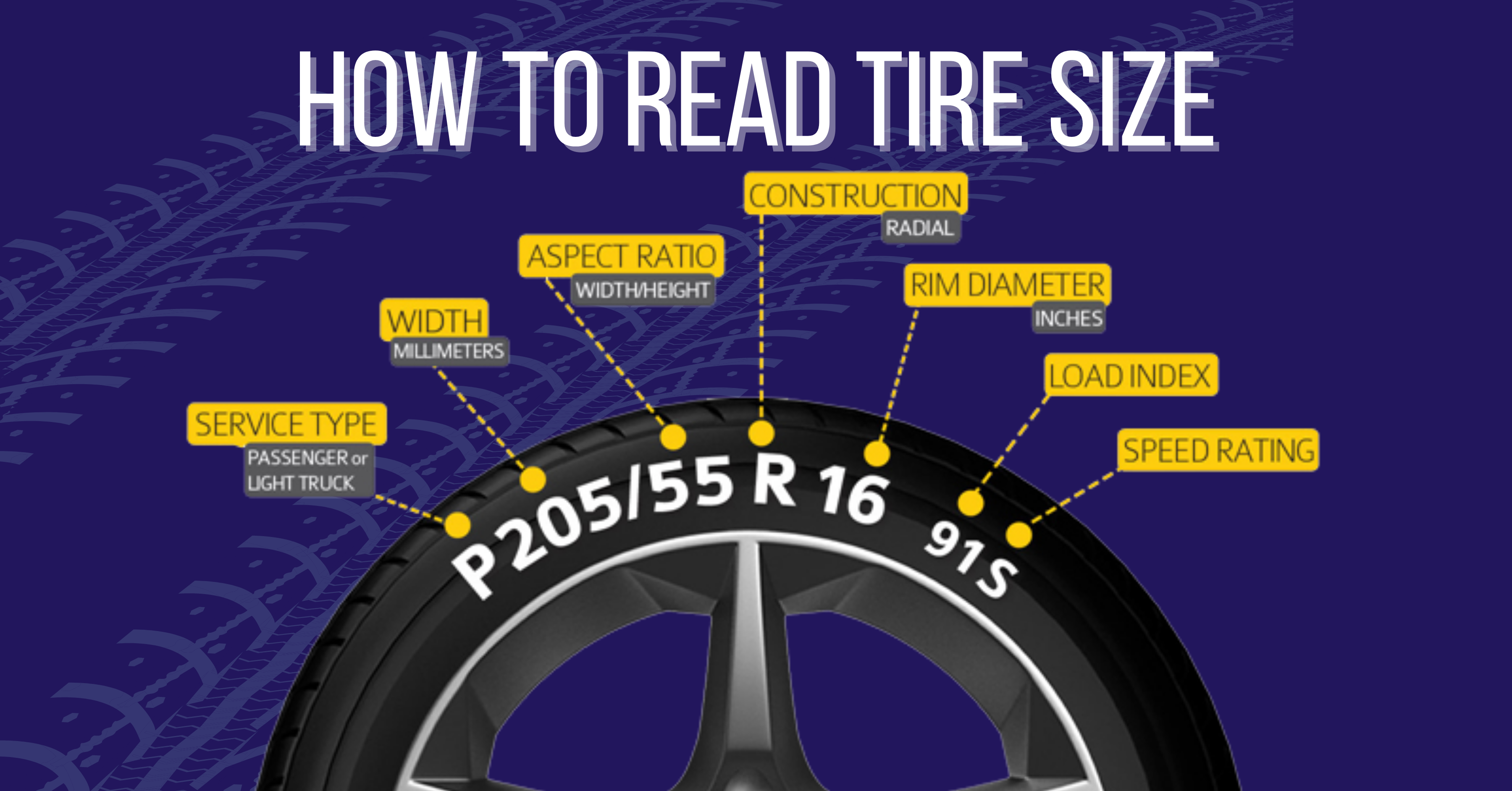
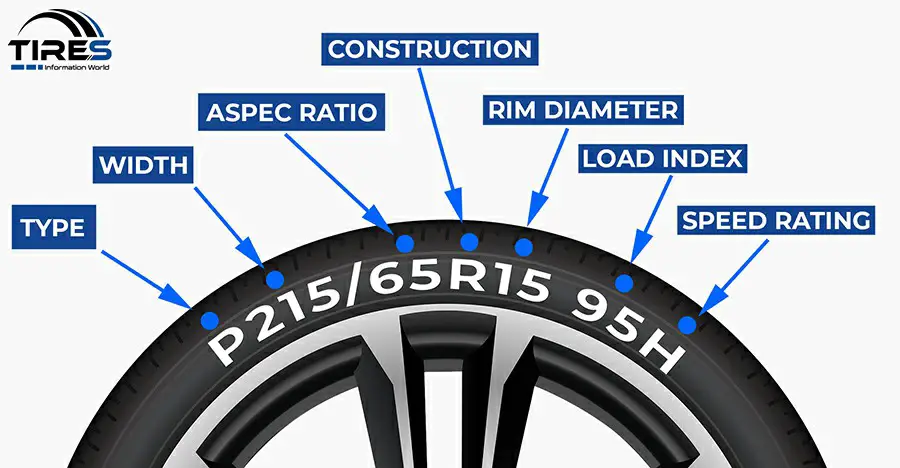
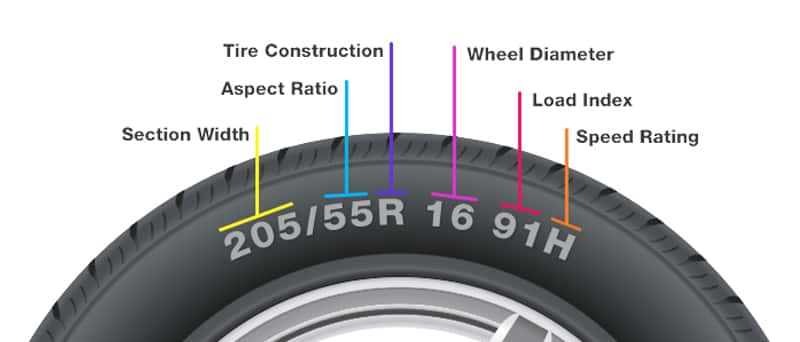
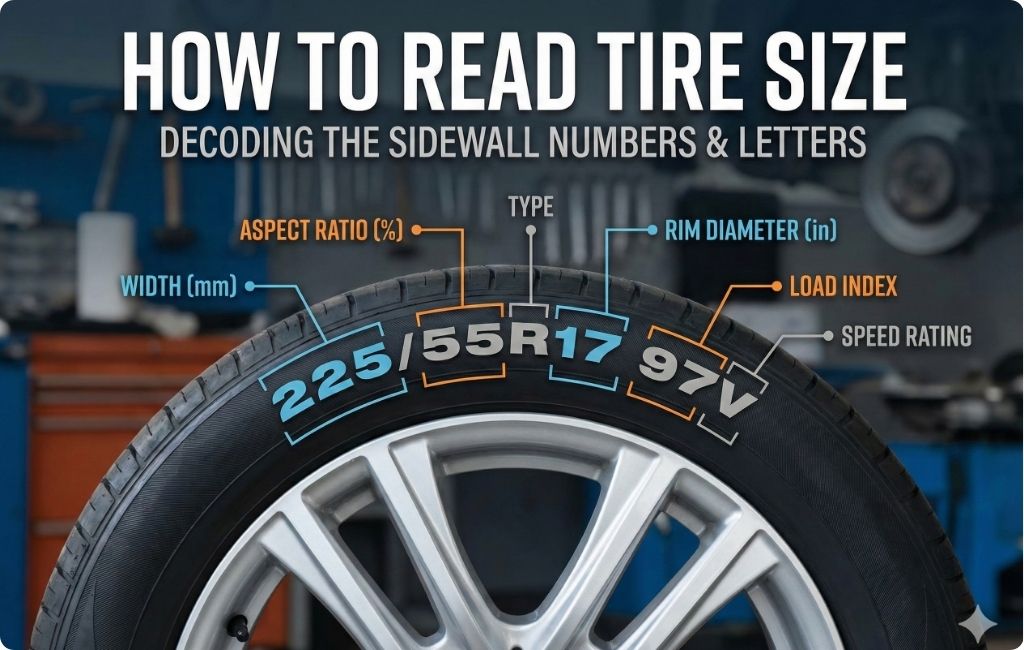
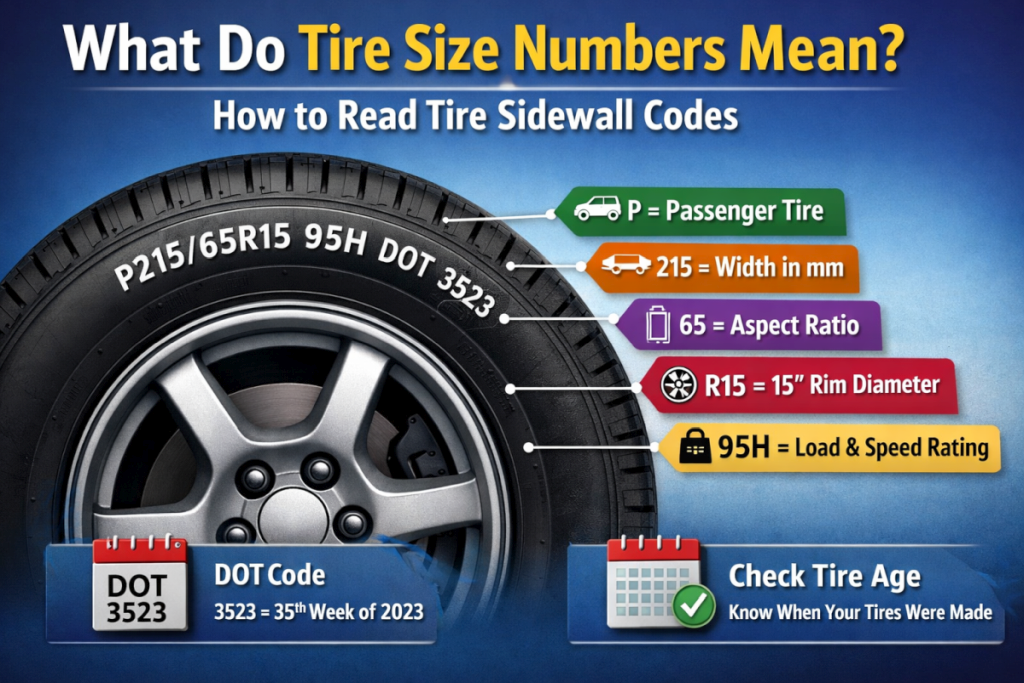
A tire size tells you the tire’s width, shape, construction, and the wheel diameter it fits. For example, P215/65R17 95H describes a passenger tire that is 215 millimeters wide, has a 65-series sidewall, uses radial construction, fits a 17-inch wheel, carries a specific load, and has a specific speed rating.
Reading tire sizes helps you buy the right replacement tires for a car, truck, SUV, or trailer in the United States. It also helps you avoid a dangerous mismatch between the tire, wheel, vehicle load, and driving conditions.
The safest starting point is the tire and loading information label on the driver’s doorjamb. You can also check the owner’s manual. The tire sidewall shows what is mounted now, but it may not show the original size recommended by the vehicle maker.
Tire size example: P215/65R17 95H
Read the code from left to right:
| Marking | Meaning |
|---|---|
| P | Passenger vehicle tire |
| 215 | Tire width in millimeters |
| 65 | Sidewall height as a percent of width |
| R | Radial construction |
| 17 | Wheel diameter in inches |
| 95 | Load index |
| H | Speed rating |
The first five parts describe the tire’s basic size. The last two parts describe how much weight the tire can carry and how fast it is rated to travel under specified test conditions.
A tire may also show extra markings, such as:
- XL or Extra Load
- LT for light-truck service
- ST for special trailer service
- M+S for mud and snow
- 3PMSF for severe snow service
- Run Flat or a maker-specific run-flat mark
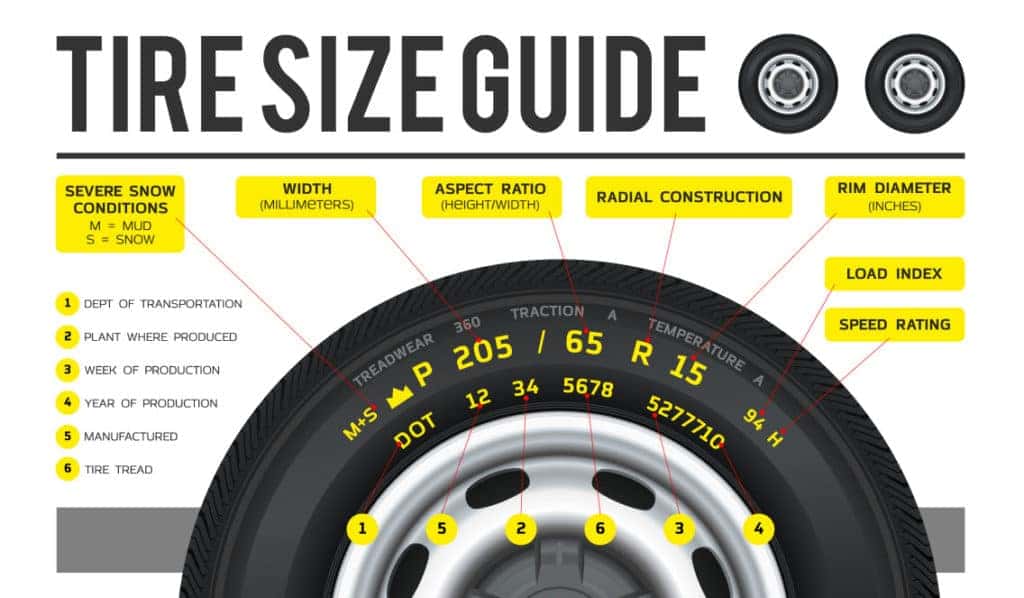
- DOT identification information
- TWI or tread-wear indicators
These marks matter, but they do not replace the vehicle maker’s recommended tire size.
What each number and letter means
The first letter: tire type
The first letter tells you the tire’s service category.
- P means passenger-car tire. In the U.S., this is common on cars, minivans, crossovers, and some SUVs.
- LT means light-truck tire. These tires are built for certain pickups, vans, and heavier-duty uses.
- ST means special trailer tire. ST tires are designed for trailer service and should not be used as a normal replacement for passenger or light-truck tires.
- T at the start usually means temporary spare tire, as in T125/70D16.
- No letter may appear on some metric tire sizes. These are often called Euro-metric tires.
A P-metric and Euro-metric tire can have similar dimensions but different load calculations. Do not assume that two tires with the same width, aspect ratio, and wheel diameter have the same load capacity.
For a vehicle sold in the United States, use the vehicle placard and owner’s manual to confirm the correct type.
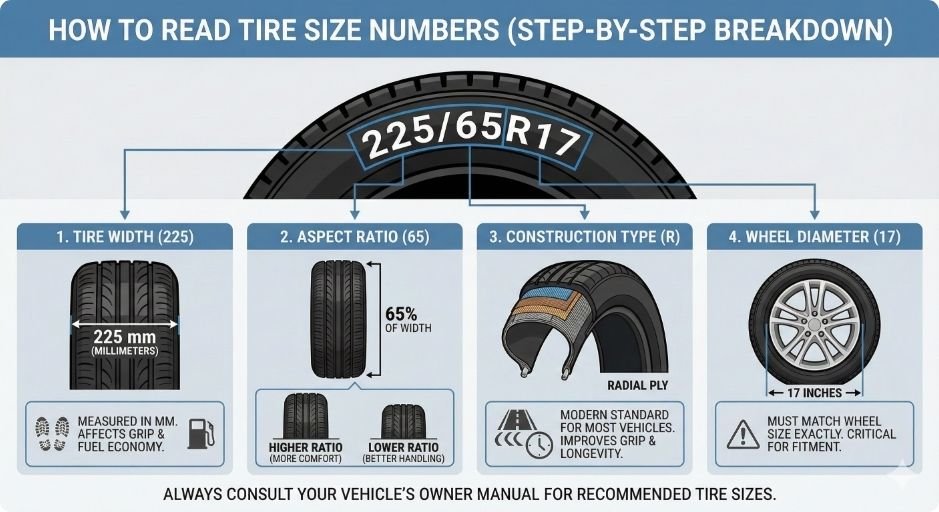
The three-digit number: tire width
The first number is the section width in millimeters.
In P215/65R17, the tire is about 215 millimeters wide from sidewall to sidewall when measured under specified conditions.
This is not the same as the width of the tread that touches the road. The tread may be narrower or wider than the total section width, depending on the tire design.
A wider tire may offer a larger contact area, but width alone does not prove better grip. Wet performance, tread design, rubber compound, inflation, road surface, and weather all affect traction.
The aspect ratio: sidewall height
The number after the slash is the aspect ratio. It shows the sidewall height as a percentage of the tire’s width.
For 215/65, the sidewall height is:
215 × 0.65 = 139.75 millimeters
So the sidewall is about 140 millimeters tall.
A lower aspect ratio means a shorter sidewall. For example:
- 215/65R17 has a sidewall about 140 mm tall.
- 215/55R17 has a sidewall about 118 mm tall.
A shorter sidewall can make steering feel more direct. It also leaves less rubber to absorb pothole impacts. A taller sidewall may provide a softer ride, but the vehicle may feel less sharp in quick turns.
The letter R: radial construction
The R means radial construction. Radial tires use internal cords that run across the tire and are supported by belt layers beneath the tread.
Most modern highway tires in the United States are radial tires. The letter does not mean “rim” or “recommended.”
Some older or specialty tires may use another construction mark:
- D means diagonal or bias-ply construction.
- B means bias-belted construction.
Do not replace a tire with a different construction type unless the vehicle maker or a qualified tire professional confirms that it is suitable.
The final number: wheel diameter
The number after the construction letter is the wheel diameter in inches.
In P215/65R17, the tire fits a 17-inch wheel.
This number refers to the wheel diameter, not the overall tire diameter. A 17-inch tire will not safely mount on a 16-inch or 18-inch wheel.
The tire must also match the wheel’s width, bead profile, bolt pattern, offset, and load capacity. Tire size alone does not confirm wheel compatibility.

What the load index and speed rating mean
The markings after the basic size are often written as 95H. The first part is the load index, and the letter is the speed rating.
Load index
The load index is a code for the maximum load the tire can carry when properly inflated under its rated conditions.
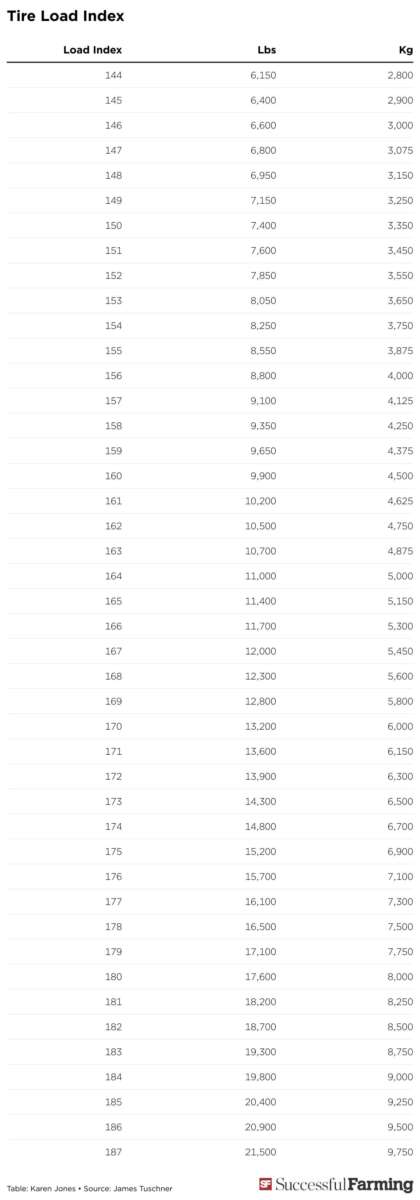
For example, a load index of 95 corresponds to 1,521 pounds per tire in the standard load-index table used for passenger tires. Four tires with that index have a theoretical combined capacity of 6,084 pounds, but the vehicle’s own weight ratings still control.
Do not calculate vehicle capacity by simply adding tire ratings and ignoring the vehicle. The vehicle manufacturer sets limits such as:
- Gross Vehicle Weight Rating, or GVWR
- Gross Axle Weight Rating, or GAWR
- Maximum cargo weight
- Trailer and tongue-weight limits
- Wheel and suspension limits
The load index is not the same as the tire’s recommended inflation pressure. A tire can carry its rated load only when inflated as required by the tire maker.
Speed rating
The speed rating is shown by a letter. Common ratings include:
| Rating | Maximum rated speed |
|---|---|
| Q | 99 mph |
| R | 106 mph |
| S | 112 mph |
| T | 118 mph |
| U | 124 mph |
| H | 130 mph |
| V | 149 mph |
| W | 168 mph |
| Y | 186 mph |
These values come from standardized test conditions. They are not a legal driving recommendation, and they do not mean a tire is safe to drive at that speed on public roads.
Speed ratings also involve handling, heat resistance, and durability at the test speed. A higher rating does not automatically mean better braking, longer tread life, or better winter traction.
Use the speed rating specified by the vehicle maker or a suitable higher rating approved by a tire professional. Do not use a lower rating unless the vehicle manufacturer specifically allows it.
Why load and speed ratings should match
A tire with the wrong load or speed rating can change how a vehicle handles and how much weight it can safely carry.
When replacing tires, match or exceed the original:
- Load index
- Speed rating
- Tire type
- Construction
- Size
- Run-flat requirement, if equipped
An exception may apply when using dedicated winter tires. Some vehicle and tire makers allow a lower speed rating for winter use, but the driver must follow the tire maker’s speed limit and place a reminder where it can be seen.
Tire size calculations: overall diameter and revolutions
You can estimate a tire’s overall diameter with this formula:
Overall diameter = (2 × sidewall height) + wheel diameter
Convert the wheel diameter from inches to millimeters by multiplying it by 25.4.
Example: P215/65R17
- Width: 215 mm
- Sidewall height: 215 × 0.65 = 139.75 mm
- Wheel diameter: 17 × 25.4 = 431.8 mm
- Overall diameter: 139.75 + 139.75 + 431.8 = 711.3 mm
- Overall diameter in inches: 711.3 ÷ 25.4 = about 28.0 inches
So a P215/65R17 tire has an estimated overall diameter of about 28 inches.
This calculation is useful when comparing alternative sizes. However, the actual diameter can vary by tire model, measuring method, tread wear, and inflation pressure.
Why overall diameter matters
Changing tire diameter can affect:
- Speedometer readings
- Odometer readings
- Ground clearance
- Acceleration
- Engine and transmission behavior
- Anti-lock braking system operation
- Traction control
- Electronic stability control
- Fender and suspension clearance
For example, if a replacement tire is larger than the original, the speedometer may show a lower speed than the vehicle is actually traveling. A major size change can also cause contact with the suspension, wheel well, or body.
Keep replacement tire diameter close to the original size unless the vehicle maker or a qualified tire specialist approves the change.
How to find the correct tire size for your vehicle
Use this order of checks:
-
Read the driver’s doorjamb placard.
Look for the recommended tire size, cold inflation pressure, seating capacity, and vehicle load information. -
Check the owner’s manual.
It may list more than one approved size for different wheels or trim levels. -
Check the fuel-door area or glove box if needed.
Some vehicles place tire information in these locations. -
Inspect the current tire.
Use the sidewall marking as a reference, not as the only source of truth. -
Confirm the replacement tire’s full specification.
Match the size, load index, speed rating, construction, and special requirements. -
Check all four tires.
A previous owner may have installed the wrong size, a temporary spare, or a mismatched tire.
If the placard and current tire disagree, follow the placard and owner’s manual. If the vehicle has aftermarket wheels, suspension changes, towing equipment, or other modifications, ask a qualified tire professional to verify fitment.
The U.S. National Highway Traffic Safety Administration advises drivers to follow the vehicle manufacturer’s tire information and maintain the pressure listed on the vehicle placard. That pressure is usually different from the maximum pressure molded into the tire sidewall.
Common tire size formats in the United States
Passenger tire example: P225/60R18
This means:
- P: passenger tire
- 225: 225 mm wide
- 60: sidewall height is 60% of width
- R: radial construction
- 18: fits an 18-inch wheel
It may also be marked 100H, which gives the load index and speed rating.
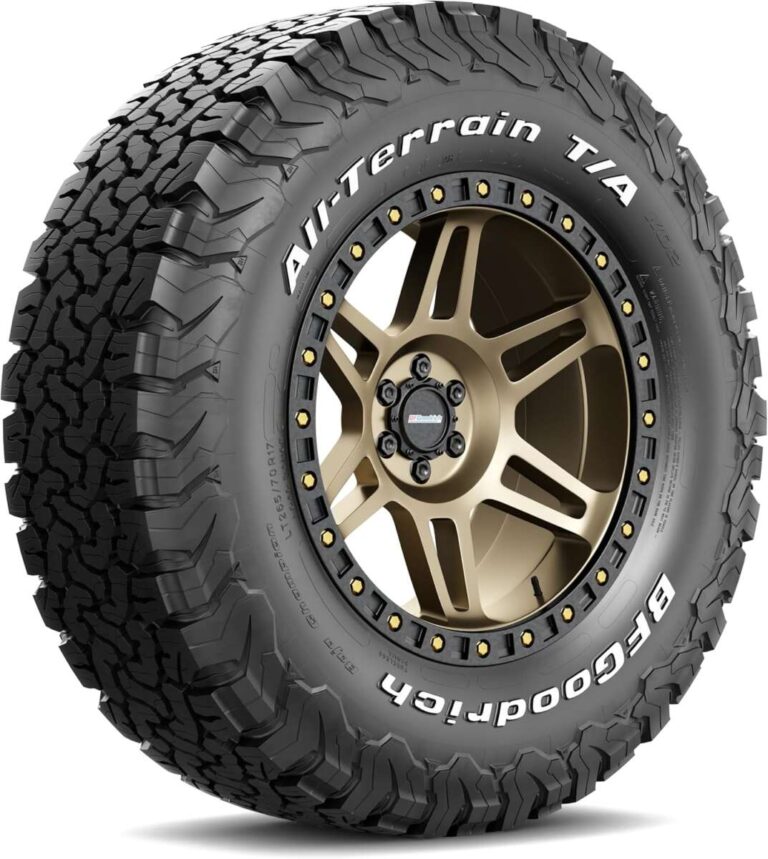
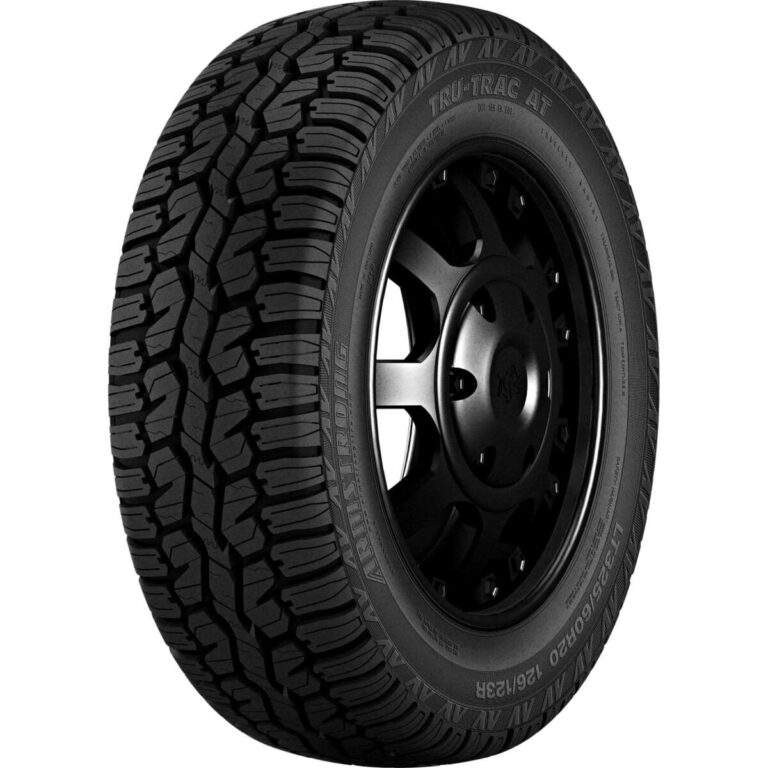
Light-truck tire example: LT265/70R17
This means:
- LT: light-truck tire
- 265: 265 mm wide
- 70: sidewall height is 70% of width
- R: radial construction
- 17: fits a 17-inch wheel
An LT tire may also show a load range, such as Load Range E. Load range describes the tire’s intended load and inflation capability. It is not a direct replacement for the load index.
LT tires can have a firmer ride and may weigh more than P-metric tires. Use the tire type specified for the truck and its intended load.
Flotation tire example: 33×12.50R20LT
Some truck tires use flotation sizing instead of metric sizing.
- 33: approximate overall diameter in inches
- 12.50: approximate section width in inches
- R: radial construction
- 20: fits a 20-inch wheel
- LT: light-truck tire
Actual dimensions vary by tire model and rim width. Check the manufacturer’s specification sheet before assuming that a flotation tire will fit.
Trailer tire example: ST205/75R15
This means:
- ST: special trailer tire
- 205: 205 mm wide
- 75: sidewall height is 75% of width
- R: radial construction
- 15: fits a 15-inch wheel
Use ST tires only for approved trailer applications. They are not passenger-car tires, even when the physical size appears similar.
Other markings on a tire sidewall
XL or Extra Load
XL means Extra Load. This tire can carry more weight than a standard-load tire of the same basic size when inflated to the correct pressure.
XL does not mean that the tire is suitable for every heavy vehicle. The load index and vehicle ratings still matter.
Load range
Load range is common on LT tires. Letters such as C, D, and E indicate increasing load and inflation categories.
The exact capacity depends on the tire’s size, construction, and inflation pressure. Always use the load-and-inflation table for the specific tire.
M+S
M+S, M/S, or M-S means the tread meets a mud-and-snow classification used by the tire industry. It does not prove that the tire is a dedicated winter tire or that it will perform well on ice.
Three-Peak Mountain Snowflake
The Three-Peak Mountain Snowflake, often called 3PMSF, shows that the tire met a defined snow-traction test for severe snow service.
It is more meaningful for winter traction than an M+S marking, but it still does not make a tire a substitute for careful winter driving. Ice, packed snow, temperature, tread wear, and road conditions all affect grip.
DOT identification number
A tire marked DOT includes a Tire Identification Number. The final four digits identify the week and year of manufacture.
For example:
- 2324 means the tire was made in the 23rd week of 2024.
The date does not tell you whether the tire is safe by itself. Age, storage, heat, sunlight, inflation, damage, and tread condition also matter. The U.S. Tire Manufacturers Association recommends regular inspection and consulting the tire maker about age-related replacement guidance.
TWI and tread-wear indicators
TWI marks the location of built-in tread-wear bars. These bars sit across the grooves and show when the tread has reached the legal minimum depth of 2/32 inch in many U.S. states.
Do not wait for the bars if the tire has cracks, bulges, cuts, exposed cords, uneven wear, or repeated air loss. A damaged tire needs prompt inspection.
How to choose between two tire sizes
Do not choose a different size based only on appearance. Compare the complete specifications.
| Check | Why it matters |
|---|---|
| Overall diameter | Affects speedometer, clearance, and vehicle systems |
| Section width | Affects wheel fit, body clearance, and road contact |
| Load index | Determines rated carrying capacity |
| Speed rating | Affects heat and handling capability |
| Wheel diameter | Must match the wheel exactly |
| Rim width range | Must fit the selected wheel |
| Tire type | P, LT, ST, or temporary spare use differs |
| Inflation requirement | Affects capacity, wear, and handling |
| Seasonal marking | Helps match the tire to weather conditions |
A common plus-sizing change uses a larger wheel with a shorter sidewall while keeping the overall diameter close to the original. For example, a vehicle might move from a 17-inch wheel to an 18-inch wheel with a lower-profile tire.
This can change ride comfort, wheel damage risk, steering response, tire cost, and snow performance. It may also require different wheels, pressure settings, and tire-pressure monitoring sensors.
Before changing sizes, verify fitment with the vehicle maker, wheel maker, or a qualified tire shop.
Tire pressure is not printed tire size
The tire sidewall often shows a maximum inflation pressure. That is not usually the pressure you should use for daily driving.
Use the cold tire pressure on the driver’s doorjamb placard. Check the pressure when the tires have been parked for several hours or driven only a short distance.
Correct pressure helps the tire:
- Carry the intended load
- Handle as designed
- Wear evenly
- Resist overheating
- Maintain fuel efficiency
Do not reduce pressure just because the tire’s maximum pressure looks high. Do not inflate to the placard pressure if the tire size or load rating is wrong for the vehicle. The size, load capacity, and pressure must work together.
A tire-pressure monitoring system can warn about significant pressure loss, but it may not replace regular pressure checks. The TPMS warning may appear only after pressure has already fallen below the system’s threshold.

Common mistakes when reading tire sizes
Mistake 1: Treating the sidewall size as a complete fitment
A size such as P235/65R18 does not confirm that the tire has the correct load index, speed rating, wheel width, or vehicle clearance.
Mistake 2: Confusing wheel diameter with tire diameter
The 18 in P235/65R18 means the tire fits an 18-inch wheel. It does not mean the tire is 18 inches tall.
Mistake 3: Using the tire’s maximum pressure
The maximum pressure on the sidewall is not normally the vehicle’s recommended cold pressure. Follow the doorjamb placard.
Mistake 4: Mixing tire types
Do not mix P-metric, LT, ST, and temporary-spare tires as if they were interchangeable. Each category has a different purpose.
Mistake 5: Ignoring load index
Two tires can have the same basic size but different load ratings. A tire with a lower load index may not safely support the vehicle.
Mistake 6: Assuming a higher speed rating solves every problem
A higher speed rating does not guarantee better wet traction, longer tread life, or a smoother ride. Choose a tire that fits the vehicle and driving conditions.
Mistake 7: Replacing only one tire without checking the drivetrain
Replacing one tire can create a diameter difference. This is especially important for all-wheel-drive and four-wheel-drive vehicles. Follow the vehicle maker’s limits for tread-depth and tire-size differences.
Mistake 8: Treating M+S as a winter-tire guarantee
M+S is not the same as the Three-Peak Mountain Snowflake symbol. Neither marking removes the need to slow down for snow and ice.

Frequently asked questions
Can I use a tire with a different size from the original?
Only if the alternative size is approved for the vehicle and maintains suitable diameter, load capacity, speed rating, wheel fit, and clearance. A tire shop’s fitment database can help, but the vehicle manufacturer’s specifications should take priority.
What does 225 mean on a tire?
The number 225 means the tire is approximately 225 millimeters wide from sidewall to sidewall under specified measuring conditions.
What does 55 mean on a tire?
The number 55 is the aspect ratio. The sidewall height is about 55% of the tire’s width.
What does R17 mean?
R17 means the tire uses radial construction and fits a 17-inch wheel.
Is a higher load index better?
A higher load index means a higher rated carrying capacity, but it is not automatically better for every vehicle. The tire must still fit the wheel and vehicle, and its pressure, construction, ride, and handling may differ.
Can I put LT tires on a passenger SUV?
Not automatically. LT tires may be suitable for some SUVs, but they can change ride quality, weight, noise, pressure needs, and handling. Use the type and load rating approved for the specific vehicle.
How do I know when a tire is too old?
Inspect the tire for cracking, bulges, cuts, uneven wear, and other damage. Read the DOT date code, then check the tire maker’s age guidance. If you see damage or have concerns, have a qualified tire professional inspect it.
Final checklist
Before buying or installing tires, confirm:
- The size matches the vehicle placard or an approved alternative.
- The tire type is correct: P, LT, ST, or temporary spare.
- The load index meets the vehicle requirement.
- The speed rating meets the vehicle requirement.
- The wheel diameter and rim width are compatible.
- The overall diameter will not create clearance or vehicle-system problems.
- The tire has the right seasonal and weather capability.
- The cold inflation pressure comes from the vehicle placard.
- All tires are suitable for the vehicle’s drivetrain and use.
If the markings are unclear or the current tires do not match the doorjamb label, stop before purchasing. Compare the owner’s manual, placard, and tire specifications, or ask a qualified tire professional to verify the fit.