

Why Does My Car Shake When I Brake?
Have you ever felt your car shaking when you press the brakes? It’s an uncomfortable feeling and can be worrying. Many people experience this problem, but they are not sure what causes it. I remember the first time my own car started to shake during braking. I felt nervous and wondered if it was safe to drive. If you’ve noticed your steering wheel, seats, or even the whole car vibrating when you slow down, you’re not alone. Let’s explore the causes, how to fix them, and what you should do next.
What Does “shaking When Braking” Mean?
When you step on the brake pedal, your car should slow down smoothly. If you feel a vibration or shaking in the steering wheel, floor, or seats, something is not working right. This shaking can be slight or strong. Sometimes, it happens only at high speeds; other times, you feel it every time you brake.
Shaking is a signal from your car. It tells you there may be a problem with the brakes, tires, or other parts. Ignoring it can lead to unsafe driving. You might wonder, “Is my car going to break down?” or “Am I doing something wrong?” Let me assure you, it’s a common problem, and you can solve it with the right steps.
Main Causes Of Car Shaking When Braking
I’ve talked to mechanics, read official guides, and learned from my own experience. There are several reasons why your car shakes during braking. Let’s look at the most common causes.
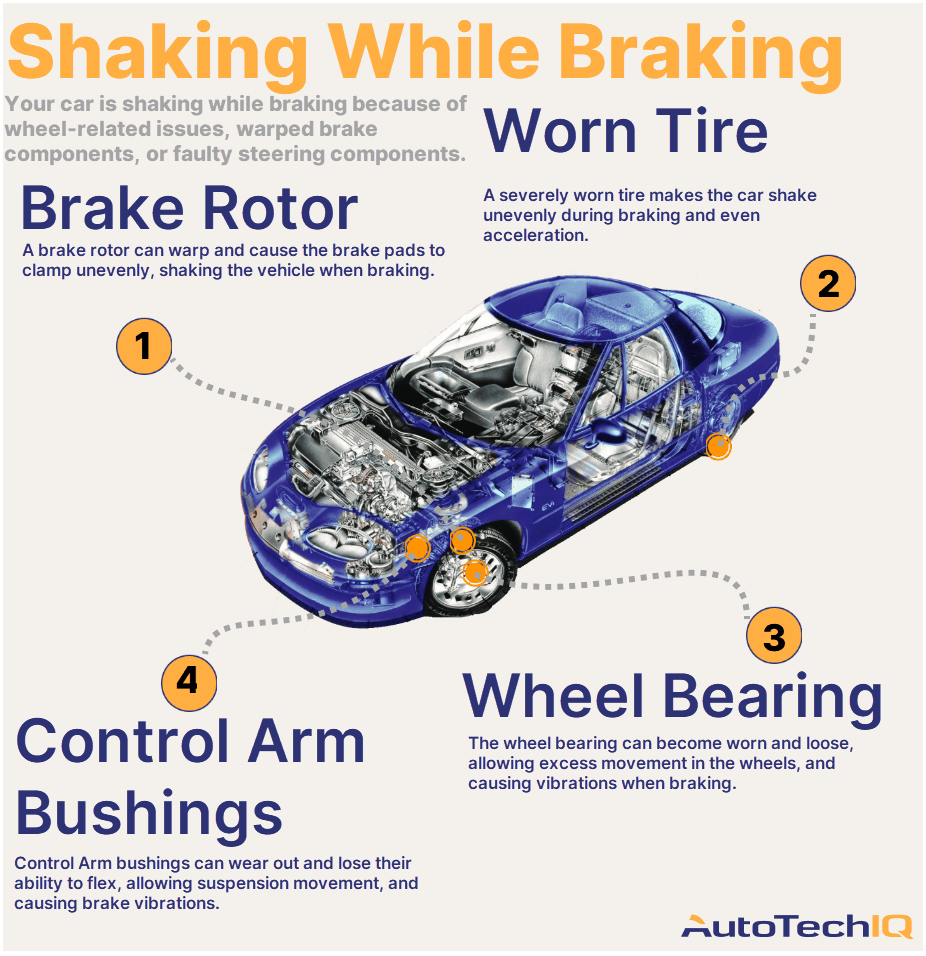
1. Warped Brake Rotors
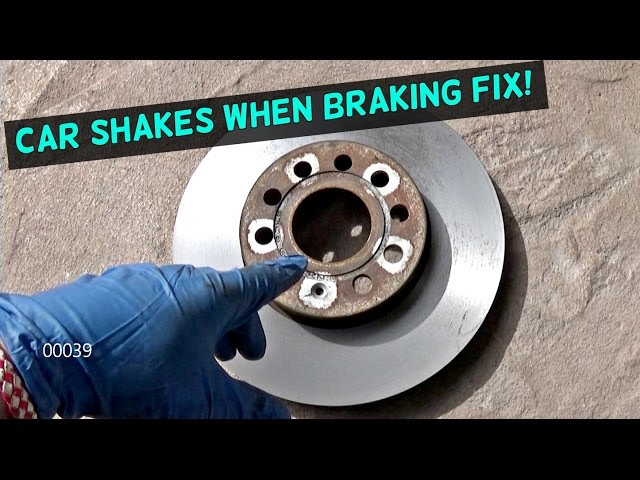
The brake rotors are metal discs attached to your wheels. When you brake, the pads squeeze these rotors to slow the car. Over time, heat and wear can cause the rotors to bend or “warp.” Warped rotors make your brakes grip unevenly, causing shaking.
Signs Of Warped Rotors:
- Vibration mainly felt in the steering wheel.
- Shaking gets worse at higher speeds.
- Sometimes, you hear a scraping sound.
Why Rotors Warp:
- Hard braking from high speed.
- Driving down long hills and braking a lot.
- Rotors are old or low quality.
I remember once driving down a steep mountain road, using the brakes a lot. After that trip, my steering wheel started to shake every time I slowed down. The mechanic showed me the rotors—they were blue from heat! Replacing them fixed the problem.
2. Worn Brake Pads
Brake pads are the parts that press against the rotors to stop your car. If they wear out, they don’t grip smoothly. This can cause shaking, noise, and poor stopping power.
Signs Of Worn Pads:
- Squealing or grinding sound.
- Vibration during braking.
- Brake pedal feels soft.
Why Pads Wear Out:
- Normal use over time.
- Cheap pads wear faster.
- Not replacing pads when needed.
Changing brake pads early is important. If you wait too long, the pads get thin and uneven. This makes the car shake and puts extra stress on the rotors.
3. Uneven Tire Wear
Your tires connect your car to the road. If they are worn unevenly, they can cause vibration, especially when braking.
Signs Of Uneven Tire Wear:
- Shaking at certain speeds.
- Visible patterns or “bald spots” on tires.
- Car pulls to one side.
Causes Of Uneven Wear:
- Wheels not aligned.
- Tires not rotated regularly.
- Suspension problems.
A friend had this issue after ignoring tire rotation for a year. His car shook badly, but new tires and an alignment made it smooth again.
4. Suspension Or Steering Problems
Your car’s suspension and steering help keep the ride smooth. If something is loose or worn, it can cause shaking.
Signs Of Suspension Problems:
- Vibration when braking or turning.
- Clunking noises.
- Uneven tire wear.
Common Suspension Issues:
- Worn ball joints.
- Loose tie rods.
- Broken control arms.
A mechanic once showed me a loose tie rod on my car. It made the steering wheel shake and felt unsafe. Fixing the tie rod stopped the shaking right away.
5. Brake Caliper Issues
The brake caliper squeezes the pads against the rotors. If it sticks or is damaged, it can cause uneven braking and shaking.
Signs Of Caliper Problems:
- Shaking at lower speeds.
- Car pulls to one side when braking.
- Burning smell after driving.
Causes:
- Caliper stuck due to rust.
- Faulty caliper piston.
- Bad brake fluid.
If you notice a burning smell after braking, it could be a stuck caliper. This is serious and should be checked soon.
6. Wheel Alignment And Balancing
Wheels must be aligned and balanced for smooth driving. Misalignment or imbalance can cause vibration, especially during braking.
Signs:
- Shaking at certain speeds.
- Car pulls to one side.
- Uneven tire wear.
Causes:
- Hitting potholes.
- Driving over curbs.
- Wheels not balanced after tire change.
Proper alignment and balancing make your car safer and more comfortable.
How To Diagnose The Problem
Understanding the cause is important. Here’s how you can figure out what’s wrong.
Start With Simple Checks
- Look at your tires for uneven wear.
- Listen for strange sounds during braking.
- Check if the shaking happens only when braking or at other times.
Try These Quick Tests
- Brake at Low Speed: If shaking happens only at high speed, it’s likely the rotors.
- Check Tire Pressure: Low or uneven pressure can cause vibration.
- Turn the Steering Wheel: If shaking gets worse, it may be suspension or steering.
When To Ask A Mechanic
If you’re unsure, it’s best to get a mechanic to check. They have tools to measure rotor thickness, inspect pads, and test suspension parts. Sometimes, shaking is a mix of several problems.
How Dangerous Is Car Shaking When Braking?
Many people ask, “Is it safe to drive if my car shakes? ” The answer depends on the cause and how strong the shaking is.
- Mild shaking: Often safe for short drives, but should be fixed soon.
- Strong vibration: Can be dangerous. It means your brakes or steering may fail.
- Noise and burning smell: Stop driving and get help right away.
Ignoring the problem can lead to:
- Longer stopping distance.
- Loss of control.
- More expensive repairs.
Safety comes first. If you’re unsure, have a mechanic check your car.
How To Fix Car Shaking When Braking
Let’s go through the solutions for each main cause.
Fixing Warped Rotors
- Replace the rotors with new ones.
- Machine (resurface) the rotors if possible.
- Use high-quality rotors to avoid repeat problems.
Replacing Worn Brake Pads
- Install new pads before they get too thin.
- Choose good quality pads for longer life.
- Check pads regularly (every 10,000 miles).
Correcting Uneven Tire Wear
- Replace tires if they are badly worn.
- Get wheels aligned and balanced.
- Rotate tires every 6,000–8,000 miles.
Repairing Suspension And Steering
- Replace worn suspension parts.
- Tighten loose steering components.
- Have a mechanic check the system.
Fixing Brake Caliper Issues
- Replace or repair stuck calipers.
- Flush old brake fluid.
- Inspect calipers for rust or damage.
Aligning And Balancing Wheels
- Get professional alignment.
- Balance wheels after tire changes.
- Avoid rough roads when possible.
How Much Does It Cost To Fix?
Here’s a quick comparison of typical repair costs:
| Repair Type | Average Cost (USD) | Time Needed |
|---|---|---|
| Replace Rotors | $200–$400 | 1–2 hours |
| Replace Brake Pads | $120–$300 | 1 hour |
| Wheel Alignment | $80–$120 | 1 hour |
| Replace Tires | $400–$800 (set of 4) | 1 hour |
| Suspension Repair | $300–$800 | 2–3 hours |
| Brake Caliper Repair | $150–$400 | 1–2 hours |
Prices can vary by car model and location. Always ask for an estimate before agreeing to repairs.
How Often Do These Problems Happen?
Let’s look at some statistics:
- Warped rotors: About 1 in 4 cars over five years old will have this issue.
- Worn brake pads: Most cars need new pads every 25,000–50,000 miles.
- Uneven tire wear: Nearly 30% of cars show signs of this after two years.
- Suspension issues: Common in cars over 60,000 miles.
These numbers show how common the problem is. Regular maintenance helps prevent shaking.
How To Prevent Car Shaking When Braking
Avoiding problems is easier than fixing them. Here’s what you can do:
- Change brake pads on time.
- Rotate tires regularly.
- Get wheel alignment every year.
- Drive gently—avoid hard braking.
- Inspect suspension parts every 20,000 miles.
By following these steps, you keep your car safe and smooth.
Credit: www.autotechiq.com
Real Experience: What Happened When I Ignored Shaking
A few years ago, my old sedan started to shake every time I braked. At first, it was mild, so I ignored it. But after a month, the shaking got stronger, and stopping felt scary. I finally took it to a mechanic.
He showed me the rotors—they were badly warped. Replacing them and the pads fixed the problem, but I had to pay extra because the pads damaged the rotors. If I had fixed it sooner, the repair would have cost less.
Comparing Symptoms: Is It Brakes Or Something Else?
Sometimes, shaking is not from the brakes. Here’s a comparison:
| Symptom | Likely Cause | Solution |
|---|---|---|
| Shaking only when braking | Brake rotors or pads | Replace rotors/pads |
| Shaking at high speed, not braking | Tire balance or alignment | Balance/align tires |
| Steering wheel shakes when turning | Suspension or steering | Repair suspension |
| Vibration with burning smell | Brake caliper problem | Repair caliper |
If you’re unsure, describe your symptoms to a mechanic. They can help pinpoint the cause.

Credit: www.wikihow.com
Common Mistakes Car Owners Make
Many people make mistakes when dealing with car shaking:
- Ignoring the problem: Hoping it will go away often leads to bigger repairs.
- Using cheap parts: Low-quality pads or rotors wear out faster.
- Delaying maintenance: Skipping tire rotation and alignment causes uneven wear.
- Not checking suspension: Worn parts can make shaking worse.
- Trying DIY fixes without knowledge: Some repairs need special tools.
Learning from these mistakes can save you money and keep your car safe.
When Should You See A Professional?
Some problems are easy to fix, but others need expert help. See a mechanic if:
- The shaking is strong or gets worse.
- You hear grinding or squealing.
- The car pulls to one side.
- There’s a burning smell.
- You’re not sure what’s causing the shaking.
Mechanics can check your car quickly and safely. They have tools to measure parts and find hidden problems.
Credit: www.youtube.com
How Car Shaking Affects Your Driving
Shaking during braking is not just uncomfortable. It can affect your driving in several ways:
- Less control: The car may pull to one side or feel unstable.
- Longer stopping distance: Brakes may not work as well.
- Damage to other parts: Shaking can wear out tires, suspension, and steering faster.
- Lower resale value: Cars with brake problems are worth less.
I once tried to sell my car with shaking brakes. Buyers noticed the problem right away and offered less money. Fixing the brakes helped me get a better price.
How Mechanics Diagnose Shaking
Here’s how professionals check for shaking:
- Road test: Driving the car to feel the vibration.
- Visual inspection: Looking at rotors, pads, tires, and suspension.
- Measuring rotors: Using a micrometer to check thickness.
- Checking tire balance: Using a balancing machine.
- Inspecting suspension: Looking for loose or worn parts.
These steps help find the cause quickly. Good mechanics explain the problem and show you the parts.
Latest Technology: How Modern Cars Help
Modern cars have new features to prevent shaking:
- Electronic brake force distribution (EBD): Spreads braking power for smoother stops.
- Anti-lock braking system (ABS): Stops wheels from locking up.
- Tire pressure monitoring system (TPMS): Alerts you to low tire pressure.
- Advanced suspension systems: Adjust automatically for smooth driving.
These features make cars safer and reduce shaking. Still, regular maintenance is needed.
Professional Tips: What I’ve Learned
From years of driving and talking to experts, here are some tips:
- Always use good quality parts for brakes and tires.
- Check your car if you feel any vibration, even small.
- Don’t ignore warning sounds or smells.
- Keep records of maintenance—helps spot patterns.
- Ask mechanics to show you the old parts after repair.
These tips help keep your car safe and save money.
Comparing Diy Vs Professional Repair
Some people like to fix their cars themselves. Let’s compare:
| Repair Type | DIY | Professional |
|---|---|---|
| Brake Pad Replacement | Possible with tools, saves money | Quick, safe, guaranteed |
| Rotor Replacement | Harder, needs special tools | Done fast, correct parts |
| Tire Rotation/Alignment | Rotation possible, alignment needs machines | Precise, lasts longer |
| Suspension Repair | Risky, can miss problems | Expert diagnosis, safer |
DIY repairs can save money, but mistakes can be costly. If unsure, go to a professional.
Where To Find Trusted Information
For more details, visit sites like Consumer Reports. They offer expert advice and updated guides.
Frequently Asked Questions
What Causes My Car To Shake When I Brake At High Speed?
High-speed shaking is usually caused by warped brake rotors. Heat and heavy braking can bend rotors, making the brakes grip unevenly. Other causes include tire imbalance or worn suspension parts.
Is It Safe To Drive A Car That Shakes When Braking?
Mild shaking may be safe for short drives, but strong vibration is risky. It can lead to brake failure or loss of control. Always fix the problem soon.
How Much Does It Cost To Fix Shaking Brakes?
Repair costs depend on the cause. Replacing rotors costs $200–$400. Brake pads cost $120–$300. Wheel alignment is $80–$120. Ask for an estimate before repairing.
Can I Fix Shaking Brakes Myself?
Some repairs, like changing brake pads, can be done at home with tools and experience. More complex fixes, like rotor replacement or suspension repair, are safer with a professional.
How Can I Prevent My Car From Shaking When Braking?
Regular maintenance is key. Change brake pads on time, rotate tires, align wheels yearly, and drive gently. Inspect suspension every 20,000 miles.
Feeling your car shake during braking is a warning sign. It’s best to act quickly and fix the problem. With the right steps, your car will be safe and smooth again. I’ve learned from experience that small problems can become big ones if ignored.
If you feel shaking, check your brakes, tires, and suspension soon. This will keep you safe and save money in the long run.