Can You Steam Clean Leather Car Seats: Safe Cleaning Guide
Yes, you can steam clean some leather car seats, but it is not the safest default method. Steam may remove surface grime, body oil, and odors, yet too much heat or moisture can damage leather, weaken adhesives, stain the finish, or push water into the seat foam.
For most cars in the United States, the safer first choice is a vacuum, a soft microfiber cloth, and a cleaner approved for the seat material. Use steam only if the vehicle owner’s manual allows it and the seats are in good condition.
What to Know Before Steam Cleaning Leather Seats
The word “leather” does not always describe the whole seat. Many vehicles sold in the U.S. use coated leather on the seating surface and synthetic vinyl on the sides or rear panels. Other vehicles use leatherette, bonded leather, or fully synthetic upholstery.
These materials can react differently to heat and water.
- Finished or coated leather: Common in modern vehicles. It has a protective surface layer and may tolerate careful cleaning better than unfinished leather.
- Aniline or semi-aniline leather: Softer and more absorbent. Steam can cause dark spots, color changes, or water marks.
- Leatherette or vinyl: Often resists spills, but heat can still soften, warp, or discolor the surface.
- Perforated leather: Has small holes for cooling or ventilation. Steam and water can enter the seat and reach foam, wiring, or sensors.
- Older, cracked, or peeling leather: Steam can make existing damage worse.
Your owner’s manual is the best source for material-specific care. Look under sections such as “Interior Cleaning,” “Leather Seats,” or “Upholstery.” Some automakers recommend mild soap and water only. Others allow a specific leather cleaner but warn against household cleaners, solvents, saddle soap, or excess water.
If you cannot confirm the seat material or the manufacturer’s cleaning advice, skip the steam cleaner.
Is Steam Safe for Leather Car Seats?
Steam is safest when used briefly, lightly, and only on approved, finished leather. It is not safe for every leather seat.
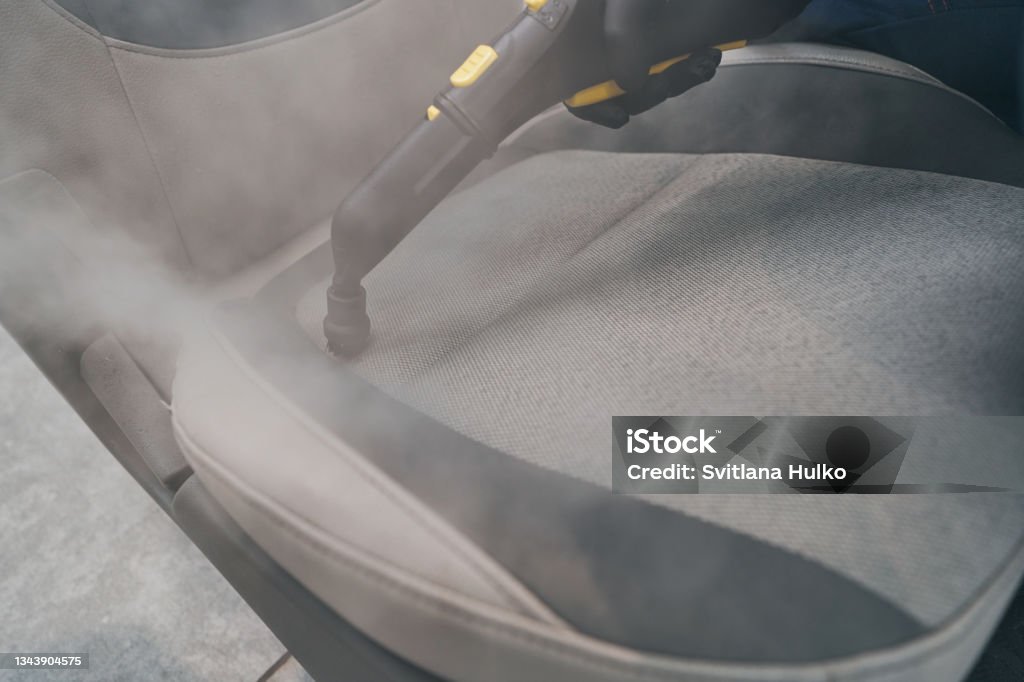
A steam cleaner heats water to create vapor. That vapor transfers both heat and moisture to the upholstery. Leather itself is not a single uniform material; it contains fibers, coatings, dyes, and often a finish that may respond poorly to heat.
Steam may cause:
- Dryness or stiffness
- Fading or dark patches
- Peeling of a surface coating
- Shrinkage or distortion
- Softening of vinyl
- Damage to stitching or adhesives
- Moisture inside seat foam
- Problems around seat heaters, fans, airbags, or sensors
A short pass over a towel-covered nozzle is less aggressive than holding a steam nozzle directly against the leather. Even so, this method does not remove the risk. Heat and water can still enter perforations and seams.
When to avoid steam completely
Do not steam clean the seats when:
- The leather is cracked, peeling, brittle, or flaking.
- The seats have deep scratches or exposed backing.
- The seats are perforated or ventilated and the manual does not approve steam.
- The vehicle has heated, cooled, or massaging seats and you cannot avoid the controls and openings.
- The leather is aniline, semi-aniline, suede, nubuck, or another absorbent finish.
- The seat has a strong chemical smell, mold, or soaked foam.
- The vehicle is under warranty and the care instructions prohibit steam.
- You cannot test the method in a hidden spot first.
For heavy stains, torn leather, dye transfer, or water damage, a professional detailer who works with automotive leather is a better option.

How to Steam Clean Leather Car Seats Safely
If the manual permits steam and the leather passes a hidden-spot test, use the least aggressive process possible. The goal is to loosen surface dirt, not soak or heat the seat.
What you need
Prepare:
- A vacuum with a soft brush attachment
- A clean microfiber cloth
- A steam cleaner with a fabric or upholstery attachment
- Distilled water, if required by the machine
- A manufacturer-approved leather cleaner
- A second dry towel
- A small amount of leather conditioner, only if the seat maker allows it
Do not add leather cleaner, bleach, fragrance, vinegar, or another chemical to the steam cleaner’s tank unless the machine maker specifically permits it.
Step 1: Read the vehicle and steam-cleaner instructions
Check both manuals before you begin. Confirm that the steam cleaner is suitable for upholstery and that the car maker does not prohibit steam or water-based cleaning.
Also check whether your seats contain:
- Side airbags
- Seat occupancy sensors
- Seat ventilation
- Heating elements
- Electronic controls
- Perforations
These features make moisture control more important.
Step 2: Remove loose dirt
Park the vehicle in a shaded, well-ventilated area. Remove child seats, floor items, and personal belongings.
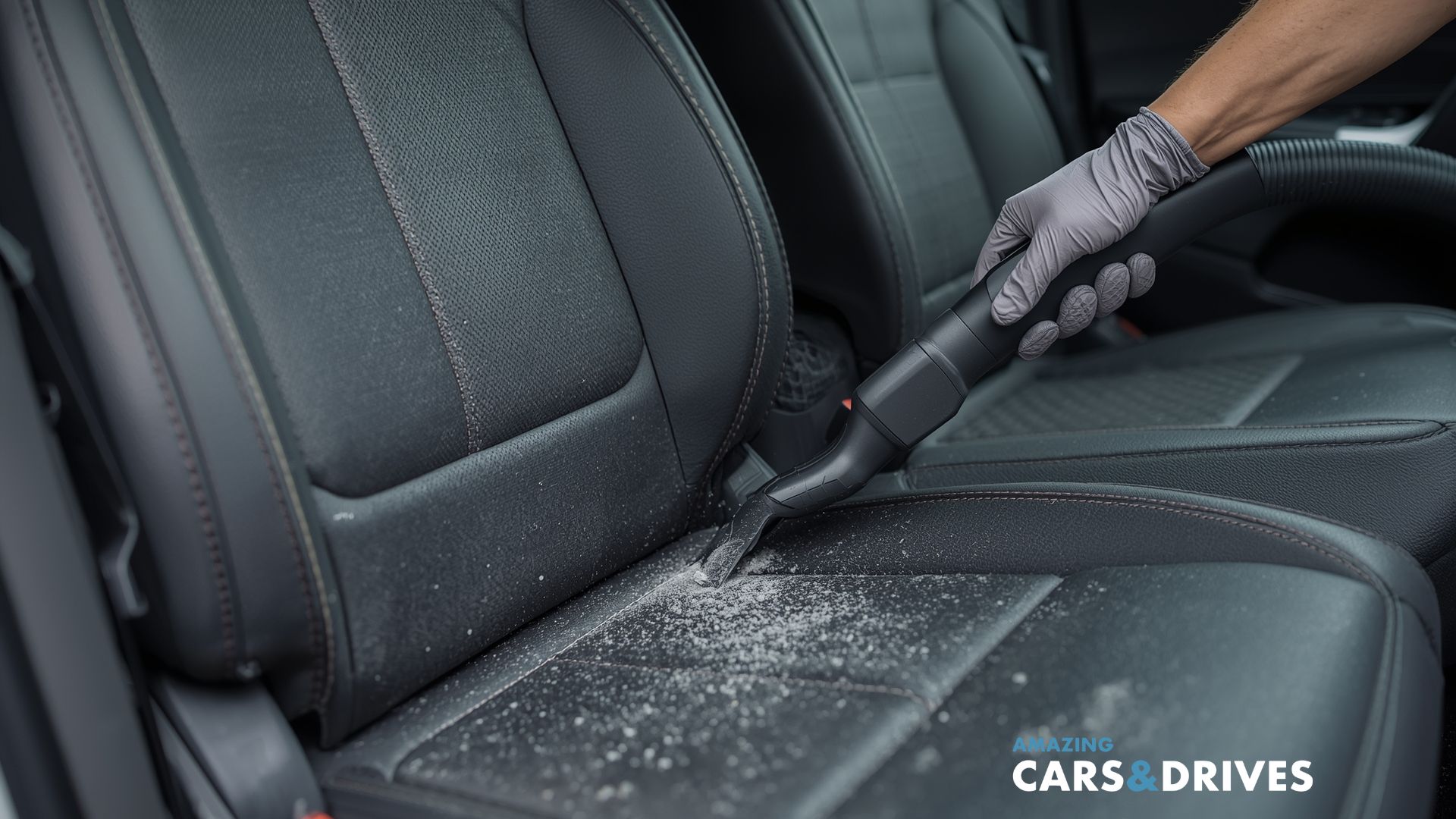
Vacuum the seats with a soft brush. Pay attention to seams and gaps, but do not press hard against the leather. Loose grit can act like sandpaper when you wipe the seat.
Step 3: Test a hidden area
Test the steam on a hidden section, such as the underside of the front seat or a concealed edge. Use the lowest useful steam setting and make one short pass.
Wait until the spot is fully dry. Check for:
- Color change
- Gloss or dullness
- Wrinkles
- Sticky texture
- Peeling
- Water marks
- A change in stiffness
If you see any change, stop. Do not assume the rest of the seat will react better.
Step 4: Use a towel barrier
Place a clean microfiber towel over the steam attachment if the tool design allows it. The towel helps spread heat and collect loosened soil.
Do not seal the nozzle against the leather. Never hold a hot nozzle in one place.
Step 5: Work in small sections
Move across a small section with quick, light passes. Keep the steam attachment moving. Avoid direct steaming over:
- Perforations
- Stitching
- Seams
- Seat controls
- Airbag panels
- Heating or ventilation openings
Wipe each section at once with a dry microfiber towel. This removes loosened dirt and limits the amount of moisture left behind.
Step 6: Clean the surface after steaming
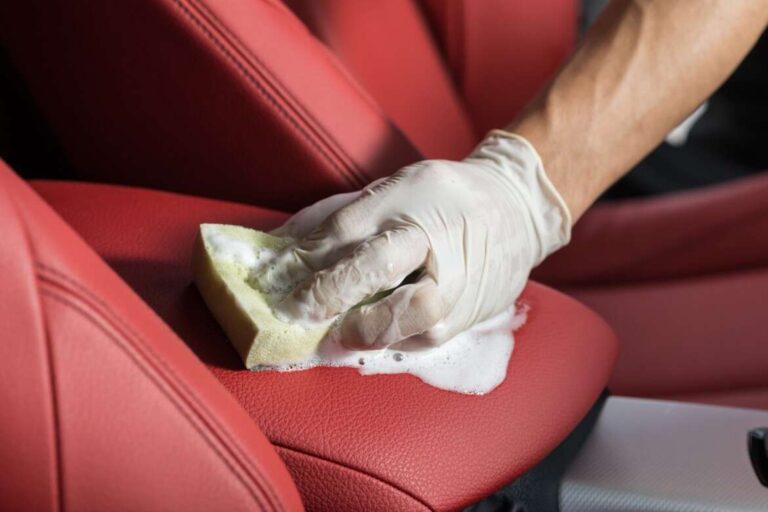
Once the seat is cool, apply an approved leather cleaner to the towel, not directly onto the seat. Wipe gently.
Spraying liquid directly onto the seat can force cleaner into seams, perforations, and control gaps. Use only enough product to clean the surface.
Step 7: Dry the seats fully
Leave the doors open or windows down in a safe, dry place. Use airflow rather than intense heat. Do not sit on the seats until they are dry.
If the seat remains damp, smells musty, feels cool and wet, or shows dark areas, stop using the vehicle seat until the moisture has evaporated. Persistent dampness may require professional inspection.
Step 8: Condition only when appropriate
Many modern automotive seats have a protective coating and do not need heavy conditioning. Excess conditioner can leave a slippery film that affects driving control.
Use conditioner only when the vehicle manual or leather-product instructions support it. Apply a thin layer and buff off any residue.

Steam Cleaning Versus Other Leather-Cleaning Methods
Steam is not automatically better than a damp cloth. It mainly changes how dirt is loosened.
| Method | Best use | Main benefit | Main risk |
|---|---|---|---|
| Vacuuming | Dust, crumbs, grit | Removes dry soil without moisture | Limited for stains |
| Damp microfiber cloth | Light dirt and fresh spills | Low heat and low cost | Can spread grime if the cloth is dirty |
| Approved leather cleaner | Body oil, makeup, surface marks | Designed for the finish | Wrong product may damage the coating |
| Steam cleaner | Stubborn surface grime, only when approved | Loosens soil with heat and vapor | Heat and moisture damage |
| Professional leather service | Dye transfer, stains, peeling, repairs | Specialized tools and skill | Higher cost |
For routine care, vacuuming and gentle wiping usually make more sense than steam. A steam cleaner becomes a possible option when ordinary cleaning leaves a thin layer of grime and the manufacturer allows it.
Steam will not repair cracked leather. It will not restore lost dye. It will not remove every stain. It may also set some stains by spreading heat through the material.

How to Remove Common Stains From Leather Seats
Use the least aggressive method that fits the stain. Blot fresh spills rather than rubbing them into the leather.
Food and drink
Remove solid material with a soft cloth or plastic spoon. Blot liquid with a dry towel. Then use a small amount of approved leather cleaner on a cloth.
Avoid soaking the area. Sugary drinks can leave a sticky film, so a second wipe with a clean, lightly damp cloth may be needed.
Grease and body oil
Body oil often collects on the driver’s seat, steering wheel, and armrests. Vacuum first, then use an approved leather cleaner.
Steam may loosen the film, but it can also spread oil across a larger area. Work in small sections and change cloths when one becomes dirty.
Ink and dye transfer
Ink, blue jeans, bags, and other dyed materials can transfer color to light leather. Do not scrub aggressively or use nail-polish remover, alcohol, acetone, or household solvents unless the manufacturer specifically approves the product.
Deep dye transfer may require a professional leather technician.
Vomit, milk, or other organic spills
Remove the material promptly and blot the area. Clean the surface with a product approved for automotive leather.
If liquid has entered perforations or seat foam, surface steaming will not solve the whole problem. Odor and bacteria can remain below the surface, so professional cleaning may be needed.
Mold or mildew
Do not use steam as a substitute for proper mold treatment. Find and correct the moisture source first. A damp seat may need removal, drying, or inspection by a qualified automotive interior professional.
Common Steam-Cleaning Mistakes
The most common mistake is treating leather like fabric. Leather can look tough, but its finish, seams, foam, and electronics need controlled cleaning.
Avoid these errors:
- Using maximum steam: High heat increases the chance of discoloration, softening, and coating damage.
- Holding the nozzle in one spot: Stationary heat can leave a visible mark.
- Steaming through perforations: Vapor can enter the seat and reach internal parts.
- Skipping the hidden-spot test: A product or method that works on one leather finish may damage another.
- Using household cleaners: Disinfectants, window cleaner, degreasers, and solvents may strip the finish.
- Applying too much conditioner: A greasy surface can attract dirt and become slippery.
- Cleaning in direct sun: Heat can dry the surface too quickly and make color changes harder to notice.
- Sitting on a damp seat: Pressure can push moisture deeper into the foam.
- Rubbing hard: Scrubbing can remove color or create a shiny patch.
- Ignoring the owner’s manual: The vehicle manufacturer’s instructions take priority over general detailing advice.

What to Do If Steam Damages the Leather
Stop cleaning if the seat changes color, becomes sticky, wrinkles, peels, or develops a strong odor.
First, let the area cool and dry naturally. Do not add more cleaner, conditioner, or steam while trying to correct the problem. Photograph the affected area and record the product, steam setting, and method used.
For minor surface residue, a professional detailer may be able to clean and recondition the finish. Peeling, cracking, dye loss, shrinkage, and damage near airbags or seat electronics need a specialist.
If moisture entered a seat with heating, cooling, wiring, or sensors, arrange an inspection before using those features. Do not remove or repair a seat-mounted airbag yourself.

Key Takeaways
- You can steam clean some leather car seats, but only when the owner’s manual allows it.
- Finished leather may tolerate careful, brief steam use better than absorbent or damaged leather.
- Avoid steam on cracked, peeling, aniline, semi-aniline, suede, nubuck, or unknown materials.
- Keep steam away from perforations, seams, airbags, seat controls, and ventilation openings.
- Vacuum and use an approved leather cleaner before considering steam.
- Test a hidden spot, use low steam, keep moving, wipe at once, and dry the seat fully.
- Use a professional leather specialist for deep stains, dye transfer, mold, peeling, or soaked foam.
FAQs
Can steam remove stains from leather car seats?
Steam may loosen some surface dirt and body oil, but it cannot reliably remove every stain. It may spread or set dye, ink, grease, or food stains. Use an approved leather cleaner first and seek professional help for deep or transferred stains.
Can I use a handheld garment steamer on leather seats?
Only if the vehicle manufacturer allows steam and the device can be used safely on upholstery. Keep the steamer moving, use a towel barrier when suitable, and avoid direct contact with perforations, seams, controls, and airbag areas.
How often should I steam clean leather car seats?
There is no universal schedule. Routine vacuuming and gentle wiping are usually enough. Steam should be an occasional cleaning method, not a regular treatment, because repeated heat and moisture may wear the finish.
Can steam remove bad odors from leather seats?
Steam may reduce some surface odors, but it may not remove odors trapped in foam, carpet, or ventilation ducts. If a spill soaked the seat, drying and professional extraction may be more effective than repeated steaming.
Should I condition leather seats after steaming?
Not always. Many modern automotive seats have a coated finish that needs little conditioner. Follow the vehicle manual and product directions. If conditioning is allowed, use a small amount and remove any slippery residue.
Conclusion
Steam cleaning leather car seats is possible, but it is a conditional task—not a universal safe method. Start with the owner’s manual, identify the seat material, and use low-moisture cleaning first.
If steam is approved, test it in a hidden spot and use short, moving passes with careful drying. When the leather is damaged, absorbent, perforated, or connected to complex seat electronics, professional cleaning is the safer choice.