Where Can You Buy Car Seat Covers: Best Places To Shop
If you need new car seat covers in the United States, you can buy them from auto parts stores, big-box retailers, car dealerships, upholstery shops, and online stores. The best place depends on your vehicle, budget, fit needs, and whether the seats contain side airbags.
For quick access, try a local auto parts store or major retailer. For a better fit, shop by your vehicle’s year, make, and model through a specialty seat-cover seller. For a premium look, contact an automotive upholstery shop or your dealership.
This guide explains where to shop, how to choose the right type, and what to check before installing covers.
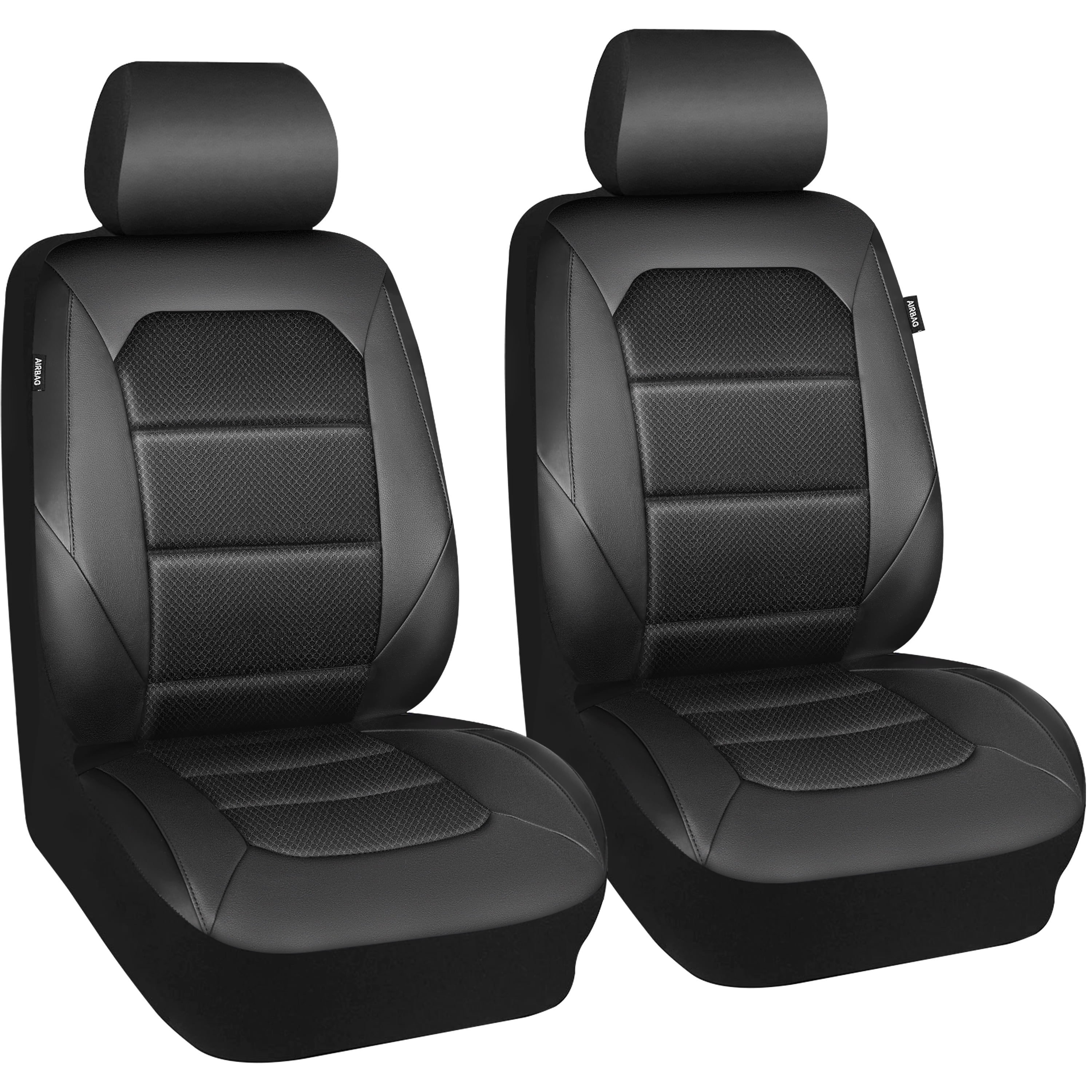
Where can you buy car seat covers in the U.S.?
You can buy car seat covers from five main sources:
- Auto parts stores for fast pickup and basic universal covers.
- Big-box retailers for low-cost options and easy returns.
- Online marketplaces for the widest selection.
- Specialty seat-cover brands for custom or semi-custom fit.
- Dealerships and upholstery shops for factory-style or professionally fitted covers.
Each option has a different balance of price, fit, service, and return convenience.
| Where you shop | Best for | Main benefit | Main drawback |
|---|---|---|---|
| Auto parts store | Same-day purchases | You may see the material before buying | Limited fit choices |
| Big-box retailer | Budget shoppers | Easy returns and pickup | Many covers are universal |
| Online marketplace | Broad selection | Many colors, materials, and prices | Fit and quality can vary |
| Specialty retailer | Better fit | Vehicle-specific choices | May cost more |
| Dealership | Factory look | Help with vehicle compatibility | Usually the highest price |
| Upholstery shop | Premium fit or repair | Professional measurement and installation | More time and labor cost |
Before you buy, confirm that the listing is for automotive seat covers. Some search results use “car seat cover” to mean a cover for a child safety seat. Those are different products with different safety rules.
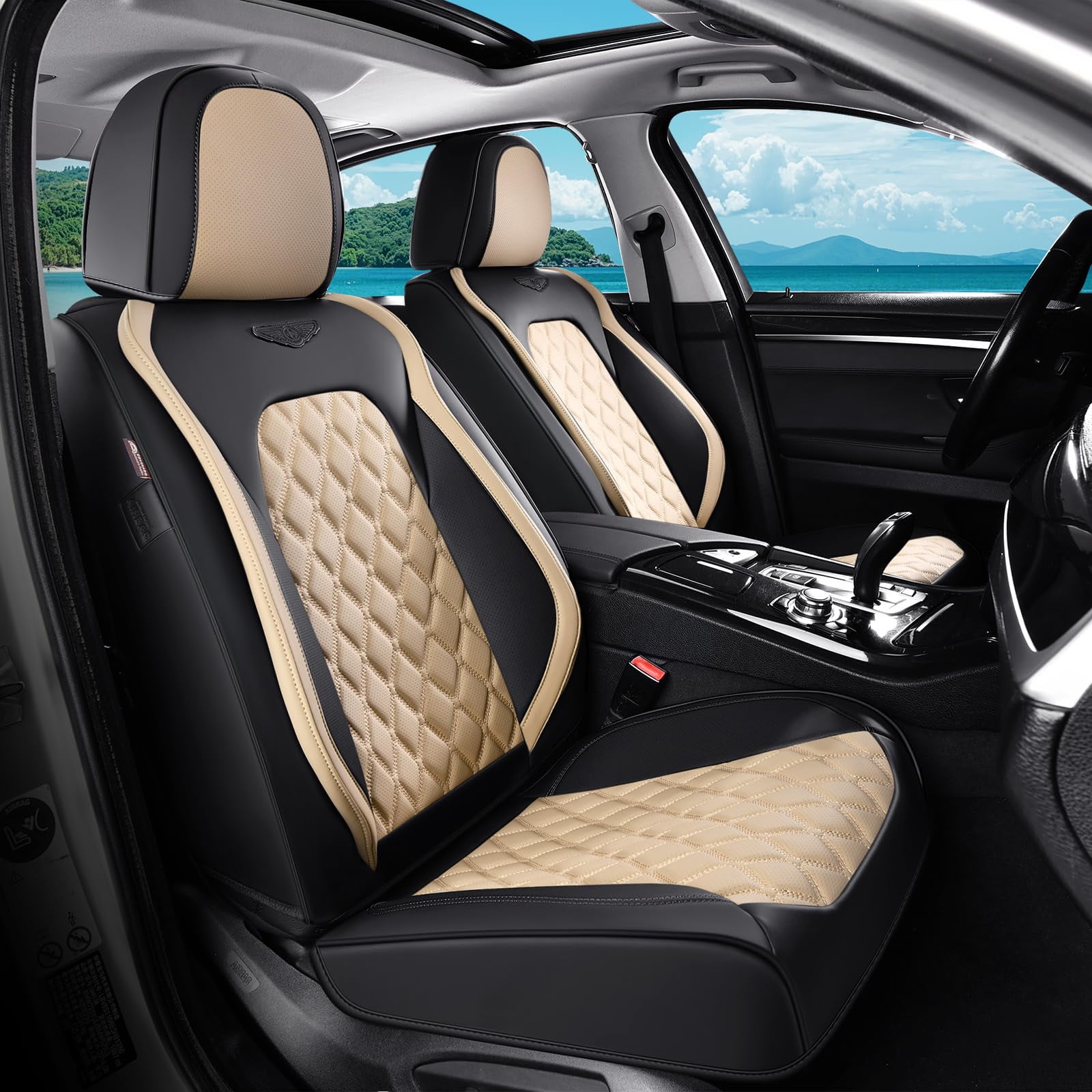
Buy car seat covers at auto parts stores
Auto parts stores are a practical choice when you need covers today. Many U.S. chains sell universal front-seat covers, bench-seat covers, steering wheel covers, and related interior products.
Ask the store whether the cover is approved for seats with side-impact airbags. Side airbags may deploy from the seatback. A cover that blocks or slows deployment may create a serious safety risk.
Take these details with you:
- Vehicle year, make, and model
- Number of rows
- Front-seat style
- Split or solid rear bench
- Headrest type
- Built-in armrests or consoles
- Heated or ventilated seat features
- Side-airbag labels on the seat
A store employee may help you compare packages, but check the product instructions yourself. A universal cover may fit several vehicles but still block a control, seat belt guide, airbag opening, or folding mechanism.
When a local store is the better choice
Choose a local auto parts store when:
- You need a cover for a temporary repair.
- You want to compare fabric in person.
- You need to return the item without shipping it.
- You are comfortable with a loose or semi-universal fit.
- You can inspect the cover before installing it.
For a close fit, a specialty seller is usually a better choice than a universal package.
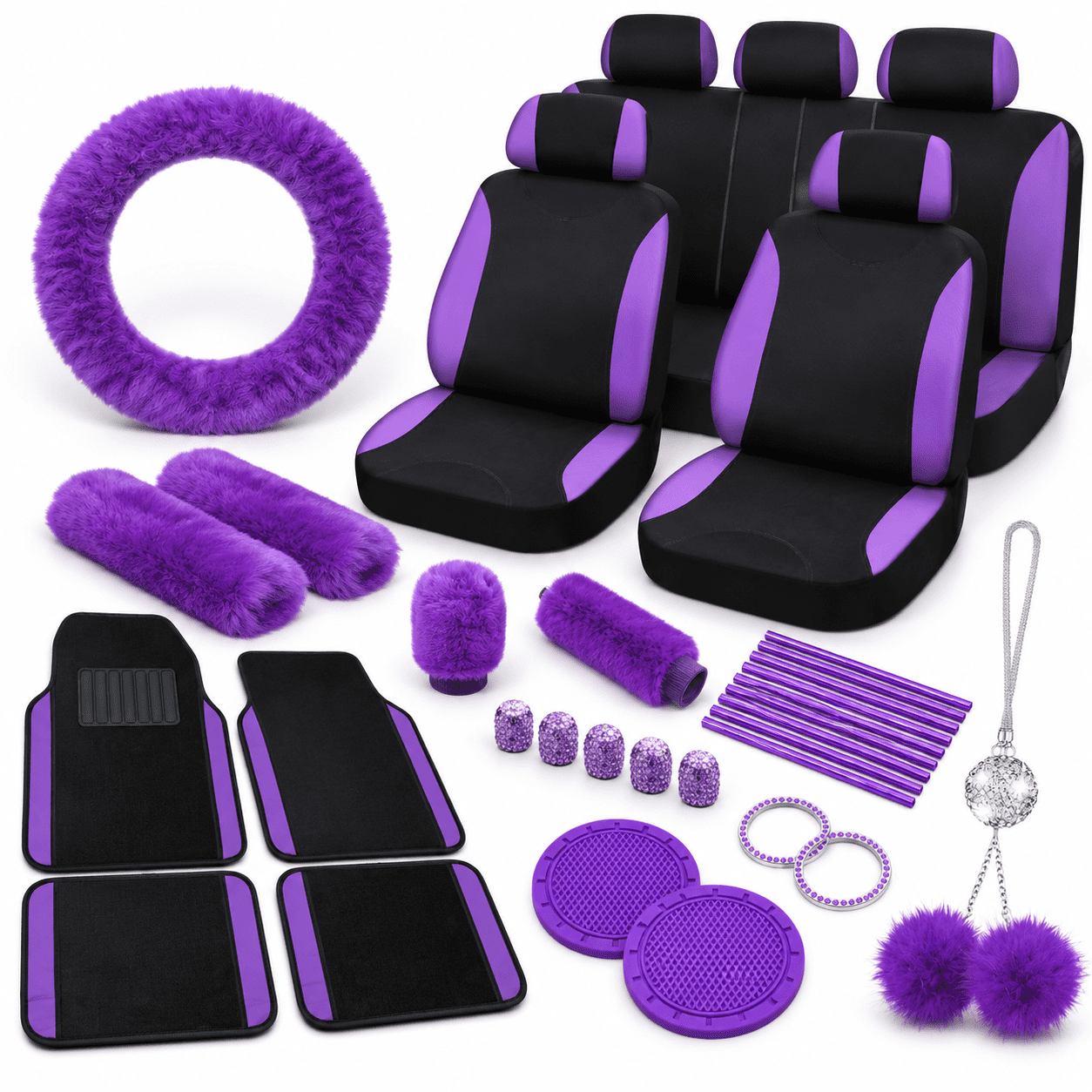
Find car seat covers at big-box retailers
Large U.S. retailers often sell car seat covers in their automotive departments and online stores. This can be useful if you want a low price, store pickup, or a simple return process.
Common product types include:
- Universal front-seat covers
- Full-seat sets
- Rear bench covers
- Pet seat covers
- Waterproof or water-resistant covers
- Sheepskin-style covers
- Neoprene-style covers
- Leather-look covers
- Child-seat protection mats
Read the package details closely. “Full set” does not always mean every seat in the vehicle. Some sets cover only the two front seats. Others include front headrest covers but not rear headrests or armrests.
Also check whether the cover supports:
- Removable headrests
- Adjustable seat controls
- Folding rear seats
- Seat belts
- Side airbags
- Heated seats
- Seat-mounted electronics
A low price can be helpful, but a poor fit may cause wrinkles, slipping, or blocked controls. If you use the vehicle every day, paying more for a better fit may save time and frustration.
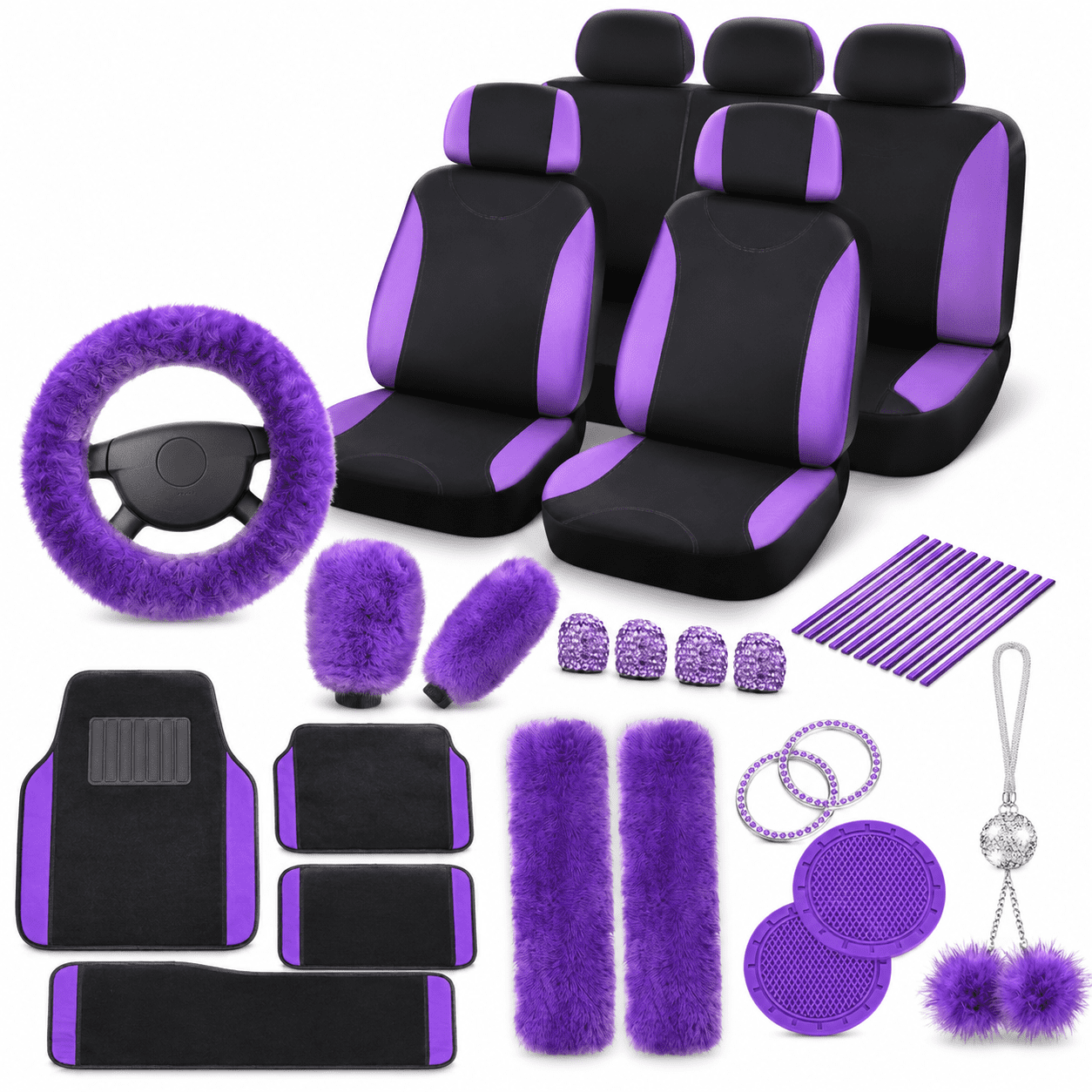
Shop online for the widest selection
Online stores offer the largest range of materials, colors, patterns, and fit types. You can find universal, semi-custom, and custom-fit covers from specialty retailers and general marketplaces.
Search by adding your vehicle details to the query. For example:
- “2021 Honda CR-V custom seat covers”
- “Ford F-150 front seat covers with side airbags”
- “Toyota Camry rear bench seat cover split fold”
- “SUV waterproof seat covers for dogs”
Do not rely on the vehicle title alone. Open the fitment section and confirm the exact trim and seat layout. Two vehicles with the same model year may have different seats because of trim packages, consoles, power controls, or airbag placement.
What to check on an online listing
Before ordering, review:
- Vehicle fitment tool
- Front and rear seat coverage
- Material and cleaning directions
- Airbag compatibility statement
- Photos of the actual installed product
- Return and exchange rules
- Warranty terms
- Shipping time
- Customer questions about your exact vehicle
- Whether the cover is sold as a set or by the seat
Product photos can show a cover on a similar vehicle, not your exact model. Treat those photos as examples, not proof of fit.
A strong listing explains how the cover accommodates the seat belt, headrest, armrest, controls, and airbag system. A listing that only says “fits most cars” gives you less useful information.
Buy custom-fit car seat covers from specialty sellers
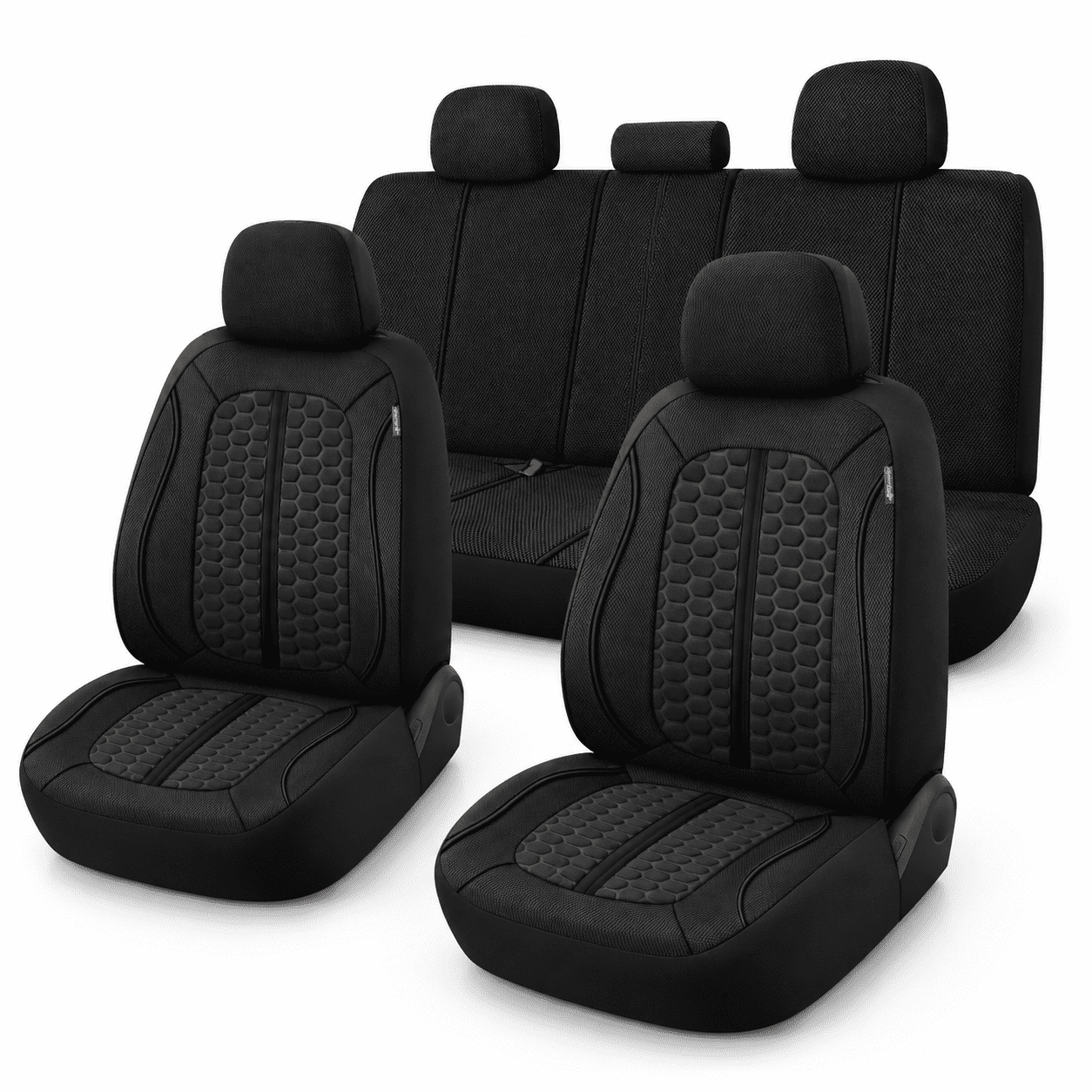
Specialty seat-cover companies are often the best place to shop when fit and appearance matter. These sellers may offer patterns made for specific vehicle models, trims, and seat layouts.
Custom-fit does not always mean the product is sewn while you wait. In many cases, it means the seller uses a vehicle-specific pattern. Read the product description to learn whether the cover is:
- Universal
- Semi-custom
- Vehicle-specific
- Fully custom
- Made to order
Custom or vehicle-specific covers may cost more and may take longer to ship. They can also have stricter return rules, especially if the product is made for your vehicle.
When custom-fit covers make sense
Consider custom-fit covers if you:
- Drive the vehicle for many years.
- Want a clean, close appearance.
- Need unusual seat configurations.
- Have a truck, van, or SUV with multiple rows.
- Want a specific material or color.
- Need covers that preserve access to controls.
- Want protection from pets, work gear, food, or frequent spills.
Before ordering, take photos of the seats if the seller offers a fitment review. Include the front seats, rear seats, headrests, center console, and visible airbag labels. This can help reveal a mismatch before production.
Ask a dealership or upholstery shop
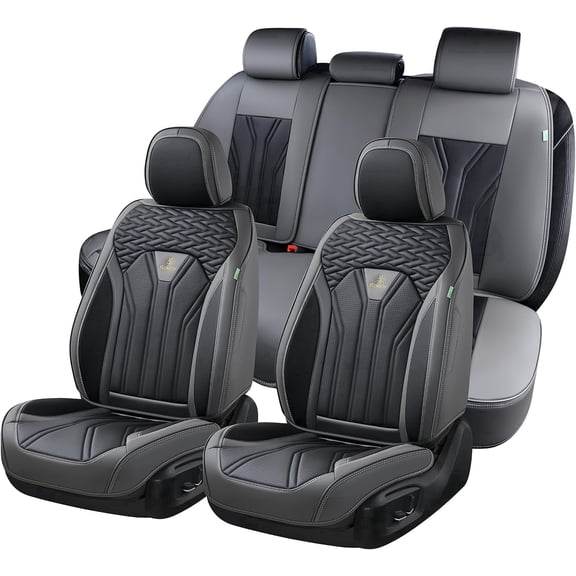
A dealership can help identify the vehicle’s seat design and safety features. Some dealers sell factory accessories, while others can refer you to an approved installer. Dealer options may provide a close visual match, but they are not always the least expensive choice.
An automotive upholstery shop can measure the seats and install covers for you. This is useful when the seats have complex shapes, integrated headrests, unusual consoles, or worn upholstery that needs repair.
Ask an upholstery shop:
- Is the material automotive grade?
- Will the shop preserve side-airbag openings?
- Can it work around heated or ventilated seats?
- Will seat belts and controls remain accessible?
- Does the price include removal and installation?
- What warranty covers the work?
- How long will the vehicle be in the shop?
Professional installation does not automatically make a product safe. The cover still needs a design that works with the vehicle’s seat and restraint system.
When professional help is worth the cost
Professional help may be useful when:
- You cannot identify the seat configuration.
- The seat has a built-in headrest.
- The seat contains a side airbag.
- The upholstery is already damaged.
- The cover must look close to factory upholstery.
- You need a commercial, fleet, or work-truck interior.
- You are unsure how to remove or reinstall the seat.
Do not remove a seat or disconnect electrical connectors unless the vehicle service instructions allow it and you understand the risks. Some seats contain airbag wiring and occupancy sensors.

Choose the right type of car seat cover
The best cover depends on what you want to protect and how you use the vehicle.
Universal seat covers
Universal covers are made to fit many vehicles. They are often the least expensive and easiest to find.
They work well for:
- Temporary protection
- Older vehicles
- Basic front seats
- Budget projects
- Vehicles with simple seat designs
Their limits include loose fit, extra fabric, and possible problems with controls or airbags. Inspect the cover carefully after installation.
Custom-fit seat covers
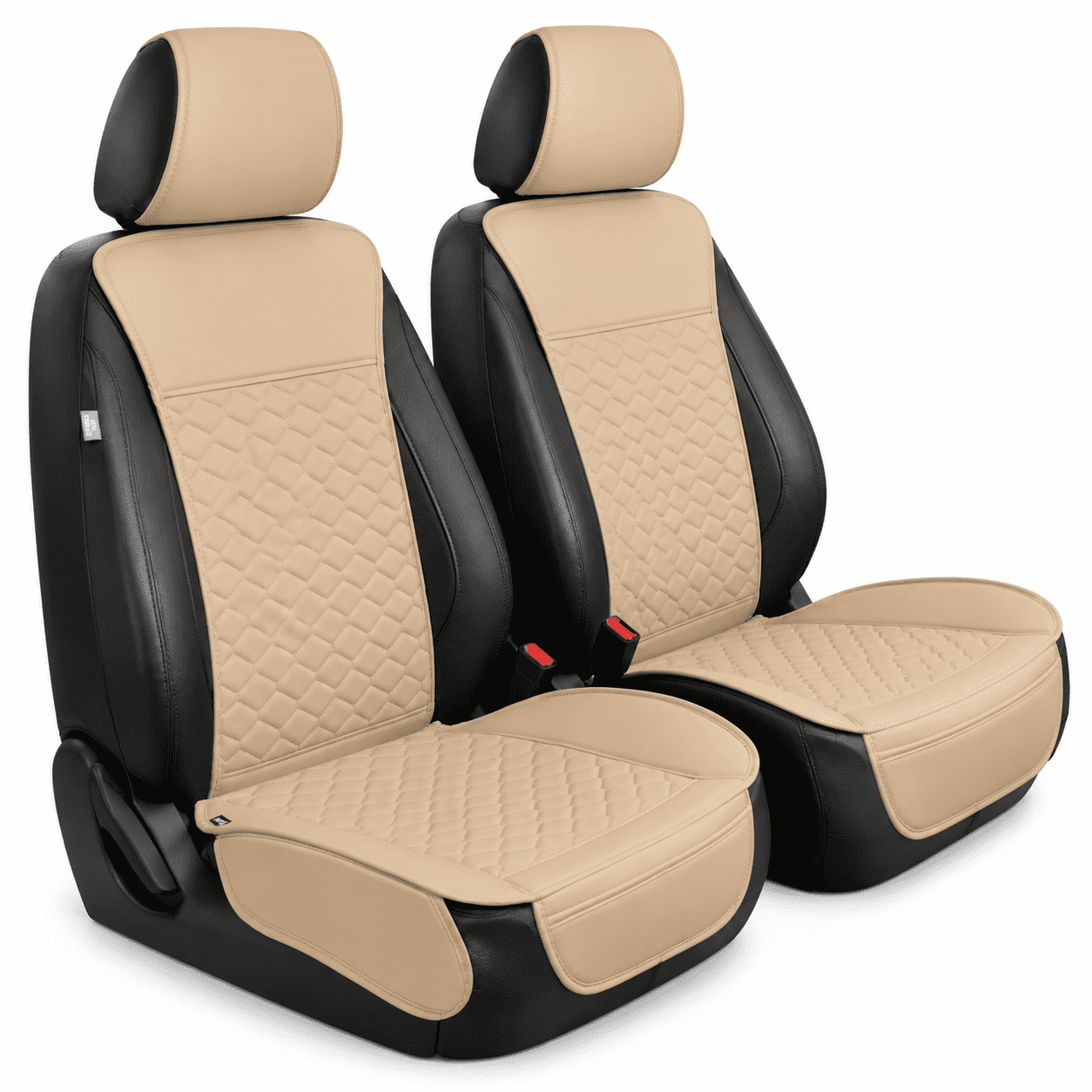
Custom-fit covers use patterns made for a specific vehicle or seat design. They usually look neater and stay in place better.
They may be a good choice for:
- Daily drivers
- Newer vehicles
- Trucks and SUVs
- Families with frequent spills
- Owners who want long-term protection
The trade-off is a higher price and possible delays or limited returns.
Waterproof and water-resistant covers
Water-resistant covers can help with rain, food, muddy clothing, and pet messes. “Water-resistant” does not always mean fully waterproof. Seams, zippers, and openings may still allow liquid through.
For pets, compare a seat cover with a hammock-style design, door protection, and a non-slip base. Make sure the cover does not interfere with seat belts or the proper use of a pet restraint.
Leather and leather-look covers
Leather-look covers can change the appearance of a cloth interior and may wipe clean. They can also feel warmer in the sun and may slide more than textured fabric.
Genuine leather covers usually cost more. Ask how the material handles heat, cleaning products, and regular wear.
Heated and ventilated seat compatibility
A cover can change how heat or airflow moves through the seat. Check the vehicle manual and cover instructions before using a cover on heated or ventilated seats.
Never assume that a thin cover is automatically safe for every seat feature.
Check safety before installing car seat covers
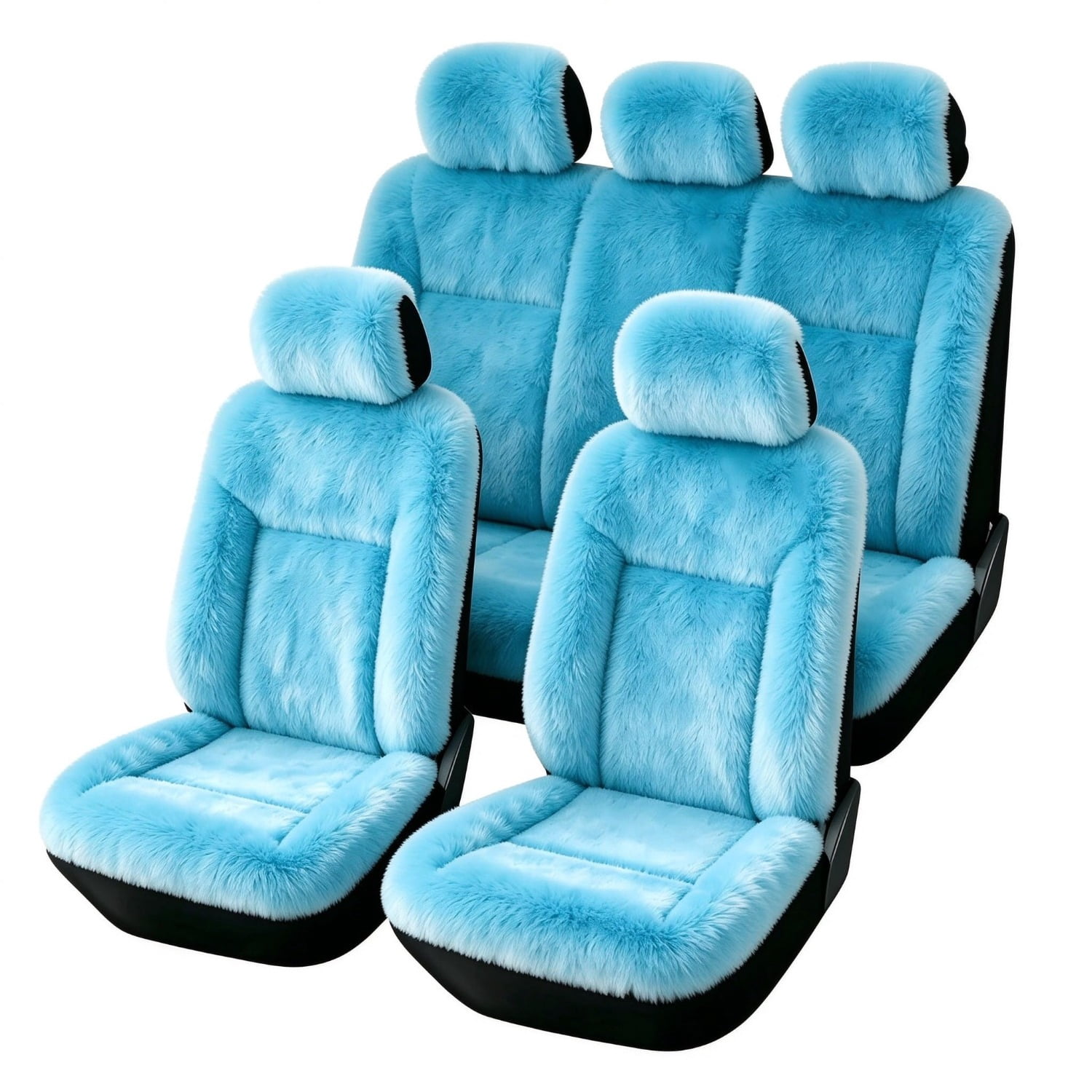
Safety should come before color, price, or style. NHTSA warns that seat covers and other accessories must not interfere with vehicle safety systems. Your vehicle owner’s manual is the main source for seat-specific instructions.
Check these points before installation:
- The side-airbag area remains uncovered or uses the opening designed by the maker.
- Seat belts buckle and retract without rubbing on the cover.
- Headrests move as the manual directs.
- The driver can reach all seat controls.
- The cover does not bunch under the driver’s legs.
- The cover does not block an occupancy sensor.
- The cover does not prevent the rear seat from folding or locking.
- No strap sits across a seat belt path.
- No loose fabric can catch on a control or pedal.
If the cover has a label that says “airbag,” read the details. That label is not enough by itself. The cover should explain which seat positions and airbag designs it supports.
Do not confuse vehicle seat covers with child-seat covers
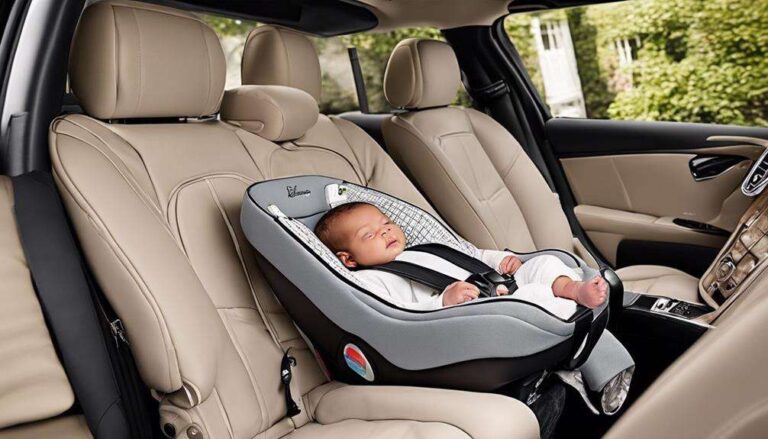
A cover for a vehicle seat is not the same as an accessory for a child safety seat. Do not add aftermarket padding, liners, inserts, or covers to a child restraint unless the child-seat maker specifically approves that item.
The National Highway Traffic Safety Administration recommends following the child restraint manufacturer’s instructions. A thick or unapproved add-on can change how the harness fits or how the restraint performs in a crash.
If you need a cover for a child safety seat, contact the child-seat manufacturer and use only approved parts.
How to buy the right car seat covers
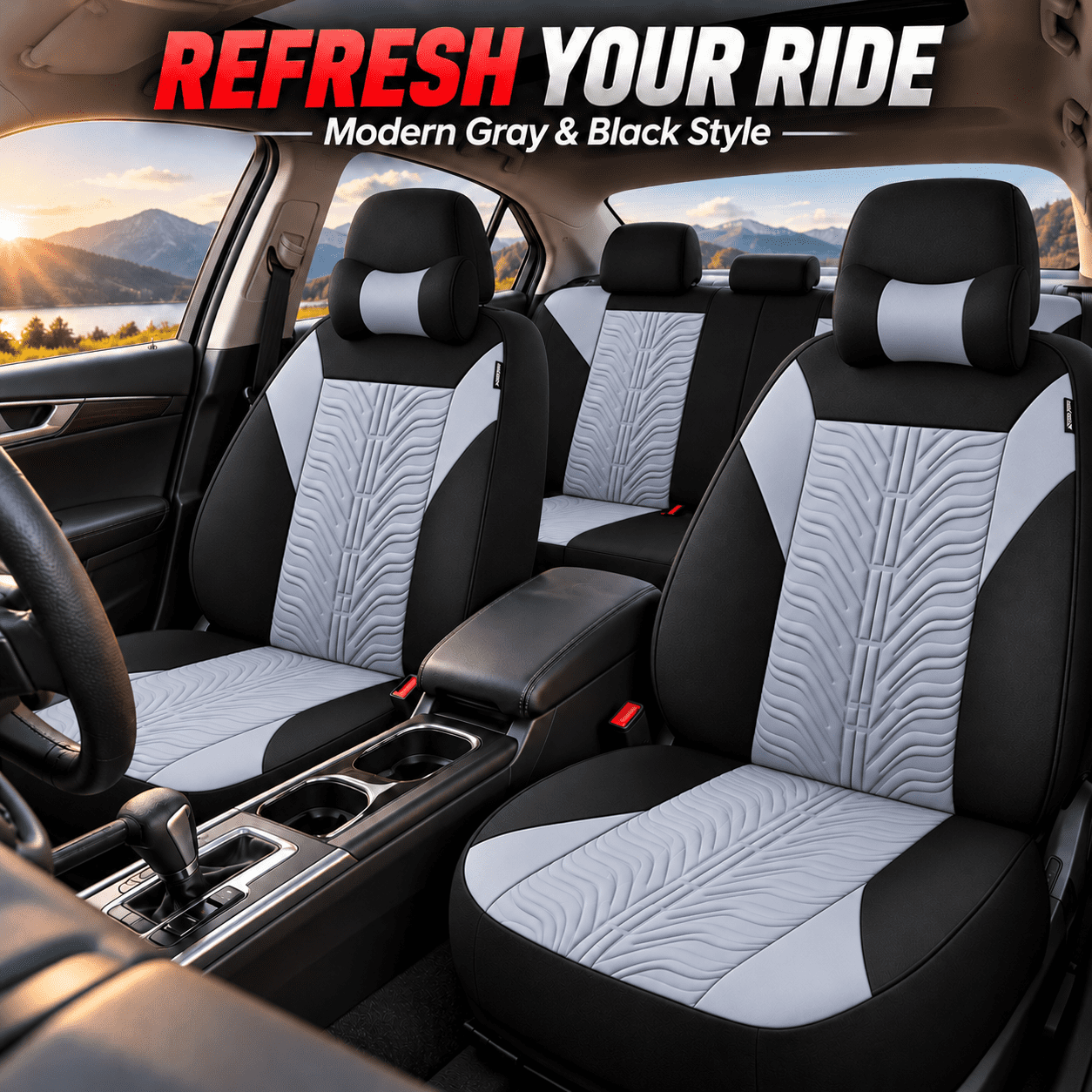
Use this short process before placing an order.
1. Identify the exact vehicle
Write down:
- Year
- Make
- Model
- Trim
- Cab or body style
- Number of rows
- Seat configuration
A 2022 pickup may have different seats in a regular cab, extended cab, and crew cab.
2. Photograph the seats
Take clear photos of:
- Both front seats
- Rear seat
- Headrests
- Center console
- Seat belt openings
- Seat controls
- Airbag labels
- Fold-down areas
Use the photos to compare the listing with your vehicle.
3. Decide what must be protected
Choose the main goal:
- Stains
- Pet hair
- Water
- Work clothing
- Sun exposure
- Worn upholstery
- A new interior look
This helps you avoid paying for features you will not use.
4. Select the fit level
Choose universal for a quick and low-cost solution. Choose vehicle-specific or custom-fit when appearance, comfort, and long-term use matter more.
5. Read the return policy
Check whether you can return:
- Opened packaging
- Installed covers
- Custom-made products
- Covers with pet hair or marks
Some sellers will not accept returns after a custom order enters production.
6. Test the installation
After installation, move the seat through its normal range. Buckle every seat belt. Check the headrest, controls, folding parts, and airbag area.
If anything is blocked, loose, or unclear, remove the cover and contact the seller before driving.

Common mistakes when buying car seat covers
The most common mistake is buying a cover based only on color or price. A cover can look good online but fail to fit the rear bench, center console, or headrest.
Avoid these problems:
- Buying “universal” without checking the seat shape
- Ignoring side-airbag compatibility
- Assuming a full set covers every seat
- Forgetting the rear seat split
- Covering heated or ventilated seats without checking instructions
- Using thick padding under a child safety seat
- Hiding seat belt buckles under fabric
- Removing factory upholstery without service guidance
- Assuming waterproof fabric means waterproof seams
- Discarding packaging before confirming fit
The clearest sign of a good fit is not a tight appearance alone. The cover should stay in place while the seat moves, and every safety feature should work as designed.
Frequently asked questions
Where is the best place to buy car seat covers?
The best place depends on your needs. Use an auto parts store for quick access, a big-box retailer for simple and affordable options, an online specialty seller for vehicle-specific fit, and an upholstery shop for professional work.
Are custom car seat covers worth it?
They may be worth the cost if you keep the vehicle for years, need a clean fit, or have an unusual seat layout. Universal covers may be enough for temporary use or basic protection.
How do I know if a seat cover fits my car?
Check the seller’s fitment tool and compare the product with your vehicle’s year, model, trim, seat layout, headrests, console, and airbag position. If the listing does not explain these details, ask the seller before ordering.
Can seat covers be used with side airbags?
Only use a cover that is specifically designed for the vehicle’s side-airbag arrangement. Follow the owner’s manual and the cover instructions. Do not use a cover that blocks or seals the seatback airbag area.
Can I use a seat cover under a child car seat?
Do not use an aftermarket cover, pad, or liner under a child restraint unless the child-seat manufacturer approves it. Use the child seat according to its manual and contact the maker if you need a replacement part.
Final recommendation
For most U.S. drivers, start by checking a local auto parts store if you need a basic cover quickly. If you want a cleaner fit, search a specialty online seller using your exact vehicle details. Choose a dealership or upholstery shop when the seats have complex features or you want professional help.
Before you buy, confirm fit, airbag compatibility, seat-belt access, return terms, and the exact seats included. A cover that protects the upholstery but interferes with a safety system is not a good purchase.