How To Buckle A Car Seat: Safe Step-By-Step Guide
Introduction
To buckle a child into a car seat in the United States, place the child’s back flat against the seat, fasten the harness buckle, connect the chest clip, and tighten the straps until they pass the pinch test. The chest clip should rest at armpit level. The harness must lie flat and snug, with no slack or twists.
Always follow the car seat maker’s manual. Seat designs differ, and the manual gives the exact harness height, buckle position, and weight limits for that model. For official U.S. guidance, check the National Highway Traffic Safety Administration and use a certified child passenger safety technician when you need hands-on help.

What You Need Before Buckling a Car Seat
Before you buckle your child, check these basic points:
- The child is within the seat’s height and weight limits.
- The car seat is installed in the correct direction.
- The seat does not move more than 1 inch from side to side or front to back when checked at the belt path.
- The child sits with their back and bottom against the seat.
- The harness straps are at the correct height for the seat’s mode.
- The child is not wearing a thick coat or bulky layers under the harness.
- The buckle, harness webbing, and chest clip are clean and free from damage.
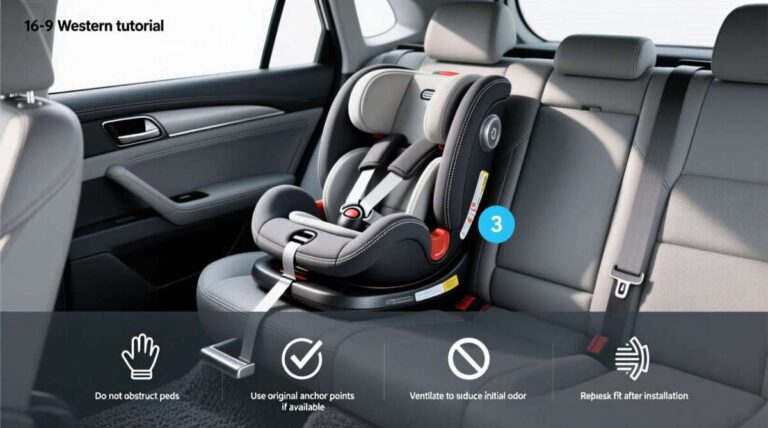
A five-point harness has five connection points: two at the shoulders, two at the hips, and one between the legs. An infant seat and a forward-facing harness seat use this system.
A booster seat works differently. A booster raises the child so the vehicle seat belt fits across the strong parts of the body. You do not buckle a child into a booster’s harness unless the manufacturer says that the seat is being used in harness mode.
The seat must also be installed correctly before you buckle the child. A well-buckled child is not protected if the car seat itself is loose, placed in the wrong direction, or used outside its limits.

How to Buckle a Child Into a Five-Point Harness
Use these steps for an infant car seat, convertible car seat, or combination seat used with its harness.
1. Place the child in the seat
Set the child’s bottom and back against the seat. The child should sit straight, not slouch or lean forward.
Move the child’s hair, clothing, or blanket away from the harness area. Never place a blanket, coat, bunting, or thick padding between the child and the harness unless the car seat maker specifically allows it.
2. Check the harness height
The correct harness slot depends on whether the seat faces the rear or the front:
- Rear-facing: The harness usually needs to come from at or below the child’s shoulders.
- Forward-facing: The harness usually needs to come from at or above the child’s shoulders.
These are common rules, but the seat manual controls if it gives different instructions. Check the harness from the side. The strap should not come from a slot that sits far above or below the shoulder.
3. Remove twists from the straps
Run your fingers along each harness strap. Make sure each strap lies flat from the shoulder to the buckle.
A twisted strap can reduce the area that holds the child. It can also make the harness harder to tighten. Untwist the webbing before you connect the buckle.
4. Fasten the buckle
Insert each harness tongue into the buckle between the child’s legs. Push until you hear or feel a click.
Then pull up on each tongue to confirm that it is locked. Some buckles use two separate tongues. Both must be inserted in the correct order.
If the buckle does not click, remove it and check for:
- A tongue inserted on the wrong side
- Food, dirt, or a small object inside the buckle
- A twisted strap
- A buckle that is not fully aligned
- A damaged buckle
Do not oil or modify the buckle. Follow the cleaning instructions in the manual. Replace the seat if the buckle does not work as designed.
5. Connect the chest clip
Join the two sides of the chest clip. Slide it up or down until it sits across the child’s chest at armpit level.
The chest clip is not meant to hold the child in the seat by itself. Its job is to keep the shoulder straps in the right place. It should not rest on the neck, stomach, or lower chest.
6. Tighten the harness
Pull the harness adjustment strap until the straps are snug. On many seats, the adjustment strap is near the child’s feet. On some seats, it may be in another location.
Press the child’s clothing flat as you tighten. Check near the collarbone, not over a thick coat.
Use the pinch test:
- Pinch the harness webbing at the shoulder.
- Try to lift the strap between your thumb and finger.
- If you can pinch extra webbing, tighten the harness.
- If you cannot pinch a fold of webbing, the harness is likely snug enough.
The harness should hold the child firmly without pressing into the neck or making it hard for the child to breathe. The child should still be able to move their head and arms normally.
7. Check the final position
Before driving, confirm that:
- The buckle is fully connected.
- The chest clip is at armpit level.
- The shoulder straps are flat.
- The harness is snug.
- The child’s back and bottom remain against the seat.
- The harness is not under the child’s arms or behind the child’s back.
- The child has not slipped out of the shoulder straps.
These checks take only a few seconds. They are worth doing every trip because children move, clothing changes, and harnesses can loosen.
How to Buckle a Rear-Facing Car Seat
A rear-facing seat supports a baby or young child’s head, neck, and back during a crash. The American Academy of Pediatrics recommends keeping children rear-facing as long as possible within the seat’s height and weight limits.
To buckle a rear-facing seat:
- Confirm that the seat is installed at the angle shown by the indicator or manual.
- Place the child’s bottom at the back of the seat.
- Set the harness straps at or below the shoulders, unless the manual says otherwise.
- Fasten the buckle between the legs.
- Place the chest clip at armpit level.
- Tighten the harness until you cannot pinch slack at the shoulder.
- Check that the child’s head is within the seat’s allowed height range.
Do not turn a child forward-facing only because the child’s legs touch the vehicle seat. Bent legs or feet touching the back seat are usually not a reason to change direction. The seat’s height, weight, and age guidance matter more.
Never add an aftermarket head support, insert, strap cover, or cushion unless it came with the seat or the maker approves it. Extra padding can change how the harness holds the child.

How to Buckle a Forward-Facing Car Seat
A forward-facing seat uses both a five-point harness and an upper tether when the seat and vehicle allow it. The tether helps limit forward movement of the child’s head and body.
To buckle a forward-facing seat:
- Confirm that the child meets the seat’s forward-facing age, height, and weight rules.
- Check that the seat is installed in a forward-facing position.
- Use the top tether according to the car seat and vehicle manuals.
- Set the harness straps at or above the child’s shoulders, if required by the seat.
- Fasten the buckle between the legs.
- Connect the chest clip at armpit level.
- Tighten the shoulder straps until you cannot pinch slack.
- Make sure the child’s ears, shoulders, and head stay within the seat’s limits.
The top tether is separate from the harness. It attaches from the top of the car seat to an approved tether anchor in the vehicle. Do not attach it to a cargo hook or another point unless the vehicle manual identifies that point as a tether anchor.
A forward-facing child should not place the shoulder straps under the arms or behind the back. Those positions can leave the upper body poorly restrained.

How to Buckle a Child in a Booster Seat
A booster seat normally uses the vehicle’s lap-and-shoulder belt. The child is ready to stop using a harness only when the child fits the vehicle belt properly and meets the seat’s requirements.
With a booster:
- Seat the child with their back against the vehicle seat or booster back.
- Route the lap belt low across the hips and upper thighs.
- Route the shoulder belt across the middle of the chest and shoulder.
- Buckle the vehicle belt.
- Remove slack from the lap and shoulder sections.
- Make sure the shoulder belt does not cross the neck or fall off the shoulder.
- Keep the child sitting upright for the whole trip.
The lap belt should not rest across the stomach. The shoulder belt should not go behind the back, under the arm, or across the face.
Many children need a booster until the vehicle belt fits without help. The NHTSA advises using a booster until the seat belt fits correctly, which often occurs when a child is about 4 feet 9 inches tall and between 8 and 12 years old. These are general guidelines, not a guarantee for every child or vehicle.
A child should ride in the back seat until at least age 13, according to NHTSA guidance.

How Tight Should a Car Seat Harness Be?
The harness should be snug enough that you cannot pinch extra webbing at the child’s shoulder. It should lie flat and hold the child’s body against the seat without pressing into the neck.
Do not judge tightness by how the harness feels at the buckle or chest clip. Slack can remain near the hips or stomach even when the shoulder area looks tight. Smooth the straps over the child’s body, then tighten from the adjustment strap.
A snug harness may leave light marks on clothing or skin. That does not usually mean the harness is too tight. A harness is too loose when you can pinch a fold, pull the straps away from the shoulders, or see the child’s body move separately from the harness.
If the harness will not tighten, check for:
- Twisted straps
- Straps caught behind the seat cover
- A child sitting on part of the harness
- A bulky coat
- The harness routed through the wrong slots
- A seat cover installed incorrectly
- A damaged adjustment mechanism
If the issue remains, stop using the seat and contact the manufacturer or a certified child passenger safety technician.

Common Car Seat Buckling Mistakes
These mistakes can reduce the protection a car seat provides:
Putting the chest clip too low
The chest clip belongs at armpit level. A low clip may allow the shoulder straps to spread apart or slip off the shoulders.
Leaving the harness loose
A loose harness creates extra movement. Use the pinch test at the shoulder after every buckle.
Buckling over a thick coat
A coat can compress in a crash and create hidden slack. Buckle the child in thin layers, then place a blanket over the harness if needed.
Using the wrong harness slots
Harness height changes as the seat changes from rear-facing to forward-facing. Read the manual before moving the straps.
Adding unapproved accessories
Aftermarket inserts, harness pads, mirrors, covers, and toys can affect harness fit or crash performance. Use only items approved by the car seat maker.
Using a seat after a moderate or severe crash
NHTSA advises replacing a car seat after a moderate or severe crash. Some manufacturers also recommend replacement after any crash. Check the seat manual and contact the maker.
Ignoring recalls or an expired seat
Check the seat’s label for its model number, manufacture date, and expiration information. Search the NHTSA recall database for current recalls. Replace a seat that is expired, damaged, missing parts, or involved in a crash when the maker requires replacement.

What to Do If the Buckle Does Not Work
Do not drive with a child in a seat whose buckle will not lock, release, or tighten correctly.
First, compare the buckle and harness path with the manual. Remove visible crumbs or dirt only as the manufacturer permits. Do not use household cleaners, lubricants, tape, or replacement parts from another seat.
Next, contact the car seat manufacturer. Keep the model number, serial number, and manufacture date nearby. The company can confirm whether a part is available and whether the seat remains safe to use.
For hands-on help, find a certified technician through the National Digital Car Seat Check Form. A technician can check the installation and show you how to adjust the harness. A seat check does not replace the manufacturer’s instructions, but it can help find fit and installation errors.

A Simple Buckling Checklist
Use this checklist before the car moves:
- Position: The child’s back and bottom touch the seat.
- Direction: The seat faces the correct way for the child and seat limits.
- Straps: The harness comes from the correct slots.
- Buckle: Both tongues are fully locked.
- Chest clip: It sits at armpit level.
- Tightness: You cannot pinch slack at the shoulder.
- Layers: No thick coat or bulky padding is under the harness.
- Installation: The car seat is secure and the tether is used when required.
- Limits: The child is within the seat’s height and weight limits.
If any answer is no, fix the problem before driving.

Frequently Asked Questions
Should the chest clip be high or low?
The chest clip should sit at armpit level. It should not rest on the neck or stomach.
Can a child wear a winter coat in a car seat?
Avoid thick coats under a five-point harness. Dress the child in thin layers, buckle the harness snugly, and place a blanket over the straps if needed.
How do I know if the harness is tight enough?
Try to pinch the harness webbing at the child’s shoulder. If you can pinch a fold, tighten it. The straps should also lie flat without twists.
Can I use a car seat if the buckle is hard to release?
Do not use it if the buckle does not work reliably. Check the manual, contact the manufacturer, and replace the buckle or seat as directed.
When can my child use a booster seat?
Use a booster when the child has outgrown the forward-facing harness limits but is not yet large enough for the vehicle belt to fit correctly. Follow both the booster manual and your state’s child passenger safety law.
Should I buckle the harness before or after putting on the chest clip?
Fasten the harness buckle first. Then connect the chest clip and slide it to armpit level. Finish by tightening the harness.
Conclusion
To buckle a car seat correctly, seat the child with their back and bottom against the seat, fasten the harness buckle, place the chest clip at armpit level, and tighten the straps until they pass the pinch test. Keep the straps flat, avoid bulky coats, and follow the exact car seat manual.
Before the next trip, check the seat’s fit, installation, expiration date, and recall status. If anything seems wrong, stop and ask the manufacturer or a certified child passenger safety technician for help.