
Most buyers put 10% to 20% down, but the right car down payment depends on your budget and loan terms.
Knowing how much down payment for a car can make the buying process far less stressful. A larger payment may lower your monthly bill and total interest, while a smaller payment can preserve cash for repairs, insurance, and emergencies. After reviewing many auto loan examples, I have found that the best choice is not always the biggest payment. It is the payment that keeps the full cost of ownership comfortable.
How Much Down Payment for a Car Is Recommended?
A common guideline is to put down at least 20% on a new car and 10% on a used car. These are helpful targets, not strict rules. Some lenders approve loans with no down payment, while others may require money upfront based on your credit, income, vehicle, and loan-to-value ratio.
Here is a simple guide:
• New car: Aim for 10% to 20% of the purchase price.
• Used car: Aim for 10% or more.
• Excellent credit: You may qualify for a lower down payment, but a larger payment can still reduce interest.
• Fair or poor credit: A larger down payment may improve approval odds and loan terms.
• Trade-in with equity: Your trade-in value may count toward the down payment.
For example, on a $30,000 new car, 20% equals $6,000. On a $20,000 used car, 10% equals $2,000. You may also need money for sales tax, dealer fees, registration, title costs, and optional products.
There is no single answer to how much down payment for a car every buyer should make. Your income, savings, credit score, and other debts matter just as much as the vehicle price.
Why Put Money Down on a Car?
A down payment reduces the amount you need to borrow. This can lower your monthly payment, reduce total interest, and make it easier to qualify for financing.
Think of the down payment as removing weight from a backpack. The more weight you remove at the start, the easier the loan may feel each month. However, removing too much can leave you without enough cash for daily life.
The main benefits include:
• Lower monthly payments: Borrowing less usually means a smaller payment.
• Less interest: Interest is charged on the loan balance, so a smaller balance can reduce the total cost.
• Better loan approval odds: Lenders may view a larger down payment as a sign of lower risk.
• Less chance of owing more than the car is worth: Cars often lose value quickly, especially during the first few years.
• Lower loan-to-value ratio: This may help you qualify for better terms.
A down payment does not guarantee a low interest rate. Your credit history, income, debt-to-income ratio, loan term, lender, and vehicle type also affect the offer.
In my experience helping people compare auto loans, the most common mistake is focusing only on the monthly payment. A dealer can make almost any payment look manageable by extending the loan term. The total amount paid is the number that deserves your attention.
:max_bytes(150000):strip_icc()/Heres-how-get-car-no-down-payment_final-1c94e62ad4644532a18289cf826f6cce.png)
How Much Should You Put Down Based on the Car Price?
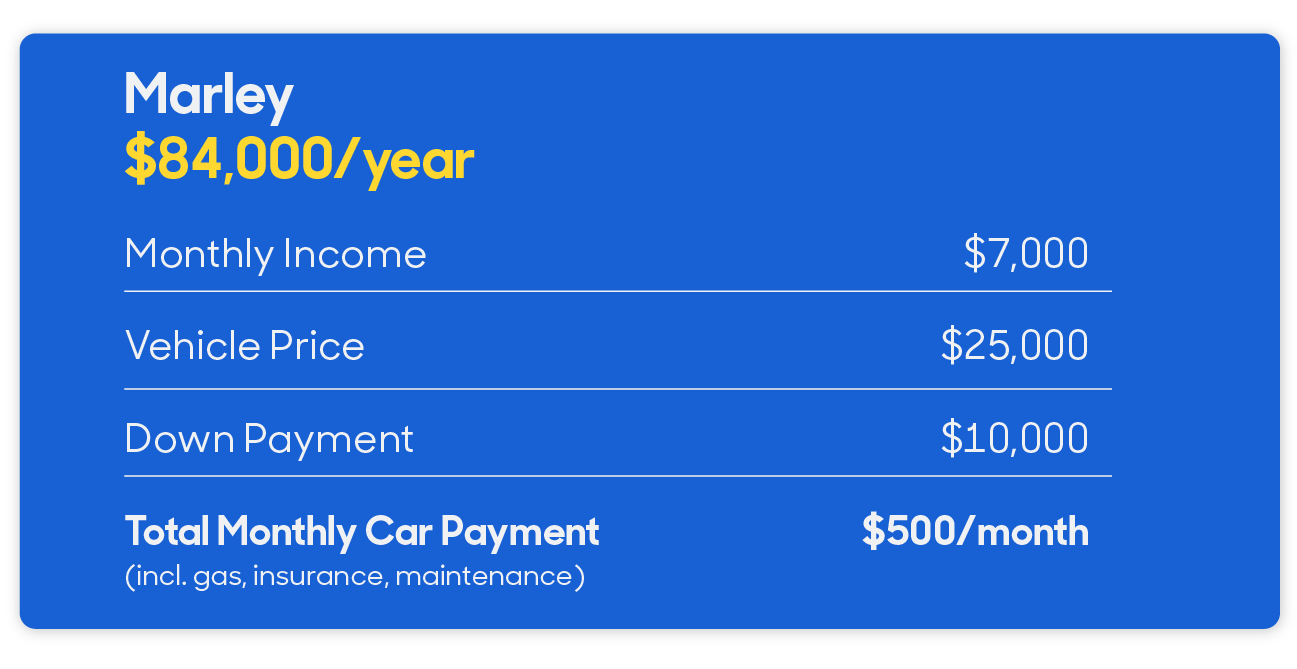
The easiest way to estimate how much down payment for a car is to multiply the vehicle price by your target percentage.
| Vehicle price | 10% down | 15% down | 20% down |
|---|---|---|---|
| $15,000 | $1,500 | $2,250 | $3,000 |
| $20,000 | $2,000 | $3,000 | $4,000 |
| $25,000 | $2,500 | $3,750 | $5,000 |
| $30,000 | $3,000 | $4,500 | $6,000 |
| $40,000 | $4,000 | $6,000 | $8,000 |
| $50,000 | $5,000 | $7,500 | $10,000 |
These figures cover only the vehicle price. Your actual cash needed at signing may be higher because of taxes and fees.
Suppose you buy a $25,000 car and put down 15%, or $3,750. If taxes and fees add $2,000, your total upfront amount could be about $5,750 unless the lender or dealer includes some costs in the loan.
Ask for the out-the-door price before deciding how much down payment for a car you can afford. This price should include the vehicle, dealer fees, taxes, registration, and other required costs.
Should You Put 20% Down on a New Car?
Putting 20% down on a new car can be a strong financial choice, but it is not required for everyone. New vehicles often lose value quickly in the first year. A larger payment can help reduce the risk of negative equity.
Negative equity means you owe more on the loan than the car is worth. For example, if your loan balance is $28,000 but the car could sell for only $24,000, you have $4,000 in negative equity.
A 20% down payment may help because:
• You start with more ownership in the car.
• The loan balance falls faster compared with the car’s value.
• You may avoid rolling unpaid debt into your next vehicle.
• Your monthly payment may become easier to manage.
Still, do not empty your savings to reach 20%. Keep enough money for:
• Three to six months of essential expenses, if possible.
• Insurance deductibles.
• Maintenance and repairs.
• Registration and annual fees.
• Medical costs or family needs.
If a 20% payment leaves you with no emergency fund, a smaller payment may be safer. Financial stability matters more than following a perfect percentage.

Should You Put 10% Down on a Used Car?
A 10% down payment is a practical starting point for many used car buyers. Used vehicles usually cost less than new ones, so the dollar amount may be easier to save.
For example, 10% down on a $18,000 used car is $1,800. That payment may reduce the loan amount without draining your savings.
A larger payment may be useful when:
• The used car has high mileage.
• The lender offers a high interest rate.
• The loan term is long.
• The vehicle is older than the lender’s preferred age.
• The car’s value is difficult to estimate.
Used car loans can have higher rates than new car loans. Some lenders also limit financing for older vehicles or cars with high mileage. In these cases, knowing how much down payment for a car to offer can help you avoid an expensive loan.
Before buying, check the vehicle history, title status, mileage, service records, and independent inspection. A down payment cannot protect you from buying a car with major mechanical problems.

How Credit Score Affects Your Down Payment
Your credit score can influence the interest rate, loan approval, and down payment a lender expects. In general, higher credit scores may help you qualify for lower rates. Lower scores may lead to higher rates, stricter terms, or a larger required payment.
Lenders may review more than your score. They can also consider:
• Payment history.
• Income and employment.
• Debt-to-income ratio.
• Length of credit history.
• Recent credit applications.
• Loan amount and vehicle value.
• Vehicle age and mileage.
A larger down payment may reduce lender risk. It can also lower the loan-to-value ratio, which compares the loan balance with the vehicle’s value.
Before applying, check your credit reports for errors. Credit reporting agencies allow consumers to review their reports through the official federally authorized website. Correcting an error may improve your profile, although results are not guaranteed.
Try to get loan offers from a bank or credit union before visiting a dealer. A preapproval gives you a clear budget and makes it easier to compare the dealer’s financing offer.
How the Down Payment Changes Your Monthly Payment
The down payment affects the amount financed. A basic calculation looks like this:
Start with the out-the-door price.
Subtract your cash down payment.
Subtract any trade-in equity.
Add any items you choose to finance.
Apply the interest rate and loan term.
Example:
• Out-the-door price: $32,000
• Cash down payment: $5,000
• Trade-in equity: $2,000
• Amount financed before interest: $25,000
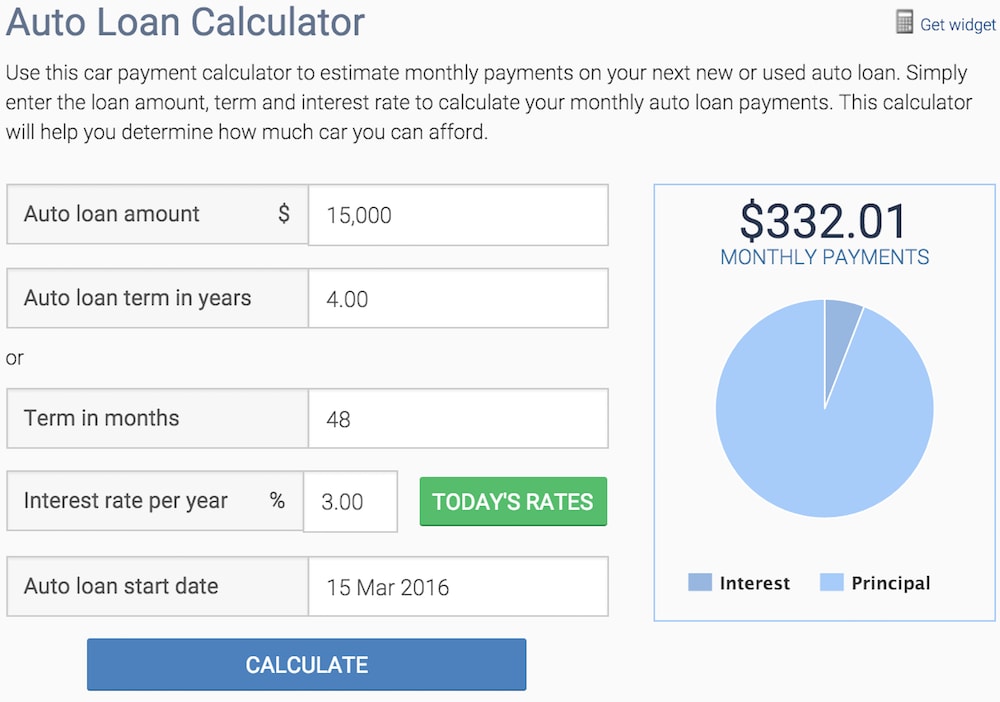
If you finance $25,000 at 7% for 60 months, the payment is about $495 per month before optional products. If you finance $30,000 under the same terms, the payment is about $594 per month.
That $5,000 difference could save roughly $99 per month and reduce total interest. Exact figures vary by lender, taxes, fees, and the final annual percentage rate.
Use an auto loan calculator, but treat its result as an estimate. Ask the lender for the amount financed, APR, payment, number of payments, and total cost.
Cash Down Payment vs. Trade-In Value
Your down payment can come from cash, a trade-in, or both. A trade-in is useful when it has positive equity.
Positive equity means your car is worth more than the amount you owe. For example, if your car is worth $16,000 and your loan balance is $11,000, you have $5,000 in equity.
Negative equity works in the opposite way. If your car is worth $12,000 but you owe $15,000, you have $3,000 in negative equity. Rolling that $3,000 into a new loan increases the amount financed and may create another difficult loan.
Get several trade-in estimates before accepting an offer. Compare the trade-in value with the private-party value, but remember that selling privately can take more time and effort.
A useful lesson is to separate the car price from the trade-in discussion. Ask for each number in writing:
• Vehicle selling price.
• Trade-in allowance.
• Payoff amount on your current loan.
• Taxes and fees.
• Cash down payment.
• Final amount financed.
This makes it harder for confusing numbers to hide an expensive deal.
How Much Down Payment for a Car Can You Afford?
Your affordable down payment is the amount you can pay without harming your financial safety. Start with your available savings, then subtract money you need to keep.
Use this simple approach:
Add your current savings.
Set aside your emergency fund.
Reserve money for upcoming bills.
Keep a repair and insurance cushion.
Use only the remaining amount for the car purchase.
For example, imagine you have $12,000 saved. You decide that $8,000 must remain for emergencies and planned expenses. Your practical car fund is $4,000, not $12,000.
You may choose to put $3,000 down and keep $1,000 for immediate vehicle costs. This could be wiser than putting all $4,000 down and having no cash for tires, repairs, or a higher insurance bill.
Also consider the full monthly cost:
• Loan payment.
• Insurance.
• Fuel or charging.
• Maintenance.
• Repairs.
• Parking and tolls.
• Registration.
A car that fits the loan payment but not the full ownership budget is still too expensive.
When a Smaller Down Payment Makes Sense
A smaller payment may be reasonable when you have strong savings, a low interest rate, and a reliable income. It may also make sense when the car is inexpensive and the loan balance remains manageable.
Consider putting less down if:
• A larger payment would use your emergency fund.
• You have high-interest credit card debt to repay.
• Your income may change soon.
• You qualify for a very low promotional rate.
• You need cash for essential repairs or moving costs.
Some buyers prefer to keep cash invested or available rather than place it into a depreciating asset. That choice depends on the guaranteed loan cost, investment risk, and personal goals. Never compare a certain loan interest cost with an uncertain investment return as if they were equal.
A small down payment can become risky when paired with a long loan term. Loans lasting 72 or 84 months may lower the payment, but they can increase total interest and keep you in debt longer.
When a Larger Down Payment Is Better
A larger payment may be helpful when the car is expensive, your credit rate is high, or the loan term would otherwise be too long. It can also help you stay within a lender’s loan-to-value limits.
A larger down payment may be smart when:
• You want a lower monthly payment.
• You want to reduce total interest.
• You have limited credit history.
• You are buying a vehicle that depreciates quickly.
• You want to avoid negative equity.
• You plan to trade or sell the car within a few years.
Do not borrow money for the down payment unless you fully understand the cost. A personal loan or credit card may carry a higher rate than the auto loan. It can also create another monthly obligation.
The goal is balance. The best answer to how much down payment for a car is enough to improve the loan while leaving you financially prepared.
Common Down Payment Mistakes to Avoid
Small mistakes can make a car loan much more expensive. Take time to review every number before signing.
Avoid these common errors:
• Emptying your savings: Keep an emergency reserve.
• Focusing only on the payment: Compare total loan cost.
• Ignoring taxes and fees: Ask for the out-the-door price.
• Rolling in negative equity: Pay attention to the full loan balance.
• Accepting the first financing offer: Compare banks, credit unions, and dealers.
• Choosing a long term without checking interest: A lower payment can cost more overall.
• Buying unnecessary add-ons: Review warranties, service plans, and insurance products carefully.
• Skipping an inspection: A used car may need repairs soon after purchase.
• Making a rushed decision: Take the contract home if the lender and dealer allow it.
One lesson I often share is to bring a written budget to the dealership. It is easy to agree to extra products or a higher price when the conversation centers on a convenient monthly payment.
A Step-by-Step Way to Choose Your Down Payment
Use these steps to decide how much down payment for a car fits your situation:
Set a total purchase budget based on your full monthly costs.
Check your credit reports and credit score.
Get preapproved by at least one outside lender.
Compare the out-the-door prices of several vehicles.
Estimate taxes, fees, insurance, fuel, and maintenance.
Protect your emergency savings.
Choose a down payment between 10% and 20% if it fits your budget.
Compare loan terms using total interest, not just payment size.
Review the contract before signing.
Confirm that the final amount matches the agreed figures.
A strong deal should make sense on paper and in real life. If the numbers feel tight before an unexpected repair, the car is probably too expensive.
Frequently Asked Questions About How Much Down Payment for a Car
Is 20% down on a car always necessary?
No. Twenty percent is a useful target, especially for a new car, but it is not a lender requirement in every case. Your credit, income, vehicle, loan term, and available savings all affect the right amount.
Can I buy a car with no down payment?
Yes, some lenders offer zero-down auto loans to qualified borrowers. However, you may have a higher payment, more interest, and a greater risk of negative equity.
Is 10% down enough for a used car?
Ten percent can be a reasonable starting point for a used car. A larger payment may help if the interest rate is high, the vehicle is older, or the lender has strict loan-to-value limits.
Should I use my savings for a car down payment?
Use savings only after protecting your emergency fund and covering near-term needs. A smaller down payment is often safer than having no cash left for repairs or unexpected bills.
Does a bigger down payment lower my interest rate?
It can lower the lender’s risk and may improve your loan offer, but it does not guarantee a lower rate. Credit history, income, lender policies, and market conditions also affect the APR.
Can a trade-in count as a down payment?
Yes. Trade-in equity can reduce the amount you need to finance. First confirm the vehicle’s value and subtract the exact payoff balance on your current loan.
How much down payment for a car with bad credit is typical?
There is no fixed amount, but lenders may request a larger payment from borrowers with weak credit. Improving your credit, comparing lenders, and choosing a less expensive vehicle may reduce the amount needed.
Conclusion
For many buyers, how much down payment for a car falls between 10% and 20% of the vehicle price. A new car may benefit from 20% down, while 10% can be a practical target for a used car. Still, your emergency savings, credit profile, loan rate, trade-in equity, and total ownership costs should guide the final choice.
Before you buy, compare the out-the-door price, total interest, loan term, and full monthly budget. Choose a payment that lowers your borrowing cost without leaving you financially exposed. Use these steps to compare offers, then explore more auto finance resources or share your car-buying questions in the comments.