

A car belt transfers engine power to vital parts that keep the vehicle running, cool, and charging.
If you have ever heard a sharp squeal under the hood, you may have wondered, “What does a car belt do?” The answer depends on the belt type, but each one plays a key role in engine operation. This guide explains how car belts work, the main types, warning signs, service needs, and mistakes that can lead to expensive damage.
What does a car belt do?
A car belt transfers power from the engine’s crankshaft to other parts. The crankshaft turns when the engine runs. A belt uses that motion to drive systems such as the alternator, air conditioning compressor, power steering pump, water pump, or camshaft.
Think of the belt as a strong rubber link between the engine and its support systems. Without it, many parts would stop working even though the engine may still run for a short time.
The answer to “What does a car belt do?” changes based on the belt design:
• A serpentine belt powers external accessories.
• A timing belt keeps the camshaft and crankshaft synchronized.
• A V-belt powers one or more accessories on some older vehicles.
• A ribbed belt grips pulleys and transfers engine rotation with minimal slipping.
Most modern vehicles use one serpentine belt for several accessories. Some engines also use a separate timing belt inside a protective cover.

The main types of car belts
Not every belt under the hood performs the same job. Knowing the difference helps you understand repair advice and maintenance schedules.
Serpentine belt
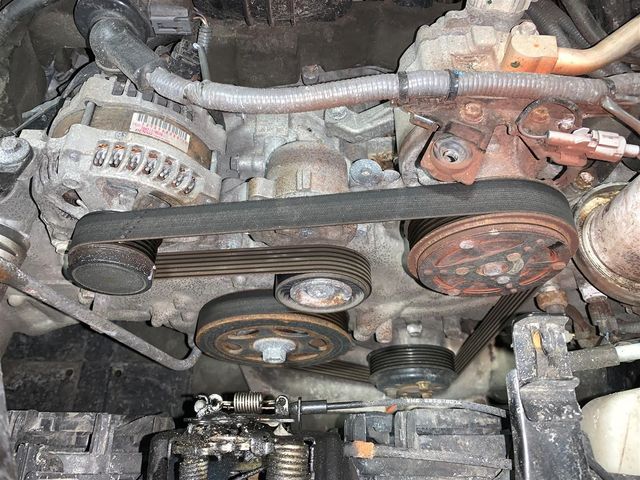
The serpentine belt is a long, continuous belt that winds around several pulleys. It may drive the alternator, air conditioning compressor, water pump, and power steering pump.
A spring-loaded tensioner keeps the belt tight. Smooth idler pulleys guide its path and reduce vibration.
If the serpentine belt breaks, you may suddenly lose:
• Battery charging
• Air conditioning
• Power steering assistance
• Engine cooling, if the belt drives the water pump
A broken serpentine belt can leave you stranded within minutes. If the water pump stops, the engine may also overheat.
Timing belt
The timing belt synchronizes the crankshaft and camshaft. This timing allows the intake and exhaust valves to open and close at the correct moment.
The timing belt does not usually power visible accessories. Instead, it controls the engine’s internal valve timing. It is often hidden behind a plastic or metal cover.
A worn timing belt may look acceptable from the outside. For this reason, replacement intervals matter. Many manufacturers set a mileage or time limit, such as a certain number of miles or several years. Always follow the service schedule for your specific vehicle.
If a timing belt breaks, the engine can stop at once. In some engines, the pistons and valves can collide. That may cause severe internal damage.
V-belt
Older vehicles often use separate V-belts. Each belt may drive one system, such as the alternator, water pump, or power steering pump.
V-belts have a V-shaped cross-section that fits into matching pulley grooves. They are less common in newer cars but still appear in classic cars, older trucks, and some specialty applications.
Accessory belt
“Accessory belt” is a broad term. It can describe a serpentine belt, V-belt, or another belt that drives equipment outside the engine’s core valve system.
When a repair shop says your accessory belt needs replacement, ask which belt they mean. The repair cost and risk can differ greatly between a serpentine belt and a timing belt.

How does a serpentine belt work?
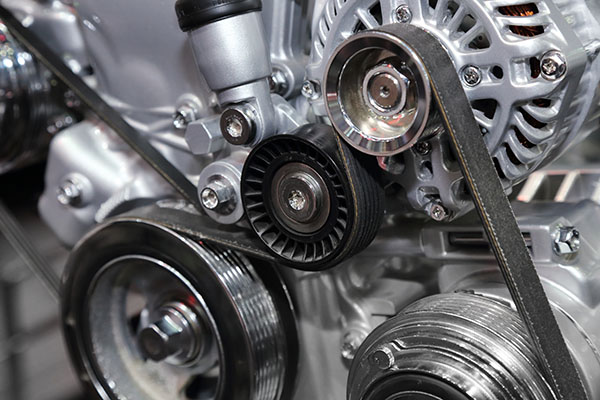
The crankshaft pulley turns as the engine runs. The serpentine belt wraps around that pulley and carries the rotation to other pulleys.
The belt has ribs on one side and a smooth back on the other. Ribbed pulleys grip the ribs. Smooth pulleys press against the back of the belt. This design lets one belt follow a complex route through the engine bay.
A tensioner maintains the correct pressure. If the belt is too loose, it can slip and squeal. If it is too tight, it can overload bearings in the alternator, water pump, or tensioner.
The belt must also track straight. A damaged pulley, worn tensioner, or misalignment can make the belt move sideways. In severe cases, it can jump off or shred.
This is one reason the answer to “What does a car belt do?” includes more than simple power transfer. A belt system must also maintain grip, alignment, and stable tension.
How does a timing belt work?
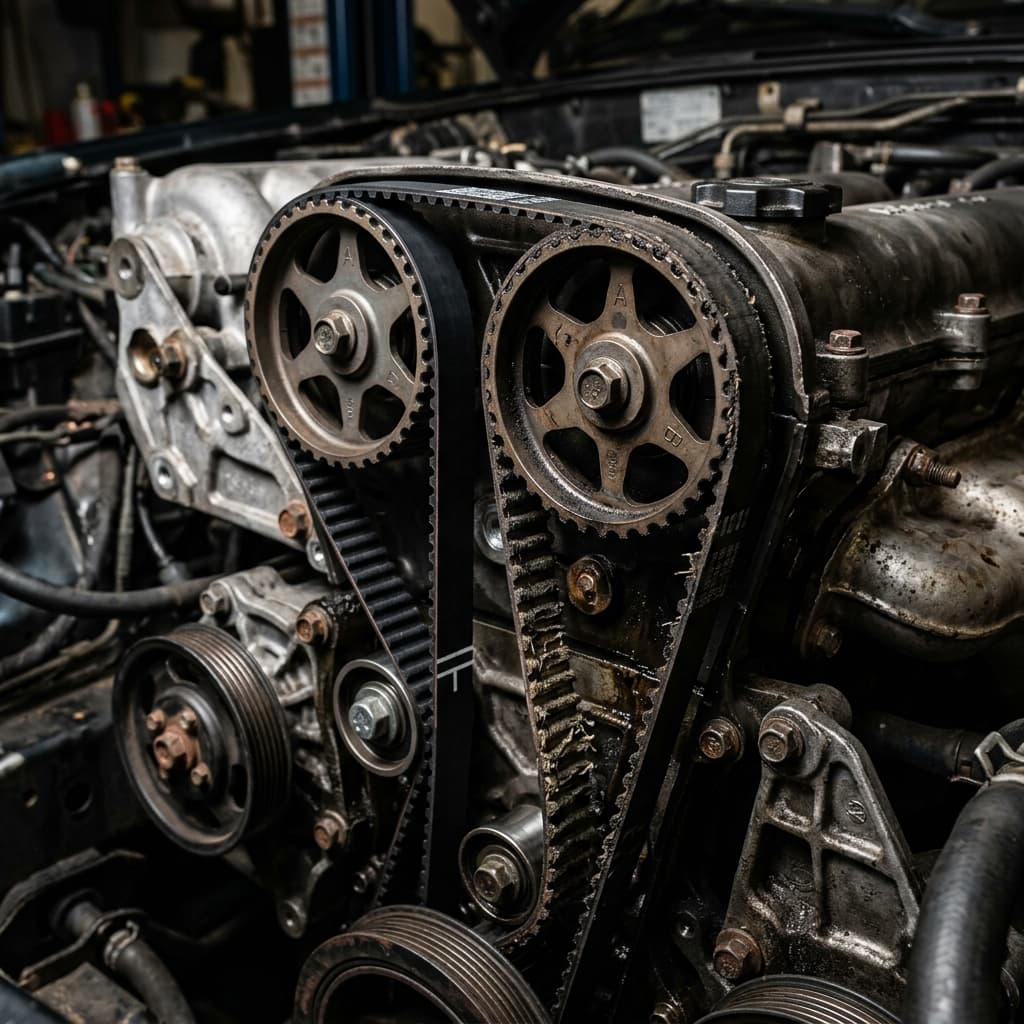
The timing belt connects the crankshaft to the camshaft through toothed pulleys. Its teeth prevent the belt from slipping during normal operation.
The crankshaft turns once for every full engine cycle rotation. In a typical four-stroke engine, the camshaft turns at half the crankshaft speed. This exact relationship controls the timing of the intake, compression, power, and exhaust strokes.
The belt must keep the valves and pistons synchronized. Even a small timing error can reduce engine performance. A major error can prevent the engine from starting or cause internal contact between moving parts.
A timing belt system may include:
• A timing belt
• A tensioner
• One or more idler pulleys
• A water pump on some engines
• Camshaft and crankshaft pulleys
Replacing only the belt may not be wise if the tensioner, pulleys, or water pump are worn. Many technicians recommend replacing these related parts together when the design allows it. This reduces the chance of repeating the same labor later.
What happens when a car belt fails?
The result depends on which belt breaks.
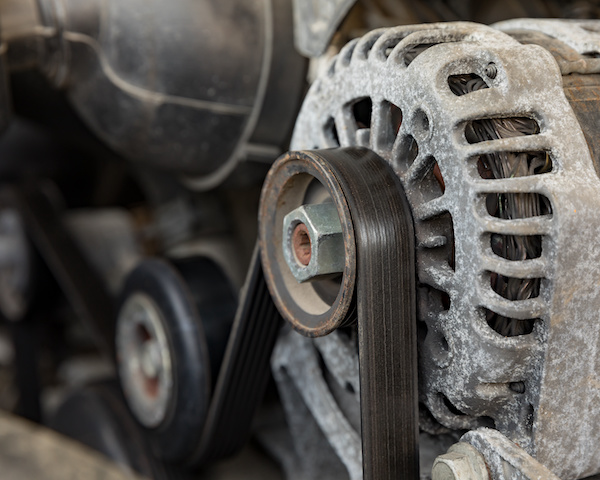
A failed serpentine belt may cause an immediate loss of charging, cooling, steering assistance, or climate control. The battery warning light may turn on. The temperature gauge may rise if the water pump stops working.
A failed timing belt can stop the engine instantly. The starter may spin the engine faster than normal because the camshaft is no longer turning. Some vehicles suffer major valve or piston damage, while others may only need a timing belt replacement.
Common effects of belt failure include:
• A loud snap or slapping sound
• A charging warning light
• Heavy or sudden steering
• Loss of air conditioning
• Engine overheating
• A no-start condition
• Visible belt pieces under the hood
If a belt breaks while driving, pull over safely as soon as possible. Turn off the engine if the temperature rises or if you see smoke. Continuing to drive may turn a manageable repair into major engine damage.
Symptoms of a worn or damaged car belt
A belt rarely fails without showing clues. Regular inspection can help you find problems early.
Squealing or chirping
A high-pitched squeal often points to belt slip, low tension, moisture, contamination, or a pulley problem. A repeated chirp may suggest misalignment or uneven wear.
Do not assume the belt itself is always the cause. A worn tensioner or failing pulley bearing can create similar sounds.
Cracks and missing ribs
Older belts may develop cracks, glazing, frayed edges, or missing ribs. Modern belt materials do not always show deep cracks before failure, so appearance alone cannot prove that a belt is safe.
Look for:
• Frayed edges
• Exposed cords
• Shiny or glazed surfaces
• Missing chunks
• Rib separation
• Oil or coolant contamination
Battery warning light
If the serpentine belt drives the alternator and the belt slips or breaks, the battery may stop charging. The vehicle can continue running briefly on stored battery power, but it will eventually shut down.
Overheating
Some vehicles use the serpentine belt to drive the water pump. If the belt fails, coolant may stop circulating. A rising temperature gauge is a serious warning.
Heavy steering
A belt-driven power steering pump may stop working if the serpentine belt fails. The steering wheel can suddenly feel much harder to turn, especially at low speed.
Ticking or rattling near the timing cover
A loose timing belt, worn tensioner, or damaged pulley may create noise near the timing cover. This symptom needs prompt inspection because timing system failure can be costly.

What causes car belt damage?
Car belts wear because they operate in heat, vibration, and constant motion. Several issues can shorten their life.
• Age: Rubber and reinforcing materials become less flexible over time.
• Heat: High engine temperatures can harden or weaken the belt.
• Oil leaks: Oil can soften belt material and reduce grip.
• Coolant leaks: Coolant may cause slipping and material damage.
• Poor tension: A loose belt slips, while an over-tight belt strains components.
• Misalignment: Crooked pulleys wear one side of the belt.
• Bad pulleys: Rough bearings can damage or throw off the belt.
• Incorrect installation: A belt routed incorrectly may fail quickly.
• Foreign objects: Debris can cut or dislodge the belt.
One practical lesson is simple: replacing a belt without fixing the leak or pulley problem may not solve anything. The new belt can suffer the same damage within a short time.

How to inspect a car belt safely
You can perform a basic visual check, but never place your hands near a running engine. Turn the engine off, remove the key, and let hot parts cool first.
Use this simple process:
Open the hood and locate the serpentine belt.
Check for fraying, missing ribs, cuts, glazing, or oil contamination.
Look at the belt edges for uneven wear.
Check whether the belt sits correctly in each pulley groove.
Look for leaks near the belt path.
Listen for unusual sounds during a professional inspection.
Do not use belt dressing as a permanent repair. It may quiet a noise for a short time, but it can hide the real issue and contaminate parts.
A timing belt usually cannot be inspected fully without removing a cover. Because of this, service records are especially important. If there is no proof of replacement and the vehicle is near the recommended interval, ask a qualified technician for guidance.

When should you replace a car belt?
The right replacement time depends on the belt, vehicle, engine, climate, and driving conditions.
Serpentine belts often last many years, but mileage alone is not enough to judge their condition. A belt exposed to oil, extreme heat, dust, or heavy use may wear sooner.
Timing belts require more strict planning. Their replacement interval is listed in the owner’s manual or factory service information. Some vehicles use timing chains instead, but a chain is not automatically maintenance-free.
Replace a belt sooner if you notice:
• Cracks, fraying, or missing material
• Repeated squealing
• Oil or coolant contamination
• A damaged tensioner
• A worn pulley bearing
• Visible misalignment
• A known overdue service interval
A belt replacement should include a check of the tensioner, idler pulleys, and related components. On some engines, replacing the water pump at the same time is efficient because the same labor is already required.
How much does car belt replacement cost?
The cost varies widely by vehicle and belt type. A serpentine belt is often a relatively simple repair. A timing belt replacement usually costs more because the technician must remove covers and access parts deep inside the engine bay.
Factors that affect the price include:
• Vehicle make and model
• Engine design
• Belt type
• Labor time
• Replacement of tensioners and pulleys
• Water pump replacement
• Local labor rates
• Whether the belt failed and caused extra damage
A low parts price does not always mean a low total repair cost. Ask for an itemized estimate that lists the belt, labor, tensioner, pulleys, water pump, and any recommended seals.
The cheapest repair may not be the best value if it ignores a worn pulley or leak. Quality parts and correct installation can prevent a repeat failure.
Car belt maintenance tips
Good maintenance is mostly about inspection and timing. You do not need advanced tools to prevent many belt problems.
• Follow the vehicle manufacturer’s service schedule.
• Check the belt during routine oil changes.
• Repair oil and coolant leaks quickly.
• Replace damaged tensioners and pulleys.
• Use the correct belt size and part number.
• Keep accurate service records.
• Avoid spraying chemicals on the belt.
• Stop driving if the engine overheats.
• Ask a technician to inspect the timing system at the required interval.
A useful habit is to take a photo of the belt routing before removal. This helps confirm the correct path during installation. Many vehicles also have a routing diagram under the hood.
Never force a belt over a pulley with a screwdriver. This can cut the belt or damage the pulley. Use the correct tensioner tool and follow the service procedure.
Common mistakes to avoid
Belt repairs can go wrong when a small warning is ignored.
One mistake is replacing only a noisy belt. The noise may come from a failing idler pulley or alternator bearing. If the underlying part locks up, the new belt may break too.
Another mistake is waiting for visible cracks. Some modern belts can fail from internal wear without dramatic surface damage. Service history and mileage are important clues.
Some drivers also confuse a timing belt with a serpentine belt. They have different jobs and different failure risks. Ask the technician to explain which belt needs attention and why.
Finally, avoid driving after a belt failure unless a professional confirms that it is safe. A short trip may cause overheating or battery discharge.
FAQ: What does a car belt do?
What does a serpentine belt do?
A serpentine belt transfers engine power to accessories such as the alternator, air conditioning compressor, power steering pump, and sometimes the water pump. If it breaks, several systems may stop working at once.
What does a timing belt do?
A timing belt keeps the crankshaft and camshaft synchronized. This allows the engine valves to open and close at the correct time.
Can a car run without a serpentine belt?
A car may run briefly after the serpentine belt breaks, but it may lose charging, cooling, steering assistance, or air conditioning. Continuing to drive can quickly cause overheating or a dead battery.
How often should a car belt be replaced?
The timing depends on the vehicle and belt type. Follow the owner’s manual, inspect serpentine belts regularly, and replace timing belts at the manufacturer’s stated mileage or time interval.
What does a bad car belt sound like?
A bad belt may squeal, chirp, slap, or make a rhythmic ticking sound. These noises can also come from a worn tensioner or pulley, so a full inspection is important.
Is a timing chain better than a timing belt?
A timing chain often lasts longer, but it can still wear and require service. A timing belt is quieter and lighter, but it must be replaced at a scheduled interval.
Can oil damage a car belt?
Yes. Oil can weaken the belt material, reduce grip, and cause slipping. An oil leak near the belt should be repaired before installing a replacement belt.
Conclusion
A car belt is a small but essential part of the engine system. The serpentine belt drives important accessories, while the timing belt keeps the engine’s internal parts synchronized. Both require the correct tension, alignment, inspection, and service schedule.
Now that you understand what does a car belt do, check your vehicle’s maintenance records and look for warning signs such as squealing, fraying, overheating, or a battery light. If you are unsure which belt your car uses, ask a trusted technician to inspect it before a minor issue becomes a major repair.
