How Much Is Texas Car Registration: 2026 Cost Guide
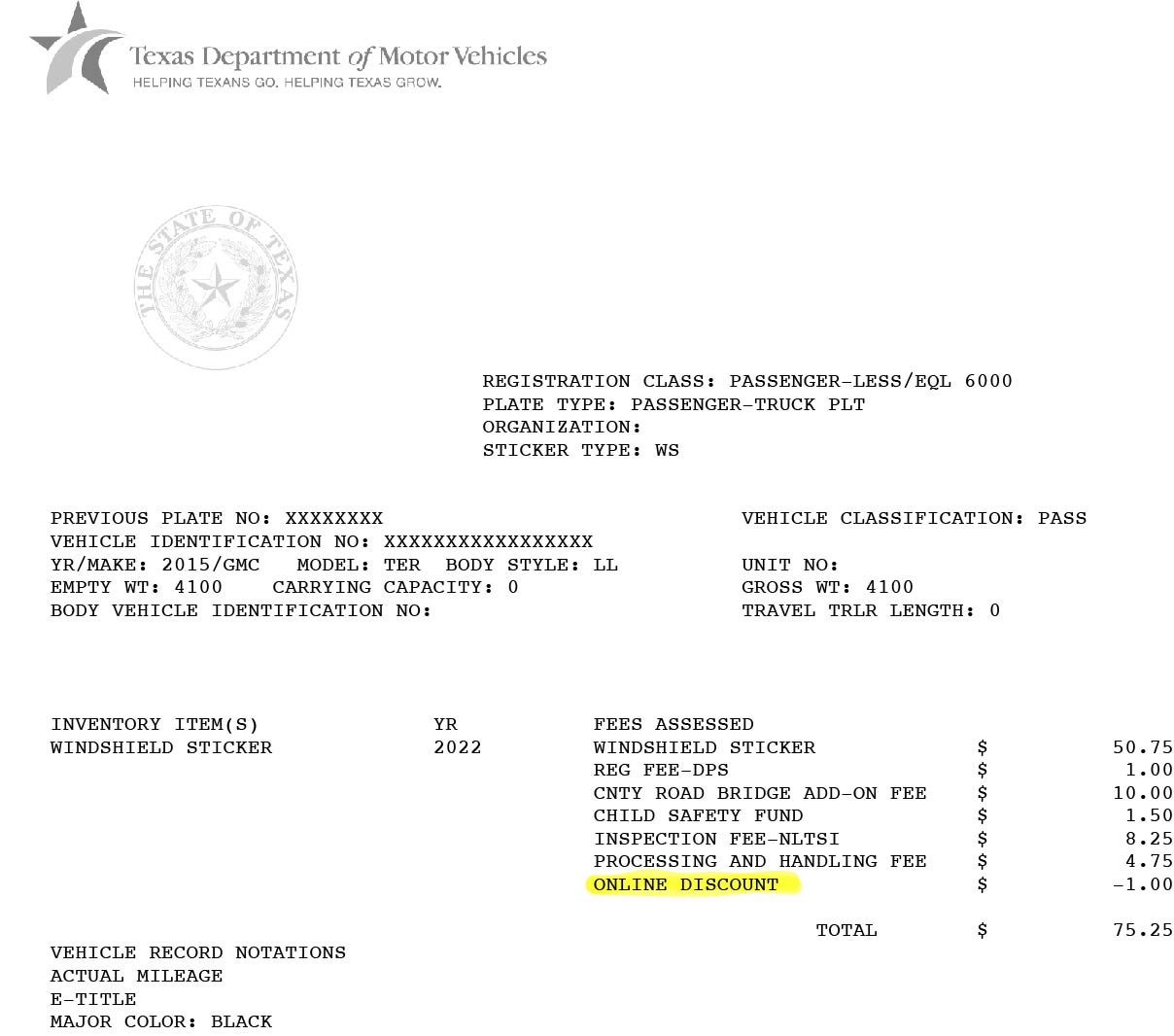
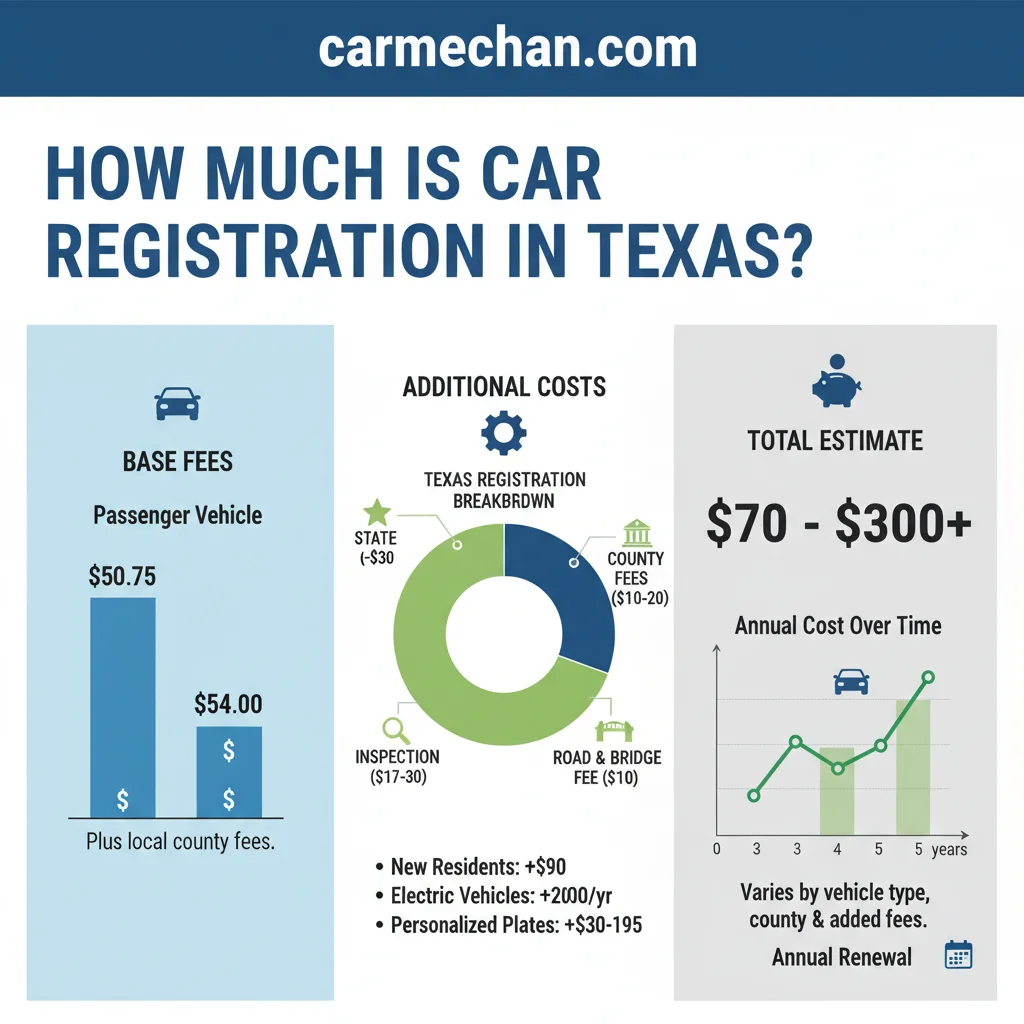
For most passenger cars and light trucks in Texas, the state registration fee is $50.75 per year. Your final bill is often higher because Texas may add a county road fee, a vehicle inspection or emissions charge, and a $4.75 processing and handling fee.
A typical renewal can cost roughly $60 to $95, but the exact amount depends on your county, vehicle type, and whether your vehicle must pass an emissions test. Texas vehicle registration fees can change, so check the official TxDMV renewal notice or online fee calculator before paying.
Texas car registration cost at a glance
The cost of Texas car registration has several parts. The state base fee is only one line on the bill.
| Fee | Typical amount or rule |
|---|---|
| State registration fee for most cars and light trucks | $50.75 |
| County road and bridge fee | Varies by county; up to $31.50 |
| Processing and handling fee | $4.75 |
| Inspection or emissions-related charge | Varies by vehicle and county |
| Title application fee, when applicable | Usually $33, plus local charges |
| Sales tax when buying a vehicle | Separate from registration |
A standard passenger vehicle may therefore cost about $55.50 before county fees and inspection-related charges:
- $50.75 state registration fee
- $4.75 processing and handling fee
If your county charges the full $31.50 local fee, the total reaches about $87.00 before any applicable inspection or emissions charge.
These figures are planning estimates. Your county tax office or the Texas Department of Motor Vehicles (TxDMV) gives the final amount.
What the $50.75 state fee covers
The $50.75 fee generally applies to a standard passenger vehicle or light truck registered in Texas. It is the basic annual registration charge set by the state.
The fee may be different for:
- Motorcycles
- Mopeds
- Trailers
- Heavy trucks
- Farm vehicles
- Commercial vehicles
- Electric vehicles
- Special or personalized plates
- Vehicles with unusual weight classifications
Do not use the passenger-car rate for a commercial truck or heavy vehicle. Weight, use, and vehicle class can change the calculation.
What local fees cover
Texas counties can add local fees to vehicle registration. The money may support county roads, transportation programs, or other local needs allowed by law.
The local amount depends on the county where the vehicle is registered. Two people with the same car can pay different totals if they live in different Texas counties.

How to calculate your Texas registration total
Use this basic formula:
Total registration cost = state fee + county fees + processing fee + inspection or emissions charges + optional plate fees
For a normal passenger vehicle, start with:
$50.75 + $4.75 = $55.50
Then add the county and vehicle-specific charges.
Example 1: Basic registration estimate
This example assumes a passenger car with no special plate and a $10 county fee:
- State registration: $50.75
- County fee: $10.00
- Processing and handling: $4.75
Estimated total: $65.50
This is a hypothetical calculation. The actual county fee and any inspection-related charge may differ.
Example 2: Registration with the maximum local fee
This example uses the maximum local fee listed by TxDMV:
- State registration: $50.75
- Local county fees: $31.50
- Processing and handling: $4.75
Estimated total: $87.00 before any additional applicable charge
Example 3: Registration in an emissions county
Some counties in the Houston, Dallas–Fort Worth, Austin, and other areas require emissions testing. If your vehicle is subject to that requirement, testing and related fees can increase the total cost.
The exact amount depends on:
- The county
- The vehicle’s model year
- Whether it is gasoline or diesel
- Whether it is a passenger vehicle or another class
- The inspection station’s charge
- Whether the vehicle passes the test
The safest method is to complete the required inspection or emissions test, then use the renewal notice or TxDMV system for the final registration amount.
Why your bill may not match an online estimate
Your bill can differ because of:
- A different county fee
- A specialty or personalized license plate
- Late registration penalties
- A registration hold
- A title transaction
- A change of address
- A new Texas resident transaction
- A different vehicle weight class
- Local emissions requirements
- A registration period that does not cover a full year
Texas registration is usually renewed for one year. Some vehicles and transactions may follow different rules.
Do Texas vehicles still need an inspection?
As of January 1, 2025, Texas ended the annual safety inspection requirement for most noncommercial vehicles. However, emissions testing still applies in certain Texas counties.
This change does not mean every vehicle can skip every inspection-related requirement. A vehicle registered in an emissions testing county may still need an emissions test before renewal.
Counties with emissions testing
Emissions testing generally applies in designated Texas counties, including major urban areas. The list can change, so confirm the rule for your registration address with the Texas Department of Public Safety or TxDMV.
If emissions testing applies:
- Take the vehicle to an authorized inspection station.
- Complete the required emissions test.
- Confirm that the test result is recorded.
- Renew registration online, by mail, or through the county tax office.
A failed emissions test can delay renewal. Ask the inspection station what repair or retest steps apply to your vehicle.
What changed after 2025
Before 2025, most noncommercial vehicles needed an annual safety inspection. After the change, most do not need that safety inspection. The state still collects certain registration-related charges, and emissions rules remain in place for affected counties.
Because the fee structure and enforcement rules can change, do not rely on an old inspection receipt or an older registration article.
How to renew Texas vehicle registration
You can usually renew through the Texas online renewal system, by mail, or at your county tax office.
Renew online
Online renewal is often the fastest option when:
- Your renewal notice is available
- Your insurance information is current
- The vehicle is eligible for online renewal
- Any required emissions test has been completed
- You do not need to change ownership or other title information
Use the official Texas vehicle registration renewal website. Have your renewal notice, license plate number, or vehicle identification information available.
Renew by mail
Follow the instructions on your renewal notice. Include the required payment and any documents requested by the county tax office.
Mail early. A late postmark or missing document can cause delays and penalties.
Renew in person
Visit the county tax office where the vehicle is registered. Bring:
- Your renewal notice, if available
- Proof of current Texas auto insurance
- Government-issued identification, if requested
- Proof of a completed emissions test, when required
- Payment
- Any documents related to a registration hold or title change
County offices may accept different payment methods. Check before you go.
What to do if online renewal fails
An online renewal may fail because of:
- An emissions test that has not posted
- A registration hold
- Unpaid tolls or other required obligations
- Incorrect insurance information
- An address or name mismatch
- An expired registration that requires in-person service
- A title or ownership issue
Read the error message carefully. If it points to a county hold, contact the agency listed in the notice before visiting the tax office.
Texas registration fees for new residents and newly purchased cars
New residents and vehicle buyers may pay more than the standard renewal amount because registration is only one part of the transaction.
New Texas residents
Texas generally requires new residents to register their vehicles after establishing residency. The process may include:
- A Texas vehicle inspection or emissions test, if applicable
- Title and registration paperwork
- Proof of insurance
- A Texas driver license or other accepted residency document
- Title fees
- Registration fees
- Use tax or other taxes, depending on the situation
New residents should contact the county tax office for the exact document list. The amount due can differ from a normal annual renewal.
Buying a vehicle from a dealer
A dealer may handle title and registration paperwork as part of the purchase. Ask for an itemized breakdown.
Your purchase documents may include:
- Vehicle sales price
- Texas motor vehicle sales tax
- Title fee
- Registration fee
- Local county fees
- Dealer document or processing fees
- License plate fees
- Optional products or services
Registration is not the same as sales tax. A vehicle can have a registration fee, title fee, and sales tax due in the same transaction.
Buying from a private seller
When buying from a private seller, the buyer usually must complete the title and registration process through the county tax office.
Before paying, check that:
- The seller’s name matches the title
- The vehicle identification number matches the vehicle
- The title has no unresolved lien
- The odometer information is complete when required
- The seller provides the required sale documents
- You receive proof of insurance before registration
Do not drive an uninsured or improperly registered vehicle. Ask the county tax office about temporary permits if you need time to complete the transaction.

Extra fees that can raise the cost
The base registration rate does not include every possible charge.
Specialty and personalized plates
Texas offers many specialty plates. Some have an additional annual fee. Personalized plates can also cost more than standard plates.
The extra amount depends on the plate design and whether the plate is personalized. Review the current TxDMV plate fee before selecting one.
Late renewal penalties
Renewing after the expiration date can result in late fees. Driving with expired registration can also lead to a citation.
A short delay does not always mean the same amount for every driver. Penalties can depend on how late the renewal is and whether the vehicle was operated during the lapse.
Registration holds
A hold can prevent renewal until another issue is resolved. Common causes may include:
- Unpaid toll charges
- Certain parking or enforcement obligations
- Insurance problems
- Missing emissions results
- Court or county requirements
The renewal system usually tells you which agency placed the hold. Resolve the hold with that agency rather than paying a second time through the registration system.
Electric vehicle fees
Texas may charge additional fees for some electric vehicles. These fees are separate from the standard registration fee and may change as state law changes.
Check the current TxDMV fee information for the vehicle’s fuel type and registration class.
Title and lien fees
A title transaction is separate from annual registration. You may need a title application fee when:
- You buy a vehicle
- You move the title into your name
- You replace a lost title
- You add or remove a lien
- You transfer ownership
Ask for an itemized bill so you can tell registration, title, tax, and optional fees apart.
Common mistakes when estimating Texas registration costs
The most common mistake is treating $50.75 as the full bill. It is usually the state base fee, not the complete amount.
Other mistakes include:
- Forgetting the $4.75 processing and handling fee
- Ignoring county charges
- Using an old inspection rule
- Assuming every county has the same emissions requirement
- Confusing sales tax with registration
- Waiting until after the expiration date
- Selecting a specialty plate without checking its added cost
- Failing to update insurance information
- Assuming a registration hold will clear automatically
Use the official renewal notice as your main source for the amount due. Online articles are useful for planning, but they may not reflect your county or the latest fee change.
How to find your exact Texas registration amount
To get the most accurate total:
- Check your renewal notice.
- Confirm your registration county.
- Verify whether your vehicle needs an emissions test.
- Check for registration holds.
- Use the official TxDMV online renewal service.
- Contact your county tax office if the amount looks wrong.
For a newly purchased vehicle or a new-to-Texas vehicle, ask the county tax office for a complete title and registration estimate. Bring the vehicle identification number and transaction details.

Frequently asked questions
How much is Texas car registration for a normal passenger car?
The state base fee is usually $50.75. After adding the $4.75 processing fee, county charges, and any applicable inspection or emissions-related fees, many drivers pay more than $55.50. The exact total depends on the county and vehicle.
Is Texas car registration cheaper after the 2025 inspection change?
Not necessarily. Texas ended the annual safety inspection for most noncommercial vehicles on January 1, 2025, but registration still includes state and local fees. Emissions testing also remains required in certain counties.
Can I renew my Texas registration without an inspection?
If your vehicle is not in an emissions testing county and is otherwise eligible, you generally do not need the former annual safety inspection. If emissions testing applies to your county and vehicle, you must complete it before renewal.
What happens if my Texas registration expires?
You may face late fees, a registration hold, or a citation if you drive with expired registration. Renew as soon as possible and check whether your county requires in-person service.
Do I need insurance to register a car in Texas?
Texas requires proof of financial responsibility for vehicles operated on public roads. Your insurance information may need to be verified before registration renewal or issuance.
Is the Texas title fee included in car registration?
Usually, no. A title fee is separate from the annual registration fee. Buying a vehicle, moving a title into your name, or changing lien information can create additional title charges.
Conclusion
For most Texas passenger cars and light trucks, start with the $50.75 state registration fee. Add the $4.75 processing fee, county charges, and any required emissions or vehicle-specific fees to estimate the final bill.
A practical planning range is about $60 to $95 for many standard renewals, but your county and vehicle details control the actual price. Check the official TxDMV renewal system or your county tax office before paying, especially if you are registering a newly purchased vehicle, moving to Texas, using a specialty plate, or dealing with an expired registration.