How Long Does A Car Belt Last: Replacement Guide
Most serpentine belts last about 60,000 to 100,000 miles, but some newer belts may last longer. A timing belt often lasts 60,000 to 105,000 miles, or about 5 to 7 years. The exact interval depends on the vehicle, engine, belt type, climate, driving conditions, and the maintenance schedule in the owner’s manual.
There are two main belts to understand:
- Serpentine belt: Drives parts such as the alternator, air-conditioning compressor, power steering pump, and water pump.
- Timing belt: Keeps the camshaft and crankshaft in sync inside the engine.
These belts have different jobs and different replacement rules. A worn serpentine belt may leave you without charging or air conditioning. A failed timing belt can cause major engine damage on some engines.
Key takeaways
- Check the owner’s manual before relying on a general mileage range.
- Replace a serpentine belt when it shows damage, not only when it breaks.
- Do not wait for visible warning signs before replacing a timing belt.
- Oil, coolant, heat, dust, and poor belt tension can shorten belt life.
- Replace related parts, such as tensioners or idler pulleys, when the service procedure calls for them.
- A squeal does not always mean the belt itself is bad.
- Stop driving if a belt is shredded, badly cracked, loose, or missing.

What type of car belt does your vehicle use?
The first step is to identify the belt. “Car belt” can mean two very different parts.
Serpentine belt
The serpentine belt is the long, ribbed belt that runs around pulleys on the outside of the engine. It may drive:
- The alternator
- The air-conditioning compressor
- The power steering pump
- The water pump
- Other accessories
A broken serpentine belt can cause the battery warning light to come on. The engine may overheat if the belt drives the water pump. Steering may also become very hard if the power steering pump stops working.
Many modern vehicles use an EPDM belt, or ethylene propylene diene monomer belt. EPDM rubber can wear without forming the deep cracks that older belt materials often showed. For that reason, a visual check alone may not reveal all belt wear.
Timing belt
The timing belt is inside a protective cover. It links the crankshaft and camshaft through a set of toothed gears. This keeps the engine valves and pistons moving at the correct time.
Timing belts are not changed only because they look worn. They may appear normal but still be due for replacement based on age and mileage. If a timing belt breaks, some engines can suffer bent valves, damaged pistons, or other costly damage.
Timing chain
A timing chain performs the same basic timing function as a timing belt, but it uses a metal chain. A timing chain does not have the same routine replacement interval as a timing belt. However, chains, guides, and tensioners can wear and may need service.
Do not assume that a vehicle has a timing chain because the belt is not visible. Check the owner’s manual or confirm the engine design with a trusted repair source.
How long does a serpentine belt last?
A serpentine belt commonly lasts 60,000 to 100,000 miles. Some newer belts can last beyond 100,000 miles under good conditions. This is a planning range, not a guarantee.
The belt may need replacement sooner if it is exposed to:
- Engine oil or coolant
- High heat
- Road salt
- Dust or sand
- Water leaks
- A damaged pulley
- Incorrect belt tension
- Frequent heavy towing
- Long periods of stop-and-go driving
A belt that is contaminated with oil should not simply be wiped clean and returned to service. Oil can damage the rubber and may also indicate a leak that needs repair.
Signs of a worn serpentine belt
Common signs include:
- Squealing during startup or acceleration
- A chirping sound that changes with engine speed
- Visible fraying
- Missing ribs
- A shiny or glazed belt surface
- A belt that is loose or off-center
- Battery, temperature, or steering warnings
- A burning rubber smell
Noise alone does not prove that the belt is bad. A worn tensioner, damaged pulley bearing, misalignment, or fluid leak can make similar sounds.
A belt inspection tool can help measure rib wear on some EPDM belts. A repair shop may also inspect belt alignment, tension, and the condition of each pulley.
When should you replace a serpentine belt?
Replace the belt when the owner’s manual calls for it, when inspection finds damage, or when the belt system has a related fault. If the belt has been removed during another repair and it is near the end of its expected life, replacement may be sensible because the extra labor is often small.
Do not replace only the belt if a failed tensioner or pulley caused the problem. The new belt may fail again if the underlying fault remains.
How long does a timing belt last?
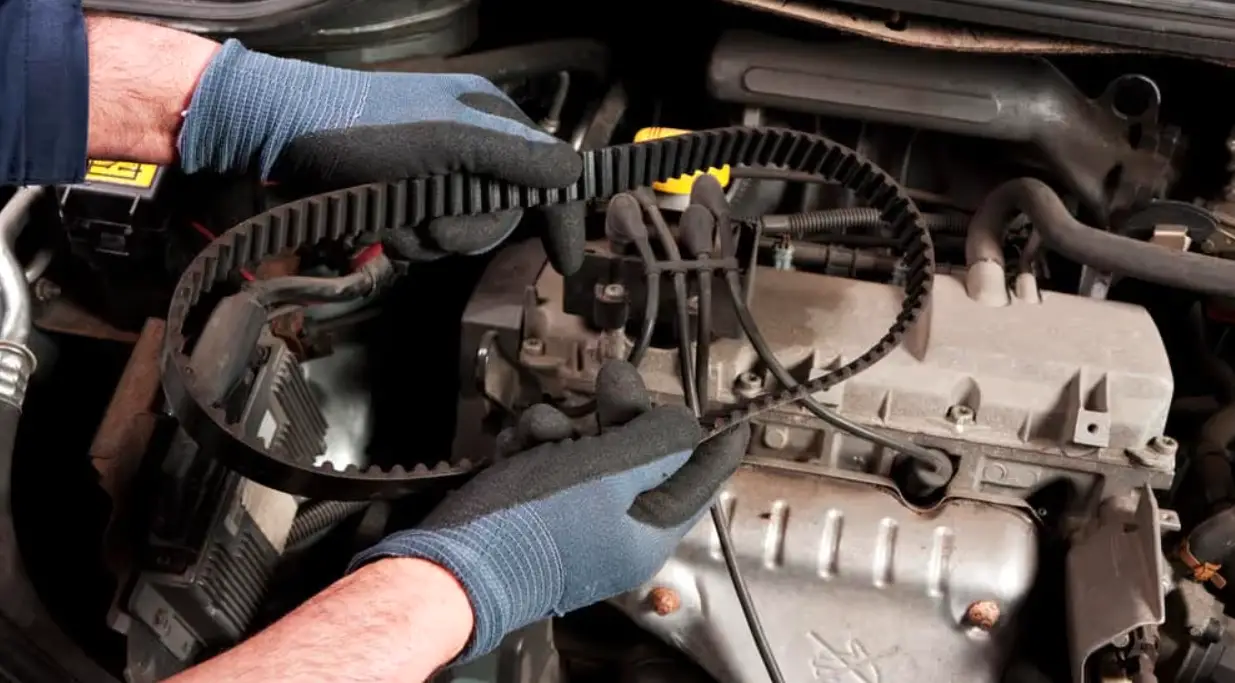
A timing belt often lasts 60,000 to 105,000 miles or 5 to 7 years, but the correct interval is set by the vehicle manufacturer. Some vehicles have shorter or longer schedules.
The owner’s manual may list separate intervals for:
- Normal service
- Severe service
- High-mileage use
- Hot or dusty climates
- Frequent towing
- Short trips
- Long periods of idling
Mileage and age both matter. A vehicle with low annual mileage may still need a timing belt because rubber and belt components age over time.
Why timing belt replacement matters
A timing belt failure can stop the engine without much warning. On an interference engine, the valves and pistons occupy overlapping space at different times. If the belt breaks and timing is lost, the moving parts can collide.
Not every engine is an interference engine. Even so, a broken belt can leave the vehicle stranded and may cause expensive repairs. The only safe way to know the correct replacement timing is to follow the service information for the exact engine.
What is usually replaced with a timing belt?
A complete timing belt service may include:
- The timing belt
- The belt tensioner
- Idler pulleys
- Water pump, when driven by the timing belt
- Seals, if they are leaking
- New bolts or other one-time-use parts, when specified
Replacing related parts can prevent a new belt from failing because an old bearing or tensioner seized. The repair plan should follow the manufacturer’s procedure for that engine.
Can you inspect a timing belt?
A technician may inspect the belt by removing its cover, but appearance is not a reliable replacement guide. A belt can look acceptable while its internal materials have aged.
Do not remove timing covers unless you have the correct tools, service information, and experience. Incorrect timing can prevent the engine from starting or cause internal damage.

What changes a car belt’s lifespan?
The replacement range is only a starting point. Several factors can shorten belt life.
Heat
High under-hood temperatures speed up rubber aging. This can matter in parts of the southern United States, desert areas, and vehicles that operate in heavy traffic. Heat also increases stress on tensioners and pulley bearings.
Fluid contamination
Oil, coolant, power steering fluid, and some cleaning chemicals can damage belt material. A fluid-soaked belt may slip, swell, or break.
Find and repair the leak before installing a replacement belt. Otherwise, the new belt may have the same short life.
Misalignment
Pulleys must line up correctly. A bent bracket, worn bearing, or incorrect pulley can make the belt track toward one edge. Edge wear, fraying, or repeated belt noise may point to an alignment problem.
Belt tension
Too little tension can cause slipping and noise. Too much tension can overload the belt, alternator, water pump, air-conditioning compressor, or other accessories.
The automatic tensioner must move freely and apply the correct force. Do not use a belt that is too short or too long because it appears to fit.
Driving conditions
Frequent short trips, stop-and-go driving, towing, dust, mud, and deep water can increase stress on the belt system. Severe service does not always mean the belt will fail early, but it may change the maintenance interval.
Vehicle age
Rubber and fabric components age even when the vehicle is parked. A low-mileage car with an original belt may still need service based on time.
How to check a serpentine belt safely
You can perform a basic visual check, but keep the engine off and cool. Never place your hands near a running belt.
- Park on level ground and set the parking brake.
- Turn off the engine and remove the key or key fob from the vehicle.
- Open the hood and locate the belt routing diagram, if available.
- Look for missing ribs, fraying, exposed cords, cuts, oil, or coolant.
- Check whether the belt sits in the center of each pulley.
- Look for a loose belt or a tensioner that appears crooked.
- Start the engine only after your hands and tools are clear.
- If you hear loud squealing, grinding, or slapping, shut the engine off and arrange an inspection.
Do not spray belt dressing on a modern serpentine belt unless the vehicle or belt maker specifically approves it. The spray may hide a problem without repairing the cause.
A successful inspection does not prove that the belt will last a certain number of miles. It only helps find visible damage and related problems.

Should you replace a belt before it breaks?
Yes, if the belt has reached the manufacturer’s service interval or inspection finds damage. Preventive replacement is usually safer than waiting for a breakdown.
For a serpentine belt, a broken belt may leave you without charging, cooling, power steering, or air conditioning. For a timing belt, waiting may create a risk of engine damage on some engines.
A replacement decision should consider:
| Situation | Best next step |
|---|---|
| Belt is cracked, frayed, soaked, or missing ribs | Replace it and repair the cause |
| Belt squeals only during rain | Inspect belt, tension, alignment, and pulleys |
| Belt has reached the manual’s timing interval | Schedule timing belt service |
| Timing belt history is unknown on a used car | Treat it as due until records prove otherwise |
| New belt failed soon after installation | Inspect pulleys, tensioner, alignment, and contamination |
| Belt looks fine but is old | Follow the age and mileage schedule |
If the service history is unknown, ask a repair shop to identify the belt type and verify the engine’s maintenance requirements. “It looks fine” is not enough for an overdue timing belt.

How much does belt replacement cost?
The cost varies widely by vehicle and by belt type.
A serpentine belt is usually a simpler repair. The total cost depends on access, labor rates, and whether the tensioner or another pulley also needs replacement.
A timing belt service costs more because the technician must remove covers and set engine timing. The job may also include a water pump, seals, tensioner, and idler pulleys. The exact estimate depends on the engine design and local labor rates in the United States.
When comparing estimates, ask whether the quote includes:
- The correct belt
- Tensioner and idler inspection
- Water pump replacement, if recommended
- New seals or bolts, if required
- Coolant replacement, if the water pump is removed
- Warranty terms
- Disposal and shop fees
The lowest estimate may not be the lowest total cost if it leaves old tensioners, pulleys, or a leaking water pump in place.

Common mistakes to avoid
Waiting for a timing belt warning
Timing belts often do not give a clear warning before failure. Use the service schedule instead of waiting for noise.
Confusing a timing belt with a serpentine belt
The visible belt on the outside of the engine is usually the serpentine belt. The timing belt is normally behind a cover. They are not interchangeable parts.
Replacing the belt but ignoring the tensioner
A failed tensioner can damage a new belt. The full belt drive system needs inspection.
Using appearance as the only test
A belt can look clean and still be old, contaminated, stretched, or internally worn.
Assuming all vehicles use the same interval
The interval can change between engines, model years, and service conditions. Use the exact owner’s manual for the vehicle identification and engine.
Driving after a belt failure
If a belt breaks, pull over safely and shut off the engine. Continuing to drive may cause overheating or additional damage.

Frequently asked questions
How often should a car belt be changed?
A serpentine belt commonly lasts 60,000 to 100,000 miles, while a timing belt often has a 60,000- to 105,000-mile interval. Your vehicle’s manual is the controlling source because some models use different schedules.
How do I know if my timing belt needs replacing?
Check the owner’s manual and service records for the exact mileage and age interval. Do not rely on noise or visible cracks. If the replacement history is unknown, have the vehicle checked before taking a long trip.
Can a serpentine belt last 150,000 miles?
It can, but that mileage is not a safe assumption for every vehicle. Belt material, climate, contamination, pulley condition, and tension all affect service life. Continue to follow the inspection and maintenance schedule.
Is a timing belt or serpentine belt more important?
Both are important, but their failure risks differ. A serpentine belt can disable key accessories and may cause overheating. A timing belt can stop the engine and may cause severe internal damage on an interference engine.
Does a new car belt need a break-in period?
No special break-in period is normally required. The belt should run smoothly and stay centered on the pulleys. Noise, wandering, or rapid wear after installation means the system needs inspection.

Evidence and source guidance
The most reliable source for a vehicle-specific belt interval is the manufacturer’s owner’s manual or maintenance guide. Repair information should match the exact model year, engine, and market.
General belt guidance can also be checked against technical information from established belt manufacturers, such as:
- Gates Automotive Aftermarket
- Continental Automotive Aftermarket
- Dayco Automotive
- NHTSA vehicle safety resources
These sources can explain belt construction, inspection, and service practices. They do not replace the service interval listed for your specific vehicle.
Conclusion
A car belt does not have one universal lifespan. Plan on roughly 60,000 to 100,000 miles for a serpentine belt and 60,000 to 105,000 miles for many timing belts, while treating the owner’s manual as the final guide.
Inspect visible belts for damage and contamination, but do not use appearance to postpone an overdue timing belt. If the belt is noisy, damaged, contaminated, or overdue, arrange a professional inspection before it fails.