How To Get Mildew Out Of Car Seats: Easy Fix
To get mildew out of car seats, first remove the source of moisture. Then vacuum the seat, clean the surface with a mild cleaner that suits the material, dry it fully, and check for hidden growth. Do not soak the foam or mix cleaning chemicals.
This guide applies to cars in the United States, including cloth, vinyl, and leather seats. If you mean a child safety seat, use the separate instructions below. A child seat has straps, buckles, padding, and labels that may be damaged by common cleaners.

What You Need Before Cleaning Mildew From a Car Seat
Gather the right tools before you start:
- Nitrile or rubber gloves
- An N95 respirator if you will disturb a large or dusty patch of mold
- Eye protection
- A vacuum with a HEPA filter, if available
- Soft nylon brushes
- White microfiber cloths
- Mild dish soap
- Clean water
- A spray bottle
- Baking soda for odor control
- A fan or wet-dry vacuum
- A leather cleaner and conditioner for finished leather
- The vehicle owner’s manual
- The seat maker’s care guide, if available
Work outdoors when possible. Open all doors and windows. Keep children, pets, and people with asthma or weak immune systems away from the work area.
“Mildew” is a common name for some surface fungi. In a damp car, mildew may appear as white, gray, green, or black spots. Color alone cannot tell you how harmful the growth is. Treat unknown growth with care.
Do not clean a large mold problem by yourself. The U.S. Environmental Protection Agency advises extra care when the affected area is large, when sewage is involved, or when someone in the home has health concerns linked to mold. A professional mold remediator may be the safer choice.
First find the moisture source
Mildew will return if the seat stays damp. Check for:
- An open window or sunroof
- A leaking door seal
- A clogged sunroof drain
- Wet floor carpeting
- A leaking windshield or rear window
- Spilled drinks
- A damp child seat or floor mat
- Water trapped under the seat
- A failed air-conditioning drain
Feel the carpet under and around the seat. Check the trunk and spare-tire well, too. A musty smell often means that moisture is hidden below the visible stain.
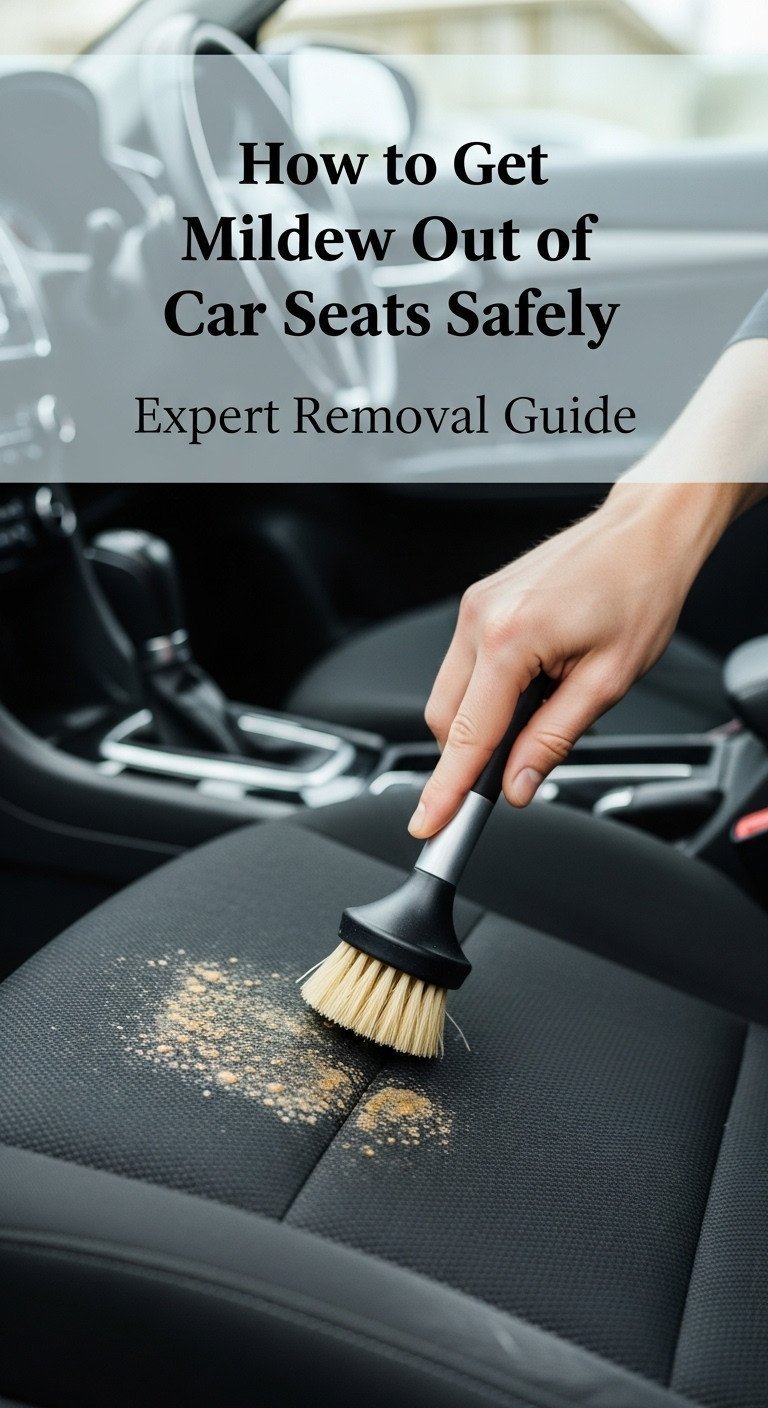
How to Remove Mildew From Cloth Car Seats
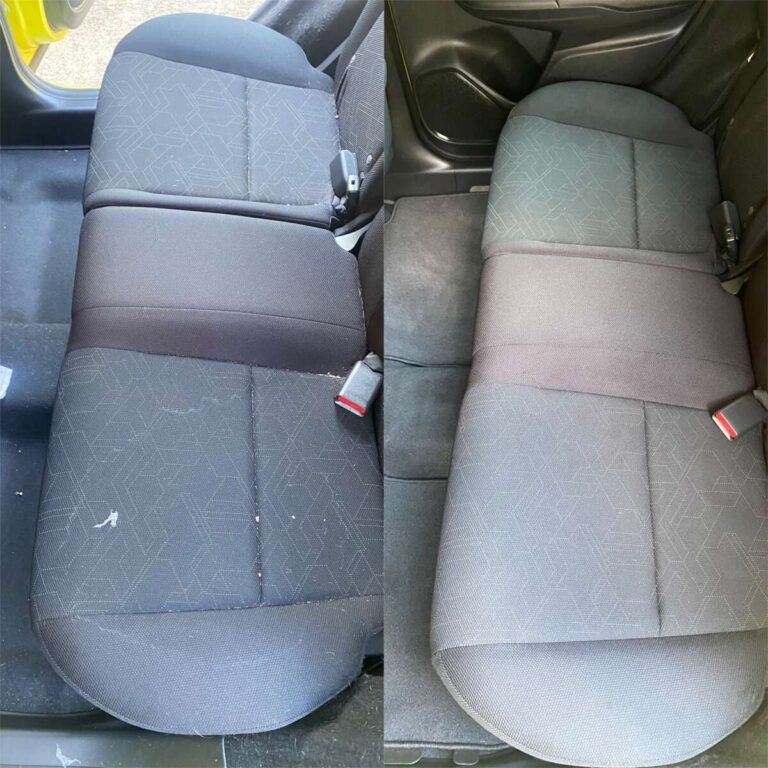
Cloth seats need careful cleaning because moisture can move into the padding. The goal is to remove surface growth without flooding the seat.
1. Move the car to a dry, well-ventilated place
Park outside if the weather is dry. Keep the doors open while you work. Do not clean a wet seat in a closed garage with poor airflow.
If the seat is soaked, dry it first. Use towels, a wet-dry vacuum, or a fan. A fan can speed drying, but do not use high heat near seat wiring, plastic trim, or airbags.
2. Vacuum loose mildew and debris
Use slow passes over the seat. A HEPA vacuum can help trap fine particles. Do not press a brush hard into the fabric. Hard brushing can push growth deeper into the weave.
Empty the vacuum outdoors. If the vacuum uses a disposable bag, seal the bag before disposal. Clean washable parts based on the vacuum maker’s directions.
3. Test the cleaner in a hidden spot
Mix a small amount of mild dish soap with warm water. Start with a weak mix, such as a few drops of soap in a cup of water.
Test it under the seat or on another hidden area. Wait for the spot to dry. Stop if the fabric fades, bleeds, becomes rough, or leaves a ring.
4. Clean small sections
Dip a soft brush or microfiber cloth into the solution. Wring it out well. The cloth should be damp, not dripping.
Work in small areas. Lift the mildew from the fabric instead of grinding it in. Rinse the cloth often in clean water. Change the rinse water when it becomes dirty.
Avoid spraying the seat directly. Overspray can reach seat-belt sensors, wiring, switches, and side-airbag parts.
5. Remove soap and moisture
Wipe the area with a clean, damp cloth. Do not flood the fabric. Then press dry towels onto the seat.
A wet-dry vacuum can remove more moisture. Use light passes. Keep the nozzle moving.
6. Dry the seat completely
Place a fan near the open car door. Let air move across the seat and floor. Drying may take several hours, depending on humidity and how wet the padding became.
Do not close the car until the seat and carpet feel dry. A closed, damp car is a good place for mildew to grow again.
7. Treat the odor after the seat dries
Sprinkle a thin layer of baking soda on the dry fabric. Leave it for several hours, then vacuum it up.
Baking soda may help with odor. It does not replace cleaning or fix mold inside the foam. Do not use it as proof that the mildew is gone.
If the stain remains
A dark mark may be a stain left behind after the growth is removed. It may also signal growth inside the foam.
Do not keep adding stronger chemicals. If the odor returns, the seat stays damp, or growth comes back, inspect the padding and the area below the seat. Professional cleaning or seat-cover replacement may be needed.

How to Clean Mildew From Leather Car Seats
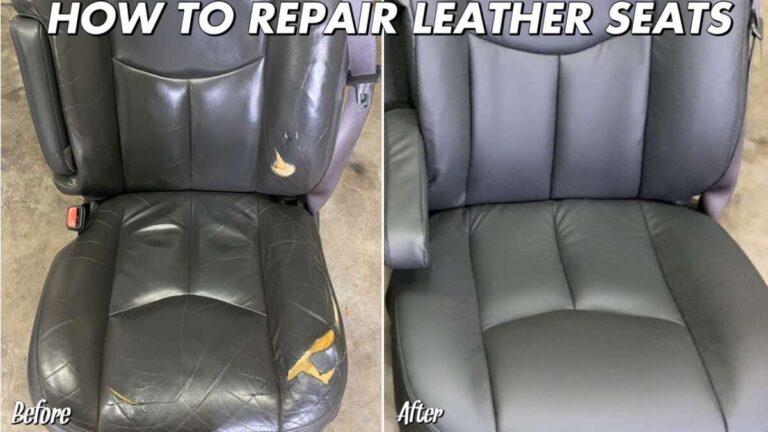
Finished leather usually resists surface moisture better than cloth. It can still develop mildew in seams, perforations, and the foam below the cover.
Use this process for finished leather
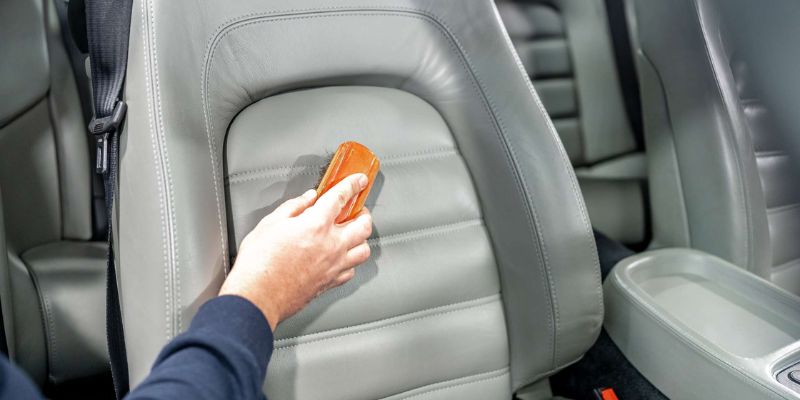
- Vacuum the seat with a soft brush attachment.
- Wipe loose debris from seams and stitching.
- Mix a small amount of mild soap with water.
- Dampen a microfiber cloth and wring it out.
- Wipe a small section at a time.
- Use a second damp cloth to remove soap.
- Dry the leather with a clean towel.
- Apply a leather conditioner made for automotive leather, if the seat maker allows it.
Test every product in a hidden area first. Some leather seats have a protective coating, while others may be unfinished, dyed, or coated with a synthetic material.
Avoid these leather-cleaning mistakes
Do not use:
- Household bleach
- Ammonia
- Strong solvents
- Abrasive powders
- Rough scrub pads
- Large amounts of water
- Furniture polish
- Undiluted vinegar
- Heat guns or high heat
These products can strip color, dry the surface, weaken stitching, or leave a sticky film.
If the seat has deep cracks, open seams, or visible growth under the surface, home cleaning may not be enough. A leather repair shop or automotive detailer can assess whether the cover can be saved.

How to Remove Mildew From Vinyl Car Seats
Vinyl is less absorbent than cloth, so surface mildew is often easier to remove. Growth can still hide along seams and under the seat edge.
- Vacuum the seat and seams.
- Wipe the surface with mild soap and water.
- Use a soft toothbrush on stitching and grooves.
- Rinse with a clean, damp cloth.
- Dry the seat fully.
- Check below the seat and around the mounting points.
Do not use bleach unless the seat maker specifically permits it. Bleach can discolor vinyl and may not remove growth inside foam or seams.
If the vinyl feels sticky after cleaning, too much soap or a silicone-based product may be present. Wipe it again with a clean, damp cloth and dry it well.
Can You Use Vinegar, Bleach, or Hydrogen Peroxide?
Common household cleaners are not interchangeable. The safest choice depends on the seat material and the product label.
| Cleaner | Main concern | General guidance |
|---|---|---|
| Bleach | Can discolor fabric, damage leather, and create harmful fumes when mixed | Avoid unless the manufacturer specifically allows it |
| Vinegar | Strong smell; may affect dyes, coatings, or finishes | Do not assume it is safe for every seat |
| Hydrogen peroxide | Can lighten dyes and damage some finishes | Test only if the seat maker permits it |
| Dish soap | Usually mild when diluted, but can leave residue | Use a small amount and rinse lightly |
| Automotive upholstery cleaner | Formulas vary by material | Follow the label and test first |
Never mix bleach with vinegar, ammonia, or another cleaner. The reaction can release dangerous gases.
A cleaner that kills mold on a hard surface may not be safe for car upholstery. Disinfecting the surface also does not remove the moisture trapped inside the seat.

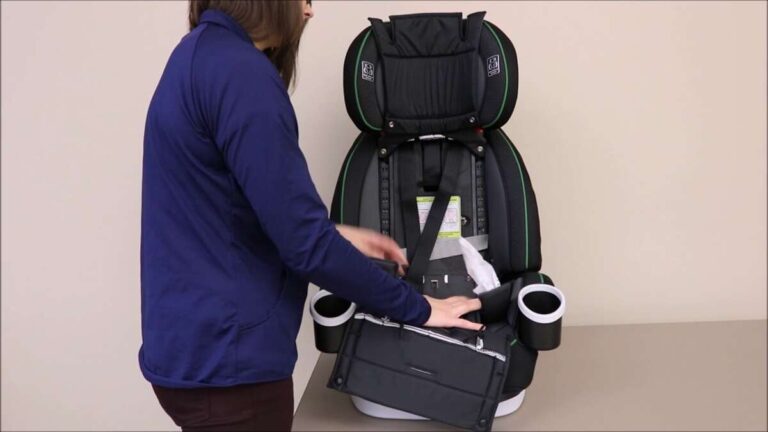
How to Clean a Child Car Seat With Mildew
A child safety seat needs special care. The harness and buckle are safety parts, not ordinary upholstery.
Start with the child seat’s manual and labels. The maker may permit machine washing of the cover but limit the water temperature, cycle, detergent, or drying method.
Follow these rules:
- Remove the child seat from the vehicle.
- Take off only the parts the manual says you may remove.
- Wash the cover as directed.
- Use only the approved detergent.
- Air-dry parts if the manual requires it.
- Wipe the plastic shell with mild soap and water.
- Do not soak the harness unless the manual specifically says you can.
- Do not use bleach, disinfectant wipes, solvents, or harsh sprays on the harness.
- Do not scrub or lubricate the buckle unless the manufacturer gives those instructions.
- Reassemble the seat exactly as shown in the manual.
If mildew reached the harness webbing, buckle, padding, or foam and the manual does not give a cleaning method, contact the manufacturer before using the seat again.
Replace the child seat if the manufacturer says it cannot be cleaned safely, if parts remain musty or moldy, or if you cannot confirm that the seat still works as designed. Do not use a child restraint that has been in a crash unless the maker or a qualified source confirms that it remains usable.
When Should You Replace the Car Seat?
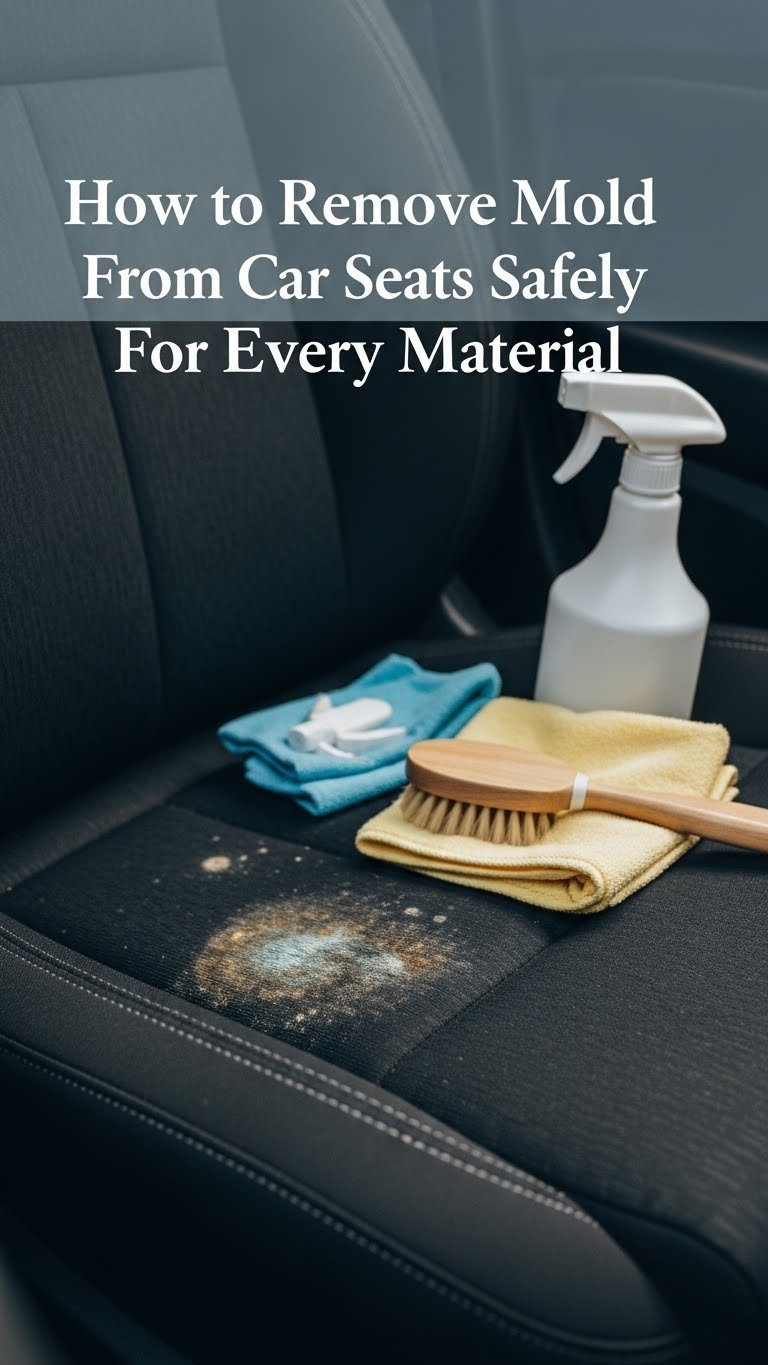
Cleaning may work for light surface growth. Replacement or professional help makes more sense when:
- The mildew covers a large area.
- The odor returns after full drying.
- Growth appears inside the foam.
- The seat was wet for a long time.
- The carpet below the seat is also moldy.
- The seat cover cannot be removed for proper cleaning.
- The fabric is breaking down.
- The seat has water damage from sewage or floodwater.
- A child safety seat has contaminated straps or unknown internal damage.
Porous materials are difficult to clean once mold grows deep inside. Scrubbing only the visible surface may leave the source behind.
For a removable automotive seat cover, replacement may be less costly and safer than repeated chemical cleaning. For an integrated seat with side airbags, sensors, or powered parts, use a qualified automotive upholstery or repair professional.

How to Prevent Mildew From Coming Back
The best mildew treatment is moisture control.
Use these habits:
- Remove wet towels, clothes, and floor mats.
- Dry spills as soon as they happen.
- Leave windows open briefly after a wet interior dries, when weather allows.
- Check door and window seals.
- Clear leaves from the cowl and windshield area.
- Inspect sunroof drains if the car has a sunroof.
- Check under floor mats after heavy rain.
- Keep the air-conditioning drain clear.
- Avoid storing a damp car under a cover.
- Use a fan or dehumidifier during deep drying.
- Do not close the car while seats or carpet are still damp.
If the car has a persistent musty smell, do not rely on an air freshener. Find the wet area first. An odor treatment may mask the problem while mold continues to grow.
Common Mistakes to Avoid
Soaking the seat
Too much water can move mildew into the foam. It can also reach wiring, sensors, and seat heaters. Use a damp cloth and remove moisture as you go.
Using heat to dry the seat
High heat may damage leather, vinyl, foam, adhesives, and plastic parts. Air movement is usually safer than intense heat.
Scrubbing before vacuuming
Aggressive scrubbing can spread particles and drive growth deeper. Remove loose material first, then clean gently.
Ignoring the carpet
Mildew under the seat can make the seat smell bad again. Inspect the floor, seat rails, and underside of the cushion.
Using an ozone generator in an occupied car
Ozone can irritate the lungs and does not remove the moisture source. It also does not replace physical cleaning.
Cleaning a child-seat harness with household chemicals
A harsh cleaner may weaken or alter the webbing. Use only the child-seat maker’s instructions.

How to Tell Whether the Cleaning Worked
The cleaning process is more likely to have worked when:
- No visible growth remains.
- The seat is fully dry.
- The musty smell does not return.
- No new spots appear after several days.
- The moisture source has been repaired.
- The area below the seat is dry and clean.
A clean-looking seat is not proof that all mold is gone. Watch the area over time. If the smell or spots return, stop repeating the same surface treatment and look for hidden moisture or contaminated padding.
Frequently Asked Questions
What kills mildew on car upholstery?
A suitable upholstery cleaner can remove surface mildew when used with physical cleaning and thorough drying. The product must be safe for the seat material. No cleaner can solve a moisture problem by itself.
Can I use baking soda to remove mildew from car seats?
Baking soda may reduce odor on dry upholstery. It does not remove deep mold or repair wet padding. Vacuum it up after use.
How long does it take for a car seat to dry?
Drying time depends on humidity, airflow, temperature, and how wet the seat became. Do not close the car or use the seat until the fabric, foam, seams, and carpet are fully dry.
Is black mildew on a car seat dangerous?
The color does not identify the species or level of risk. Avoid disturbing unknown growth without basic protection. Get professional help for large areas, flood damage, or serious health concerns.
Can I steam-clean a mildewed car seat?
Steam may add heat and moisture to the padding. Use it only if the vehicle or seat manufacturer permits it and you can dry the seat fully. It is not a substitute for fixing the leak.
How do I remove mildew from a car seat after flooding?
Floodwater may contain sewage, chemicals, and other contaminants. Do not treat flood-damaged upholstery as a normal spill. Contact an automotive restoration professional and check with your insurer. A child safety seat exposed to floodwater may need replacement.
Final Takeaway
To get mildew out of a car seat, remove the moisture source, vacuum loose growth, clean gently with a material-safe product, and dry the seat completely. Avoid bleach, harsh solvents, heavy soaking, and unapproved chemicals on child safety restraints.
If mildew keeps returning, the problem is likely inside the padding, carpet, or vehicle structure. In that case, professional cleaning or seat replacement is safer than repeated surface treatments.