

If another car’s paint, house paint, or road-marking paint gets on your vehicle in the United States, do not start with a razor blade or harsh thinner. Most surface paint transfer can be removed safely by washing, softening the paint, using automotive clay or a mild solvent, and then protecting the clear coat.
The right method depends on where the paint is, how old it is, and whether your car’s clear coat is still intact. Start with the least aggressive method. Stop if the paint underneath looks dull, soft, cracked, or discolored.
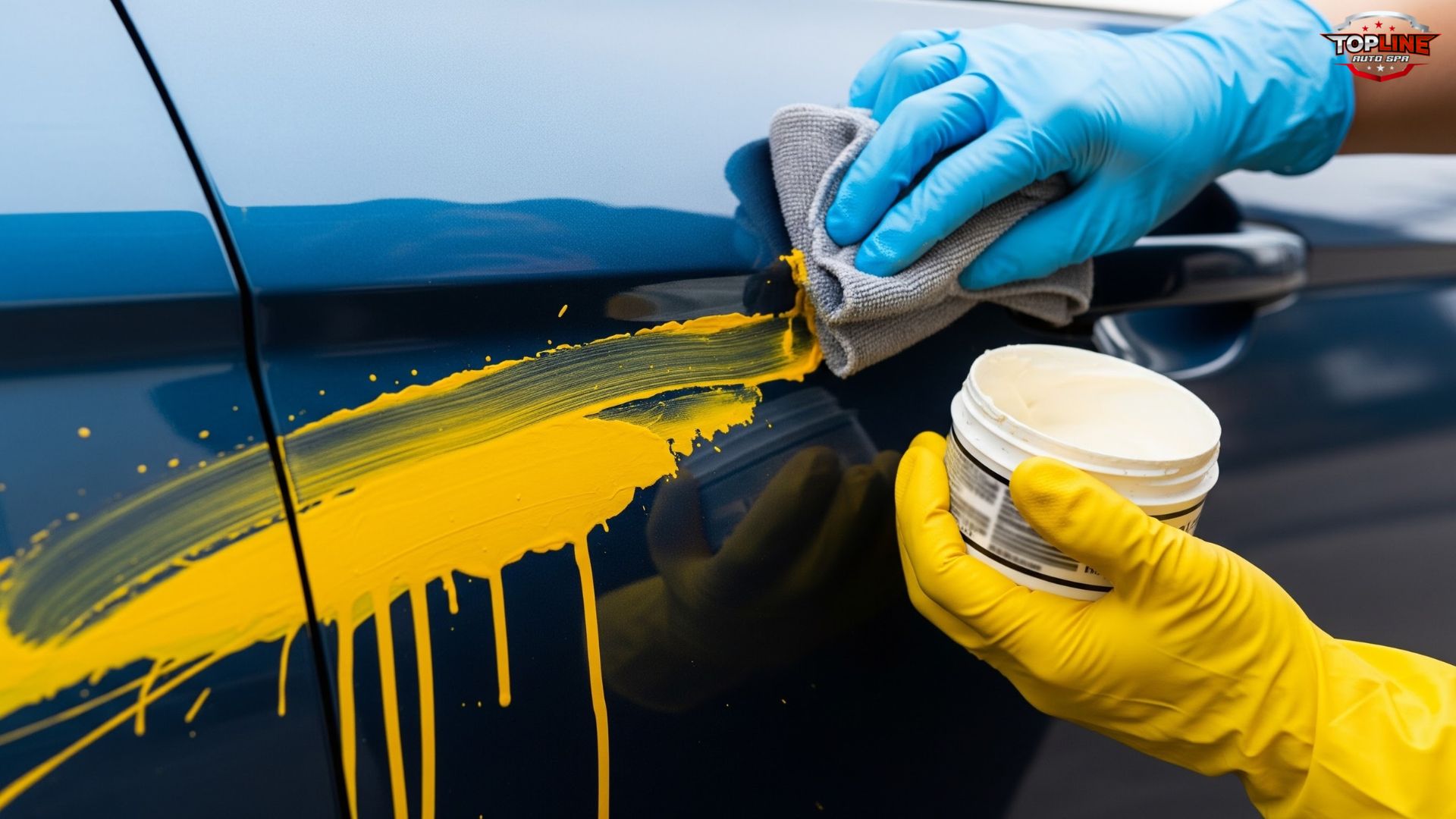
First, identify the type of paint on your car
The safest method depends on the paint problem. A thin layer sitting on top of the clear coat is much easier to remove than paint that has bonded to, etched, or damaged the finish.
| Paint problem | Common example | Best starting method |
|---|---|---|
| Paint transfer | Scraped bumper or painted pole | Wash, lubricate, then use a mild cleaner or polish |
| Fresh water-based paint | Latex wall paint or traffic paint | Keep wet, rinse, then use mild soap |
| Dried overspray | Fine dots on the hood or glass | Clay bar or synthetic clay mitt |
| Oil-based paint | Enamel or solvent-based paint | Automotive-safe tar and adhesive remover |
| Paint on plastic trim | Bumper, mirror, or molding | Mild cleaner and gentle hand work |
| Paint on glass | Window or windshield | Glass-safe cleaner and a new plastic scraper |
| Damaged clear coat | Peeling, clouding, or exposed color coat | Stop and seek professional repair |
Paint transfer means the other object’s paint has rubbed onto your car. Your original paint may still be underneath. Overspray means tiny droplets have landed across the surface, often after nearby painting or road work.


The factory finish on many modern cars has several layers: metal or plastic, primer, color coat, and clear coat. The clear coat provides gloss and some chemical and scratch resistance, but it is not indestructible.
Do not assume a strong chemical is better. A product that removes paint quickly may also soften trim, stain plastic, dull the clear coat, or damage fresh bodywork.
What you need before removing paint
Gather the following items before you begin:
- Two clean microfiber towels
- A bucket of car-wash soap and water
- A hose or pressure washer used at a safe distance
- Nitrile gloves
- Eye protection
- Automotive detailing clay or a synthetic clay mitt
- Clay lubricant or a water-based detailing spray
- Automotive tar, adhesive, or paint-transfer remover
- A soft wash mitt
- A plastic scraper for glass only
- Automotive polish and wax or paint sealant
Work in a shaded area on a cool surface. Direct sun can dry cleaners too fast and make the surface hard to judge.
Read the label and safety data sheet for any chemical product. Use good airflow, keep solvents away from flames, and do not mix cleaners. Many automotive solvents are flammable and can irritate the skin, eyes, and lungs. The U.S. Occupational Safety and Health Administration provides general guidance on chemical labels and safety data sheets through its Hazard Communication Standard.
Before using any remover, test it on a small hidden area. Check the towel after wiping. If it shows the car’s color, if the surface turns cloudy, or if the trim becomes sticky, stop immediately.

How to remove paint from a car: the safest step-by-step method
Use these steps for most paint transfer and dried paint on the exterior. Move to the next step only if the previous one does not work.
1. Wash the affected area
Rinse away loose grit. Wash the panel with car-wash soap and a clean microfiber mitt. Do not rub dry dirt across the paint, because dirt can act like sandpaper.
Rinse well and dry with a clean towel. Look at the area in good light. Determine whether the paint is raised, smeared, dotted, or mixed with scratches.


2. Try a clean microfiber towel
If the paint is fresh or only lightly transferred, dampen a microfiber towel with car-wash solution and wipe gently in one direction.
Use a fresh section of the towel often. Do not press hard. If the paint begins to smear, keep the area wet and rinse the towel instead of spreading the material over a larger section.
3. Use an automotive-safe paint or tar remover
For dried paint, apply a small amount of an automotive-safe paint-transfer, tar, or adhesive remover to a towel. Do not pour it over the panel.
Hold the damp towel against the paint for a short time to soften the residue. Then wipe lightly. Repeat as needed rather than scrubbing harder.
Keep the product off rubber seals, unpainted plastic, matte trim, and repaired areas unless the label says it is safe for those materials. Wipe the panel with soap and water after using the remover.
Products made for automotive surfaces are usually a safer choice than household paint thinner. However, “automotive” does not mean harmless. Always follow the product label.
4. Use a clay bar for small raised spots
A clay bar can remove bonded particles and light overspray that remain after washing. It works by grabbing contaminants from the surface while the lubricant reduces friction.
- Knead a clean piece of clay until it is soft.
- Spray clay lubricant over a small area.
- Glide the clay lightly across the wet surface.
- Stop when the surface feels smooth.
- Fold the clay to expose a clean face.
- Wipe the area with a microfiber towel.
Never use clay on a dry panel. If the clay touches the ground, throw it away. Small grains trapped in the clay can scratch the finish.
A synthetic clay mitt can cover more area, but it still needs plenty of lubricant and light pressure. It may remove bonded contamination more quickly, but careless use can create light marring.
5. Polish only if a stain or haze remains
After the paint is removed, the original surface may show a dull mark or faint color. This can be paint residue, light scuffing, or a damaged clear coat.
Use a mild automotive polish by hand with a foam applicator. Work on a small area and check your progress often. Polish removes a very small amount of the surface through controlled abrasion, so more is not always better.
If the mark remains after gentle polishing, do not keep cutting deeper. A professional may need to measure the finish, compound the panel with a machine, or refinish it.
6. Protect the cleaned area
Wash away residue, dry the panel, and apply wax or a paint sealant according to its label. This helps restore some surface protection after cleaning and polishing.
Protection will not repair peeling clear coat or deep scratches. It is the final care step, not a substitute for paint repair.


How to remove different kinds of paint
Latex or water-based house paint
Fresh latex paint is often the easiest to remove. Keep it damp and rinse it before it dries. Car-wash soap may remove small spots.
For dried latex paint, soften the area with warm water and soap first. Then try an automotive-safe remover or clay bar. Avoid scraping painted body panels with a metal blade.
Oil-based or enamel paint
Oil-based paint can bond more firmly. Do not use gasoline, acetone, or a random household thinner on the vehicle.
Use a remover labeled for automotive paint and test it first. Apply a small amount to a towel, work briefly, and wash the area afterward. If the paint covers a large panel or has been baked in the sun, a body shop or professional detailer may be safer.
Road paint and traffic-line paint
Road-marking paint may be water-based or solvent-based. Fresh material should be rinsed as soon as possible, but do not drive through loose wet paint if you can avoid it.
Dried road paint on the lower body, wheel wells, or tires may need a clay bar, tar remover, or professional cleaning. The correct choice depends on the product used by the road contractor. If the paint came from recent road work, photograph the damage and record the location before cleaning. That documentation may help with an insurance or agency claim.
Paint from a parking barrier or another vehicle
This is usually paint transfer. Wash the area first. If the mark is raised or smeared, use an automotive-safe transfer remover. A mild polish may remove the final shadow.
Inspect for damage underneath. Paint transfer can hide scratches, dents, or exposed primer. If you see bare metal, treat the damage promptly to limit corrosion.
Paint on black plastic trim
Unpainted plastic can react differently from clear-coated metal. Test every product first. Use soap, a soft towel, and a plastic-safe cleaner before trying anything stronger.
Avoid aggressive polishing on textured plastic. It can leave shiny patches that are difficult to reverse. If the plastic has turned white or the paint has soaked into the texture, replacement or professional restoration may be the better option.
Paint on glass
Glass is more resistant than automotive paint, but seals and tint are not. Wash the glass, apply soapy water, and use a new plastic scraper at a shallow angle.
For stubborn spots, use a glass-safe cleaner. Do not use a metal razor on tinted film or near rubber seals unless the glass manufacturer or tint installer confirms it is safe.

What should you never use on car paint?
Avoid these common choices unless a qualified professional specifically recommends them for the exact surface:
- Acetone
- Lacquer thinner
- Paint stripper
- Gasoline
- Kerosene
- Brake cleaner
- Strong household degreasers
- Abrasive kitchen pads
- Steel wool
- Metal razor blades on painted panels
- Sandpaper without experience and proper refinishing plans


These substances can soften the clear coat, stain plastic, remove wax, or damage rubber. Some can also create a fire or inhalation hazard.
A pressure washer can help rinse loose material, but it will not safely remove bonded paint by itself. Hold the nozzle far enough away to avoid lifting trim, decals, or damaged paint. Never use high pressure to compensate for an unsuitable chemical or poor technique.

When should you stop and call a professional?
Stop DIY removal if any of these signs appear:
- The color coat comes off on your towel.
- The surface becomes cloudy or sticky.
- The clear coat is peeling or cracked.
- You see bare metal, primer, or deep scratches.
- The paint covers a large part of the vehicle.
- The paint is on a recent body repair.
- A chemical has stained plastic or rubber.
- The residue does not improve after gentle cleaning and clay.
- You are not sure whether the surface is factory paint, a wrap, or a ceramic coating.
A professional detailer may be able to remove transfer with controlled polishing. A body shop can determine whether the panel needs sanding, repainting, or clear-coat repair.
Do not try to polish through peeling clear coat. Clear-coat failure is a coating problem, not surface dirt. Abrasive work may make the damage larger.
How much work is needed?
The time and cost depend on the type and size of the paint mark.
| Situation | Likely home effort | Main risk |
|---|---|---|
| Small fresh spot | A few minutes | Spreading the wet paint |
| Light paint transfer | 15–30 minutes | Scratching while wiping |
| Dried overspray | 30–90 minutes | Marring from dry clay or excess pressure |
| Large solvent-based spill | Several hours or professional service | Clear-coat or trim damage |
| Peeling or damaged finish | Not a cleaning job | Making the repair worse |
These are practical ranges, not guaranteed times. A small, fresh mark may take longer than a large one if the paint has cured strongly or sits on textured plastic.
The least expensive approach is not always the safest. Replacing a damaged trim piece or repainting a panel can cost far more than using the correct automotive cleaner at the start.
Common mistakes that cause damage
Scrubbing before washing
Dry grit beneath a towel can create scratches. Always wash and rinse first.
Using too much pressure
Pressure may remove the contaminant, but it can also remove gloss. Let the cleaner or lubricant do the work.
Using one dirty towel for the whole car
Fold the towel and switch to a clean side often. Wash heavily soiled towels separately from household laundry.
Working in direct sun
Heat speeds evaporation and can leave stains. A cool, shaded panel gives you more control.
Skipping the test spot
A product that works on clear-coated metal may stain textured plastic. Test each material separately.
Repeating an aggressive method
If a mild method does not work, repeating it harder may cause damage without solving the cause. Change the method or seek help.


How to tell whether the paint is gone
Run a clean, gloved fingertip lightly over the washed surface. It should feel smooth, without raised dots or rough edges.
View the panel from several angles. Check for:
- Remaining colored spots
- A dull or cloudy patch
- Scratches around the original mark
- Peeling or cracked clear coat
- Exposed primer or metal
- Staining in plastic or rubber
A smooth surface is a good sign, but it does not prove that the clear coat is undamaged. If the area looks different from the surrounding paint, use a mild polish only once or ask a professional to inspect it.
Frequently asked questions
Will WD-40 remove paint from a car?
Some penetrating oils may loosen certain paint-transfer or adhesive residues, but they are not a universal paint remover. They can leave an oily film and may affect trim or existing protection. An automotive-safe product labeled for the surface is easier to control.
Can rubbing alcohol remove paint from a car?
Isopropyl alcohol may remove some fresh residues, but strength, contact time, and surface condition matter. It can also strip wax or affect sensitive finishes. Dilute or use it only as directed, test first, and do not assume it is safe for plastic, wraps, or coatings.
Can I use a magic eraser on car paint?
A melamine foam “magic eraser” is abrasive. It can dull clear coat and leave a visible haze. Do not use it on painted panels. Use an automotive microfiber towel, clay lubricant, or a mild polish instead.
Does toothpaste remove paint transfer?
Toothpaste contains mild abrasives, but it is not designed for automotive clear coat. It may create uneven dull spots and leaves residue. A proper automotive polish gives you better control.
Can a car wash remove paint overspray?
A normal car wash may remove loose dirt and fresh water-based paint, but it often cannot remove cured overspray. Clay or a suitable automotive remover may be needed after washing.
Will insurance cover paint transfer?
Coverage depends on the cause, policy, deductible, and whether another party can be identified. Photograph the damage before cleaning, save repair estimates, and contact your insurer or the responsible property owner when appropriate. Do not assume coverage without checking the policy.

Key takeaways
- Wash the car before touching the paint.
- Start with the least aggressive method.
- Use automotive-safe products and test them first.
- Use clay only with plenty of lubricant.
- Keep solvents away from plastic, rubber, wraps, and fresh repairs.
- Do not use acetone, lacquer thinner, gasoline, or metal scrapers on painted panels.
- Stop when the clear coat appears damaged.
- Protect the surface after successful removal.
Conclusion
The safest way to get paint off a car is to work slowly: wash first, soften the residue, use a suitable automotive remover or clay bar, and polish only when needed. Fresh paint and light transfer may come off easily, while cured solvent paint or damaged clear coat may require professional work.
Your next step is simple: wash and dry a small section, identify whether the paint is sitting on top or has damaged the finish, and test the mildest suitable method before treating the whole panel.
