

Remove food, vacuum every hiding spot, clean scent trails, and use car-safe ant bait until the colony is gone.
Learning how to get rid of ants in car interiors takes more than spraying the first insect you see. Ants follow scent trails, hide in small gaps, and may keep returning when crumbs or spilled drinks remain. This guide explains a safe, practical process based on ant behavior, vehicle care, and common pest-control guidance.
Why ants get inside your car
Ants usually enter a car for one simple reason: they find food, water, or shelter. A parked vehicle can offer all three, especially in warm weather.
Small food bits under a seat may be enough to attract scout ants. Sweet drinks, snack crumbs, pet food, and greasy wrappers are common triggers. Moisture from wet floor mats, leaks, or spilled drinks may also make the cabin more inviting.
Ants may enter through:
• Door seals and window gaps
• Open windows or sunroofs
• The dashboard and glove box
• Floor mats and carpet edges
• Air vents and the cabin air filter area
• The engine bay, especially when the car is parked near grass, trees, or an active nest
Some species, such as pavement ants, odorous house ants, and carpenter ants, may wander into vehicles. Carpenter ants deserve extra attention because they can nest in damp wood or damaged areas, although they do not usually eat dry wood like termites do.
One important lesson from real vehicle cleanups is that seeing only a few ants does not mean only a few ants are present. The visible ants may be scouts searching for food. If they find a reliable source, they can leave a chemical trail for more ants to follow.
:max_bytes(150000):strip_icc()/how-to-get-rid-of-ants-in-your-car-5199318-Final-8fa3586e904b4c72a49eeac2827dff23.jpg)
How to get rid of ants in car step by step
The most reliable way to get rid of ants in car spaces is to remove the attraction, erase the trail, and target the colony. Follow these steps in order.
1. Move the car away from the nest
Park in a clean, open area away from grass, mulch, wood piles, and walls. If the vehicle is parked over an active nest, ants may keep climbing into it.
Choose a dry spot in sunlight when possible. Heat and light can make the car less comfortable for ants, but sunlight alone will not solve an infestation.
2. Remove everything from the cabin
Take out:
• Food wrappers
• Reusable grocery bags
• Cups and bottles
• Child car seats, if safe to remove
• Floor mats
• Blankets, pet items, and clothing
Check the trunk as well. Many people clean the front cabin but forget a snack bag or spilled drink in the cargo area.
3. Vacuum the entire interior
Use a crevice tool around:
• Seat rails
• Carpet seams
• Under the seats
• Door pockets
• Center console gaps
• Glove box edges
• Trunk trim
• Spare tire compartments
Vacuuming removes crumbs, ants, eggs, and scent-marked debris. Empty the vacuum outdoors into a sealed trash bag. Do not leave the vacuum contents inside your garage.
4. Clean food and scent residue
Wipe hard surfaces with warm water and a mild interior-safe cleaner. Focus on cup holders, door panels, the center console, and areas around child seats.
A diluted vinegar solution can help remove ant scent trails from some hard, non-sensitive surfaces. However, do not use vinegar on leather, delicate screens, unfinished materials, or surfaces where the vehicle maker warns against acidic cleaners. Test any cleaner in a hidden spot first.
For fabric seats and carpet, use a cleaner made for automotive upholstery. Avoid soaking the carpet because excess moisture can create mold, odor, or electrical problems.
5. Inspect the cabin air filter area
Ants can sometimes gather near the fresh-air intake or cabin air filter housing. Check your owner’s manual before opening this area.
Replace a dirty cabin air filter if needed. Do not spray insecticide into vents, the blower motor, or electronic controls. Chemicals in these areas can damage parts and expose passengers to lingering fumes.
6. Use ant bait instead of broad spraying
Ant bait works because worker ants carry the bait back to the colony. The colony may include the queen, larvae, and other workers. A contact spray may kill visible ants but often does not reach the nest.
Place a small amount of enclosed ant bait near suspected entry points, but keep it away from children, pets, food, and areas touched by passengers. Follow the product label exactly.
Do not place loose bait on seats or carpet. Use a secured bait station whenever possible. Never mix different pesticides or use more product than the label allows.
7. Watch the activity for several days
You may see more ants near the bait at first. That does not always mean the treatment failed. Worker ants may be feeding and carrying the bait to the colony.
Avoid killing every ant near the bait unless the label tells you to do so. Give the bait time to work. If activity continues after about one to two weeks, replace the bait and look for an outside nest or a hidden moisture problem.

How to find where ants are entering
Finding the entry point can make how to get rid of ants in car much easier. Start with a careful inspection during daylight.
Look for ants near:
• Door weather stripping
• The base of the windshield
• The hood and fenders
• The trunk seal
• Floor carpet edges
• Air vents
• Wiring openings between the engine bay and cabin
• Cracks near the glove box or dashboard
Place a small piece of plain paper near a suspected area and observe it for a few minutes. Ants often travel in lines, especially along edges and seams.
Do not pull apart dashboard panels or remove door trim unless you know the correct procedure. Modern vehicles contain airbags, sensors, wiring, and fragile clips. A repair manual or qualified technician is safer than guessing.
If ants appear mainly in the engine bay, inspect the parking area first. Branches, weeds, mulch, and exterior walls can act like bridges. Trim vegetation and move the vehicle after treating the outdoor nest.

Safe products for removing ants from a car
The best product depends on where the ants are and whether children or pets use the vehicle.
Enclosed ant bait stations
These are often the safest choice for a vehicle because the bait stays inside a container. Place them where ants travel but passengers cannot reach them.
Check the label for:
• Target ant species
• Indoor or vehicle use
• Required placement
• Child and pet warnings
• Disposal instructions
Gel bait
Gel bait can work well in cracks and hidden areas. However, it should never be applied to steering wheels, seats, pedals, cup holders, or other surfaces that people touch.
Use only a tiny amount in a protected location. Remove it after the label’s recommended period.
Insecticide sprays
Sprays can kill ants on contact, but they are usually a poor first choice inside a car. They may stain surfaces, leave strong odors, and fail to kill the colony.
If you use a spray, choose one labeled for the intended location. Remove people, pets, and personal items first. Ventilate the car fully, and never spray near electrical components, airbags, controls, or air vents.
Natural remedies
Essential oils, citrus scents, and cinnamon may discourage some ants for a short time. They do not reliably remove a nest, and oils can stain upholstery or damage plastics.
Natural does not always mean safe for a vehicle. Bait and cleaning are usually more dependable than strong scents.
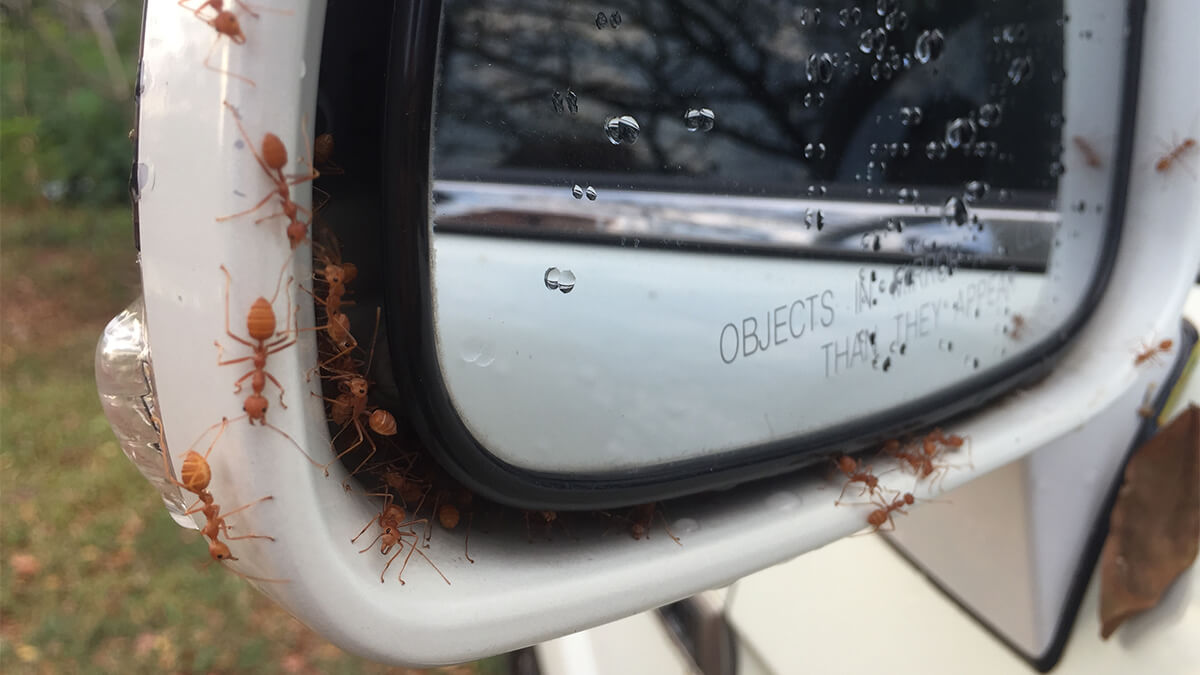
What not to do when removing ants
Many failed attempts to get rid of ants in car interiors come from using too much product or treating only the visible insects.
Avoid these mistakes:
• Do not flood the cabin with bug spray.
• Do not use bug bombs or foggers inside a vehicle.
• Do not spray pesticide into air vents or under the dashboard.
• Do not mix bleach, ammonia, vinegar, or insecticides.
• Do not leave food, drinks, or dirty dishes in the car.
• Do not place loose poison where a child or pet can touch it.
• Do not ignore a water leak or damp carpet.
• Do not assume ants are gone after one day.
Foggers are especially risky in small enclosed spaces. They can leave pesticide residue and may create fire or health hazards. Always read the product label and follow the ventilation instructions.
If you feel dizzy, develop a headache, or notice breathing trouble after using a chemical, leave the vehicle and get fresh air. Contact a medical professional or poison control service for guidance.

How long does it take to get rid of ants in car?
A light ant problem may improve within one or two days after cleaning and moving the vehicle. A colony connected to the car or a nearby nest may take one to two weeks, especially when bait is used.
The timeline depends on:
• Ant species
• Nest location
• Amount of food residue
• Weather and temperature
• Type of bait
• Presence of moisture
• Whether the outdoor nest was treated
Keep checking the vehicle each day. Vacuum again if needed, but do not repeatedly wipe away bait stations or move them before the label allows.
If ants return after several cleanups, the problem may not be inside the vehicle. They could be nesting under a driveway, near a parking space, inside a wall, or around landscaping.
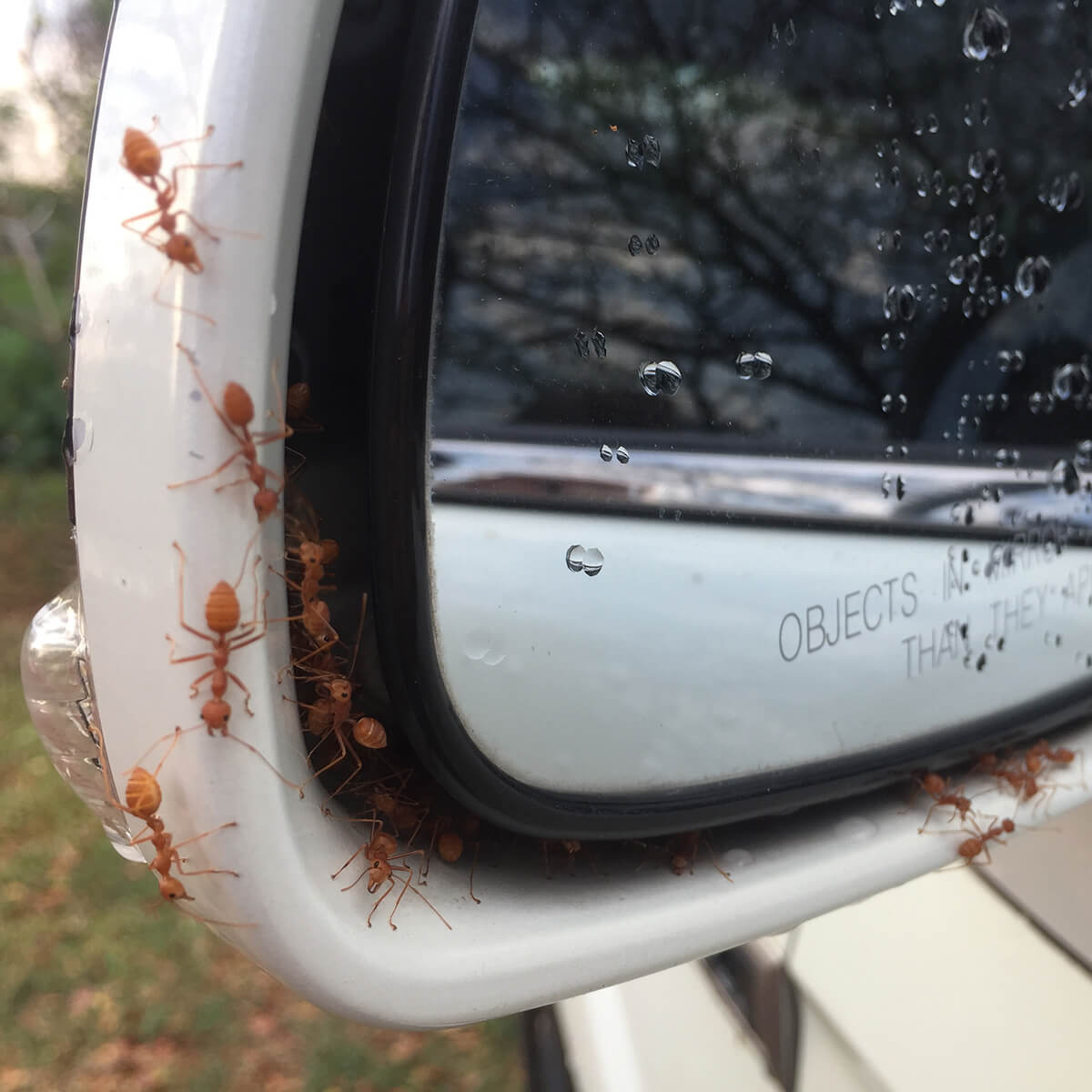
How to prevent ants from coming back
Prevention is the final part of learning how to get rid of ants in car. A clean vehicle gives ants little reason to return.
Use these habits:
• Remove trash every time you leave the car.
• Keep snacks in sealed containers.
• Wipe up drink spills at once.
• Vacuum the cabin every few weeks.
• Clean under child seats and pet covers.
• Keep windows and the sunroof closed when parked near ant activity.
• Inspect door seals and trunk seals for damage.
• Fix water leaks and dry wet mats quickly.
• Avoid parking beside mulch, dense weeds, or active nests.
• Check the engine bay after parking near trees or tall grass.
A small car trash bag can help, but empty it often. It is useful only when it does not become a second food source.
If you park in the same place each day, inspect the ground around the tires. Ants may be climbing from soil, landscaping, or pavement cracks. Treating the exterior nest may be more effective than repeatedly treating the car.

When to call a pest professional or mechanic
Most small ant problems can be handled with cleaning, inspection, and labeled bait. Professional help makes sense when the ants keep returning or appear in large numbers.
Contact a pest professional if:
• Ants appear throughout the cabin and engine bay.
• You find a large nest near your parking area.
• Ants continue for more than two weeks after treatment.
• You see winged ants indoors.
• You suspect carpenter ants near damp wood.
• Household members have asthma or chemical sensitivities.
Contact a mechanic if you find moisture inside the dashboard, damaged wiring, or signs of nesting near electrical parts. Ants do not usually cause major vehicle damage, but any pest activity near wiring deserves caution.
A professional can identify the species and use a treatment that fits the nest location. This is often cheaper and safer than repeatedly buying sprays that only kill the ants you can see.
Frequently Asked Questions About How to Get Rid of Ants in Car
What is the fastest way to get rid of ants in car interiors?
Remove all food, vacuum the cabin, clean scent trails, and place a labeled ant bait station near the activity. Move the car away from the nest or infested parking area.
Can I spray Raid or another bug spray inside my car?
Only use a pesticide if its label allows the intended indoor or vehicle use. Never spray into vents, electrical parts, airbags, seats, pedals, or other areas that passengers touch.
Will ants leave my car if I leave it in the sun?
Sunlight and heat may reduce ant activity for a short time, but they usually will not remove the colony. Cleaning and bait are more dependable solutions.
Why do ants keep coming back after I clean my car?
The colony may be outside the vehicle, or an unseen spill and scent trail may remain. Check the parking area, door seals, cabin filter area, trunk, and damp carpet.
Are ants dangerous to my car?
Most ants do not seriously harm vehicles, but they can become a nuisance and may gather near wiring or electrical components. Persistent activity should be inspected rather than ignored.
Can I use vinegar to remove ants from my car?
A diluted vinegar solution may help remove scent trails from some hard surfaces. Test it first, and avoid using it on leather, screens, delicate trim, or materials that can react to acid.
How do I keep ants out of my car permanently?
Keep food and drinks out, vacuum often, repair leaks, protect door seals, and avoid parking near nests. If the source is outside, treating the nearby colony is essential.
Conclusion
The most effective way to get rid of ants in car interiors is to break the cycle. Remove food and moisture, vacuum hidden areas, clean scent trails, use enclosed bait safely, and inspect the place where you park.
Skip foggers and heavy spraying. They can harm people, surfaces, and vehicle parts while leaving the colony alive. Start with a careful cleanup today, then monitor the car for the next one to two weeks. Share your results or explore more vehicle cleaning and pest-control guides for practical ways to keep your car fresh and pest-free.