

You can check a car battery with a visual inspection, a multimeter, or a dedicated battery tester.
Learning how to check car battery health can save you from a sudden no-start, a costly tow, and needless parts replacement. This guide explains voltage readings, load tests, warning signs, safety steps, and the simple difference between a weak battery and a charging problem.
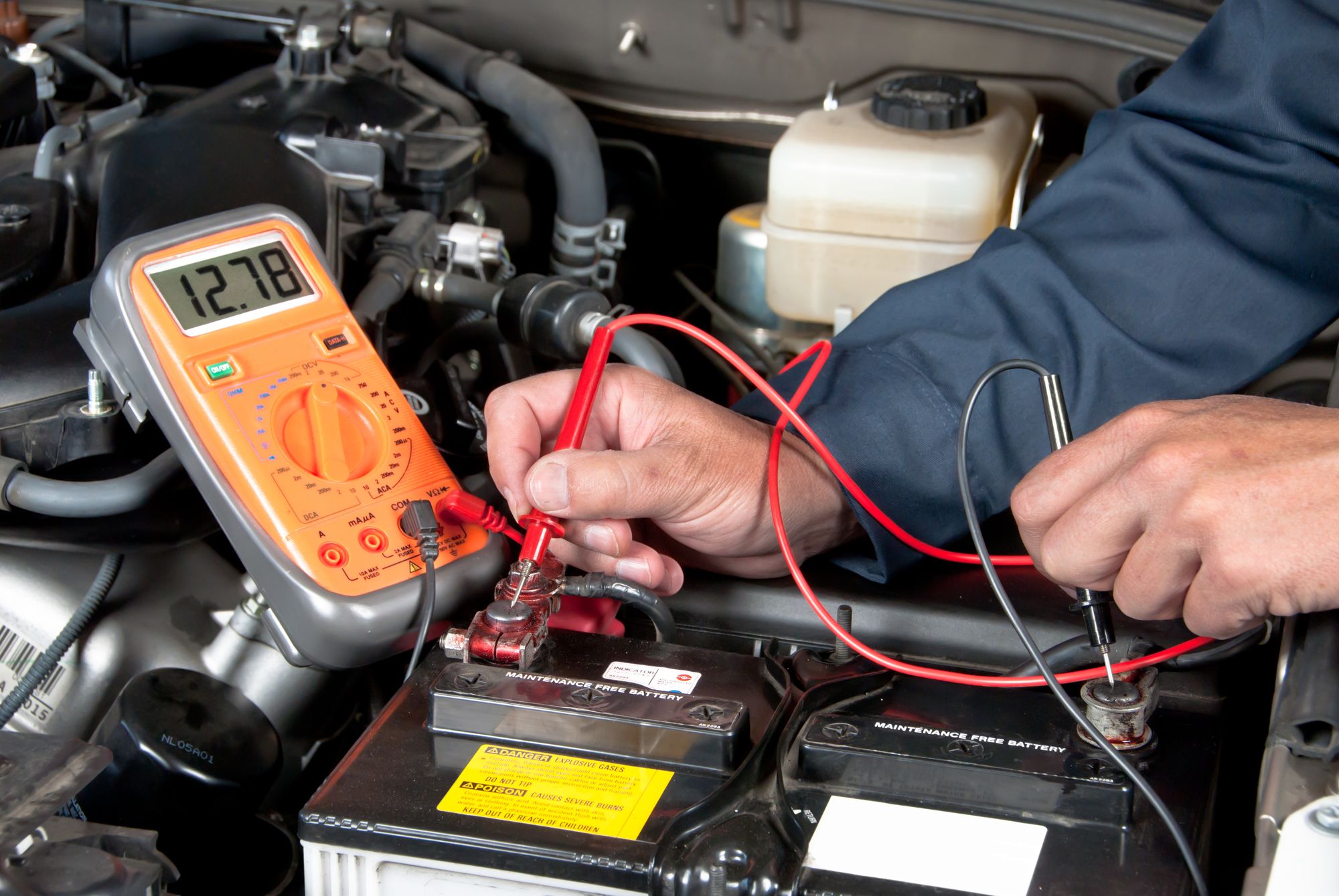
Why You Should Check Your Car Battery
A car battery does more than start the engine. It supplies power to the starter motor, lights, computers, security system, and other electrical parts. When its charge drops or its internal plates wear out, the car may crank slowly or fail to start.
A battery can look clean and still be weak. That is why learning how to check car battery voltage gives you better information than relying on appearance alone.
Regular testing is useful before:
• A long road trip
• Cold weather
• Buying a used car
• Replacing a battery
• Diagnosing slow engine cranking
• Installing a high-power accessory
Most modern 12-volt car batteries last about three to five years. Heat, short trips, poor charging, vibration, and deep discharges can shorten that life. Your owner’s manual may list the correct battery type and testing details for your vehicle.
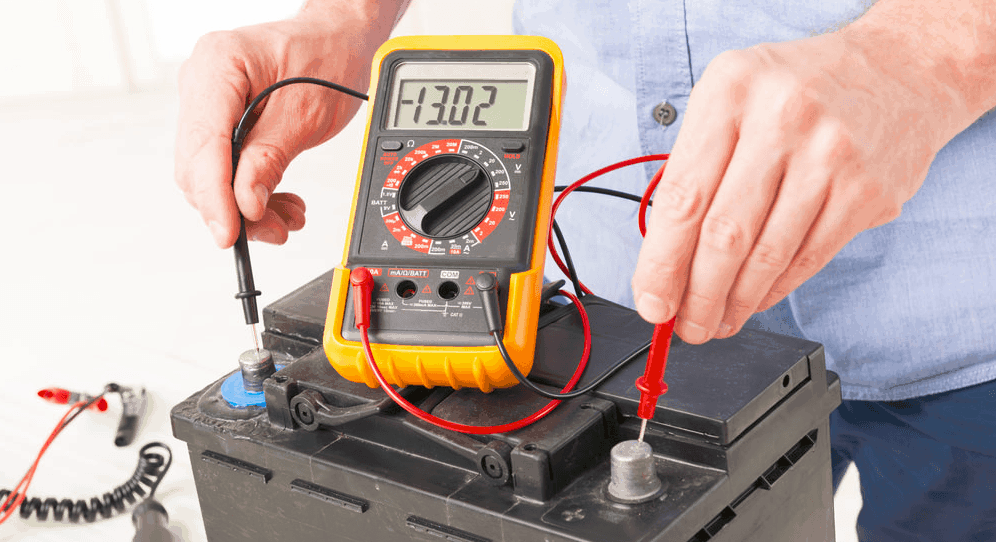
How to Check Car Battery Safely
Before you test anything, park on a flat surface and turn off the engine. Set the parking brake and keep the key away from the ignition. Work in a well-ventilated area, especially if the battery is being charged.
Wear safety glasses and gloves if you handle the battery. Never place metal tools across the positive and negative terminals. A short circuit can cause sparks, burns, or battery damage.
Follow these safety rules:
• Keep cigarettes, flames, and sparks away from the battery.
• Do not lean over the battery while connecting equipment.
• Remove metal jewelry, such as rings and bracelets.
• Connect the positive probe or clamp first when the instructions require it.
• Disconnect the negative connection first when removing a tester.
• Do not test a frozen, cracked, swollen, or leaking battery.
A swollen battery is not a normal maintenance issue. It may have internal damage or severe overcharging. Stop using it and ask a qualified technician to replace it.

How to Check Car Battery With a Multimeter
A digital multimeter is the easiest home tool for measuring battery voltage. You can find one at most auto parts stores, hardware stores, or online retailers. Choose a meter that can measure direct-current voltage, usually marked DCV or V with a straight line.
Step 1: Let the Car Sit
For the most useful resting-voltage reading, turn off the engine and let the car sit for several hours. Overnight is ideal. This lets the battery surface charge fade.
If you test the battery right after driving, the reading may be higher than its true resting level. Turn on the headlights for about 30 seconds, then turn them off and wait a few minutes if you need to remove surface charge quickly.
Step 2: Set the Multimeter
Set the meter to DC voltage. Choose the 20-volt range if your meter does not select the range automatically.
Touch the red probe to the positive terminal. It is usually marked with a plus sign and may have a red cover. Touch the black probe to the negative terminal, marked with a minus sign.
Do not worry if the display shows a minus sign. That usually means the probes are reversed. Swap them and repeat the test.
Step 3: Read the Voltage
Use this chart as a general guide for a standard 12-volt lead-acid battery:
• 12.6 to 12.8 volts: Fully charged and generally healthy
• 12.4 volts: About 75% charged
• 12.2 volts: About 50% charged
• 12.0 volts: About 25% charged
• Below 12.0 volts: Very low charge or a possible problem
These values are estimates, not a final diagnosis. Temperature affects voltage, and a battery can show a normal reading while still failing under load.
A reading near 12.6 volts means the battery has a good charge at that moment. It does not prove that the battery can deliver enough current to start the engine.

How to Check Car Battery While Starting the Engine
A starting test shows how far the battery voltage falls when the starter draws heavy current. This is one of the most useful parts of learning how to check car battery performance.
Keep the multimeter connected to the battery terminals. Ask a helper to start the vehicle while you watch the display. Stay clear of belts, fans, and other moving engine parts.
During cranking, a healthy battery often stays above about 9.6 volts at room temperature. A much lower reading may point to a weak battery, poor cable connection, or a starter that draws too much current.
Temperature matters. Cold weather can reduce battery output, so the same battery may show a larger voltage drop on a freezing morning. The exact test limit may also vary by battery design and manufacturer.
Use the results with other clues:
• Normal resting voltage with a deep cranking drop: The battery may be weak.
• Low resting voltage with a normal cranking drop: The battery may simply need charging.
• Normal battery voltage with slow cranking: Inspect the cables and starter.
• A single click with strong lights: A starter or connection problem may exist.
• Rapid clicking with dim lights: Low battery voltage is more likely.
Do not crank the engine for a long time during testing. Short attempts reduce heat and protect the starter motor.

How to Check Car Battery With a Load Tester
A load tester applies an electrical load that imitates engine starting. It can provide a stronger diagnosis than a simple voltage reading.
A traditional load test often applies a load equal to about half the battery’s cold cranking amp, or CCA, rating for around 15 seconds. The battery must usually maintain a specified voltage during the test. The exact limit depends on temperature and the tester’s instructions.
Some newer testers use conductance technology. They measure the battery’s ability to conduct current and estimate its starting capacity. These testers are common in repair shops because they are fast and do not place the same heavy load on the battery.
When using a load tester:
Confirm that the battery is charged enough to test.
Inspect the battery for cracks, leaks, or swelling.
Connect the tester exactly as the manual explains.
Enter the battery’s CCA rating if the tester requests it.
Apply the test for the stated time.
Compare the result with the battery label and tester guidance.
A failed test does not always mean the battery alone is at fault. A loose terminal, poor ground strap, or discharged battery can affect the result. Charge the battery and repeat the test when appropriate.

How to Check Car Battery Terminals and Cables
Poor connections can mimic a dead battery. Corrosion adds resistance, much like a kink in a garden hose that limits water flow.
Inspect both battery terminals and the cable ends. Look for white, blue, or green powder, loose clamps, broken wires, damaged insulation, and rust near the mounting area.
Turn off the vehicle before cleaning. Use a battery terminal brush and a mixture made for battery cleaning, or follow the product directions. Baking soda is sometimes used to neutralize light acid residue, but keep any mixture away from battery openings and dry the area afterward.
Tighten the terminal clamps so they cannot twist by hand. Do not overtighten them, because you can damage the battery posts.
A voltage-drop test can find hidden resistance:
• Place the positive meter lead on the battery positive post and the negative lead on the positive cable connection.
• Have someone crank the engine.
• A noticeable voltage reading suggests resistance in that connection.
• Repeat the process on the negative side between the battery negative post and the engine block.
The exact acceptable voltage drop varies by vehicle and test method. If you see a high reading, clean or repair the cable before replacing the battery.
How to Check Car Battery Charging Voltage
A healthy battery may keep going flat if the alternator is not charging it correctly. This is why how to check car battery voltage should include a charging-system test.
Start the engine and let it idle. Place the multimeter probes on the battery terminals. Many vehicles show a charging voltage between about 13.7 and 14.7 volts, but modern charging systems may vary.
Some newer vehicles use smart alternators. Their voltage may move up and down based on battery temperature, driving conditions, electrical demand, and the vehicle computer. For that reason, one reading is not enough to diagnose every charging system.
Turn on the headlights, blower fan, rear defroster, and other normal loads. The voltage should remain within the vehicle maker’s expected range. A very low reading may suggest an alternator, belt, wiring, or control problem.
A very high reading can also cause trouble. Overcharging may damage the battery and electronic parts. If the voltage stays unusually high or low, have the charging system tested by a qualified technician.

Battery Warning Signs to Watch For
Testing is helpful, but your car often provides clues before the battery fails completely. Pay attention to changes that happen more than once.
Common signs include:
• Slow or hesitant engine cranking
• A clicking sound when you turn the key
• Flickering interior or dashboard lights
• Headlights that become dim at idle
• A battery warning light
• Electrical accessories that work poorly
• The need for repeated jump-starts
• A swollen battery case
• Corrosion around the battery posts
• A reset clock or radio after starting
A warning light shaped like a battery does not always mean the battery is bad. It often signals a charging-system issue. The alternator, belt, wiring, or voltage regulator may be the true cause.
One practical lesson from battery diagnosis is simple: do not replace parts based on one symptom. Check the battery, cables, starting system, and charging system as a group.
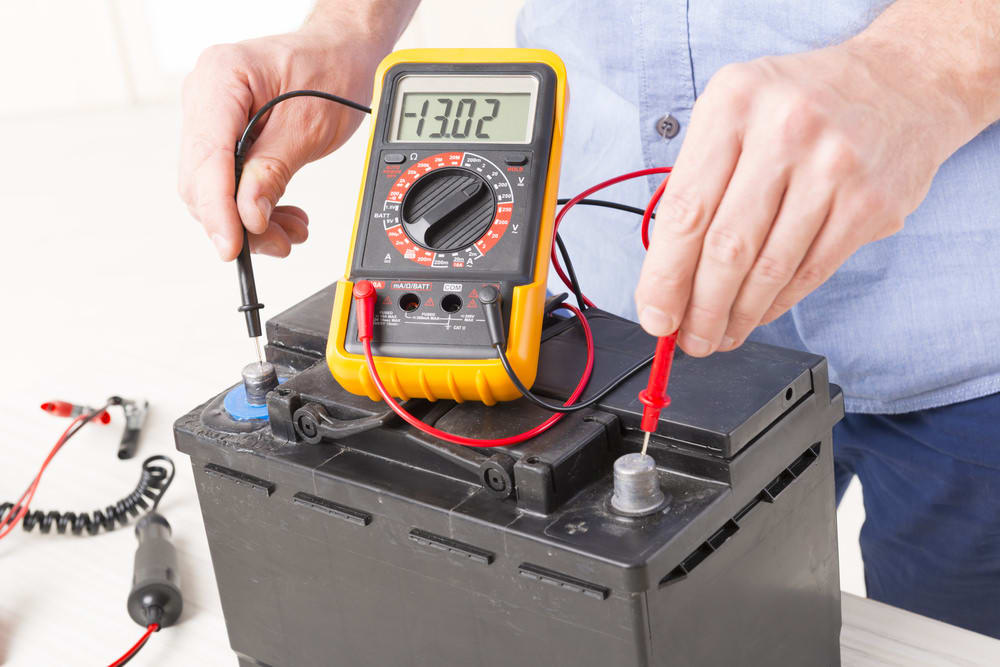
How Long Should a Car Battery Last?
Most conventional car batteries last three to five years, but climate and driving habits matter. Very hot weather can speed up internal wear. Very cold weather reduces available starting power and exposes a weak battery.
Short trips can also cause trouble. The starter uses a large amount of energy, but a short drive may not give the alternator enough time to restore it. Frequent deep discharges can reduce battery life as well.
You may need to check car battery condition more often if:
• The battery is older than three years.
• You drive mostly short trips.
• The vehicle sits unused for long periods.
• You live in a very hot or cold climate.
• The car has many electrical accessories.
• You recently needed a jump-start.
A battery age label may appear on the top or side of the case. If the battery is nearing the end of its expected life, proactive replacement may be wiser than waiting for a failure in a parking lot.
Common Mistakes When Testing a Car Battery
Many incorrect diagnoses come from small testing errors. Avoiding them makes your results more useful.
Testing Right After Driving
A recent drive can leave a surface charge on the battery. This may produce a reading that looks healthier than the true resting voltage.
Ignoring Battery Temperature
Voltage and starting power change with temperature. Compare your result with the tester instructions and consider the weather before making a decision.
Testing Only Voltage
Voltage measures electrical pressure. It does not fully measure starting strength. A battery can show 12.6 volts and still fail a load or conductance test.
Forgetting the Cables
Dirty or loose terminals can block current. Always inspect the connections before condemning the battery.
Replacing the Battery Without Finding the Cause
If the alternator overcharges the battery or a hidden electrical drain remains, a new battery may fail too. Test the full system when the problem returns.
Using the Wrong Battery Type
Some vehicles require an absorbed glass mat, or AGM, battery. Others use an enhanced flooded battery or a standard flooded design. Installing the wrong type may affect charging and battery life, especially in vehicles with start-stop systems.
When to Visit a Professional
You can perform basic checks at home, but some situations call for expert help. Battery acid, high-current cables, and modern vehicle electronics deserve respect.
Visit a repair shop if:
• The battery is cracked, swollen, or leaking.
• The vehicle has a hybrid or high-voltage system.
• The battery keeps losing charge overnight.
• The battery passes but the engine still cranks slowly.
• The charging voltage is outside the vehicle maker’s range.
• You need battery registration or computer programming.
• You cannot safely reach the battery.
Many vehicles place the battery in the trunk, under a seat, or behind engine parts. Some have remote testing terminals under the hood. Use the owner’s manual rather than guessing.
A professional battery test can also measure CCA, reserve capacity, internal resistance, and charging-system performance. These results are especially useful before a long trip or when a vehicle has repeated electrical faults.
How to Check Car Battery: A Simple Checklist
Use this checklist when you want a quick but careful diagnosis:
Turn off the engine and inspect the battery case.
Look for swelling, cracks, leaks, and severe corrosion.
Check the battery age.
Clean and tighten the terminals if needed.
Measure resting voltage with a digital multimeter.
Test the voltage while the engine cranks.
Measure charging voltage with the engine running.
Check for loose grounds and damaged cables.
Use a load or conductance tester for a deeper result.
Replace the battery only after checking the charging system.
Keep a record of the voltage, date, temperature, and symptoms. A single number is useful, but a pattern is better. For example, a battery that drops from 12.6 volts to 12.1 volts after sitting overnight may have a drain or internal weakness.
Frequently Asked Questions About How to Check Car Battery
How do I check a car battery without a multimeter?
Inspect the battery, listen to the cranking sound, and check whether the headlights become very dim during starting. These clues can suggest a problem, but a multimeter or professional tester gives a more reliable answer.
What voltage should a car battery show when the car is off?
A fully charged 12-volt battery often shows about 12.6 to 12.8 volts after sitting. A reading near 12.2 volts suggests roughly half a charge, while a reading below 12.0 volts is very low.
Can a car battery be bad if it reads 12.6 volts?
Yes. A battery may show normal resting voltage but fail when the starter demands high current. Use a load test or conductance test to check its real starting ability.
How can I tell whether the battery or alternator is bad?
A low resting voltage may point to a discharged or weak battery, while abnormal voltage with the engine running may suggest a charging problem. Test both systems, because one fault can damage the other.
How often should I check my car battery?
Check it before winter, before long trips, and whenever you notice slow cranking or electrical problems. After the battery is three years old, testing it every six to 12 months is a sensible habit.
Is it safe to test a car battery at home?
Basic voltage testing is usually safe when you use the correct meter and avoid sparks or short circuits. Do not test a damaged battery, and seek professional help for hybrid or high-voltage systems.
Conclusion
Knowing how to check car battery voltage, terminals, cranking performance, and charging output helps you find problems before they leave you stranded. Start with a visual inspection, use a multimeter for resting and running voltage, and confirm uncertain results with a load tester.
Do not forget the cables and alternator. A battery is only one part of the starting system, and replacing it without checking the cause can waste money. Test your battery today, record the results, and use a qualified technician when the problem is unclear. Share this guide with another driver or explore more vehicle maintenance resources for practical ways to keep your car reliable.