

Most cars need four to six quarts of oil, but the exact amount depends on the engine and filter.
Knowing how much oil does my car need helps protect the engine, improve fuel economy, and prevent costly damage. The right answer varies by make, model, engine size, oil filter, and whether the engine is fully drained. This guide explains how to find the correct oil capacity, check the level, avoid overfilling, and choose the right oil with confidence.
How Much Oil Does My Car Need?
Most passenger cars need between 4 and 6 quarts of motor oil during a routine oil change. Smaller engines may need about 3.5 to 4 quarts, while large engines, turbocharged engines, trucks, and performance cars may need 6 to 8 quarts or more.
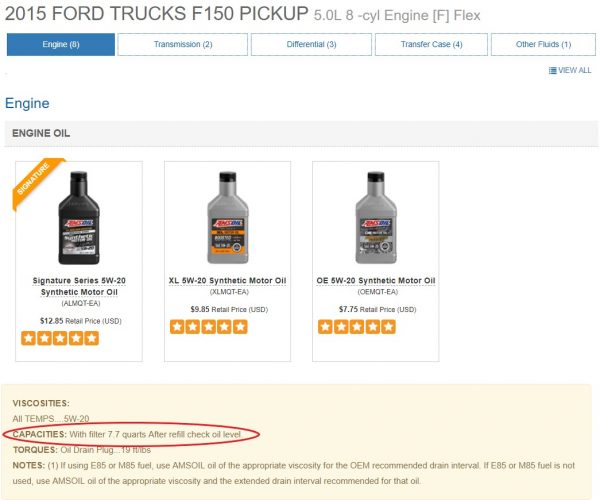
The safest way to learn how much oil does my car need is to check the owner’s manual. Look for terms such as “engine oil capacity,” “oil and filter change,” or “crankcase capacity.” The oil capacity listed for an oil and filter change is usually more useful than the dry engine capacity.
Typical oil capacities include:
• Small four-cylinder engines: 3.5 to 5 quarts
• Larger four-cylinder engines: 4.5 to 6 quarts
• V6 engines: 5 to 6.5 quarts
• V8 engines: 6 to 8 quarts
• Diesel engines: 6 to 12 quarts, depending on the engine
These figures are only general ranges. Two vehicles with the same engine size can require different amounts of oil because of differences in the oil pan, filter, cooling system, and engine design.
Why Oil Capacity Matters
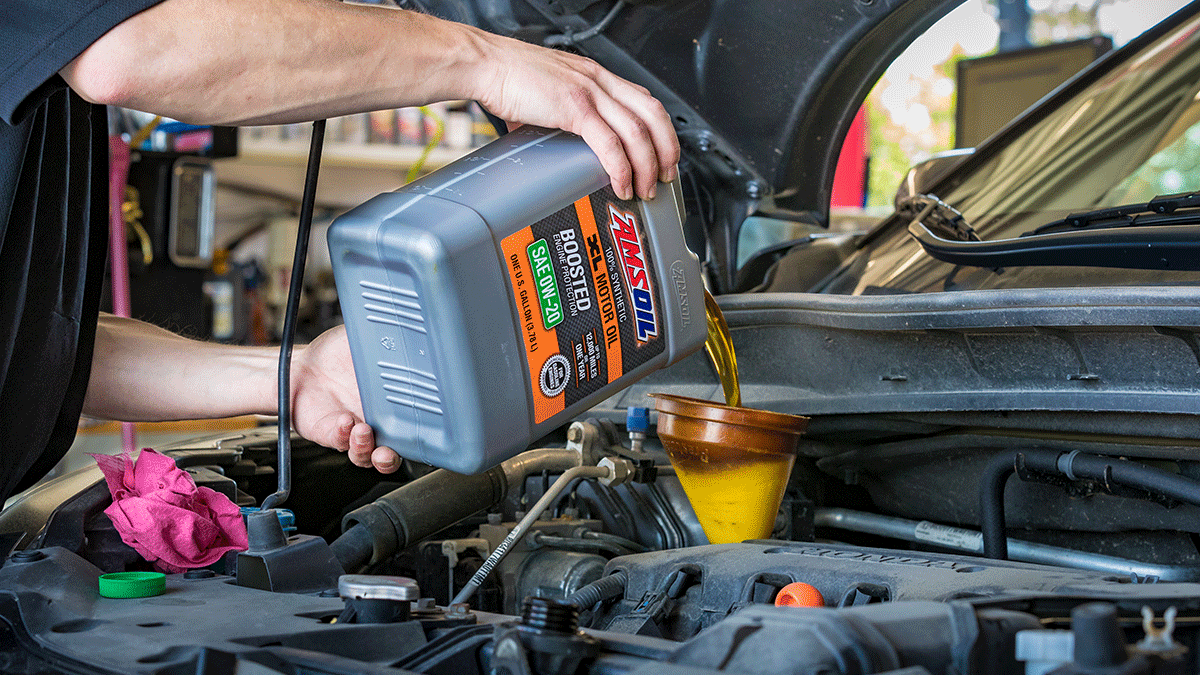
Engine oil works like the engine’s blood. It reduces friction, carries heat away from moving parts, and helps suspend dirt until the oil filter traps it. Too little oil can leave important components without proper lubrication.
Too much oil can also cause trouble. A crankshaft may whip the oil into foam, much like an egg beater creates bubbles. Foamy oil does not lubricate well, and excess pressure can damage seals or force oil into areas where it should not be.
Using the correct amount of oil helps:
• Protect bearings, pistons, camshafts, and timing components
• Control engine heat
• Reduce wear during cold starts
• Support proper oil pressure
• Keep emissions systems working as designed
• Help the engine reach its expected service life
The question “how much oil does my car need” is not only about filling the engine to a number. It is also about checking the level after the oil has circulated and settled.

Where to Find Your Car’s Oil Capacity
Your owner’s manual is the best first source. The information may appear in the maintenance section, technical specifications, or fluid capacities chart.
You can also find the correct oil capacity through:
• The manufacturer’s official website
• A dealership service department
• A trusted parts store database
• A repair information system
• The label or documentation for the vehicle
Use the vehicle identification number when possible. A single model may have several engines in one year, and each engine may hold a different amount of oil.
Do not rely only on the engine’s displacement. A 2.0-liter engine does not always take the same amount of oil as another 2.0-liter engine. Engine size describes volume, not the complete lubrication system.
How to Check the Oil Level Correctly
The dipstick tells you how much oil is in the engine now. It does not always tell you the total oil capacity. A proper check prevents both underfilling and overfilling.
Follow these steps:
Park on level ground.
Turn off the engine and wait about five minutes.
Open the hood and find the oil dipstick.
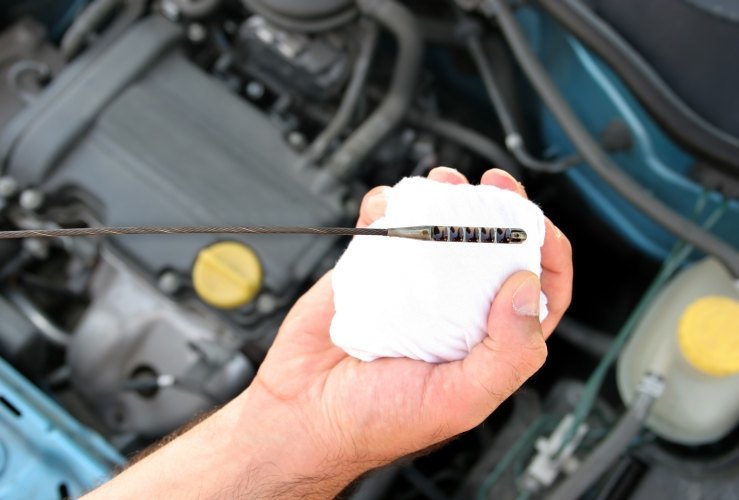
Remove the dipstick and wipe it clean with a lint-free cloth.
Push the dipstick fully back into its tube.
Remove it again and read the oil level.
Add oil in small amounts if the level is below the safe mark.
The oil should usually sit between the “Full” and “Add” marks. On many vehicles, the space between those marks equals about 1 quart. This is common, but not universal, so check your manual.
A common mistake is checking the oil right after shutting off the engine. Some oil is still moving through the engine, so the dipstick may show a low level. Waiting a few minutes gives the oil time to drain back into the oil pan.
How to Add Oil Without Overfilling
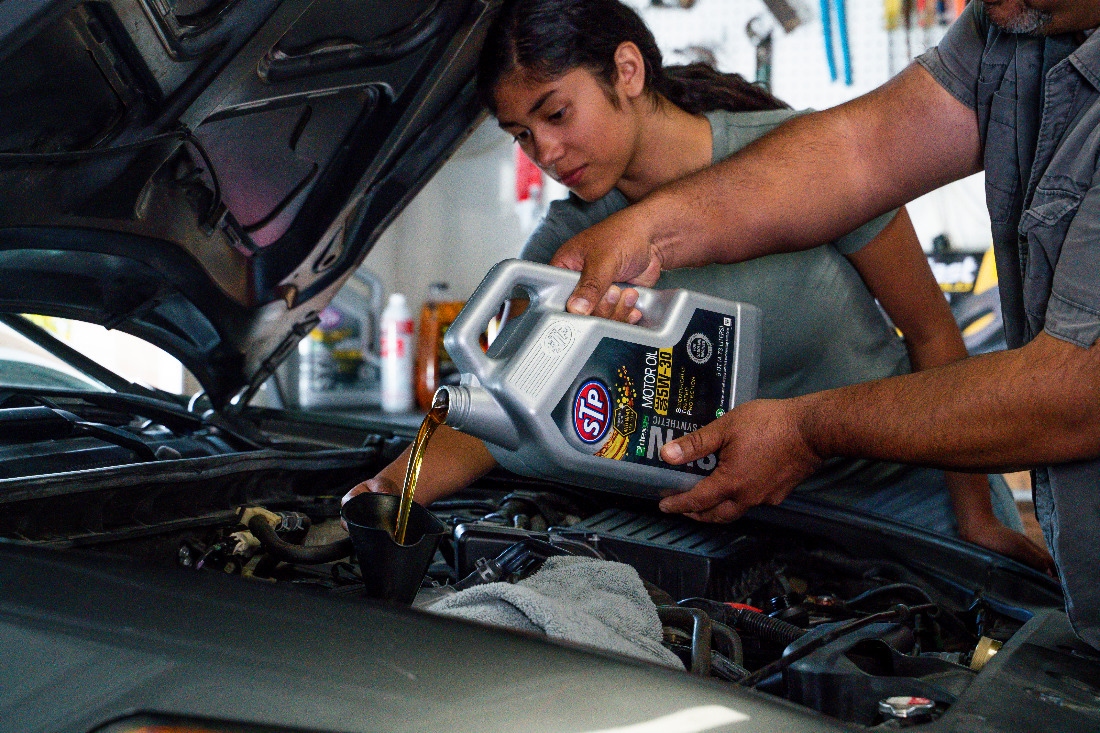
If the dipstick shows a low level, add oil slowly. Pour in about half a quart, wait a minute, and check the dipstick again. Continue only when needed.
Here is a safe method:
• Remove the oil filler cap.
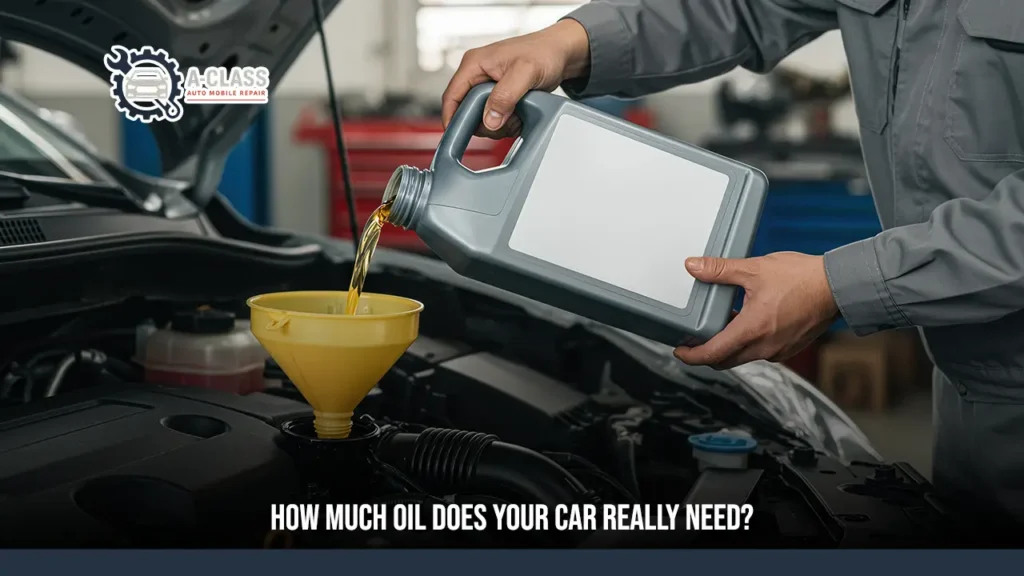
• Place a funnel in the opening.
• Add the correct oil grade in small amounts.
• Wait for the oil to drain into the pan.
• Check the dipstick after each addition.
• Stop when the oil reaches the full mark.
Do not assume that an empty-looking dipstick means the engine needs its full capacity. If the dipstick shows no oil, the engine may still contain several quarts. Adding the full listed capacity without draining the old oil could cause a serious overfill.
This is one of the most important lessons when asking how much oil does my car need: oil capacity applies to a known starting point, usually after draining the old oil and replacing the filter.
Oil Change Capacity Versus Dry Engine Capacity
Manufacturers may list more than one oil capacity. The most useful figure for most drivers is the capacity for an oil and filter change.
Common capacity labels include:
• Oil and filter change: The amount needed during normal maintenance
• Oil change without filter: Slightly less oil because the old filter still holds oil
• Dry engine: The amount needed after the engine has been completely emptied or rebuilt
• Initial fill: The amount used when an engine is first assembled
A dry engine capacity is often higher than the amount needed for a normal oil change. Using the dry capacity during routine maintenance can overfill the engine.
When researching how much oil does my car need, read the wording beside the number. A value without context can lead to a wrong fill.
Does the Oil Filter Change the Amount Needed?
Yes. The oil filter holds a small amount of oil. When you install a new filter, some additional oil is needed to fill it.
The difference is usually not huge. It may be a few ounces, but the exact amount depends on the filter size and engine design. This is why many manuals list separate capacities for an oil change with and without a new filter.
Replacing the filter at the recommended interval is important because the filter traps dirt, metal particles, and other contaminants. A new filter also gives the fresh oil a clean path through the lubrication system.
For most routine services, use the oil and filter capacity listed in the owner’s manual. Then confirm the final level with the dipstick.

What Happens If You Use Too Little Oil?
Low oil can cause serious engine damage. When the level drops, the oil pump may draw air instead of a steady supply of oil. This can reduce oil pressure and leave moving parts with little protection.
Warning signs of low engine oil may include:
• A red oil pressure warning light
• Ticking, tapping, or knocking sounds
• Burning oil smells
• Increased engine temperature
• Poor engine performance
• Visible leaks under the vehicle
Stop the engine if the oil pressure warning light turns on while driving. The warning light may indicate dangerously low pressure, not simply a small shortage of oil. Continuing to drive can turn a minor leak into a failed engine.
If the dipstick is low but no warning light is on, add the correct oil before driving far. Then inspect the vehicle for leaks or arrange a professional check.
What Happens If You Add Too Much Oil?
Overfilling is also harmful. Excess oil can contact the rotating crankshaft and become aerated. Air bubbles reduce the oil’s ability to form a strong protective film.
Too much oil may lead to:
• Foamy or aerated oil
• Oil leaks from seals and gaskets
• Blue exhaust smoke
• Rough running
• Damage to catalytic converters
• High crankcase pressure
• Poor engine lubrication
If you suspect an overfill, do not guess. Check the dipstick on level ground after the engine has been off for several minutes. If the level is clearly above the full mark, have the excess removed.
A small amount above the full line may not cause immediate damage, but a large overfill should be corrected promptly. The safe limit depends on the engine, so there is no universal “extra amount” that is harmless.
How to Choose the Correct Motor Oil
Oil capacity answers how much oil does my car need. Oil viscosity and specifications answer which oil does my car need.
Your manual may recommend a viscosity such as:
• 0W-20
• 5W-20
• 5W-30
• 10W-30
The first number describes cold-flow performance. The “W” means winter, not weight. The second number describes how the oil flows at normal engine operating temperature.
You should also check for the required industry specification, such as an API or ILSAC rating, or a manufacturer-specific approval. A bottle can have the correct viscosity but still lack the specification your engine requires.
Synthetic oil may be required or recommended for some vehicles. Other vehicles can use conventional, synthetic blend, or full synthetic oil if the product meets the manual’s requirements. Always follow the manufacturer’s specification rather than choosing oil based only on price or marketing claims.
How Often Should You Change the Oil?
Oil change intervals depend on the vehicle, oil type, driving conditions, and engine design. Many modern vehicles use an oil-life monitoring system rather than a fixed mileage schedule.
Severe driving may require more frequent service. Examples include:
• Frequent short trips
• Heavy traffic and long idling
• Towing or carrying heavy loads
• Driving in extreme heat or cold
• Dusty roads
• Repeated stop-and-go driving
• Track or high-performance use
Follow the maintenance schedule in your manual. Waiting for the oil to look dark is not a reliable test. Oil naturally becomes darker as it collects contaminants and works inside the engine.
Regularly checking how much oil does my car need is different from knowing when to change it. Check the level often, and change the oil at the recommended interval.
Oil Capacity Examples by Vehicle Type
Vehicle type can offer a rough starting point, but it cannot replace the exact specifications for your engine.
A small compact car with a four-cylinder engine may need around 4 quarts. A midsize sedan with a larger four-cylinder engine may need about 5 quarts. A V6 pickup truck may need roughly 6 quarts, while a large diesel truck can require 10 quarts or more.
Hybrid vehicles also need regular engine oil. Their gasoline engines may run less often, but the oil still ages and collects moisture. Some hybrids use smaller engines and may require less oil than a similar-size conventional vehicle.
Turbocharged engines deserve extra care. A turbocharger spins at very high speed and depends on clean oil for cooling and lubrication. Use the exact oil grade and specification listed by the manufacturer.
A Practical Oil Change Procedure
If you change your own oil, gather the right supplies before starting. You will usually need the correct oil, a new filter, a drain pan, a wrench, a filter tool, gloves, a funnel, and a safe way to support the vehicle.
Use this general process:
Warm the engine for a few minutes, unless the manufacturer gives different instructions.
Park on a level surface and secure the vehicle.
Raise the vehicle only with equipment rated for its weight, and use jack stands when required.
Remove the drain plug and let the old oil drain fully.
Replace the drain plug washer if the manufacturer recommends it.
Install the new oil filter and lubricate its gasket with fresh oil.
Add most of the listed oil capacity.
Start the engine briefly and check for leaks.
Turn the engine off and wait several minutes.
Check the dipstick and add oil until it reaches the correct mark.
Never work beneath a vehicle supported only by a jack. Used oil should be collected and taken to a recycling center or participating auto parts store. Do not pour it onto the ground or into a drain.
Mistakes to Avoid When Checking Oil
Even a simple oil check can go wrong. Small errors often lead to an inaccurate reading or the wrong amount of oil.
Avoid these common mistakes:
• Checking the oil on a steep driveway
• Reading the dipstick while the engine is running
• Forgetting to wipe the dipstick before the final check
• Adding oil too quickly
• Using the dry engine capacity for a normal oil change
• Mixing up quarts and liters
• Using the wrong viscosity
• Ignoring a leaking oil filter or drain plug
• Treating an oil pressure light like a routine service reminder
One quart equals about 0.946 liters. A capacity listed as 5.0 liters is slightly more than 5 quarts, so confirm the unit before pouring.
A useful habit is to keep one unopened quart of the correct oil in the vehicle or garage. This can help during a long trip, but it should not replace regular checks for leaks or oil consumption.
What If Your Car Uses Oil Between Changes?
Some engines consume oil as mileage increases. Small amounts may pass the piston rings or valve seals, while leaks may develop around gaskets, seals, or the oil filter housing.
Check the oil level every few hundred miles if your vehicle has a known consumption issue. Record the mileage and the amount added. This information can help a mechanic identify a pattern.
Look for:
• Blue smoke from the exhaust
• Oil spots where you park
• A burning oil smell
• Oil around the engine
• Low oil levels without visible leaks
Some manufacturers consider a certain amount of oil use normal, especially under heavy loads or high engine speeds. However, rapid oil loss should always be investigated. An engine that needs a quart every few hundred miles may have a problem that requires repair.
Frequently Asked Questions About How Much Oil Does My Car Need
How much oil does my car need for a regular oil change?
Most cars need about 4 to 6 quarts for an oil and filter change. Check the owner’s manual because engine size, design, and filter capacity can change the exact amount.
Can I use the dipstick to know how much oil my car needs?
The dipstick shows the current oil level, not the engine’s total capacity. Add oil slowly and use the dipstick to confirm the final level after the oil settles.
Is it safe to add a full quart of oil?
Add a full quart only when the dipstick shows that the engine is about one quart below the full mark. If the level is only slightly low, add half a quart or less and check again.
What happens if I put too much oil in my car?
Too much oil can become foamy and reduce lubrication. It may also cause leaks, smoke, high crankcase pressure, or engine damage, so remove excess oil promptly.
Should I check my oil when the engine is hot or cold?
Check the owner’s manual because procedures vary. In general, park on level ground, turn the engine off, wait several minutes, and then check the dipstick.
Does changing the oil filter change how much oil my car needs?
Yes. A new filter holds some oil, so the filter-change capacity may be slightly higher than the capacity for an oil change without a new filter.
How often should I check my engine oil?
Check it at least once a month and before long trips. Check it more often if the engine leaks, consumes oil, or operates under severe driving conditions.
Conclusion
Most cars need about 4 to 6 quarts of oil, but the correct answer depends on the exact engine and service procedure. The owner’s manual provides the best capacity, while the dipstick confirms the final level. Add oil slowly, use the correct viscosity and specification, and never ignore warning lights, leaks, or unusual oil consumption.
Now that you know how much oil does my car need, check the level on your next fuel stop and write down the correct capacity for your vehicle. Share this guide with another driver, and explore your manufacturer’s maintenance schedule to keep your engine running smoothly.