
You can buy a car with bad credit by checking your budget, comparing lenders, and choosing a loan you can repay.
Buying a car with bad credit can feel like walking into a room where everyone already knows your mistakes. It does not have to be that way. With the right plan, you can find financing, avoid unfair terms, and choose a reliable car without putting your entire budget at risk. This guide explains how to buy a car with bad credit using clear steps, real-world examples, and practical advice based on common auto lending practices.
Understand what bad credit means to auto lenders
Bad credit usually means a lower credit score or a limited credit history. Lenders use your credit report, income, debt, and payment history to estimate how likely you are to repay the loan.
FICO and VantageScore use different scoring models. Because of this, the score you see in an app may not match the score a car lender uses. A low score does not automatically mean you will be denied, but it can lead to a higher annual percentage rate, or APR.
When learning how to buy a car with bad credit, remember that lenders look at more than your score. They may also consider:
• Your monthly income and employment history
• Your debt-to-income ratio
• The size of your down payment
• The age, price, and mileage of the car
• Your past auto loan history
• Whether you have a cosigner
A lender sees a car loan as less risky when the loan is small compared with the car’s value. This is why a larger down payment can improve your approval chances and may reduce your interest rate.
Check your credit before visiting a dealership
The first step in how to buy a car with bad credit is to review your credit before applying for loans. You should know what lenders may see and correct errors before they affect your application.
You can request free credit reports from the three major credit reporting companies through the official federally authorized website. Checking your own credit report does not hurt your credit score.
Look for:
• Accounts you do not recognize
• Payments marked late when you paid on time
• Debts that should have been removed
• Incorrect account balances
• Duplicate collection accounts
If you find an error, dispute it with the credit reporting company and the business that supplied the information. Keep copies of your documents. Credit report disputes can take time, so do not wait until the day you plan to buy a car.
Also check your credit score if possible. Your score can help you compare loan offers, but it is only one part of the decision. A lender may approve you because you have steady income and a strong recent payment record, even if older credit problems remain.
Set a realistic car budget
A lender may approve a loan that your budget cannot safely handle. Approval is not the same as affordability.
Before shopping, calculate the full cost of ownership. Your monthly car cost may include:
• Loan payment
• Insurance
• Fuel or charging costs
• Maintenance and repairs
• Registration and taxes
• Parking or tolls
• Extended warranty costs, if you choose one
A useful starting point is to keep your total transportation costs manageable after rent, food, utilities, debt payments, and savings. Do not rely only on the payment shown by a dealer. A longer loan term can make the payment look small while increasing the total interest.
For example, a $18,000 loan at a high APR may seem affordable over 72 months. However, you could pay thousands of dollars in interest and remain in debt for years. A less expensive car with a shorter loan may be the safer choice.
When considering how to buy a car with bad credit, build an emergency fund into the plan. Even a used car can need tires, brakes, or a battery soon after purchase.

Save for a down payment
A down payment lowers the amount you need to borrow. It can also reduce the lender’s risk and help you qualify for better terms.
A larger down payment may help you:
• Lower your monthly payment
• Reduce total interest
• Avoid owing more than the car is worth
• Improve your loan-to-value ratio
• Make approval easier
There is no single perfect down payment for every buyer. Some borrowers may use savings, a trade-in, or a combination of both. Do not drain your entire bank account just to make a large down payment. You still need money for insurance, registration, repairs, and emergencies.
Be careful with “no money down” offers. They can be useful for some buyers, but financing the full price, taxes, fees, and add-ons may create a large loan. If the car loses value quickly, you could owe more than it is worth.
Compare banks, credit unions, and online lenders
Do not assume the dealership is your only financing option. Shopping for a loan before you shop for a car can give you a stronger position.
Consider getting quotes from:
• A local bank
• A credit union
• An online auto lender
• A community development lender
• The dealership’s finance department
Credit unions often have flexible underwriting policies, but membership may be required. Online lenders can provide fast decisions, though rates and fees vary widely. Banks may offer competitive rates to existing customers.
Ask each lender for the same information:
• APR
• Loan term
• Monthly payment
• Total finance charge
• Total amount paid
• Required down payment
• Origination or processing fees
• Prepayment penalty, if any
Multiple auto loan applications made within a short shopping period are often treated as one inquiry by commonly used scoring models. Even so, ask lenders how they handle credit checks before submitting applications.
Getting preapproved is one of the most useful steps in how to buy a car with bad credit. It tells you how much you may borrow and helps you focus on cars that fit your real budget.
Find a reliable car, not just a low payment
A low payment does not make a good deal. The car must be dependable enough to support your work, family, and daily life.
Start with vehicles known for reasonable repair costs and strong parts availability. Compare insurance quotes before buying. A car with a low sticker price may cost more to insure or repair.
Before signing, review:
• Vehicle history
• Title status
• Accident records
• Maintenance records
• Recall information
• Mileage
• Tire and brake condition
• Signs of flood or collision damage
A pre-purchase inspection by an independent mechanic is one of the best protections for a used-car buyer. The inspection may cost money, but it can reveal problems that are expensive to fix.
Try to buy from a seller that provides clear paperwork. Avoid anyone who refuses an inspection, pressures you to sign immediately, or will not explain the total price.
One lesson that comes up often in real buyer experiences is this: people focus on getting approved and forget to inspect the car. Financing a problem vehicle can turn one financial challenge into two.
Understand buy-here, pay-here dealerships
Buy-here, pay-here dealerships offer in-house financing. They may advertise approval for buyers with poor or no credit. Payments are usually made directly to the dealership.
These dealers can help people who have trouble qualifying elsewhere. However, compare the full cost carefully. Interest rates may be high, vehicles may cost more than similar cars, and some contracts include strict payment rules.
Ask about:
• The total cash price
• The APR and finance charge
• Payment due dates
• Late fees
• Repossession policies
• Whether payments are reported to credit bureaus
• Any tracking or starter-interrupt device
Do not assume that every buy-here, pay-here dealer reports on-time payments. If building credit is important to you, confirm the reporting policy in writing.
The Federal Trade Commission warns consumers to review financing terms and watch for deceptive fees or add-ons. You should receive a copy of every document you sign.

Consider a cosigner carefully
A cosigner with strong credit may help you qualify or receive a lower interest rate. The cosigner agrees to repay the loan if you do not.
This is a serious legal and financial commitment. A missed payment can damage both people’s credit. The loan may also affect the cosigner’s ability to qualify for another loan.
Before asking someone to cosign, discuss:
• The exact monthly payment
• Who will pay insurance and repairs
• What happens if you lose your job
• How payment records will be shared
• How the cosigner can be released, if allowed
Never pressure a family member or friend to cosign. If the loan is not affordable on your income, a cosigner may only delay a larger financial problem.
Watch for predatory car loan terms
Bad credit can make buyers more vulnerable to unfair deals. Some dealers use confusing language, urgent sales tactics, or unnecessary products to increase the loan amount.
Watch for these warning signs:
• The dealer focuses only on the monthly payment
• The APR is not clearly shown
• The contract has blank spaces
• Fees appear late in the process
• You are told to sign before reading
• The dealer says the loan is final, then asks you to return
• You are pressured to buy a warranty or insurance product
• The seller refuses to provide a copy of the contract
• The vehicle price changes after financing is discussed
Ask for an itemized buyer’s order. Compare the cash price with the amount financed. Optional products, such as gap coverage, service contracts, and credit insurance, should be clearly explained and priced separately.
Gap coverage may help if your insurer pays less than your loan balance after a covered theft or total loss. It can be useful in some cases, but it is not automatically worth the price. Compare the cost with coverage from your insurer or another provider.
Negotiate the car price and financing separately
Many buyers make the mistake of negotiating only the monthly payment. This can hide a high price, a long term, or expensive add-ons.
Use this order:
Negotiate the vehicle’s out-the-door price.
Review the trade-in value separately.
Compare financing offers.
Choose optional products only after reviewing the full contract.
The out-the-door price should include the vehicle price, dealer fees, taxes, registration, and other required charges. Ask whether any fee is optional.
For example, a dealer may offer a $350 monthly payment. That payment could result from a low car price and good rate, or from a high price spread over 84 months. The payment alone does not tell you whether the deal is good.
This separation is a key part of how to buy a car with bad credit because borrowers with high rates have less room for hidden costs.

Read the loan contract before signing
Do not sign until you understand the Retail Installment Sales Contract or other loan agreement. The contract controls your legal obligations.
Check these details:
• Amount financed
• APR
• Finance charge
• Number of payments
• Payment amount
• First payment date
• Late payment fee
• Total of payments
• Optional products
• Early payoff terms
The Truth in Lending disclosures should show important loan costs. If the paperwork differs from what the salesperson promised, stop and ask questions.
Do not rely on verbal promises. If a dealer says an add-on will be removed or a rate will be changed, request written proof before signing.
In some states, there is no general three-day right to cancel an auto purchase after signing. Do not assume you can return the car simply because you change your mind. Learn your state’s rules before completing the purchase.
Improve your credit before buying if possible
Waiting a few months may save you money. If you can delay the purchase, focus on actions that strengthen your application.
Helpful steps include:
• Pay every bill on time
• Reduce credit card balances
• Avoid applying for many new accounts
• Keep older accounts open when appropriate
• Pay down collection balances only after understanding the credit impact
• Correct credit report errors
• Keep proof of income and housing payments
Payment history is a major factor in many credit scoring models. Even a short period of on-time payments can show lenders that your finances are improving.
If you need a car immediately, you can still compare lenders and choose a modest vehicle. Buying now does not mean you must accept the first offer.
Know what to do after buying the car
Your work does not end when you drive away. Set up automatic payments if your bank balance can support them. Keep a reminder several days before each due date.
Save these documents:
• Signed purchase contract
• Loan agreement
• Insurance information
• Vehicle title documents
• Warranty papers
• Repair and maintenance records
Check your first lender statement for accuracy. Confirm that the payment, balance, and due date match your contract.
If you expect trouble making a payment, contact the lender before the due date. Some lenders may offer hardship options, but approval is not guaranteed. Ignoring the problem can lead to late fees, credit damage, and repossession.
Making every payment on time may help your credit profile over time, especially when the lender reports the account to the credit bureaus.

Common mistakes to avoid
Knowing what not to do is just as important as knowing how to buy a car with bad credit.
Avoid these common mistakes:
• Shopping for a car before setting a budget
• Accepting the first loan offer
• Choosing a long term only for a lower payment
• Skipping the independent inspection
• Financing expensive extras
• Using all your savings for the down payment
• Failing to compare insurance costs
• Signing without reading the contract
• Buying a car with a salvage or flood title without understanding the risks
• Making a false statement on a credit application
Lenders may verify your income and employment. Never exaggerate your income or hide debts. False information can cause serious financial and legal problems.
A simple plan for buying a car with bad credit
Use this checklist to make the process less stressful:
Review your credit reports and scores.
Set a total transportation budget.
Save a reasonable down payment and emergency reserve.
Gather proof of income, residence, and insurance.
Compare at least three lenders.
Get preapproved when possible.
Choose reliable cars within your price range.
Check vehicle history and obtain an inspection.
Negotiate the out-the-door price.
Compare the final loan offers.
Read every contract before signing.
Set up payments and maintain the car.
This process may take longer than walking into a dealership and accepting an offer. The extra time can protect you from a loan that creates stress for years.

Frequently asked questions about how to buy a car with bad credit
Can I buy a car with bad credit and no down payment?
Yes, some lenders offer loans with little or no down payment. However, you may face a higher APR, a larger monthly payment, or negative equity, so saving even a modest amount can improve the deal.
What credit score is needed to buy a car?
There is no universal minimum score for an auto loan. Some lenders work with borrowers who have very low scores, but approval, APR, loan size, and vehicle rules depend on income, debt, credit history, and the lender’s policies.
Should I get a cosigner for a bad credit car loan?
A cosigner may improve approval odds or reduce the interest rate. Both borrowers remain responsible for the debt, so use a cosigner only when the payment is affordable and the risks are fully understood.
Is it better to buy a used car with bad credit?
A used car may cost less and require a smaller loan, but age and repair risk matter. Have any used vehicle inspected and compare its total cost with a newer, more reliable model.
Can a car loan improve my credit?
A car loan may help build credit if the lender reports payments and you pay on time. Late payments, default, or repossession can seriously harm your credit, so do not borrow more than your budget allows.
How can I avoid being scammed by a car dealer?
Request an itemized out-the-door price, verify the APR, inspect the vehicle, and read every document. Walk away if the dealer uses pressure, changes terms without explanation, or refuses to provide copies of the paperwork.
Conclusion
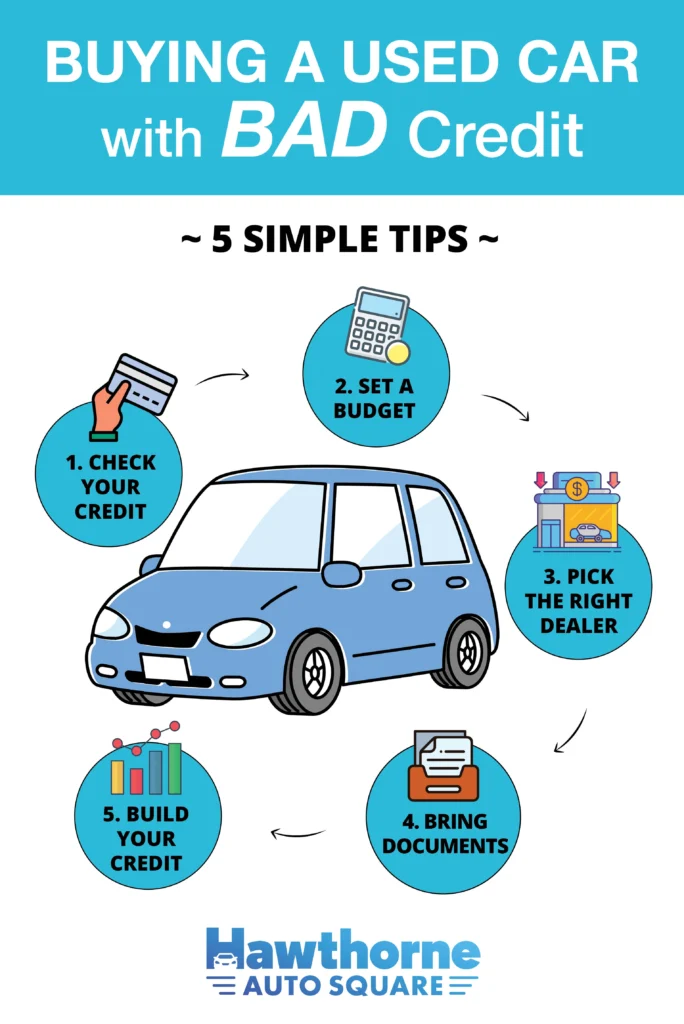
Learning how to buy a car with bad credit starts with preparation, not panic. Check your credit, set a realistic budget, save what you can, compare lenders, inspect the car, and review the full loan cost instead of chasing a low monthly payment.
Bad credit may limit your choices, but it does not remove your right to clear terms and a fair deal. Take your time, ask direct questions, and choose a vehicle and payment that support your financial goals. Use this checklist when you shop, and explore trusted financial resources before signing your next auto loan.